

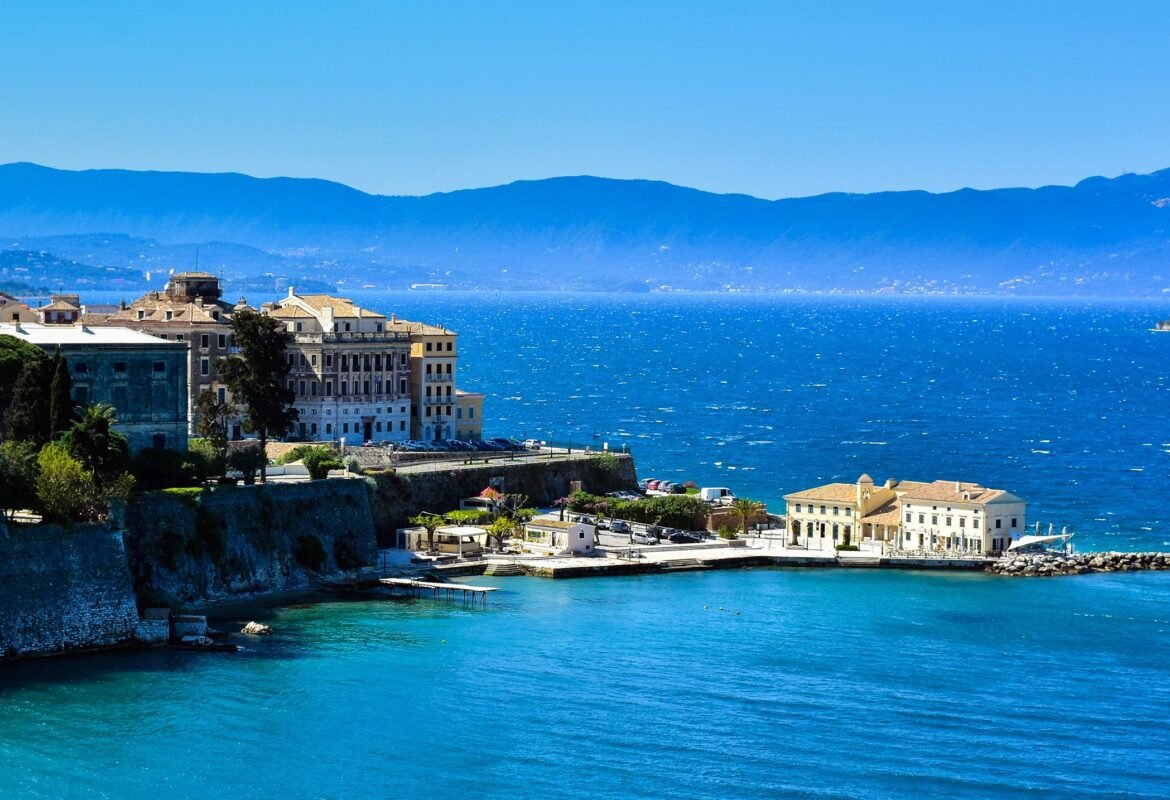


Corfu, or Kerkyra, is what we locals call the “Emerald Island,” and honestly, once you’re here, it makes sense. It’s way greener than most Greek islands, full of olive trees (millions of them), wildflowers in spring, and beaches tucked between all that lush landscape. It’s not just pretty; it feels alive.
Where is Corfu?
You’ll find it in the northwest of Greece, right where the Ionian meets the Adriatic. It’s super close to the mainland, and even closer to Albania, which you can actually see on a clear day. Corfu kind of sits at the heart of this little cluster of islands, with places like the Diapontia Islands, Paxos, and Antipaxos nearby.
It’s one of those spots that feels a bit like a crossroads, Greek at heart, but with layers of history and influences from all over.
Key Insights into Corfu’s Land, People, and Life
Corfu is home to around 100,000 people. This island combines charming towns and scenic traditional villages, fertile plains, and rugged mountains with more than 217 kilometers of pristine coastline.
Whether you’re exploring its geography, learning about its people, or soaking in its natural beauty, Corfu offers a unique blend of history, culture, and breathtaking landscapes.

Beyond its natural beauty, Corfu’s history stretches back more than 3,000 years, making it a cultural and historical cornerstone of Greece. It has been inhabited since the Paleolithic era and was famously referenced in Homer’s Odyssey as the home of the Phaeacians.
Throughout history, the island has been a melting pot of influences, blending Greek, Venetian, French, and British cultures, all of which are still visible today in its architecture, traditions, and cuisine.
Visitors are drawn not just by the island’s serene beaches and hidden coves but by its rich cultural fabric.
Whether exploring ancient fortresses or wandering through charming villages, Corfu’s heritage is ever-present, leaving a lasting impression on all who visit.
Origin of the Name “Corfu”
There seems to be a lot of confusion about the origin of the name. Let’s clear things up: Corcyra and Corypho have completely different roots.
Corcyra was a mythological nymph, daughter of the river god Asopos, who was abducted by Poseidon and brought to the island, giving it her name.
From Corcyra, the Dorians, among the first Greek colonists on the island, adapted the name to their dialect, producing Kerkyra. This remains the current Greek name for both the town and the island.
The other word is Korypho, a Greek word meaning “tops” or “peaks.” The Italians later adapted this name into Corfu, which subsequently became the standard name used by most Europeans for both the island and its main town.
In ancient times, the island was also traditionally identified as Scheria and played a significant role in Homer’s Odyssey. Scheria represents one of the fundamental themes of the Odyssey: Xenia, the ancient Greek concept of hospitality and the sacred obligation to welcome and protect strangers. The Phaeacians were renowned for their hospitality, making this an essential part of the story.
Failing to represent this fundamental aspect in any film or adaptation removes any right to call the adaptation the Odyssey!
At other times, its sickle-like shape earned it the name Drepanon, meaning “sickle.” These various names reflect the island’s deep cultural and linguistic heritage.
Corfu Population and Demographics
As of the 2021 census, Corfu Island has 103,840 residents, with 40,050 in the town of Kerkyra.
Its vibrant communities are spread across 208 villages, with a notable British presence, making up about 5% of the population.
Corfu has about 160 people per square kilometre, roughly twice the Greek average, and its diverse demographic reflects its appeal as both a holiday and a permanent destination.
👉 → Living like a local in Corfu
What Makes Corfu Different From Other Greek Islands?
Corfu breaks the classic Greek island stereotype. Instead of dry, barren rocks, it offers lush landscapes, endless coastline options, and a completely different climate.
Lush Greenery and Dense Vegetation
Known as the “Emerald Island,” Corfu is covered in millions of olive trees, thick cypress forests, and vibrant greenery that grows right down to the water. This dense vegetation keeps the island cool, refreshing, and visually stunning compared to the dry islands in the Aegean.
An Endless Coastline of Beaches
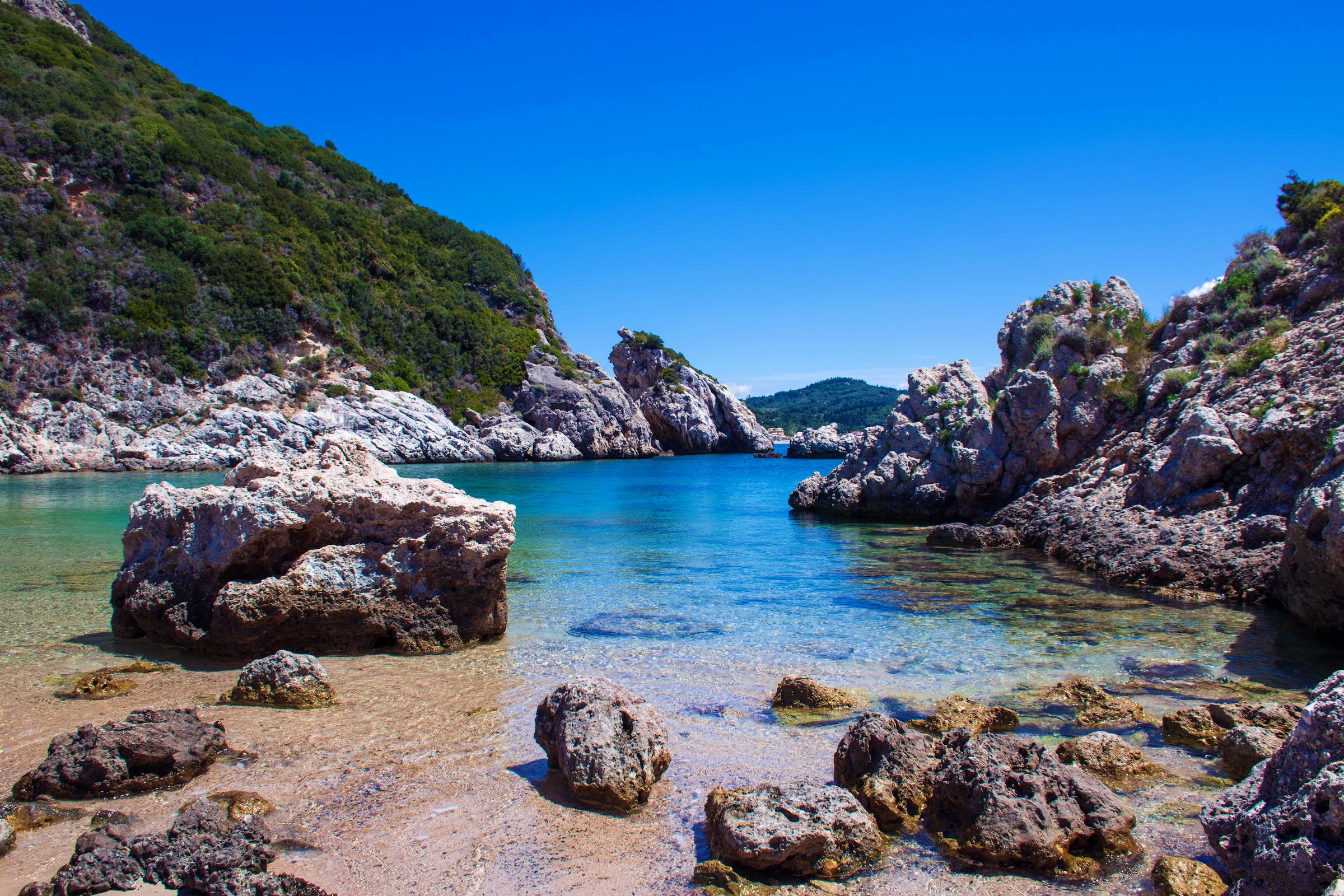
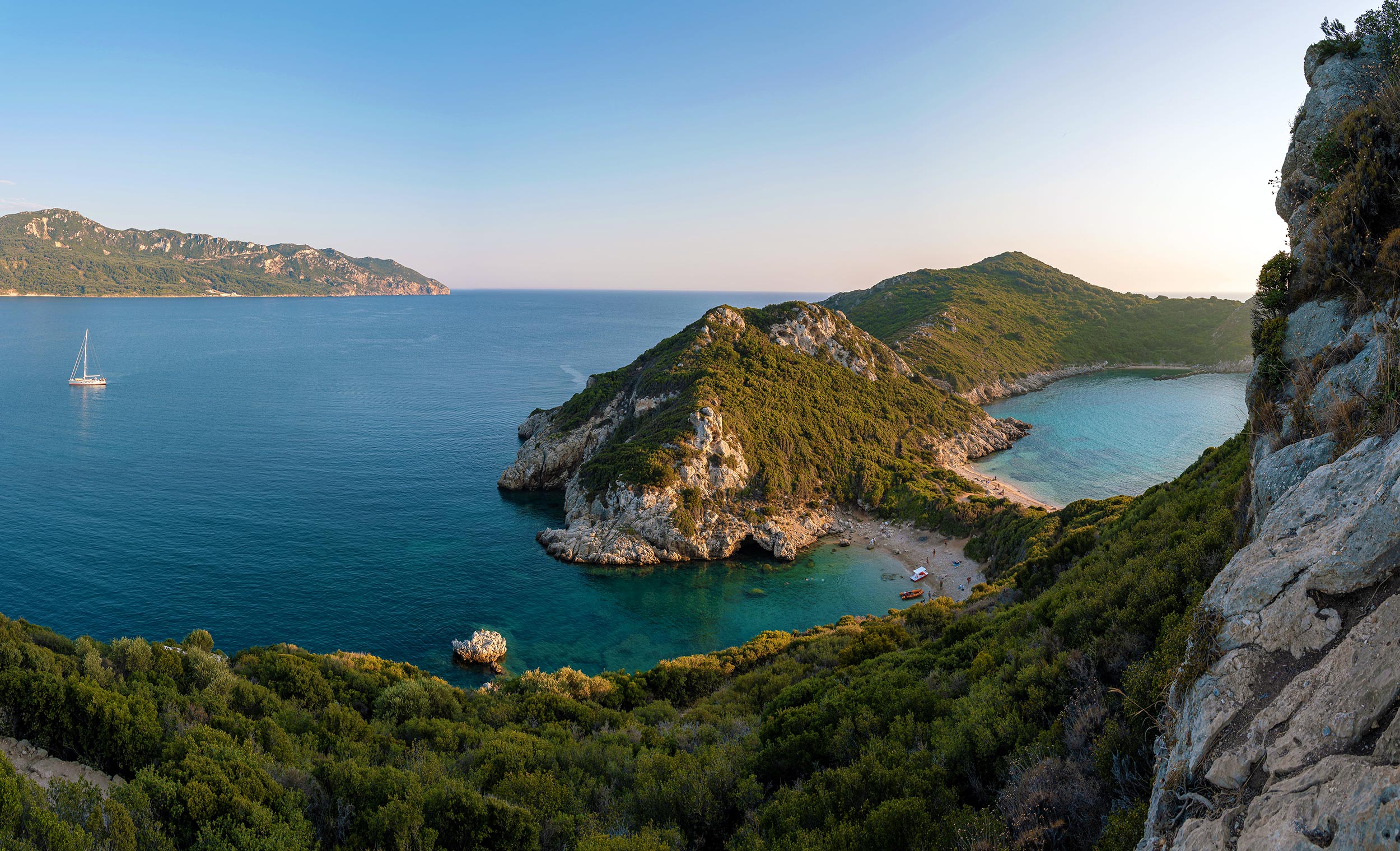
Corfu does not rely on a single, overcrowded “wow” landmark like Zante’s Navagio beach. Instead, its strength is the sheer number and variety of beaches scattered across almost every mile of its coast.
The island is known for its diverse coastline, from sandy beaches like Glyfada and Issos to hidden coves around Paleokastritsa. Beyond the coast, there are scenic landscapes, hiking trails, and natural landmarks worth exploring.
You shouldn’t miss authentic experiences such as boat trips, olive oil tastings, and visits to scenic villages.
Quantity and Variety Over Single Iconic Landmarks
You get an endless choice of shores rather than just one famous photo spot. Here is what makes the Corfiot coastline stand out:
- Beaches everywhere: Accessible bays and coves are tucked into almost every single corner of the island’s coastline.
- Endless variety: You can easily switch between long stretches of fine golden sand, dramatic clay cliffs, and quiet pebble coves.
- Beautiful backdrops: The quality of the sand is excellent, and every beach is framed by lush, green nature.
- Warmer water: Because Corfu sits in the Ionian Sea, the water is noticeably warmer and calmer than the chilly, windy Aegean Sea.
👉 Discover the Best Beaches in Corfu
Corfu’s Unique Features

What Makes Corfu Historically and Culturally Unusual
Corfu boasts an array of distinctive characteristics that set it apart from the rest of Greece:
- The Esplanade and Liston: Spianada Square is one of Europe’s largest public squares, flanked by the French-designed Liston promenade.
- Venetian Architecture: The Old Town features narrow street labyrinths (kantounia), arched doorways, and pastel-colored buildings.
- Ottoman-Free History: Unlike mainland Greece, Corfu never fell to the Ottoman Empire, keeping its European heritage intact.
- Three European Influences: Centuries of Venetian, French, and British rule heavily shaped the island’s culture and landmarks.
- Unique Easter Traditions: During Holy Saturday, locals throw massive clay pots (botides) from their windows into the streets.
- Musical Heritage: The island has a massive musical tradition, boasting dozens of active philharmonic brass bands.
- Kumquat Capital: Introduced around 1924 by Sidney Merlin, a Greek-born Briton, this tiny citrus fruit is widely grown here for local liqueurs and sweets.
- The British Cricket Legacy: Corfu is home to the only cricket field and teams in Greece, a leftover habit from British rule.
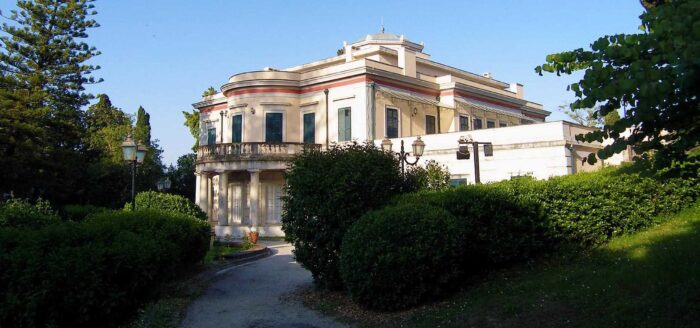
- Royal Birthplace: Mon Repos Palace on the island is the birthplace of several European royals, including Britain’s Prince Philip.
- The Durrells: The famous British author Lawrence Durrell and naturalist Gerald Durrell lived and wrote here in the 1930s.
- The Georgian Palace: The Palace of St. Michael and St. George is the only purely Georgian-style palace built outside the UK.
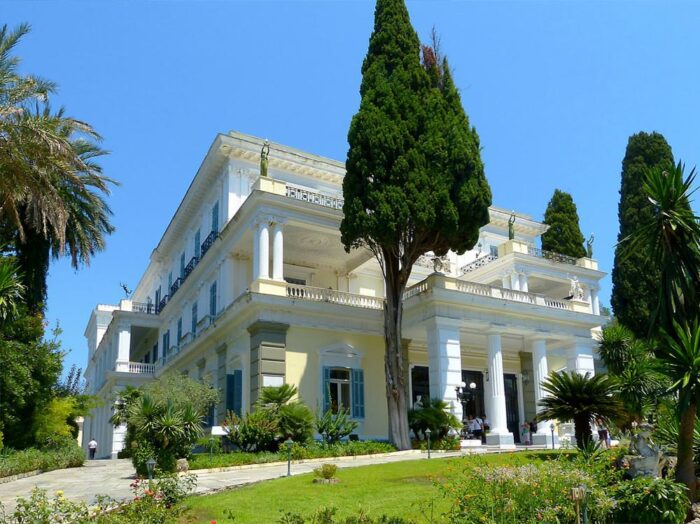
- Achilleion Palace: A stunning neoclassical palace built by Empress Elisabeth (Sisi) of Austria, dedicated to the hero Achilles.
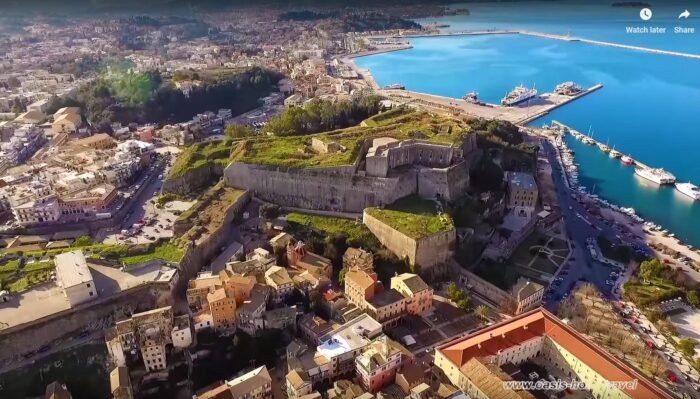
- Twin Fortresses: The Old and New Fortresses are massive fortifications that successfully defended the island for centuries.
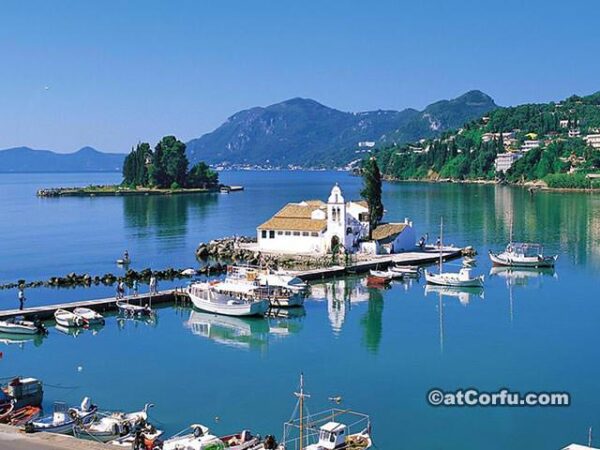
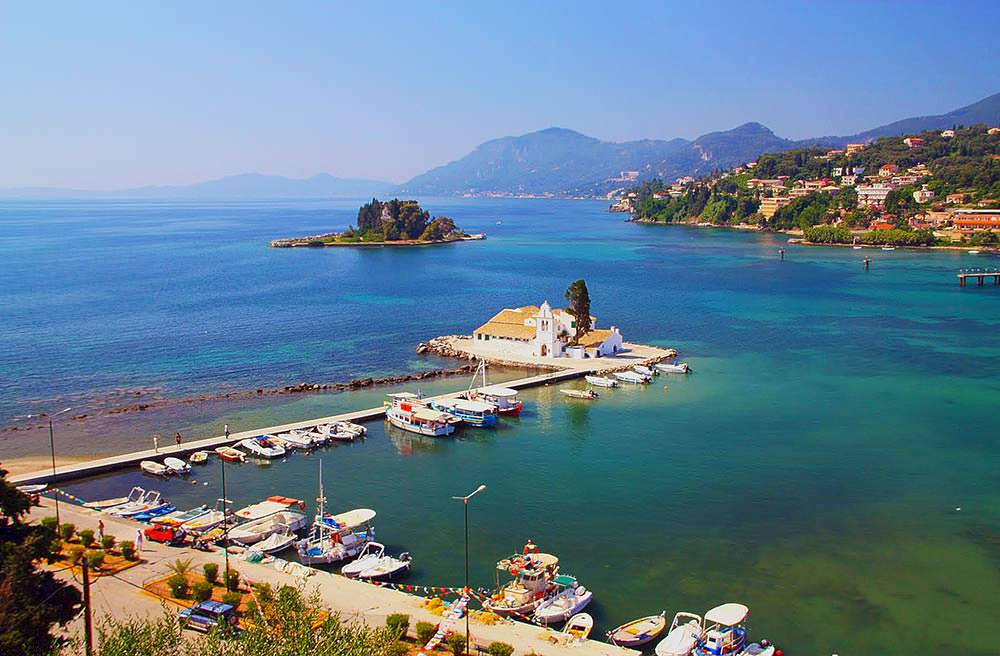
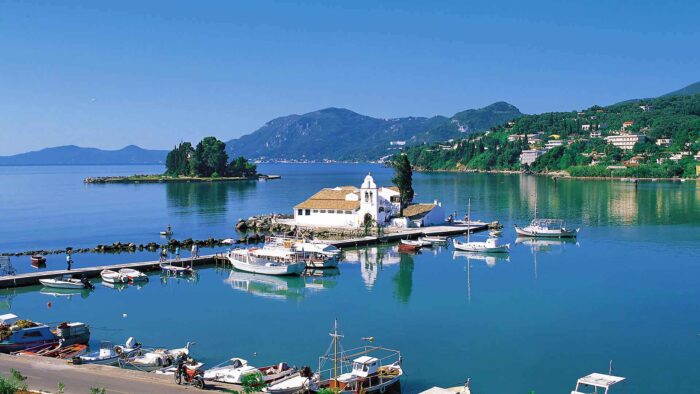
- Pontikonisi (Mouse Island): The iconic, tiny islet home to the Pantokrator monastery, sitting right next to Vlacherna chapel.
- Distinct Cuisine: Local dishes like Pastitsada, Sofrito, and Bourdeto blend Italian cooking styles with Greek ingredients.
- Corfiot Dialect: The local spoken accent and vocabulary still retain strong musical, Venetian-Italian linguistic roots.
- A Land of Modern “Firsts”: Corfu established Greece’s very first university, first commercial bank, and first modern theater.
Info for Travelers to Corfu
Is Corfu worth Visiting?
Absolutely! Corfu’s stunning beaches, diverse landscapes, UNESCO-listed Old Town, and welcoming atmosphere make it an irresistible destination. Its vibrant culture and cuisine, coupled with a mild climate, ensure a memorable experience for every traveler.
How Big is Corfu?
Corfu spans 593 km², with an additional 47 km² from its neighboring islands, creating a total area of 640 km². It stretches 61 km in length and 27 km in width, with a picturesque 217 km coastline.
Despite some narrow roads between old villages, its extensive road network makes exploring the island easy.
When to Visit
Corfu is a year-round destination, with warm summers, mild winters, and beautiful spring and autumn seasons.
→ Corfu Weather by Month
How to Get to Corfu?

Corfu is well connected by air and sea, with multiple options depending on your location and travel style.
→ Corfu International Airport Guide
→ How to get to Corfu
Getting Around
Exploring Corfu is easy, whether you use public buses, rent a car, or travel by taxi or boat.
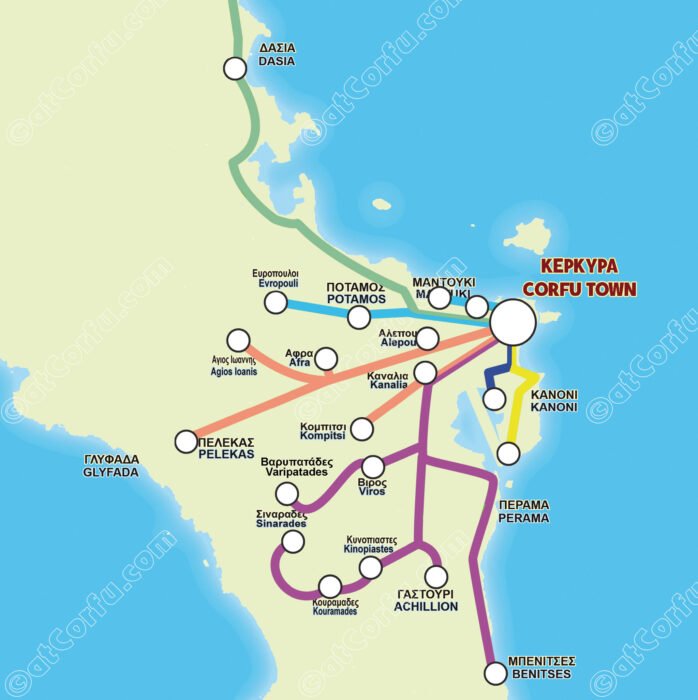
→ Corfu Blue Bus Routes
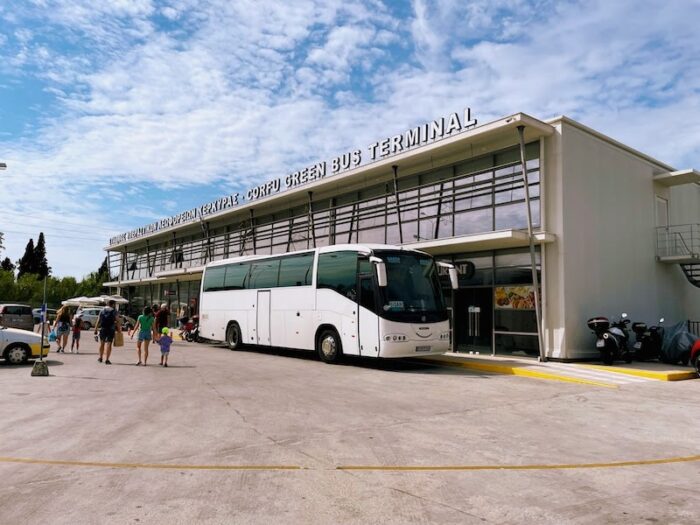
→ Corfu Green Buses
→ Distances from Corfu Town
Is Corfu Expensive?
- Cost of living: The cost of living and travel expenses in Corfu, Greece, can vary depending on factors such as the season, accommodation choices, dining preferences, and activities.
- In general, compared to other popular European destinations, Kerkyra can offer relatively affordable options for accommodations, food, and activities, particularly if you avoid peak tourist seasons.
- Budget and plan: However, it’s essential to budget and plan to ensure your expenses align with your financial preferences and expectations.
See more: Corfu Addresses, Phone Numbers, and Useful Tips
Corfu Information


Where to Stay

Corfu offers accommodation for every type of traveler, from luxury resorts to family-run stays.
👉 Explore Corfu Accommodation
👉 See the Best Hotels in Corfu
Corfu Destinations
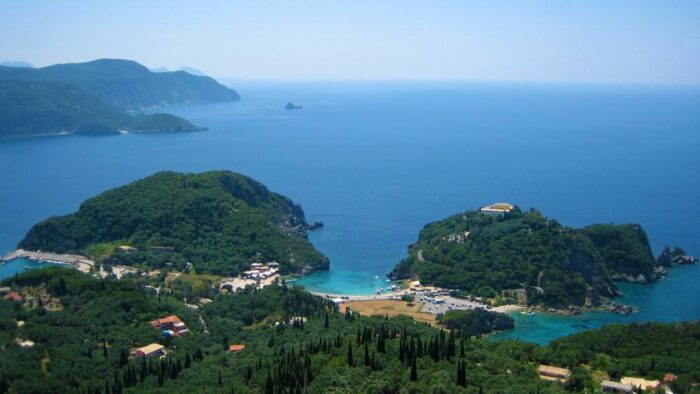
Corfu is not a single resort but a collection of very different places. Corfu Town is a Venetian old town that works as a base for sights and food. Benitses is a quiet seaside village on the coast south of the town. Sidari in the north is known for its beaches and lively nightlife, while Paleokastritsa on the west coast is known for its coves and hidden beaches.
See all the places to stay in our guide to the best Corfu resorts and holiday destinations.
Maps & Visual Guides
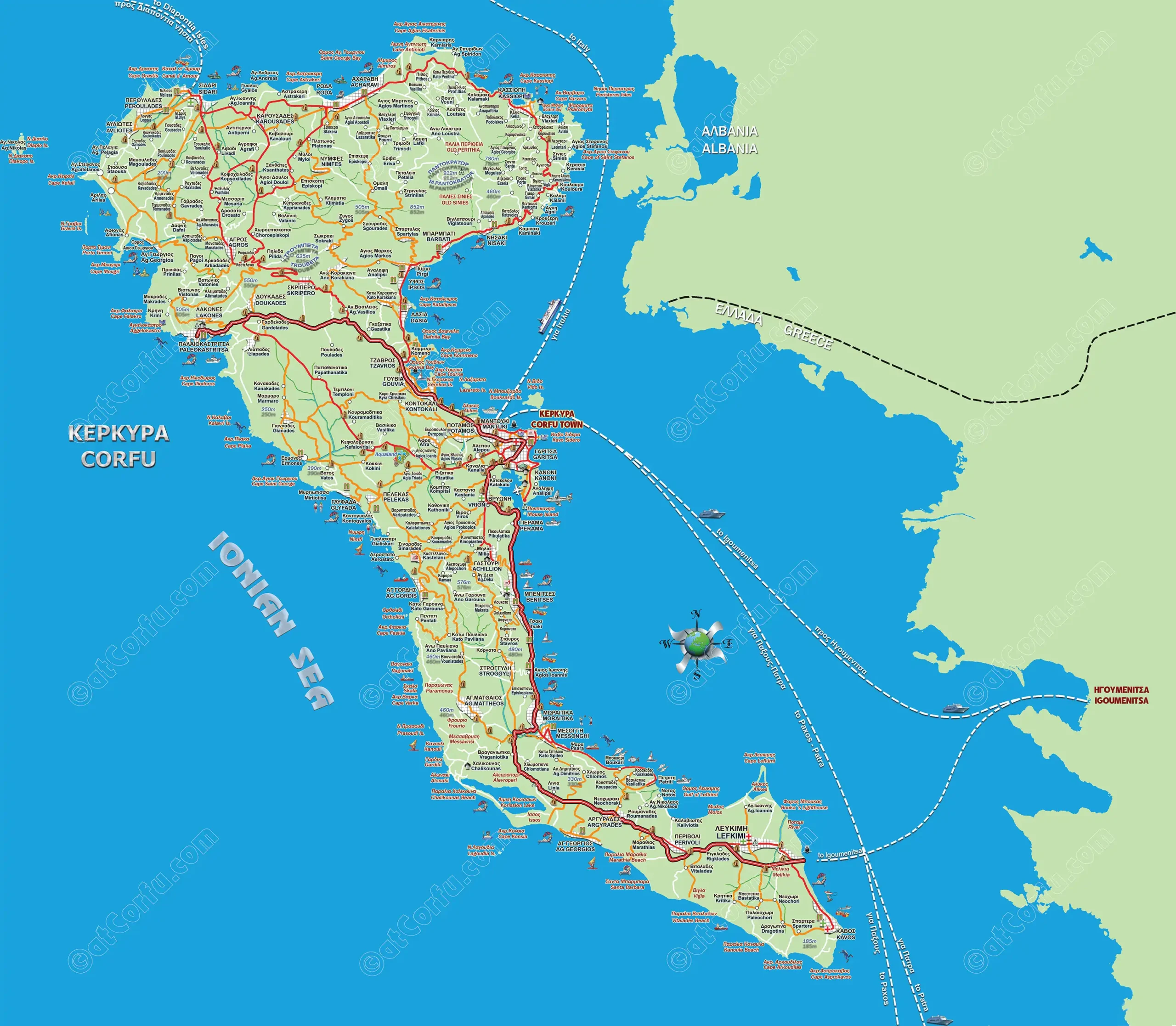
We have a large collection of detailed maps covering roads, villages, beaches, attractions, and key locations.
Find all Corfu mapsClimate and the Weather

Corfu is known as Greece’s greenest island, thanks to its mild, humid climate and winter rains. Summers are hot and dry, while winters are mild with rare snowfall, mainly on Mount Pantokrator. Average lows are around 5°C (41°F) in January and average highs around 30°C (86°F) in July, though some days exceed 40°C (104°F).
👉 Find out more about Corfu Weather: The Climate and Temperatures per Month
Geography & Environment
Mountains and Terrain – Is Corfu Hilly?

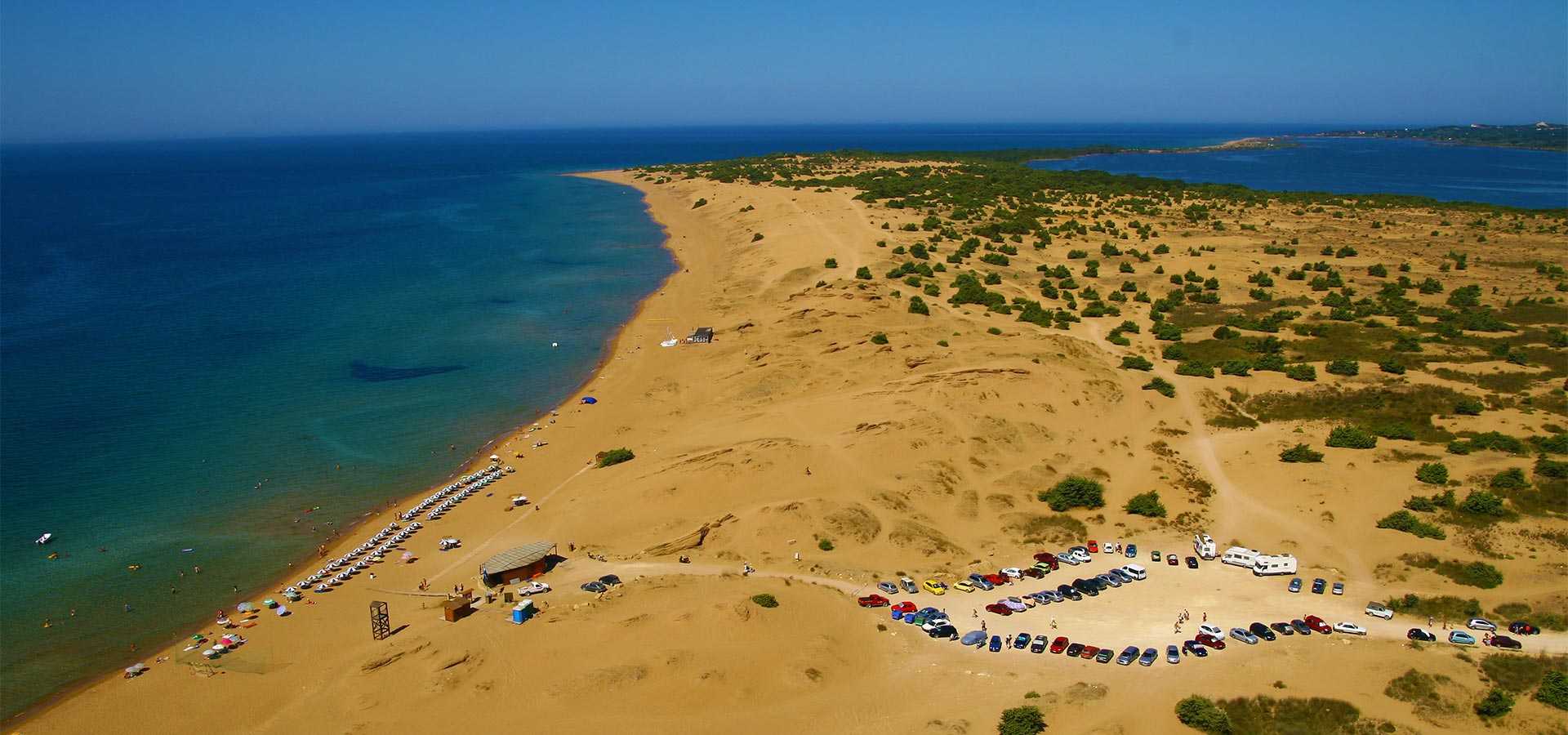
The island’s diverse terrain ranges from mountainous areas in the north to flatter regions in the south.
The northern part is dominated by Mount Pantokrator (906m) and Stravoskiadi peak (849m), with lower hills like Troumpeta (600m) extending westward.
The southern section is mostly flat, with hills near Chlomos and Saint Mattheos villages.
The central plain is scattered with small hills, enhancing its picturesque landscape and influencing local ecosystems.
Lakes and Rivers
- Lake Antinioti: Located on the north coast, this lake connects to the sea between Kassiopi and Roda and supports rich wildlife.
- Korission Lagoon: A salty lake near Halikouna Beach on the southwest coast, serving as a stopover for migratory birds.
- Sidari River: Originates from Mount Troumpeta and flows through Sidari.
- Other Rivers: Notable rivers include those near Potamos, Benitses, and Messonghi, as well as rivers at Gardenos Beach and Lefkimi.
These water bodies, along with Corfu’s waterfalls, enhance the island’s natural beauty and support diverse habitats, attracting nature enthusiasts.
Geological Formation
Corfu is primarily a sedimentary island formed from limestone, shale, and sandstone. Its landscape was shaped by marine and tectonic processes rather than volcanic activity.
The island is part of the Ionian geological region, which is seismically active, so minor earthquakes can occur occasionally, but Corfu itself has no volcanic origin.
Historic and Archaeological Significance of Corfu
Prehistoric Corfu
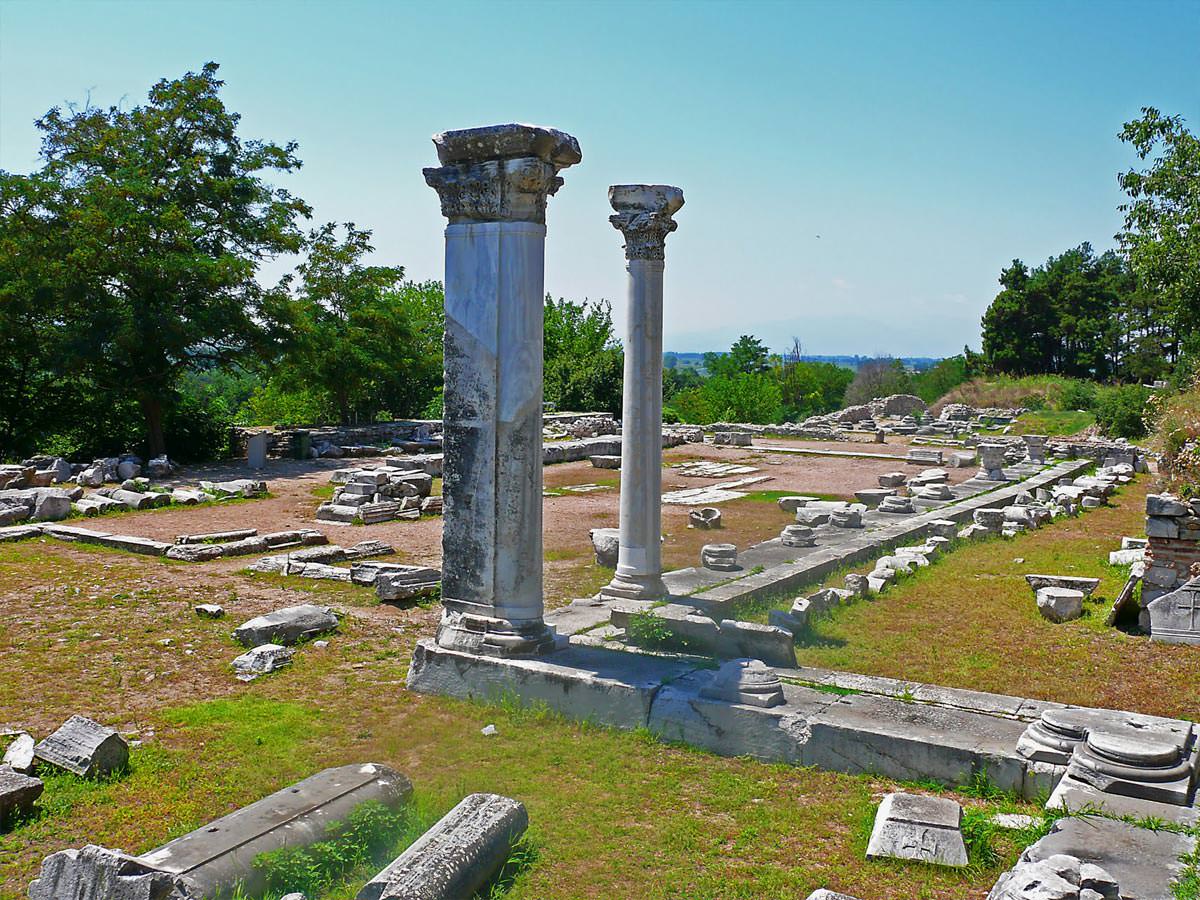
Corfu’s history stretches back to prehistoric times, with evidence of Neolithic occupation dating to around 6000 BCE. This ancient heritage highlights the island’s deep historical roots.
- Sidari (Northwest): Archaeological discoveries near Sidari have revealed one of the island’s oldest human settlements. Tools, pottery, and other artifacts shed light on the early inhabitants of Corfu.
- Chalikounas (Southwest): Further Neolithic sites near Chalikounas suggest that Corfu was inhabited long before the Dorians’ arrival, marking it as an early cradle of civilization in the region.
Corfu’s strategic location and fertile lands made it a desirable place for settlers throughout history, shaping the rich cultural and historical tapestry that endures today.
Corfu’s Naval History
Corfu was one of the leading naval powers of the Greek world, with about 120 triremes at the time of the Peloponnesian War.
Paleopolis and Mon Repos Estate
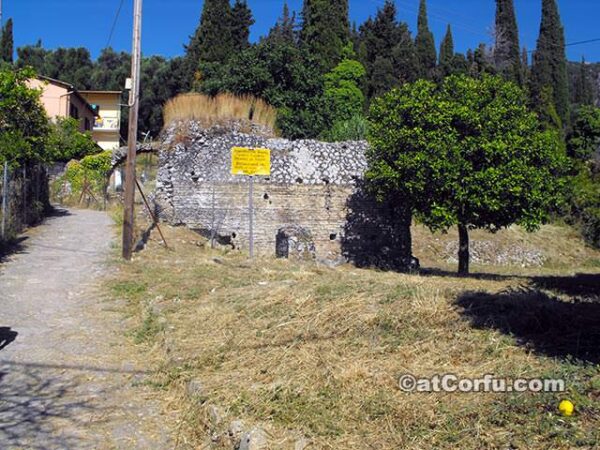
Located just south of Town on the Kanoni Peninsula, Paleopolis is a significant archaeological site. It contains the remains of the ancient city of Kerkyra, founded by Dorians from Korinth around 733 BCE.
Nearby is the Mon Repos estate, a neoclassical villa built during the British period, adding further historical depth to the area.
Temple of Artemis
The goddess Artemis, who was a protector of Corfu in antiquity, was honored with a large temple.
The temple’s pediment, known for its intricate carvings, is one of the most notable artifacts and is preserved in the Corfu Archaeological Museum.
Museums
- Museum of Asian Art: This Corfu Town museum showcases a rare collection of Asian art.
- Archaeological Museum: Displays ancient artifacts, including the renowned Gorgon pediment from the Temple of Artemis.
- Folklore Museums: Located in villages like Sinarades and Acharavi, these offer a glimpse into Corfu’s past through local costumes and tools.
Monuments, Attractions, and Historical Sites

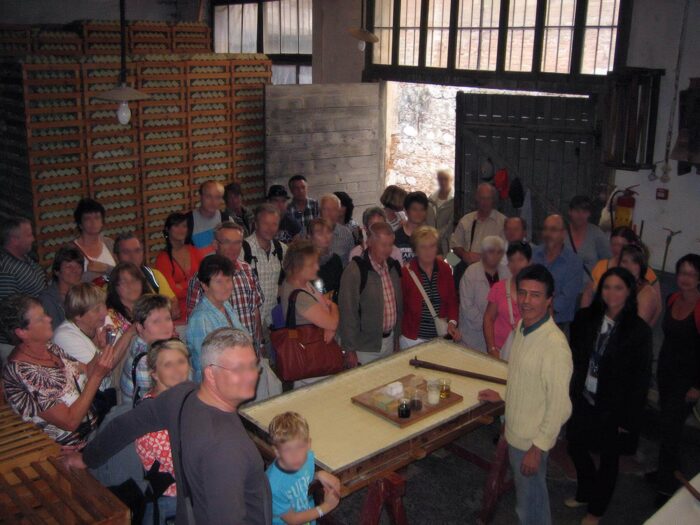
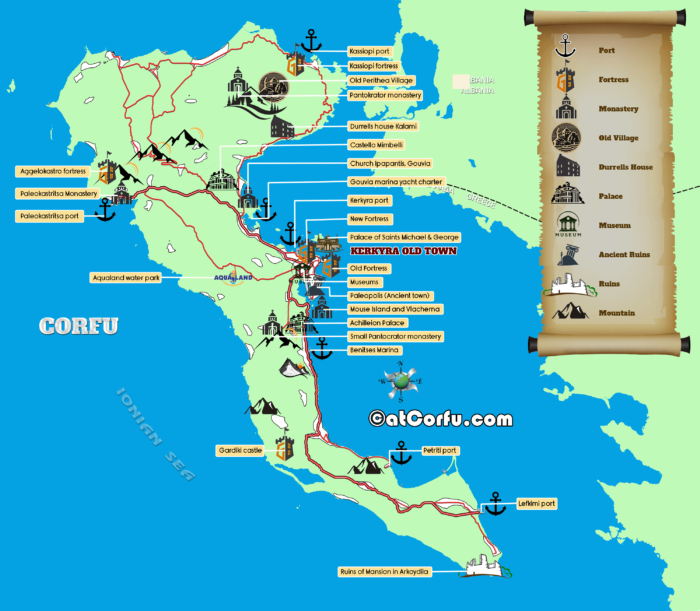
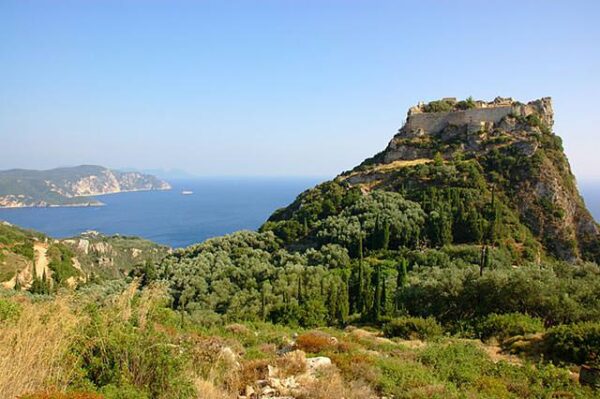
Corfu is rich in cultural landmarks, from the Byzantine fortress of Angelokastro to the Venetian Arsenal in Gouvia. Notable sites include Achilleion Palace, commissioned by Empress Elizabeth of Austria, and attractions like the Benitses Sea Museum and the Kynopiastes Olive Museum.
👉 See all Historical Sites of Corfu.
👉 See many of those on this map of Corfu’s historical sites.
Corfu Old Town (Kerkyra)
The vibrant capital blends history with modern life. As a UNESCO World Heritage site, it features Venetian architecture, narrow cobbled streets, and stunning sea views.
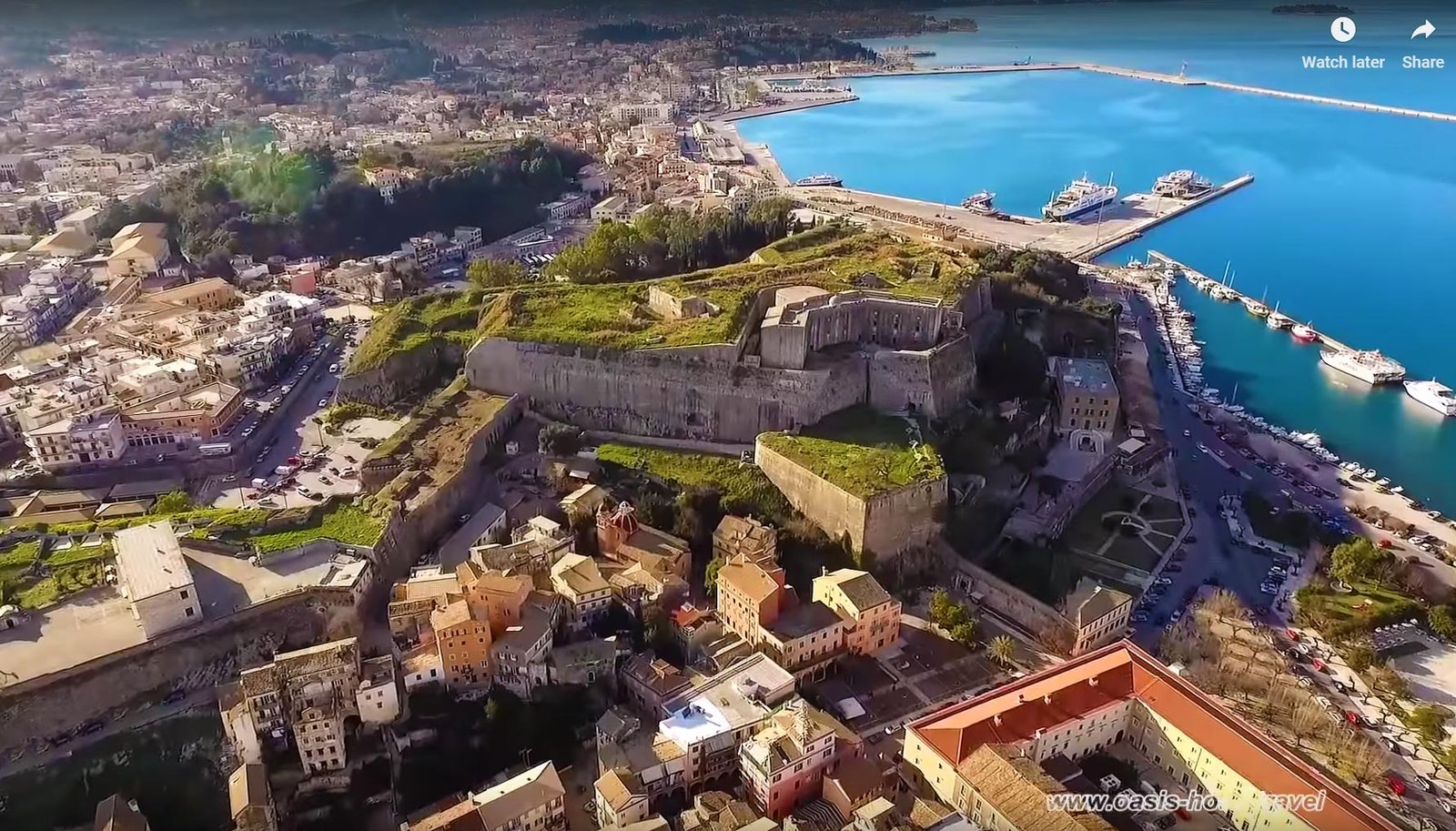
- Old Town: UNESCO-listed with Venetian architecture, historic squares, and narrow alleys.
- Spianada Square: Greece’s largest square, ideal for strolling and enjoying cafes.
- Liston Promenade: Inspired by Paris’s Rue de Rivoli, lined with cafés and restaurants.
See extensive information on Corfu Town
Activities to Do in Corfu
- Beach Hopping: Explore Glyfada, Agios Gordios, and Myrtiotissa.
- Water Sports: Snorkeling, scuba diving, and sailing.
- Hiking: Corfu Trail and Korission Lagoon.
- Cultural Experiences: Visit museums and historical sites.
- Wine Tasting: Sample Corfu’s unique wines.
- Unusual things to do in Corfu
Mouse Island and Vlacherna
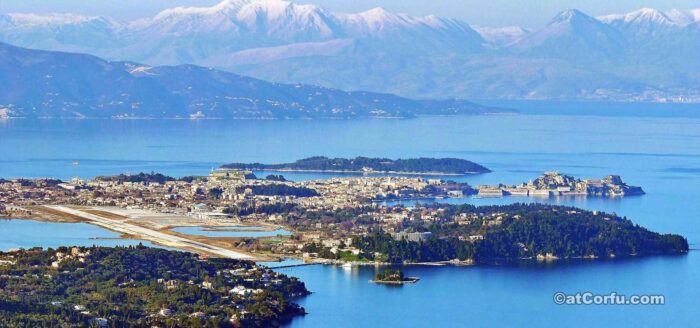
This iconic view features the whitewashed Vlacherna chapel sitting on a tiny jetty, with the lush, cypress-tree-covered islet of Pontikonisi (Mouse Island) resting just behind it in the bay. Located right next to the airport runway in Kanoni, it is the most famous postcard location in Corfu and a perfect spot to watch planes land directly over the water.
Religious Sites
- Monasteries and Churches: Corfu is home to beautiful religious sites like the Monastery of Paleokastritsa and the Church of St. Spyridon, known for their serene atmosphere and stunning architecture.
Corfu Monuments & Sights
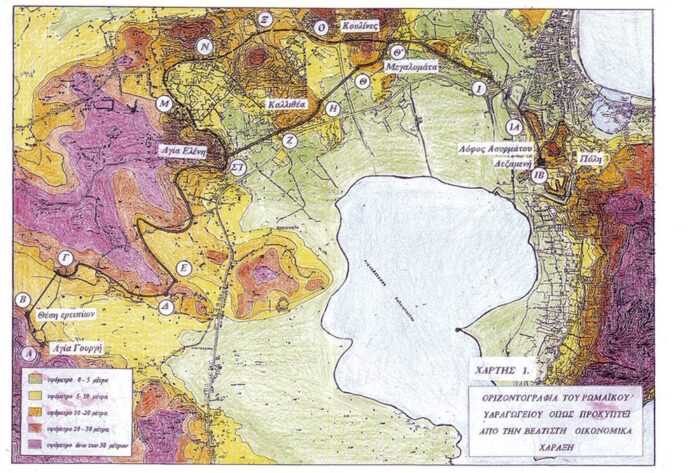
Cultural Experiences in Corfu
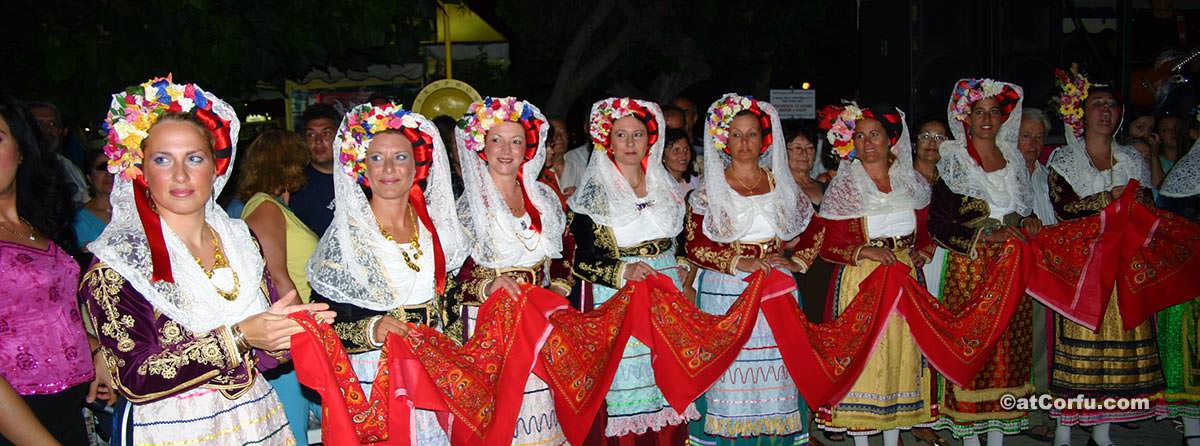
Corfu’s rich cultural heritage offers visitors a variety of immersive experiences, from festivals and arts to historical landmarks and traditional cuisine. Below are some highlights.
Local Festivals and Events
- Easter Celebrations: Famous for grand processions, music, and the unique “pot-throwing” tradition in Corfu Town.
- Corfu Carnival: Vibrant parades, colorful costumes, and music reflecting Venetian influence.
- Music and Dance Festivals: Summer festivals feature classical concerts, traditional Greek music, and international performances.
👉 Learn more about Corfu Festivals and Events
👉 Use our Interactive Corfiot Dialect Application to search among 5000 old Corfiot words.
Traditional Corfiot Cuisine
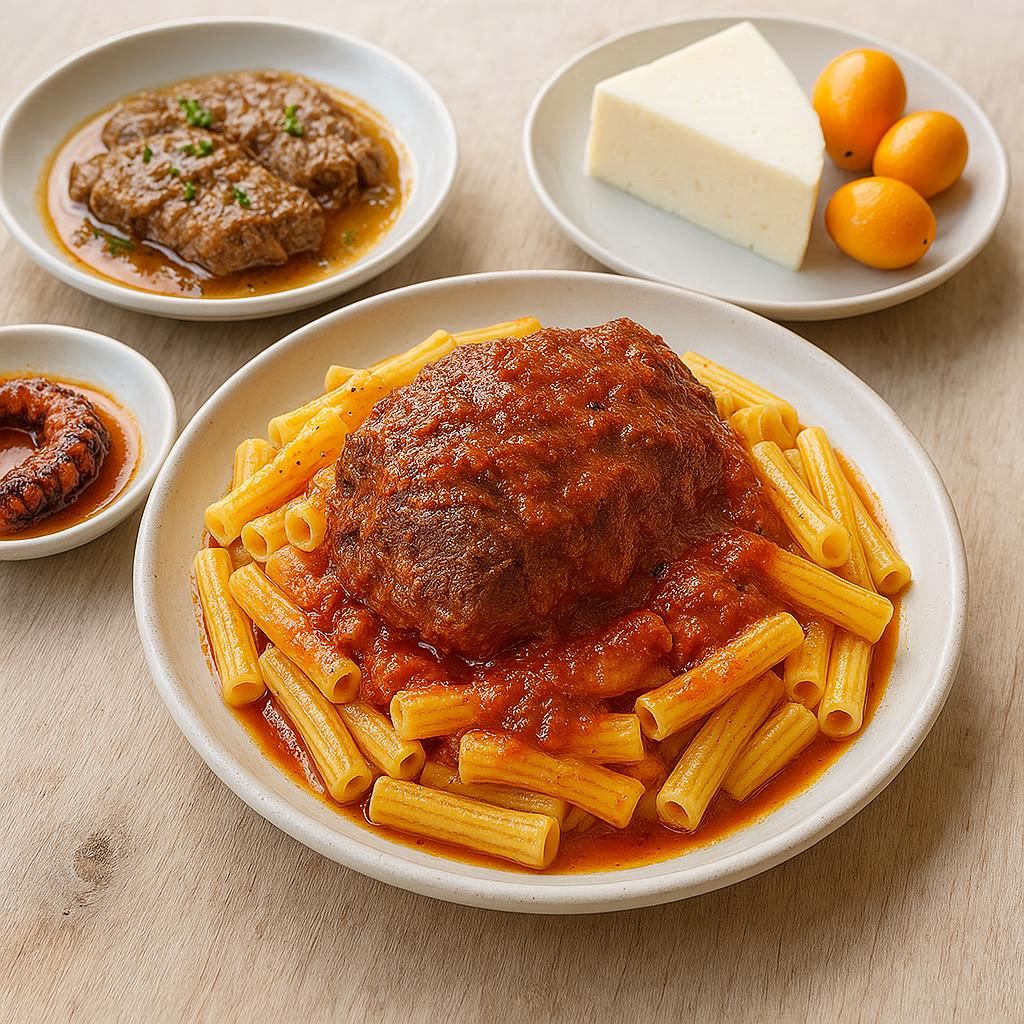
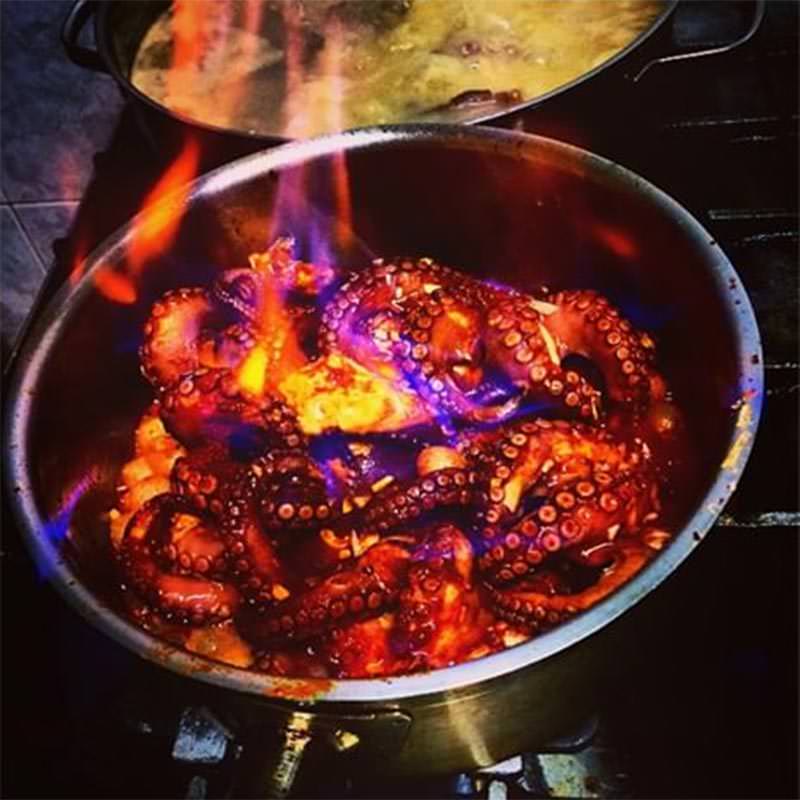
A complete Corfu travel experience includes savoring the island’s cuisine, a delightful blend of Greek and Venetian flavors. Whether you prefer fine dining or a casual seaside meal, there’s something for every palate.
Nightlife
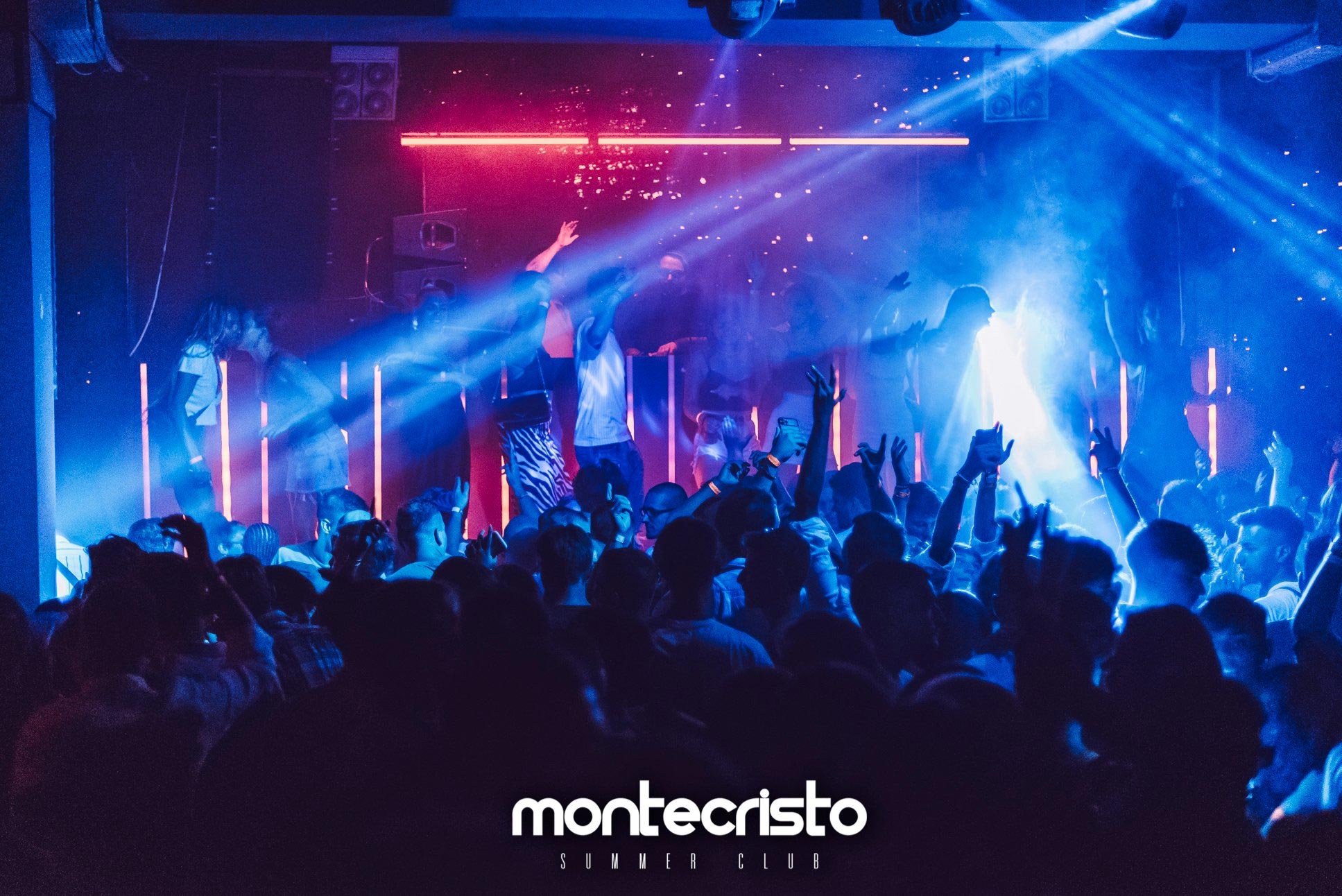
Whether you’re looking to dance the night away or enjoy a casual evening out, the nightlife here has something to offer for all preferences.
👉 Read: Corfu at Night: Is Corfu a Party Island? Clubs & Bars
Arts and Crafts
- Handmade Crafts: Explore markets for local pottery, lace, and olive wood carvings, offering unique souvenirs.
- Icon Painting: Visit workshops where local artists craft religious icons, an important tradition in Corfu’s Orthodox Christian culture.
Administrative Division

In 2011, the “Kallikrates” reform merged Corfu into a single municipality, but the 2018 “Kleisthenes” reform divided the island into four municipalities:
- Metropolitan Municipality of Central Corfu and Diapontian Islands: Population 68,500, includes Corfu Town and nearby islands.
- Municipality of the North: Population 17,200, covering areas like Saint George and Esperion.
- Municipality of the South: Population 15,700, including Lefkimi and Melitieon.
- Municipality of Paxos: Population 2,440, focused on Paxos Island.
These reforms streamlined local governance and improved efficiency.
Useful Telephone Numbers and Tips
- Emergency Services (Police, Fire, Ambulance): 112
- Police: 100
- Fire Department: 199
- Ambulance Service: 166
Medical Services
- Corfu General Hospital: +30 26610 88200
- First Aid (Emergency Medical Assistance): +30 26610 28258
- Pharmacy On-Call Service: +30 26610 41100
Transportation
- Corfu International Airport “Ioannis Kapodistrias”: +30 26610 89600
- Corfu Port Authority: +30 26613 65200
- KTEL Corfu (Intercity Bus Service): +30 26610 30627
- Taxi Service: +30 26610 33811
Tourist Information
- Tourist Police: +30 26610 39590
- Corfu Tourist Information Office: +30 26610 37633
Other Useful Numbers
- Municipality of Corfu: +30 26613 62100
- Public Power Corporation (DEI): +30 26610 38000
- Water Supply and Sewerage Company (DEYAK): +30 26610 39910
These numbers can be very helpful for both residents and visitors in various situations.
Helpful Things to Know
- Language: Greek is the official language, but English is widely spoken in tourist areas.
- Currency: Euro (€).
- Etiquette: Greeks are known for their hospitality. Greeting people with a handshake or kiss on both cheeks is customary.
- Religion: Greek Orthodox is the predominant religion. Respect local customs, especially when visiting churches and monasteries.
- Festivals: Easter is the most important holiday, celebrated with processions and feasts. The Corfiot Carnival and various music festivals are also popular.
Practical Tips for Visitors
- Transportation: Renting a car is the best way to explore the island. Buses are available but may be less frequent in rural areas.
- Safety: Corfu is generally safe, but take standard precautions against petty theft.
- Health: Tap water is safe to drink only in some areas such as Benitses. Local advice is usually to drink bottled water. Healthcare facilities are available in Corfu Town and the larger villages.
- Electricity: The standard voltage is 230V, and the plugs are Type C and F.
Unique Experiences to Look for
- Olive Oil Tours: Visit olive groves and learn about the production process.
- Boat Trips: Explore nearby islands like Paxos and Antipaxos, or take a day trip to Albania.
- Traditional Villages: Visit villages like Pelekas and Lakones to experience local life.
- Cycling Tours: Discover the island’s beauty on two wheels.
- Local Markets: Explore markets in Corfu Town for local products and souvenirs.
Environment and Biodiversity
Corfu’s diverse environment spans lush forests, green mountains, and vast sandy beaches reminiscent of the Sahara. Each area hosts unique ecosystems, inspiring writers, artists, and cultural figures worldwide.


Photos by Pascal Debrunner, HP Koch, Erik Karits, and Ijon Tichy on Unsplash
The landscape is incredibly varied, offering everything from green mountainous regions to picturesque sandy beaches.
The island is home to a rich array of flora and fauna, with unique ecosystems supporting diverse species of birds, insects, and wildlife, some of which are not native to the Mediterranean.
This diversity captivated the naturalist Gerald Durrell, who extensively documented Corfu’s biodiversity during his family’s stay on the island from 1935 to 1939.
Among the island’s most dominant trees is the olive, which forms a key part of Corfu’s landscape, alongside abundant citrus fruits. Tall, slender cypress trees, a reminder of Corfu’s Italian heritage, are also widespread across the island.
Notably, the island receives one of the highest rainfall amounts in Greece, resulting in its fertile soil. In theory, this allows the island to be self-sufficient in agriculture.
However, the rise of tourism and other economic factors has shifted the local population toward other forms of livelihood.
Wrapping Up
Corfu is captivating visitors with its rich history, vibrant multicultural heritage, and breathtaking landscapes.
From its enchanting medieval old town to its stunning, expansive beaches, it offers a unique and unforgettable experience.
The longer you explore, the deeper you fall in love with its charm and beauty, making it a truly exceptional place in Greece.
Without a doubt, Corfu is an island well worth visiting. To explore it and understand it, two or three weeks are not enough. It is like a great work of art that reveals itself more and more the longer you look at it.
Frequently Asked Questions About Corfu
What is the best time of year to visit Corfu?
The best time to visit Corfu is from May to September when the weather is warm and sunny. Spring is perfect for hiking and sightseeing with fewer crowds, while July and August offer peak beach weather and vibrant nightlife.
Why does Corfu have two different names?
The island is called Corfu internationally, which comes from the Byzantine word Koryfo, meaning “peaks.” Locally, Greeks call the island Kerkyra, named after the mythological nymph Korkyra. According to legend, the sea god Poseidon fell in love with Korkyra and abducted her, bringing her to the island.
What are the best beaches to visit in Corfu?
Corfu features diverse coastlines with exceptional beaches. The west coast is famous for dramatic scenery like Paleokastritsa, Porto Timoni, and Glyfada. If you prefer sandy shores and family-friendly waters, look into northern options like Sidari and Acharavi.
How do you get to Corfu Island?
You can easily reach Corfu by air or by sea. Ioannis Kapodistrias International Airport handles domestic flights from Athens year-round and direct seasonal flights across Europe. Alternatively, frequent daily ferries connect Corfu Port to Igoumenitsa on the Greek mainland.
Comments