

Greek myths are not only about gods and heroes. They are also full of monsters: giants, serpents, hybrids, sea beasts, ghosts and demons. They are the obstacles heroes must overcome, the shapes the Greeks gave to fears they could not explain, and sometimes a punishment sent by the gods.
This guide meets them by type, from the family of Typhon to the demons of the night, with a link to the full story wherever there is one.
Where the Monsters Come From: Typhon and Echidna
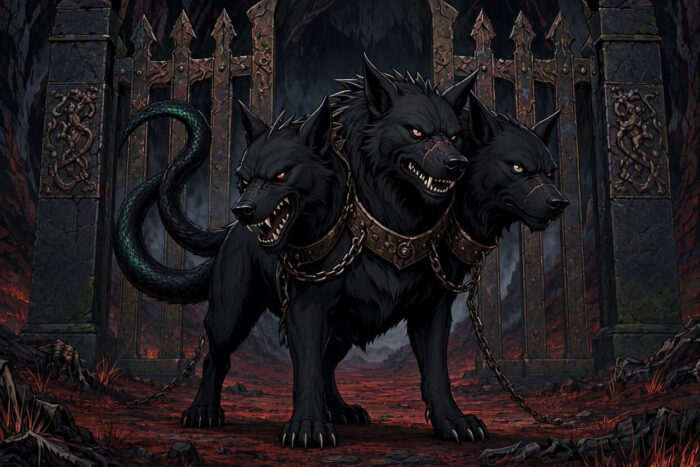
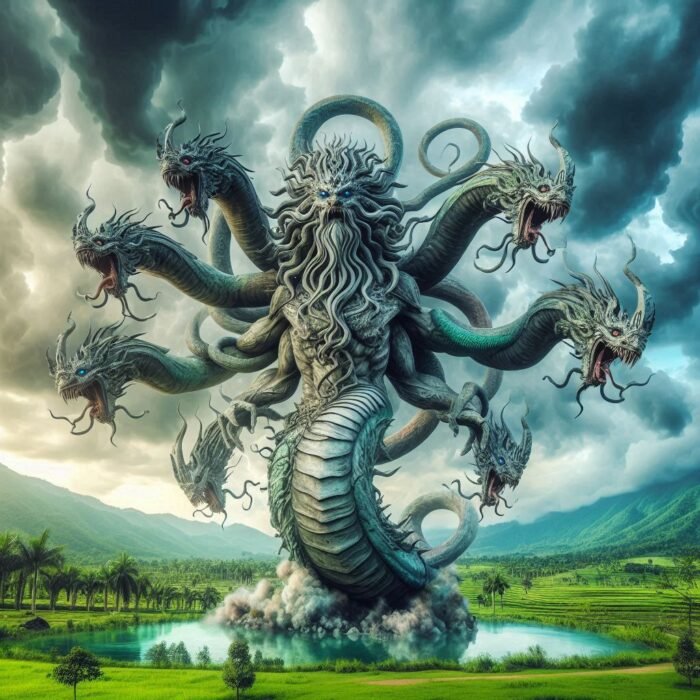
Many of the most famous monsters belong to one family. In Hesiod’s Theogony, the storm giant Typhon, who challenged Zeus himself, and the half-woman, half-serpent Echidna are the parents of a dreadful brood that includes Orthus, the watchdog of Geryon’s cattle, Cerberus, the guardian of the underworld, and the Hydra of Lerna. Hesiod traces the Chimera, the Sphinx and the Nemean lion back to the same stock.
The Greeks made them children of chaos, which is why the heroes who defeat them are doing more than winning a fight: they are bringing order to the world. For the beginning of that story, see Greek Theogony Explained: Titans, Gods and the Creation Story.
Monsters the Heroes Had to Defeat
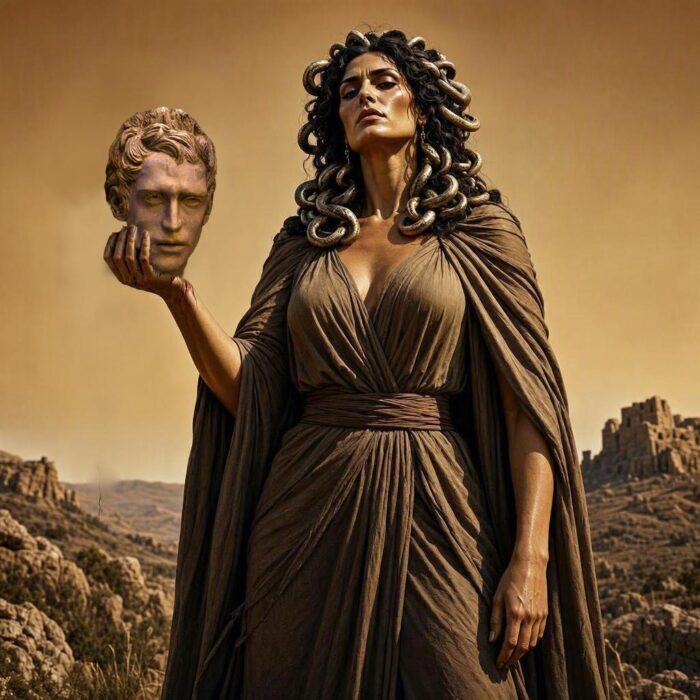
Most monsters exist to be killed by a hero. Heracles kills the Nemean lion and the Hydra and drags Cerberus up from the underworld, as told in The 12 Labours of Hercules. Perseus beheads the Gorgon in Medusa: From Woman to Monster to Symbol of Resistance and later rescues Andromeda from a sea monster, in Perseus: Slayer of Medusa and Savior of Andromeda. Theseus faces the bull-headed Minotaur in the Labyrinth of Crete, in Theseus and the Minotaur. Bellerophon kills the Chimera from the back of Pegasus, and Oedipus defeats the Sphinx with an answer to her riddle.
Several of these places can still be visited, among them Lerna, Nemea and Cape Tainaron. See Mythological Places in Greece You Can Visit Today.
Sea Monsters and the Monsters of the Odyssey
The sea is the home of some of the most dangerous creatures in the myths. In the Odyssey, Odysseus has to steer between Scylla and Charybdis, resist the Sirens, blind the one-eyed shepherd Polyphemus, and lose most of his fleet to the cannibal giants of the Laestrygonians. The whole voyage is in The Odyssey category.
Giants, Hybrids and Other Strange Beings
Some monsters are less like beasts than like old and powerful races. The Gigantes rose against the Olympians, and the Hecatoncheires, who each have a hundred arms, helped Zeus win the war against the Titans. The Cyclopes appear in two very different forms: as divine craftsmen in Hesiod, and as savage shepherds in the Odyssey. Between the human and the animal stand the hybrids: the centaurs, the satyrs, the harpies and the griffins. Many of them are introduced in the main Greek Mythology guide.
If you want the creatures that most people have never heard of, take the journey down the seven chambers in Meet Empousa, Fantasos, and 4 Monsters of Greek Mythology.
Spirits and Demons
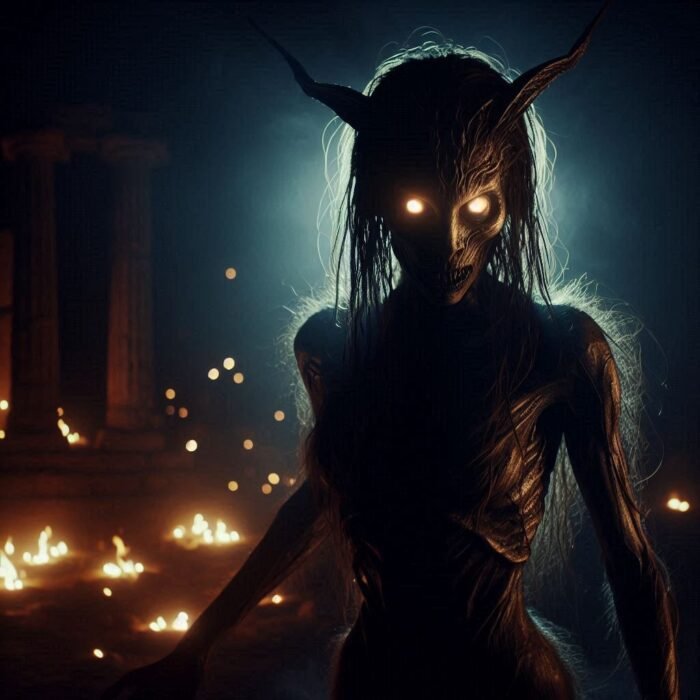
Not every monster has a body. The Greeks also feared the spirits of the night and of the dead. Empousa, the shapeshifting demon with one leg of bronze, was said to be a daughter of Hecate, and the Lamiae were vampiric women who preyed on the young. The Keres were spirits of violent death, and the Erinyes pursued murderers without rest. Many of the abstract spirits of deceit, sleep and dreams belong to Nyx’s brood, described in The Children of Nyx in Greek Mythology.
Why the Greeks Told Stories About Monsters
Monsters served several purposes. They were barriers that tested a hero’s courage and wit, personifications of fears such as storms, death and the unknown, and warnings against pride and greed. Many are liminal figures, standing on the edge between human, animal and divine, and that is what makes them uncanny. When a hero kills one, the story is rarely just about a fight. It is about the triumph of order over chaos.