



⚡ Quick Guide: The Complete Children of Nyx (Goddess of Night)
🌌 THE DARK PRIMORDIAL OFFSPRING
- The Firstborn (With Erebus): Sired with the God of Darkness, Nyx gave birth to Aether (Light) and Hemera (Day), balancing cosmic dualities.
- The Inescapable Fates: Mother to the Moirai (Clotho, Lachesis, and Atropos), the absolute arbiters of mortal and divine destiny.
- Sleep and Death: Gave birth to the twin brothers Hypnos (Sleep) and Thanatos (Peaceful Death), dwelling in the dark Underworld.
🌋 CHALKING THE PATH OF MORTAL SUFFERING
- The Daemons of Doom: Nyx independently birthed Moros (Doom), Ker / Keres (Violent Destruction), and Eris (Strife/Discord).
- Emotional & Cosmic Forces: Mother to Nemesis (Retribution), Oizys (Misery), Momus (Blame), Geras (Old Age), and Philotes (Affection/Friendship).
- Deceit and Dreams: Sired Apate (Deceit) and the Oneiroi (The Pantheon of Prophetic Dreams).
The children of Nyx include Moros (Doom), Thanatos (Death), Hypnos (Sleep), Nemesis (Retribution), Eris (Strife), and other primordial deities in Greek mythology.
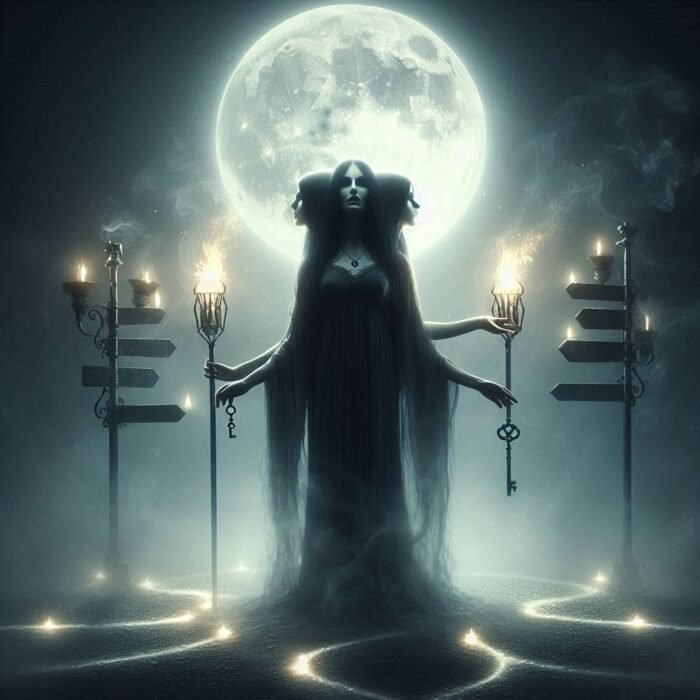
In Greek mythology, Nyx, the Primordial Goddess of Night, stands among the oldest divine powers described in the Theogony. From her darkness emerged not just gods, but the fundamental forces that shaped existence—death, sleep, fate, suffering, and conflict itself.
Some of her children, such as Aether and Hemera, were born through her union with Erebus (Darkness). Yet most arose from Nyx alone, embodying the unseen structure of the world and influencing both mortals and gods alike.
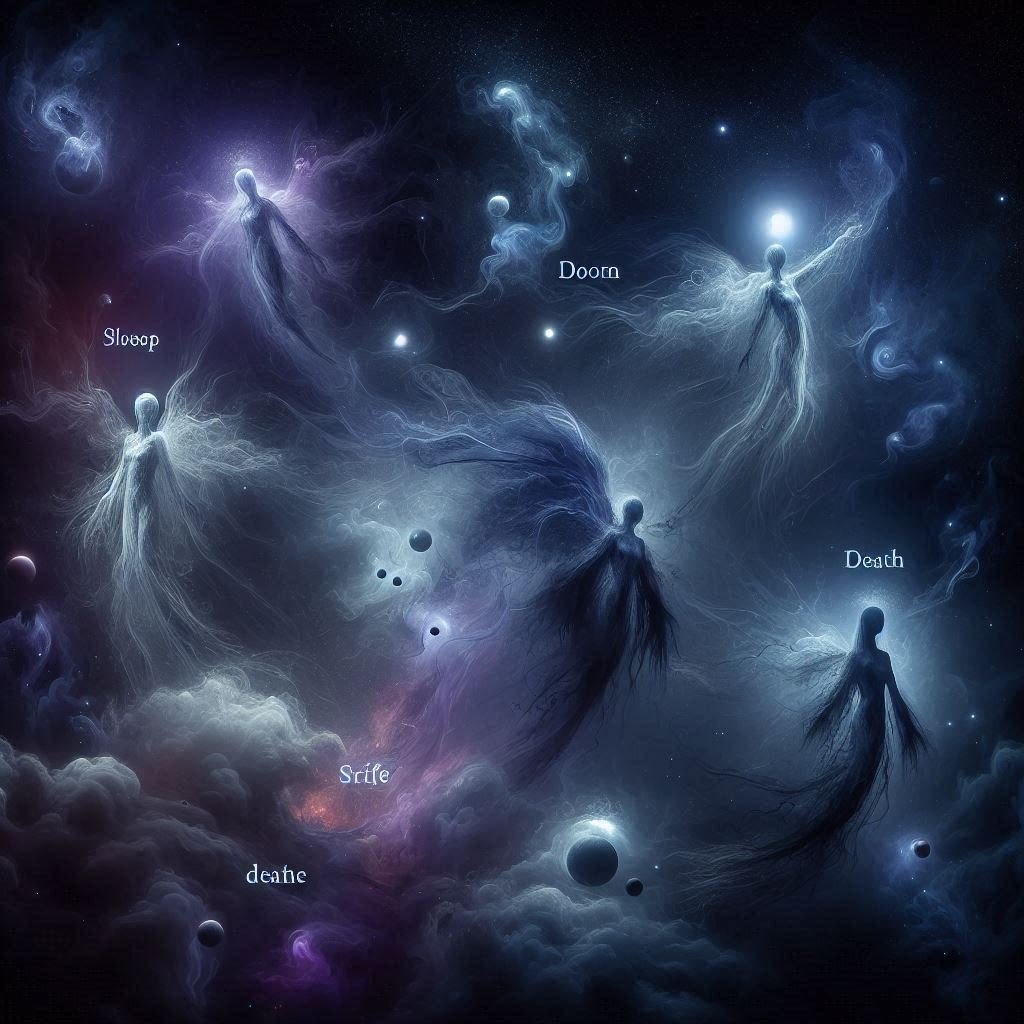
Nyx children
Before the Olympians, before even the Titans, there was Nyx, the Primordial Night. From her vast darkness came the first divine powers—not shaped like mortals, but existing as pure forces that ruled emotion, destiny, and death itself. Some were born with Erebus (Darkness); most arose from Nyx alone, each expressing an aspect of her infinite night.
With Erebus
- Aether (Αἰθήρ) – The divine brightness of the upper air, essence of light and clarity.
- Hemera (Ἡμέρα) – The spirit of Day, the opposite breath to Night’s shadow.
Born from Nyx Alone
- Moros (Μόρος) – Doom
The unbreakable law of destiny; the end that awaits every being. - Thanatos (Θάνατος) – Death
The sacred stillness that ends life and returns all things to silence. - Hypnos (Ὕπνος) – Sleep
The divine rest that mirrors death but restores the living. He had his own children too.- Phorkys – (sometimes listed among Hypnos’ children)
- Phobetor (Ikelos) – The nightmare spirit, appearing as beasts or fears.
- Ikelos – Alternative name for Phobetor in some sources.
- Phantasos (Phantasy) – The spirit of surreal, fantastical visions.
- The Oneiroi (Ὄνειρα) – Dreams
The drifting powers that weave images in mortal minds; among them, Morpheus, Phobetor/Ikelos, and Phantasos. - Nemesis (Νέμεσις) – Retribution
The divine balance that humbles arrogance and restores justice. - Momos (Μῶμος) – Criticism or Mockery
The voice that reveals fault and folly, even among gods. - Philotes (Φιλότης) – Affection
The sacred bond of love, friendship, and unity among beings. - Geras (Γῆρας) – Old Age
The divine wear of time that none may escape. - Eris (Ἔρις) – Strife
The restlessness that stirs competition and conflict. - Apate (Ἀπάτη) – Deceit
The subtle power of illusion and falsehood. - Oizys (Ὀϊζύς) – Misery or Suffering
The shadow of pain that follows mortal awareness. - The Moirai (Μοῖραι) – The Fates
The divine order of life and death—Clotho spins, Lachesis measures, Atropos ends. - The Keres (Κῆρες) – Death Spirits
The fierce energies of violent death, haunting battlefields, and endings without peace.
Legacy of Nyx and Her Offspring
The children of Nyx form the invisible framework of the world described in Greek mythology. They are the divine currents behind emotion, justice, mortality, and chaos—forces that neither Olympus nor the underworld could escape. In Theogony, their presence marks the moment when darkness began to take shape and name, giving order to the unseen laws that still govern gods and mortals alike.
Through them, Nyx remains eternal: a presence felt more than seen, dwelling in every silence, dream, and shadow. To explore how these ancient powers connect with the later gods and heroes, continue with the story of Theogony and the unfolding genealogy of creation.

Comments