



Corfu is a treasure trove of history, where every street, fortress, palace, and monument tells a story. From the UNESCO-listed Old Town to iconic palaces, fortresses, and ancient ruins scattered across the island, these sites and points of interest offer a journey through Corfu’s rich architectural and cultural heritage.
Here is our list of the more famous historical sites, monuments, and attractions in Corfu that you can use to enjoy your stay to the full.
You will be surprised by the large number of monuments you can find in Corfu. This magic island offers natural beauty and many attractions, monuments, and sights scattered around, particularly inside the old town.
So, there is always something for everyone to see and visit.
We can assure you that we searched a lot, and we are certain that our list will definitely help you. After all, we live permanently on the island, and we know better than anyone what can make your trip to Corfu most enjoyable.
Let’s start then.
Sites in the old town of Kerkyra
Kerkyra is the historical center of the island and the first view of Corfu for those who reach the island from the sea by ferry.
Without a doubt, the old medieval city of Corfu, where Venetian influences dominate, is the biggest attraction of the island, as it is a UNESCO World Heritage Site as a whole.
Even if you stay in another tourist resort, you should take the time to visit the town at least for a day.
Here you will find the most important sites and monuments on the island. And you will get lost inside the narrow streets of the old city. Time will pass quickly before you realize it.
Some of the Sights to see here are the following:
1. The Awe-Inspiring Old Fortress

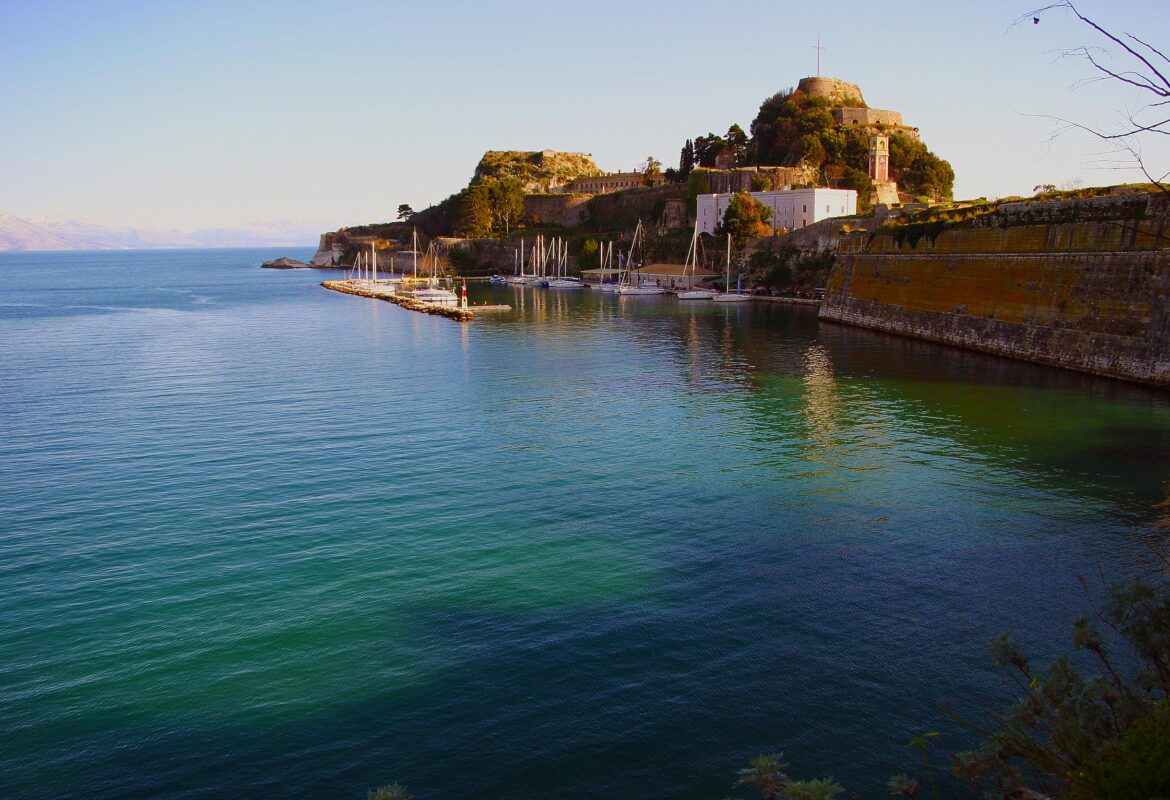
One of Corfu’s most important monuments, the Old Fortress is a rocky peninsula first fortified by the Byzantines and later reinforced by the Venetians, who dug a moat that turned it into an island. Inside you’ll find the British-built church of St. George, the old English hospital and a café, plus the best views over the town, the harbor and the mountains of Epirus.
The main entrance never closes, so you can explore the bastions any time.
Find all the answers on the page about Corfu Old Fortress
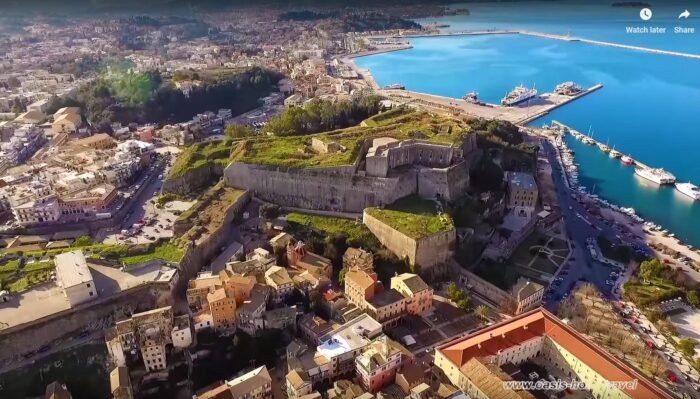
2. The Majestic New Fortress
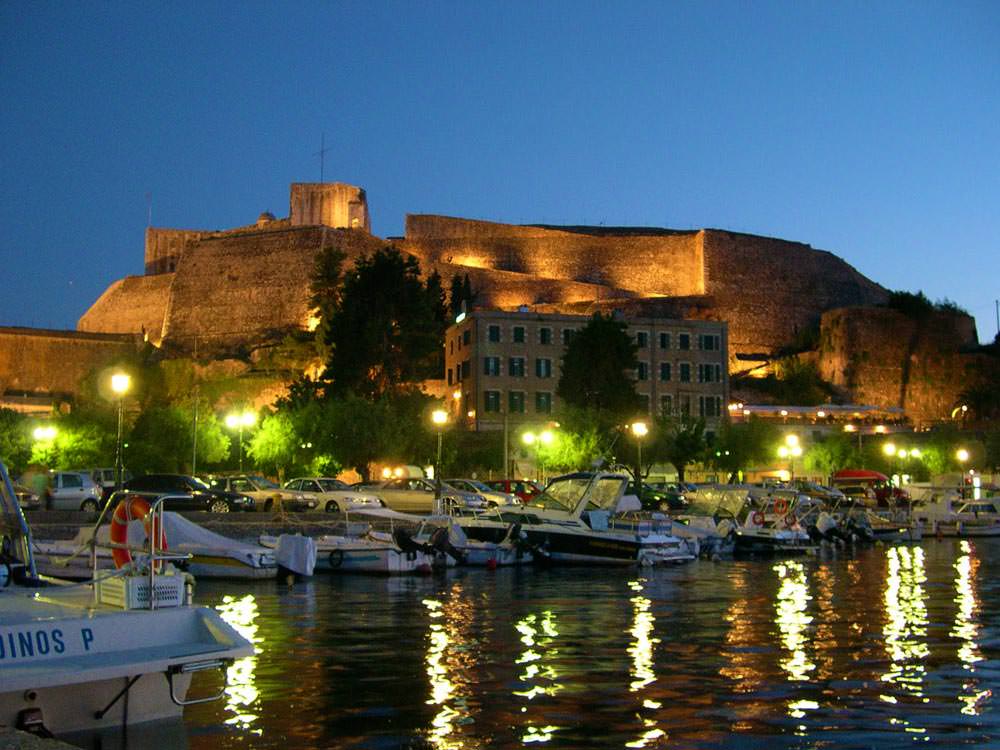
Built by the Venetians between 1576 and 1645 on the hill of San Marcos, the New Fortress was built by the town’s own inhabitants to defend against the Ottoman threat. Its walls once ran south to Garitsa Bay.
Today you can climb the bastions for views over the town and the sea, visit the Museum of Ceramic Art in the old barracks, and catch concerts and exhibitions in summer. The naval station still operates inside.
Find them all on the page about Corfu new fortress
3. The Palace of Saints Michael and George
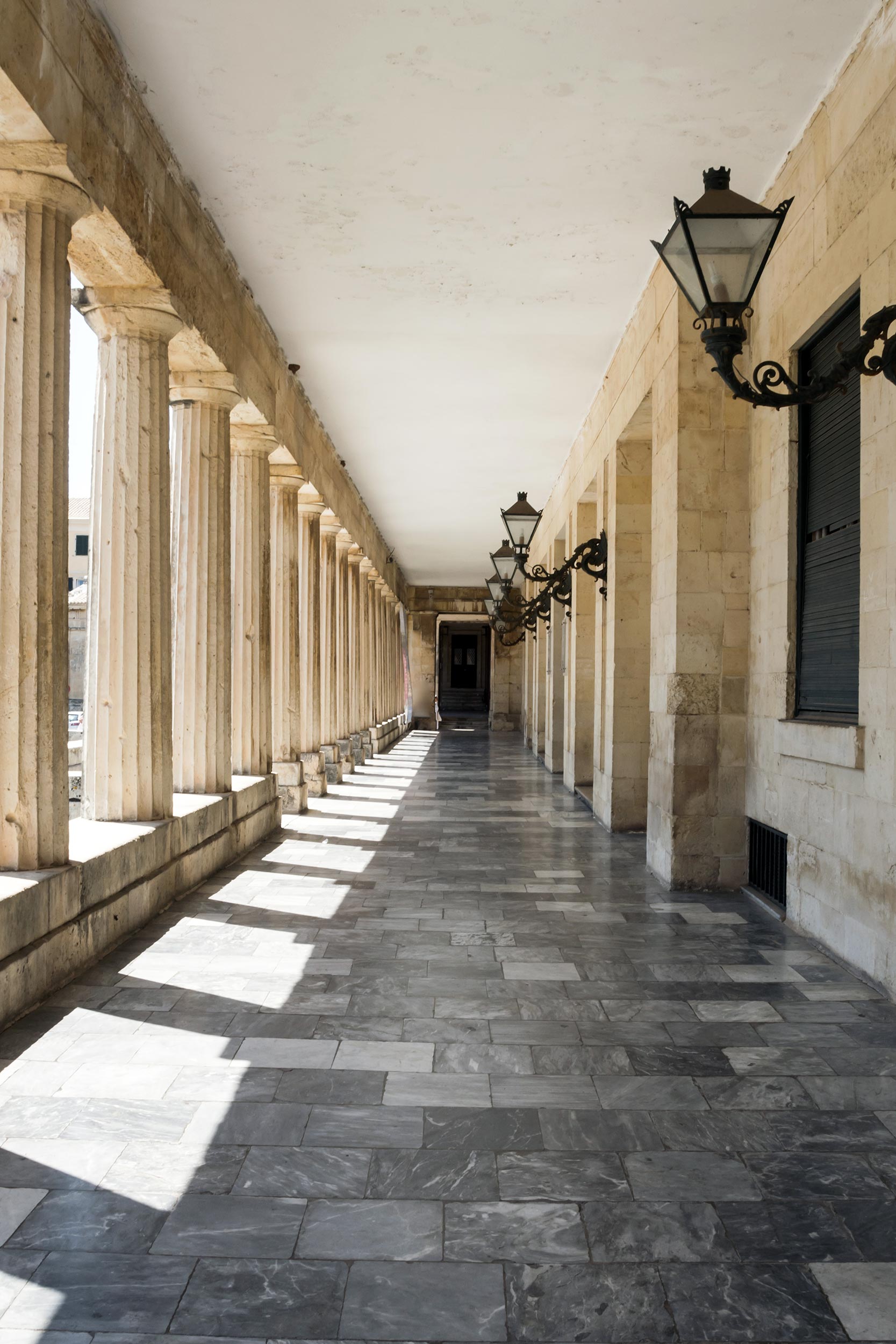
Begun in 1819 as a residence for the British High Commissioner, Sir Frederick Adams, this Georgian-style palace was designed by Colonel Sir George Whitmore and is described as the finest example of Regency architecture outside Britain.
It later served as the summer residence of the former Greek royal family and hosted a European Union summit in 1994. Today it stands on the north side of the Esplanade and houses the Asian Art Museum and the Municipal Gallery.
Palace of Saint Michael and George4. Corfu Town Hall

In 1663, the construction of the gallery of nobles “loggia nobili” was begun, and took almost 30 years to complete.
This beautiful building housed the famous San Giacomo theatre. Later, Nikolaos Mantzaros, composer of the Greek national anthem, was the director of the orchestra.
Today, the building has retained its beauty and has become the home of the Town Hall. It is located at the intersection of Eugene M. Voulgareos and M.Theotoki streets.
5. The Ionian Parliament building
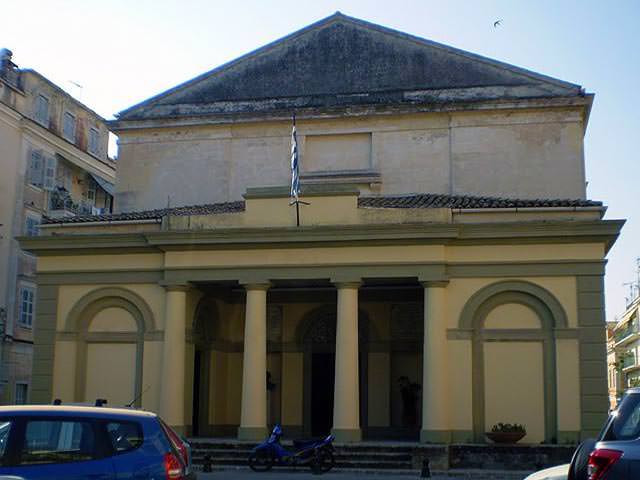
At the intersection of Napoleon Zabeli and Moustoxidi streets is the building of the Ionian Parliament.
Here the representatives of the people of the Ionian Islands voted for union with Greece, which was eventually ratified by a resolution of the Ionian Islands on 23rd September 1863.
The building was designed by Ioannis Chronis in 1855 in a neoclassical style with a distinctive entrance of Doric columns.
It was restored in 1978 and, since then, has been the home of the Museum devoted to the struggle of the people of Heptanisa (Ionian Islands) for freedom.
We hope that it will be restored to its previous glory and officially become the Ionian Parliament.
6. The Ionian Academy
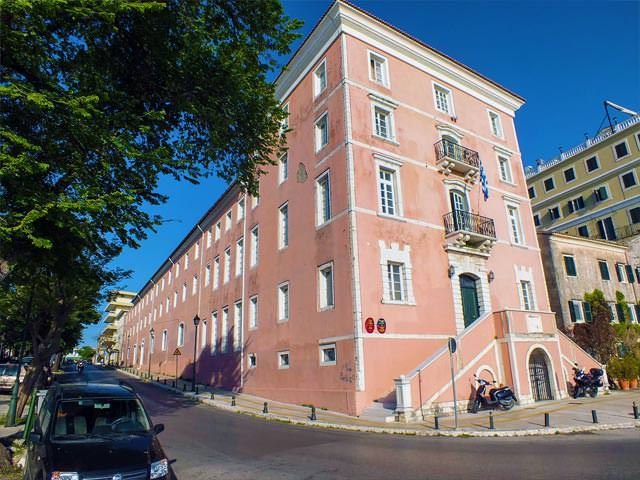
The intersection of Akadimias and Kapodistriou streets at Southwest Upper Square of Spianada was one of the entrances to the city during the era of Venetian rule.
There, the General Provveditore of the city (as he was called then), Grimani Correr, started to build a building to be used as a barracks.
In 1823, following a resolution of the Ionian parliament, with the help of Lord Frederick Guilford, the Ionian Academy was founded, the first Greek university, which until 1841 was hosted in a government building in the old fortress.
In 1841, the university moved to the former Grimani Correr barracks, which from then on was named the Ionian Academy; the schools of philosophy, law, and medicine, and later the polytechnic, obstetrics, and pharmacology were housed there.
In 1865, following the Union of the Ionian Islands with Greece, the Greek kingdom immediately rewarded the fervent desire of the Corfiot people for union with Greece by closing our university.
They also removed the electricity factory already operating in Corfu and took all its machinery to Piraeus, leaving Corfu in a state of spiritual and economic stagnation.
The Greek state denied Corfu’s spiritual and cultural leadership by removing a century of progress.
After the university was closed, its building housed the Public Library, but during the Second World War, the building was bombed by the Germans in September 1943. It was restored in 1994.
7. Annunziata, a monument of pan-European significance

Only the bell tower remains of Annunziata, the Catholic church of Lontsiada, dedicated to the Annunciation of the Virgin Mary and to Santa Luccia.
The church was bombed in 1943 and demolished in 1953, but the tower survives as a monument of pan-European significance: many of the Latin nobles who died at the naval battle of Nafpaktos (Lepanto) in 1571 were buried here.
Annunziata in Corfu8. The vast Esplanade square and Liston

The Esplanade is the central square of Corfu and one of the largest in Europe, where concerts are held in summer and cricket is still played, a legacy of the British.
Along one side runs the Liston, arcades modeled on the Rue de Rivoli in Paris and now the busiest street in town, full of cafes.
Esplanade and Liston9. The church of St. George inside the Old Fortress

This building is an imitation of an ancient Greek temple and was built by the English between 1815 and 1860 inside the old fortress of Corfu.
It is a Christian church, dedicated to Saint George.
The columns on the front side are of Doric rhythm.
Visiting the courtyard is free anytime, but you can enter only when the church is open.
10. The old district of Kampielo
Kampielo is the name of the northern district of the old town.
Almost the most characteristic part of the city in terms of its Venetian character, with the very narrow streets called kantounia and the very tall buildings.
Small openings reveal some small squares jumping out between the buildings.
If you sit in the middle of a street and open your arms, you will touch the walls of the opposite buildings.
The District exudes an air of other times and is worth getting to know.
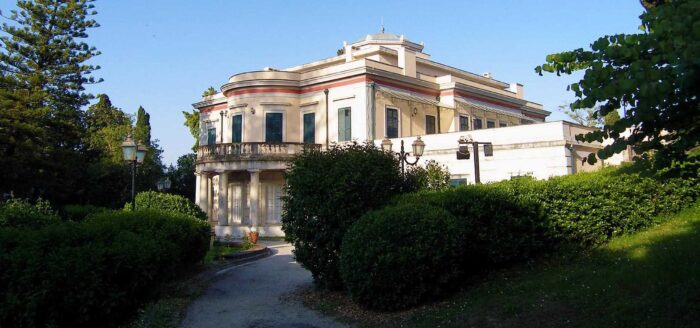
11. Mon Repos Palace
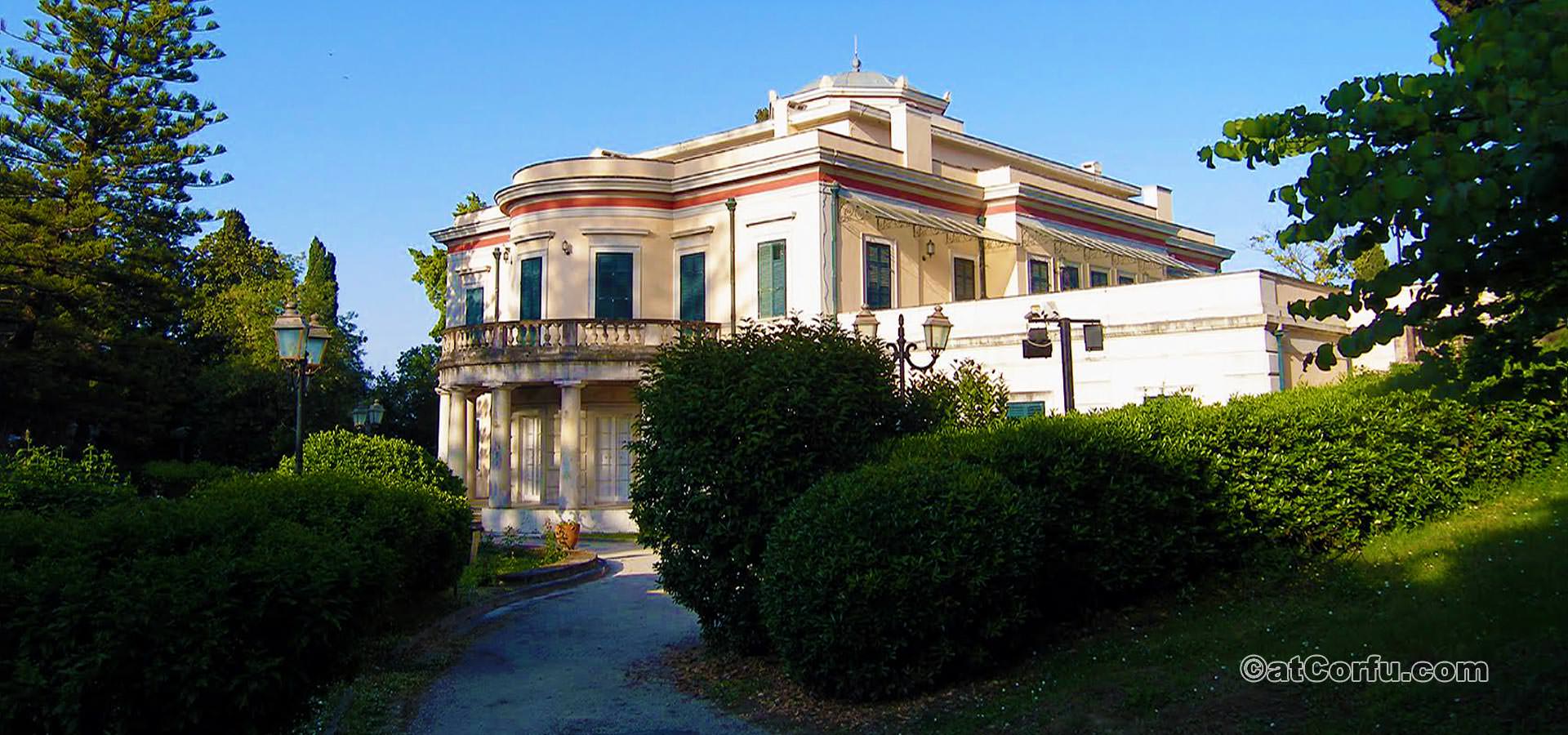
This palace was built at the start of the peninsula of Kanoni opposite the ruins of Paleopolis and has well-laid-out gardens and spectacular sea views.
After the union with Greece in 1864, it was granted to the former royal family and was used as their summer residence.
Today it belongs to the Municipality of Corfu and has been transformed into a museum and a historic place that can be visited by all. It is open on weekdays from 8 am to 7 pm.
Mon Repos
12. The Corfiot history is alive at the Casa Parlante Museum

The Casa Parlante Museum opened in March 2014.
Its name, of course, comes from Corfu’s strong Italian cultural influence.
Located in an old building in the center of the old town of Corfu. It is essentially a copy of the interior of a typical old mansion of the 18th-19th century in Corfu, representing the daily life of the nobles of the 19th century.
There are moving figures and sounds of that time to create an authentic and exciting experience.
Casa Parlante has won the Greek Entrepreneurship Award in 2013, under the name “Corfu Living History”.
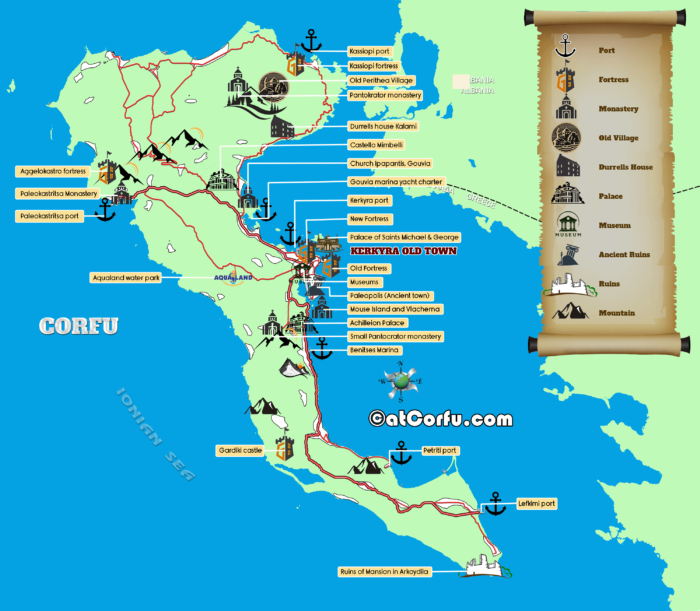
Map of Corfu’s Historical Sites
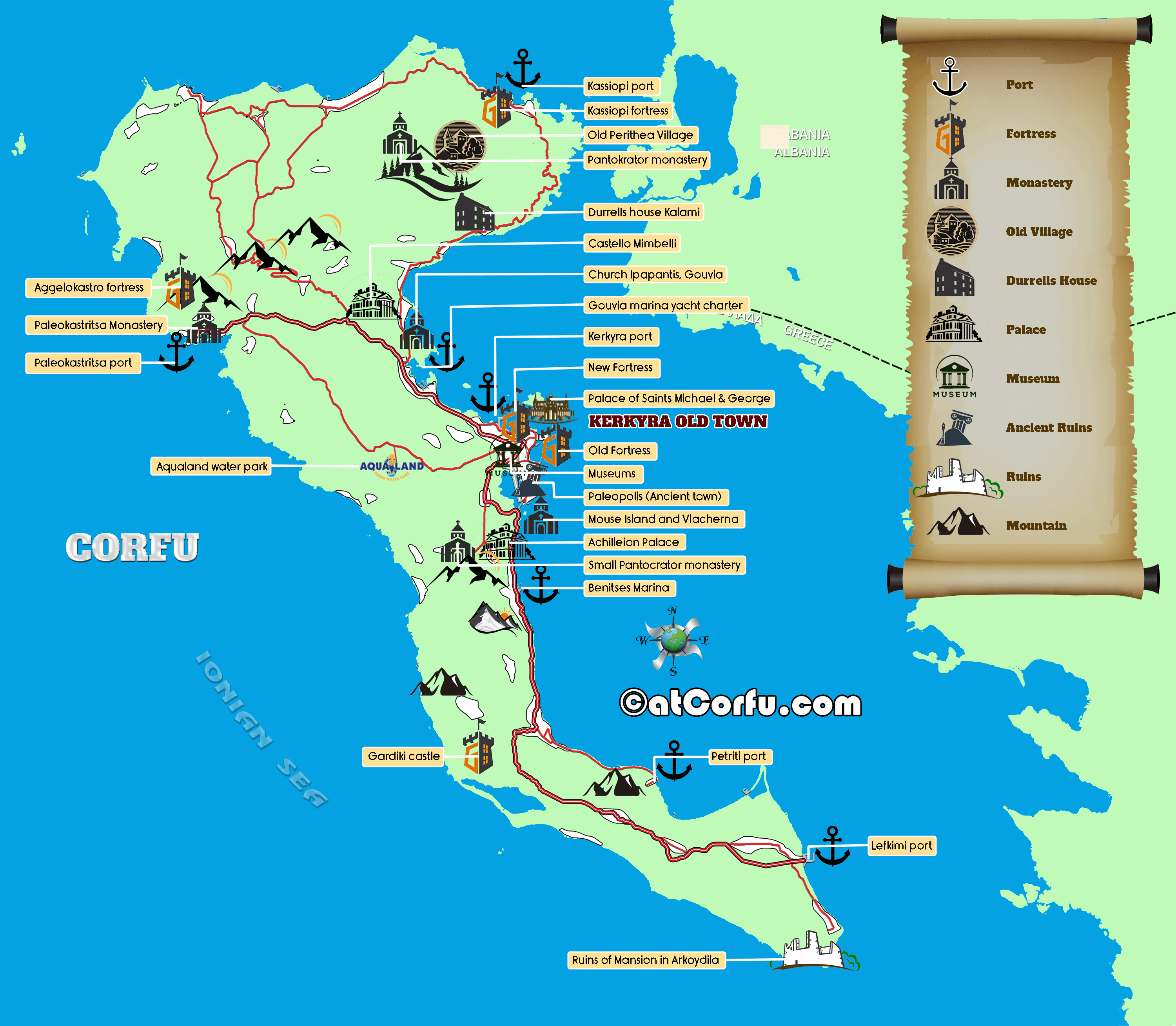
Use our Corfu map with sights to easily locate and explore the island’s top attractions, both in Corfu Town and beyond.
Sightseeing on the rest of Corfu island
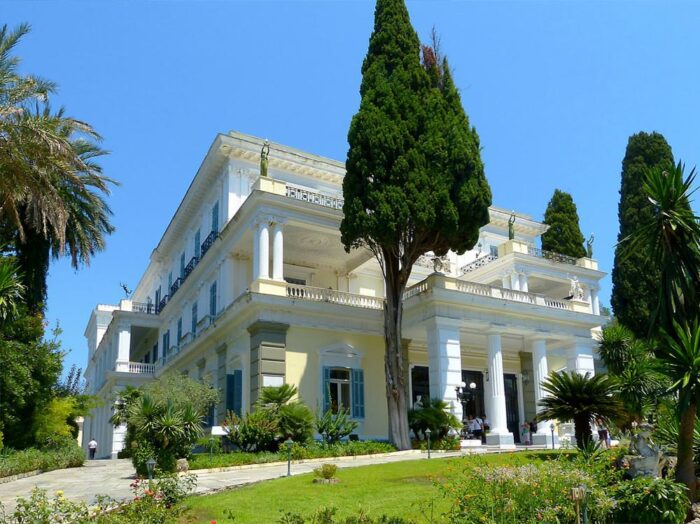
13. The Royal Achilleion Palace
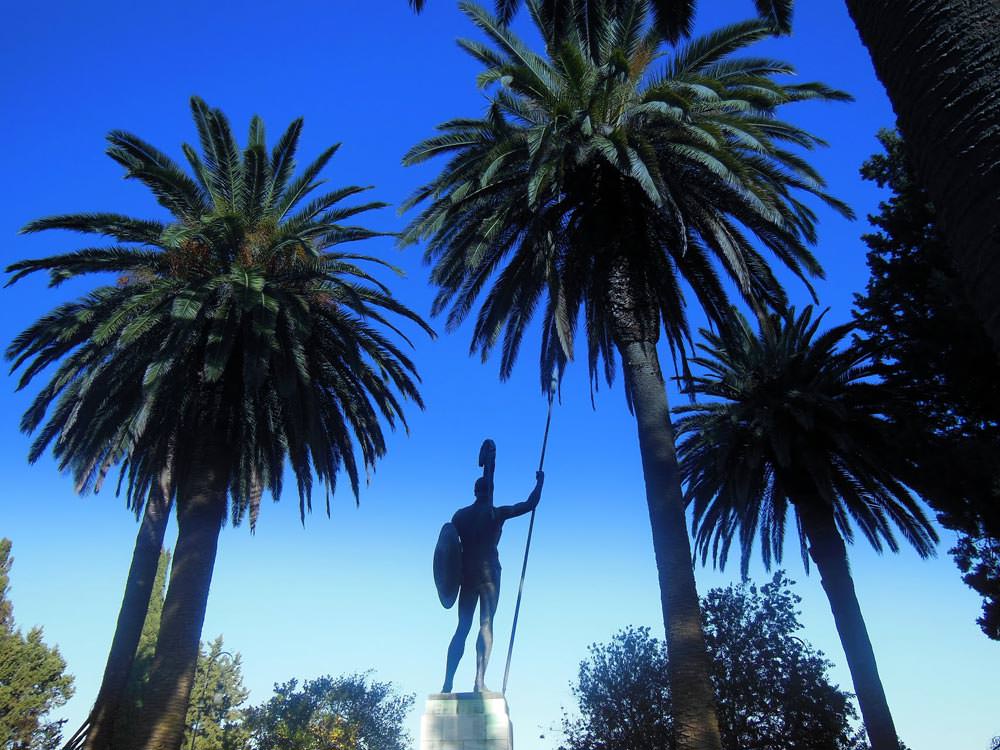
Built in 1890 by Empress Elizabeth of Austria (Sissi) in Gastouri village, about 10 km south of Corfu town, the neoclassical Achilleion is known for its statues of Achilles and its gardens with views over the Ionian Sea.
Access has changed during a long restoration, so check what is open before you go.
Achilleion Palace14. Remnants of the Byzantine castle in Gardiki

The castle in Gardiki was built by Angelos Komninos at the same time as Angelokastro.
It is located in the area of Halikounas in southwestern Corfu and is located at a strategic point, from which it controls the western side of the island and is in visual contact with Angelokastro.
Concerts and other events take place in the ruins of the castle; visit it.
15. Vlacherna and Mouse Island in Corfu
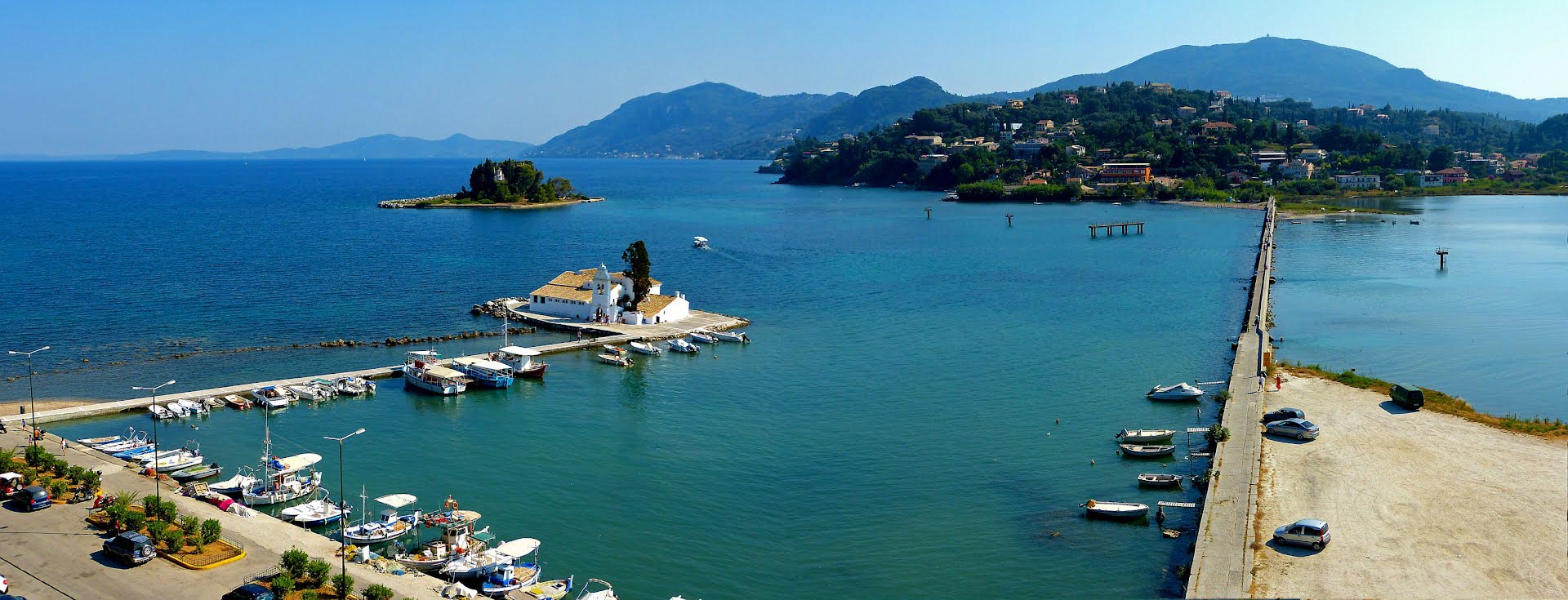
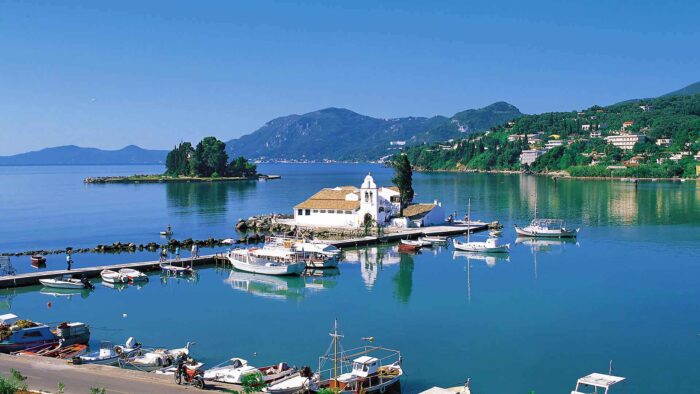
Mouse Island (Pontikonisi), with its Byzantine church of Pantokrator among dense vegetation, is the trademark image of Corfu.
According to myth, it is the ship of the Phaeacians that carried Odysseus home, turned to stone by the gods. Small boats sail there regularly from the beach below Kanoni. Next to it is Vlacherna, joined to Kanoni by a short walkway, with its own small church.
About Mouse island16. Kanoni District
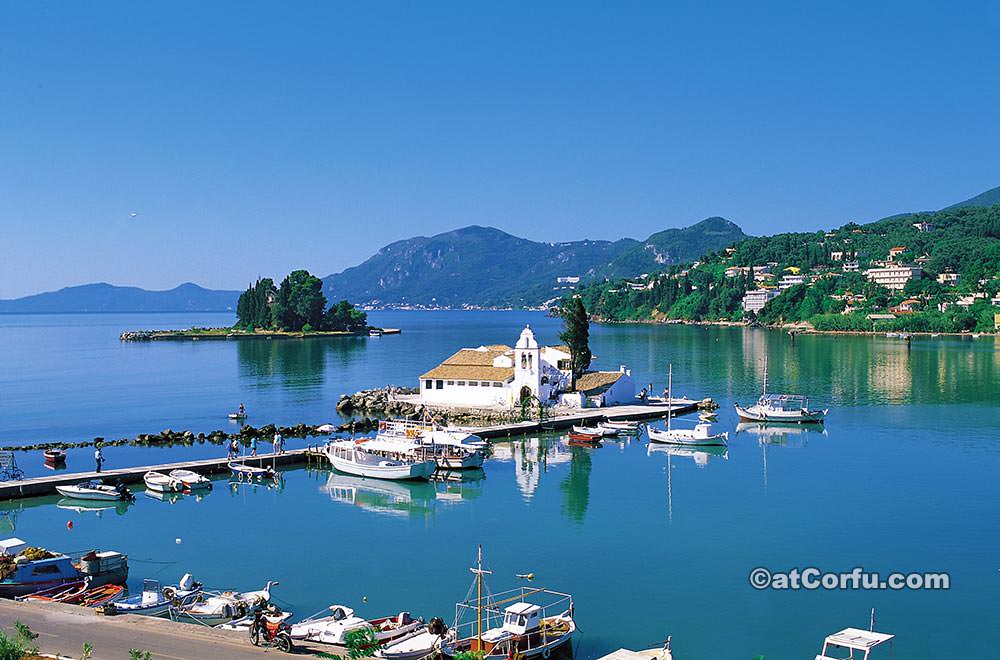
One of the most famous attractions in Corfu, located south of the town on the peninsula next to the airport, is named after a French cannon battery type that is left there.
From Kanoni, there is a fantastic view of Mouse Island and the Monastery of Panagia Vlahernas next to it, as well as the airport on the side and Perama and Benitses towards.
Kanoni peninsula
17. The Kaiser’s Bridge

The Kaiser’s Bridge was built at the beginning of the 20th century and was used by Kaiser Wilhelm the second to moor his yacht and also to go from the Achilleion Palace to the sea and enjoy swimming away from prying eyes.
It is located 2 km north of Benitses and was blown up during World War 2 as the German troops needed to get their tanks through the low arch.
So the Germans destroyed something made by another German.
18. The Ruins of the Kassiopi fortress
Kassiopi Castle is located on the northeast coast of Corfu above Kassiopi.
It was one of the three castles of the Byzantine period that defended the island before the Venetian era.
There was a defensive triangle, with the cliff at Gardiki guarding the south of the island, Kassiopi to the northeast, and Angelokastro to the northwest.
Its location is on the northeast coast of Corfu, which controls the Corfu Canal that separates the island from the mainland; therefore, it has a significant advantage and increased strategic importance.
Kassiopi fortress is definitely one of the most important defensive remains in the Ionian Islands
19. The Impressive Angelokastro
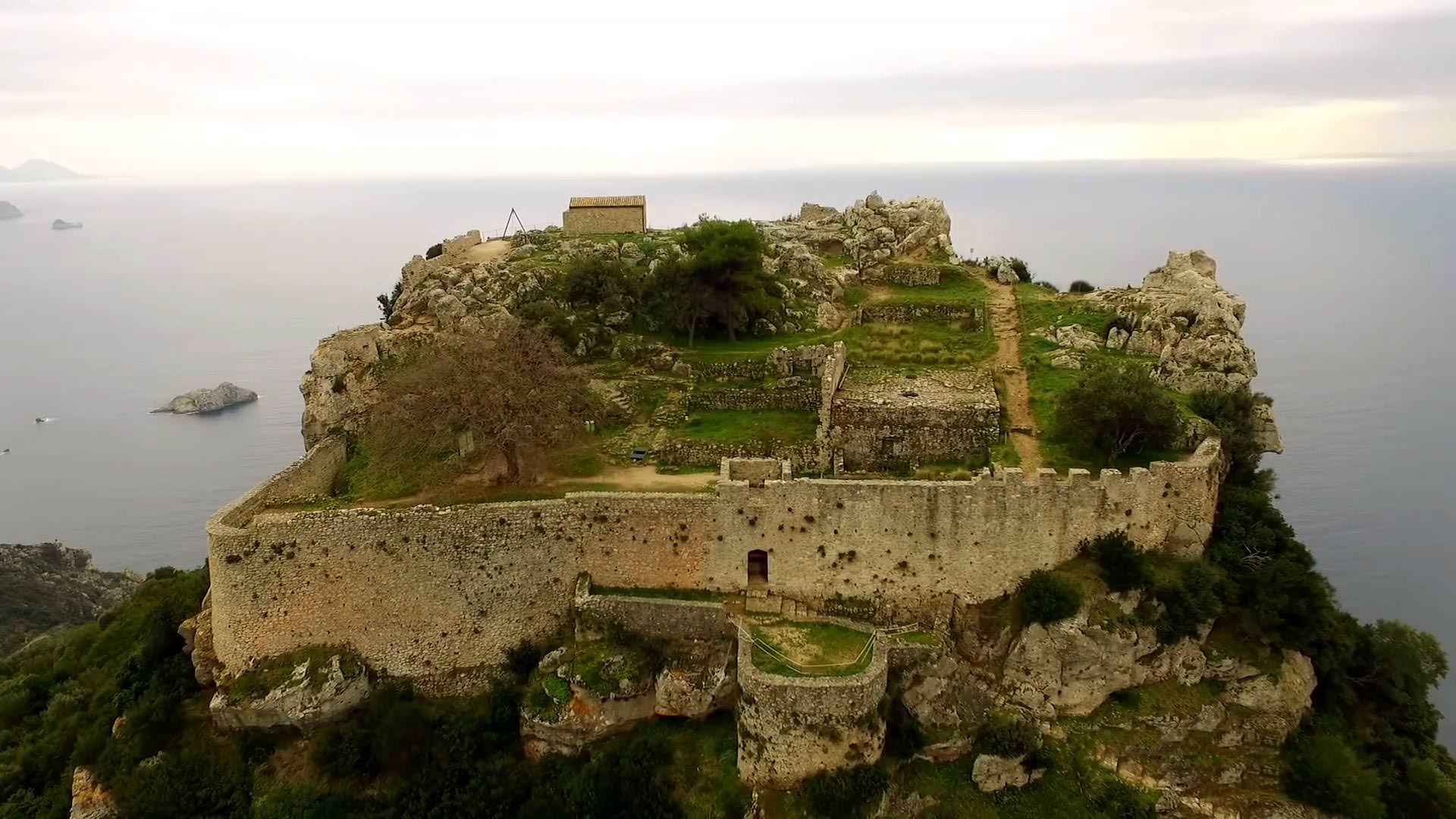
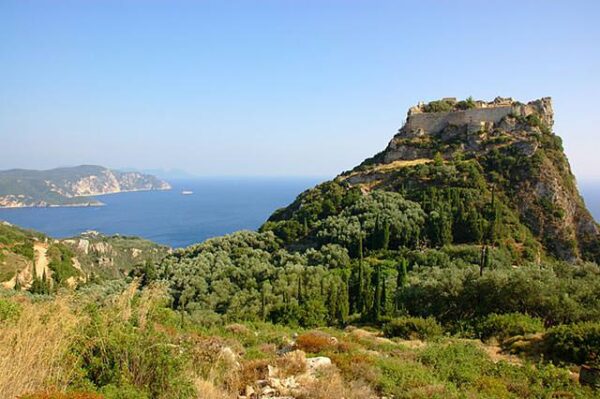
Angelokastro was the westernmost outpost of the Despotate of Epirus, on a cliff near the village of Krini above Paleokastritsa.
In an emergency it could shelter the whole population of the region. It withstood many sieges, including Barbarossa’s attack in 1537 and an Ottoman attempt in 1571.
Inside are two large water tanks and the churches of the Holy Archangels and Agia Kiriaki, built in a small cave.
Angelokastro20. See some of Corfu’s historic Monasteries
In Corfu, in addition to the many churches, there are many famous monasteries also worth visiting.
A) Monastery of Paleokastritsa
Among the most important monasteries in Corfu, it is on a rock above the sea, one of the most beautiful monasteries you have ever visited because of the breathtaking view it provides, but also because of the exhibits there.
Among other exhibits of religious interest are the bones of a whale that had washed up dead at sea on the beach below the monastery.
B) Monastery of Myrtiotissa
It is located between Pelekas and Vatos villages, on a small hill just meters away from the small but famous Mitriotissa beach.
C) Monastery of Pantokrator-Kamarelas
It is in the village of Nymfes, in northwest Corfu, with 5 very friendly, hospitable nuns always willing to show you around.
Corfu in historic engravings
A short video of 19th-century engravings showing Corfu as travelers saw it.
Conclusion
This is our large and complete list of the most important attractions in Corfu, left behind by Corfu’s many conquerors.
Surely there are some more we missed, but these are a good number for you to start and help you to enjoy your Corfu holidays to the full.
We hope you enjoy visiting all these Corfu landmarks and monuments on this list.
Comments