



The Odyssey refers here exclusively to the ancient Greek epic poem attributed to Homer; it’s clearly Greek mythology and not modern adaptations or films of the same name.
Introduction
The Odyssey follows Odysseus’s long and difficult return home after the fall of Troy. It consists of 24 books and approximately 12,000 lines of dactylic hexameter verse in Homeric Greek, a form of Ionic dialect with elements from Aeolian, written around 750–700 BCE.
Unlike a simple voyage home, the mythic narrative is shaped by divine opposition, fragmented journeys, and a second unfolding story in Ithaca, where his household waits under growing crisis.
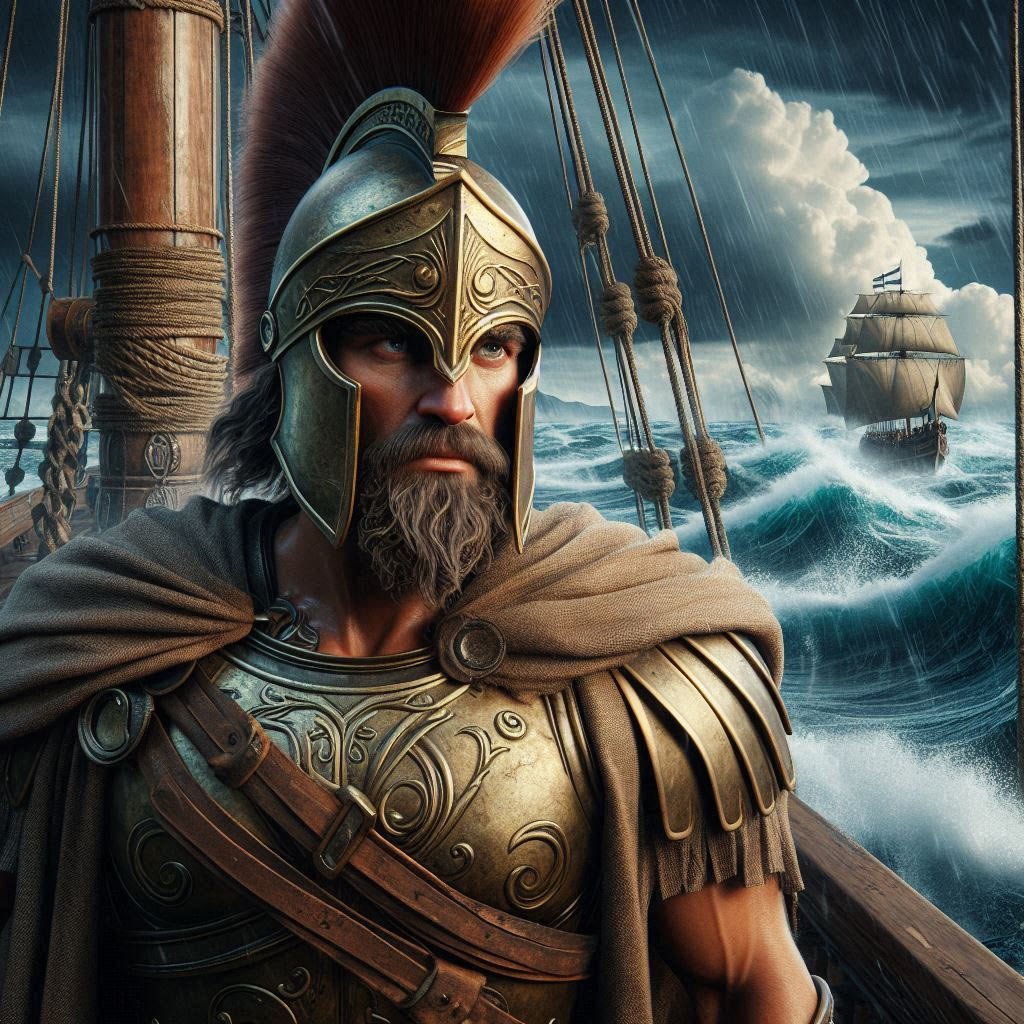
From the beginning, the gods are not unified. While some protect Odysseus, especially Athena, others oppose him as he was considered responsible for the destruction of Troy. Most significantly, Poseidon becomes his enemy and extends the journey through storms, misdirection, and suffering at sea.
Possible Historical Setting
Although the Odyssey belongs to Greek mythology and cannot be treated as a historical account, the story is traditionally connected to the aftermath of the Trojan War and the closing period of the Late Bronze Age, often placed around the 12th or early 11th century BCE.
The Odyssey - Homer
Key Characters
- Odysseus — King of Ithaca and central hero of the epic
- Penelope — Wife of Odysseus, waiting in Ithaca during his absence
- Telemachus — Son of Odysseus who searches for his father
- Athena — Goddess who supports Odysseus and Telemachus
- Poseidon — God of the sea, who obstructs Odysseus’ return
- Circe — Sorceress encountered during the journey (Aeaea)
- Calypso — Nymph who detains Odysseus on Ogygia
- Polyphemus — Cyclops whose blinding triggers Poseidon’s wrath
- Nausicaa — Phaeacian princess who helps Odysseus after a shipwreck
- Alkinoos — King of the Phaeacians who hosts Odysseus
Ithaca in Odysseus’ Absence: A Second Story Unfolds
The epic begins in Ithaca, where Penelope and Telemachus have had no news of Odysseus for many years.
While Odysseus remains absent, Ithaca becomes a place of growing tension and waiting. The situation at home unfolds as a parallel narrative, in which the preservation of Odysseus’ household is increasingly threatened before his return.
The household is overrun by suitors who pressure Penelope to remarry, consuming Odysseus’ property and destabilizing his home. In response, Athena arrives in disguise and urges Telemachus to leave Ithaca and search for information about his father.
During his search, Telemachus travels to Sparta, where Menelaus tells him what he has learned from Proteus. Proteus, the old man of the sea, reveals that Odysseus is still alive and held by Calypso on Ogygia.
Main Story (Correct Timeline of the Odyssey)
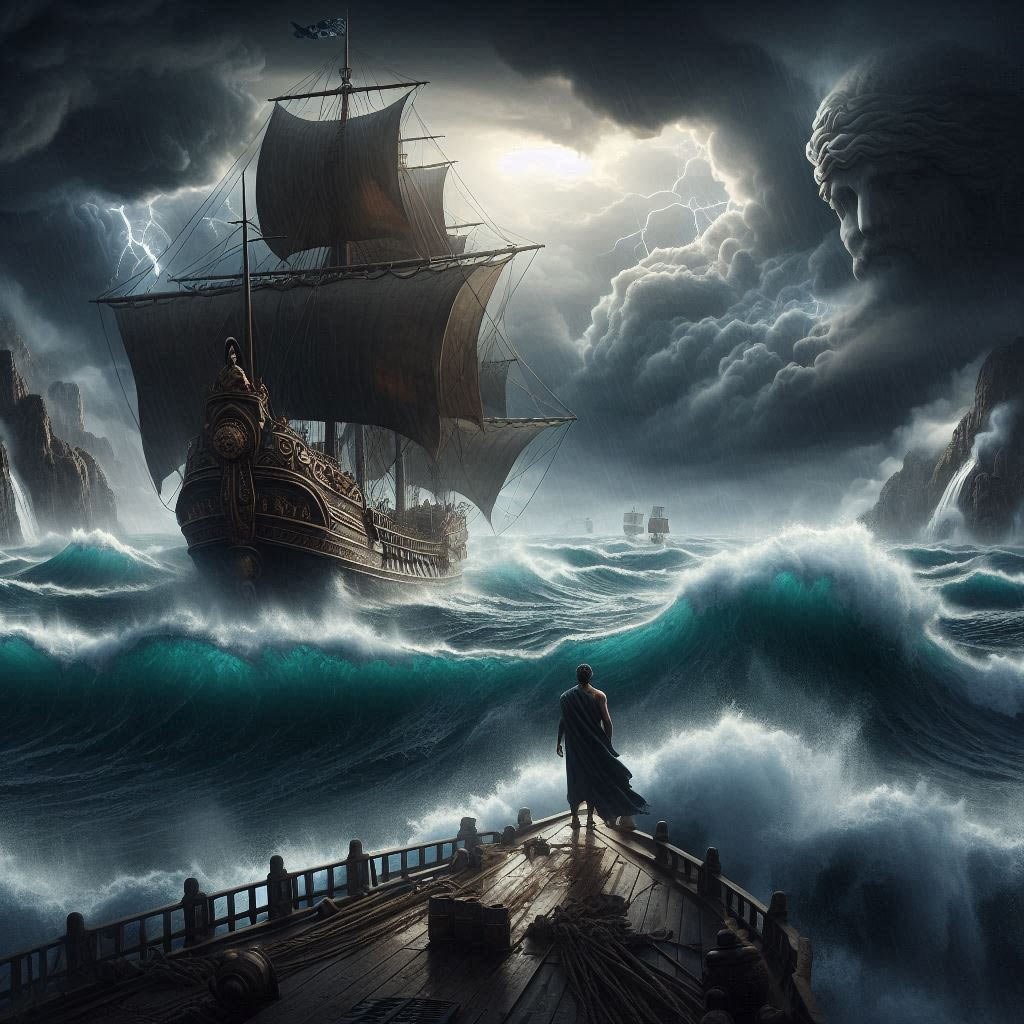
After the fall of Troy, Odysseus sets sail for Ithaca with twelve ships and roughly six hundred men under his command, but his return is immediately shaped by divine opposition. The gods are divided in their judgment of him, and his journey becomes a prolonged passage of delay and hardship.
1. Raid of the Cicones (After Leaving Troy)
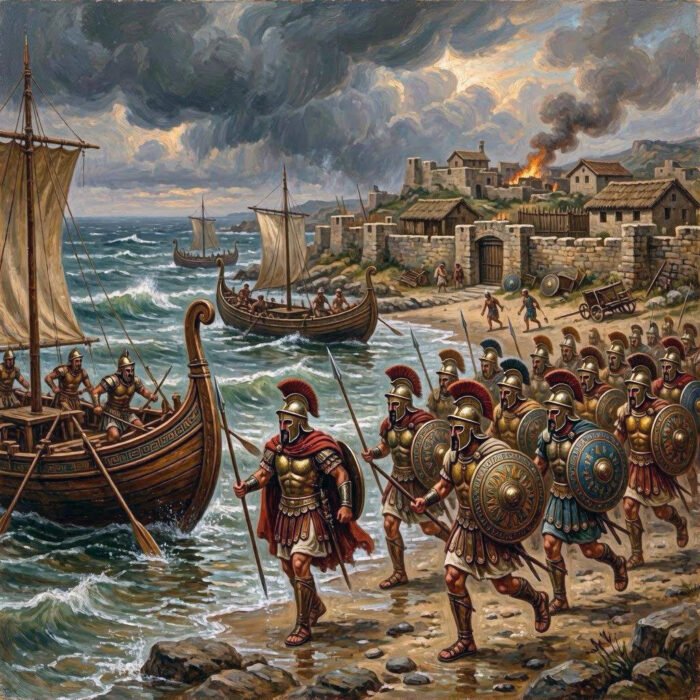
On leaving Troy, Odysseus and his men, instead of sailing south, turned north and attacked Ismarus, the land of the Cicones, a coastal people allied to Troy. They raid and plunder the city successfully, but instead of leaving immediately, the crew lingers too long.
The Cicones regroup and counterattack, inflicting heavy losses on Odysseus’ men. This first setback marks the beginning of the journey’s pattern: early success followed by consequences caused by human error and delay.
This place was probably on the coasts of Thrace.
👉 Read full episode: Cicones episode
2. The Lotus-Eaters: Forgetting Ithaca
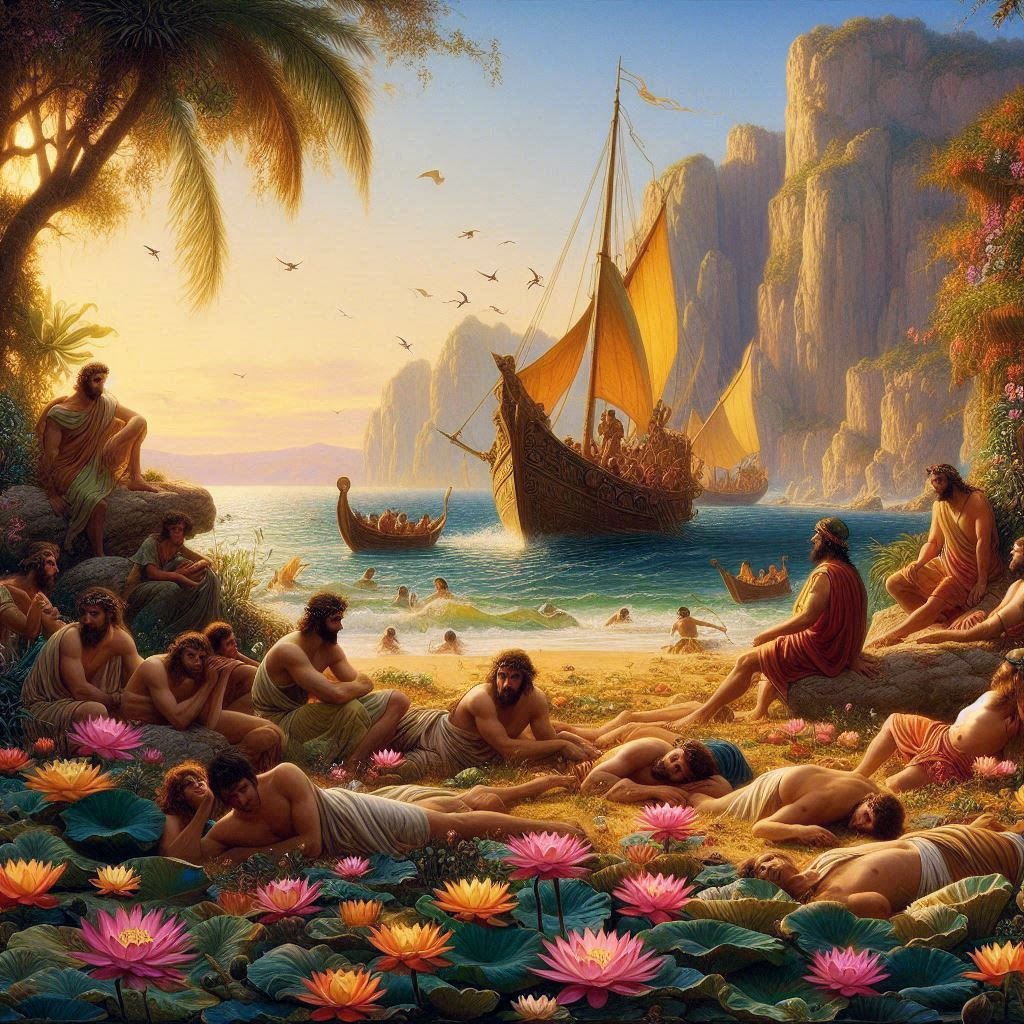
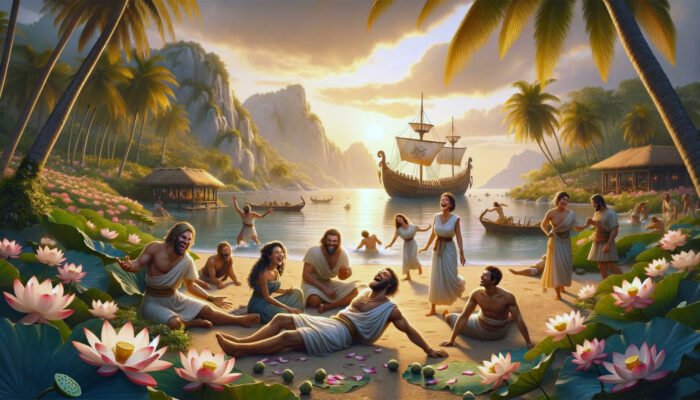
After Ismarus, the fleet failed to turn north after the Peloponnese and continued south, ending on an unknown foreign coast, probably of North Africa (often Libya or the Tunisian region). Odysseus encounters a people who consume the lotus plant, a substance that erases memory and desire.
Some of his men lose all interest in returning home, forcing him to bring them back by force. It is the first moment where “home” itself begins to disappear from memory.
3. Polyphemus and the Turning Point of Divine Wrath
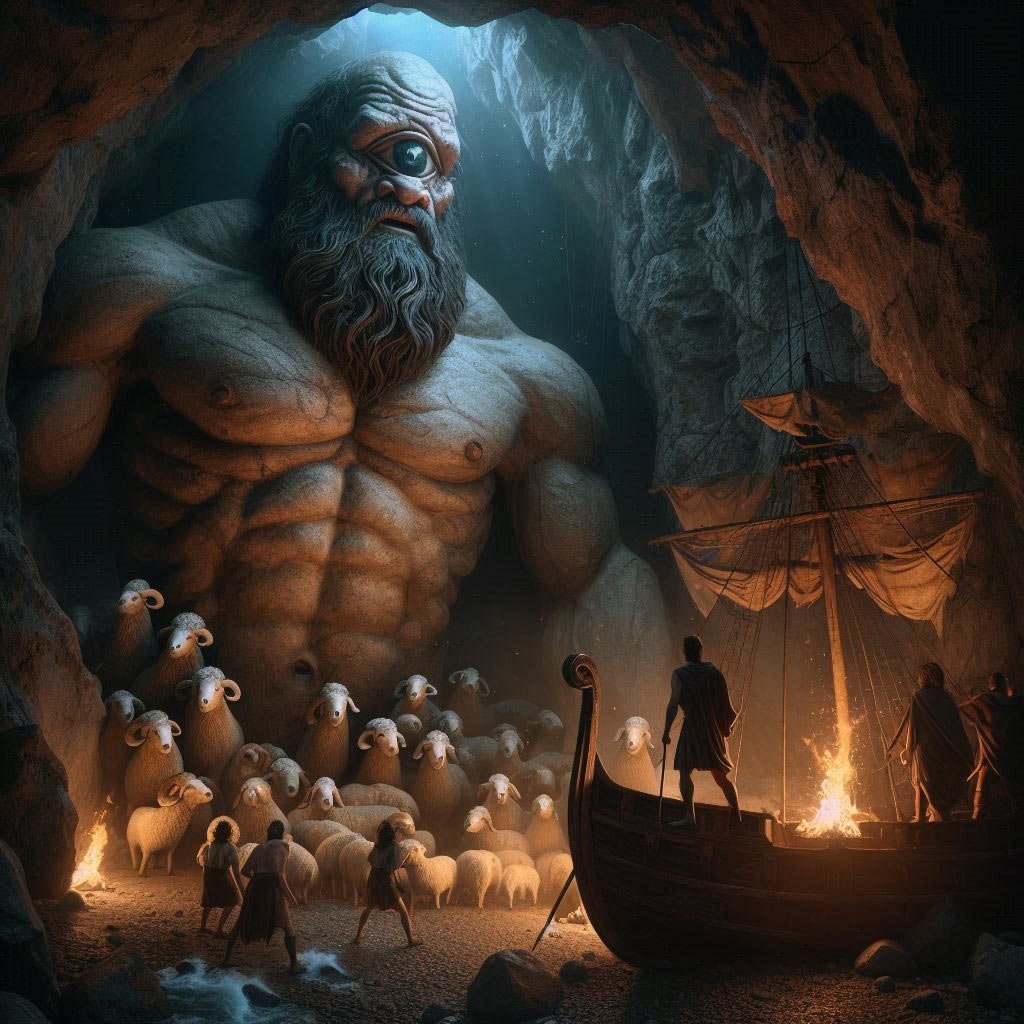
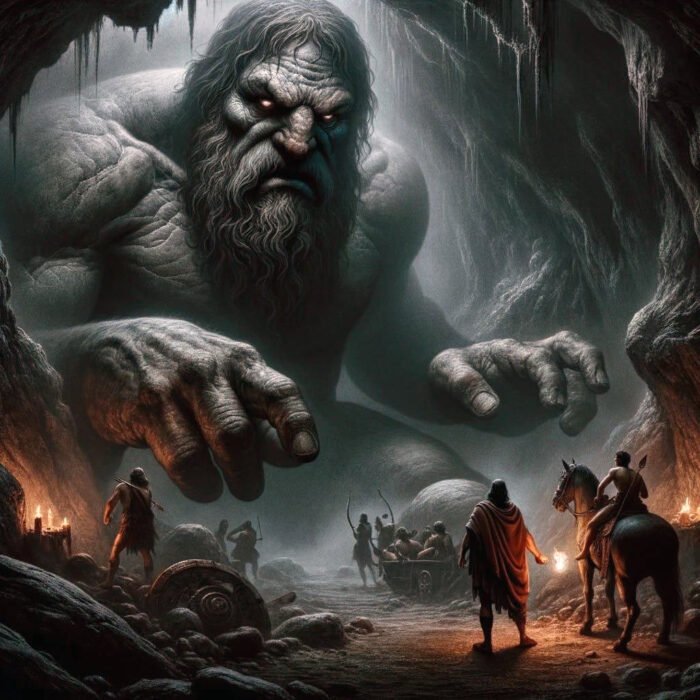
The journey becomes irreversible after Odysseus enters the land of the Cyclops, who were giants and shepherds, with only one eye on top of their noses.
Trapped by Polyphemus in his cave, naming himself when asked as “ού τις”, meaning “none” in Greek. He later blinds the giant to escape.
The giant screamed to his father Poseidon, “I was blinded by none”, creating confusion. This delay was enough for the ships to escape.
But this act binds him to the hatred of Cyclops’ father, Poseidon, who now actively obstructs his return. Cyclops were probably in Sicily.
4. Aeolus and the Bag of Winds
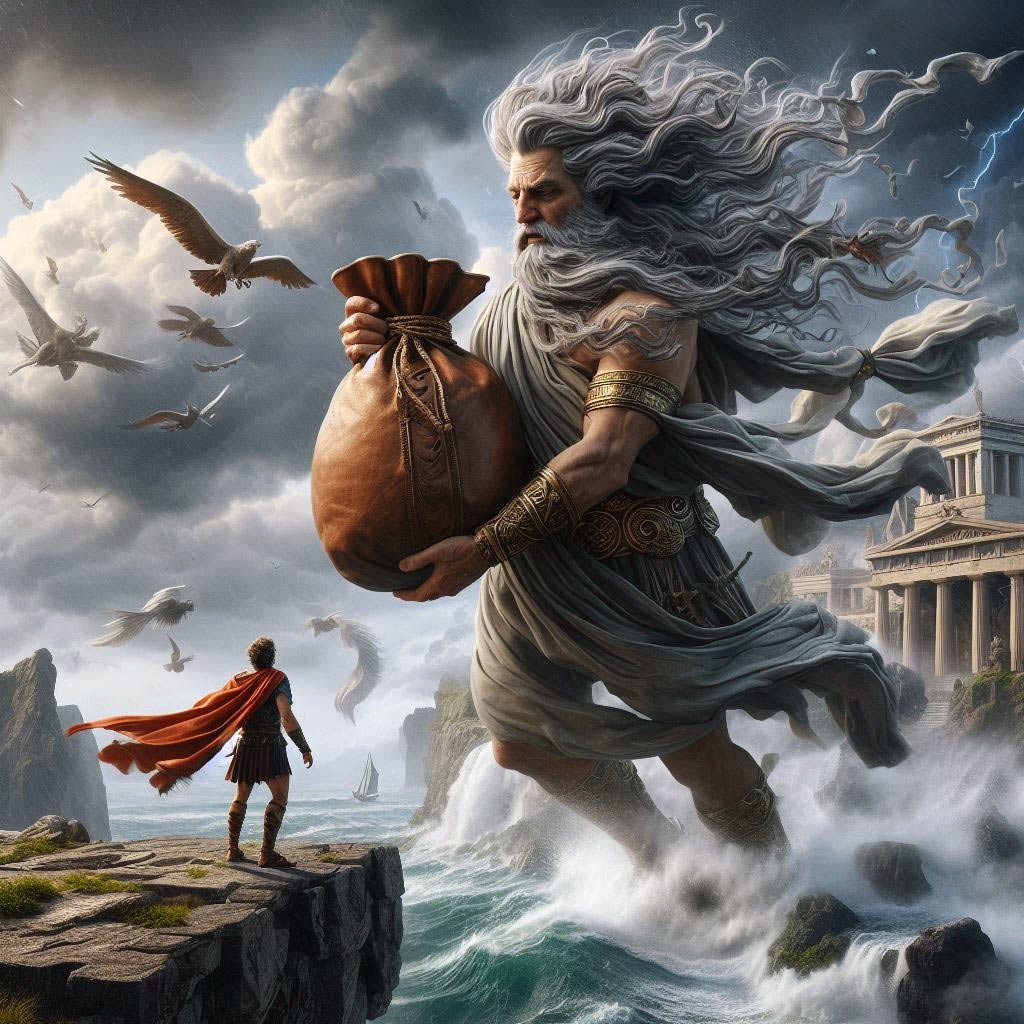
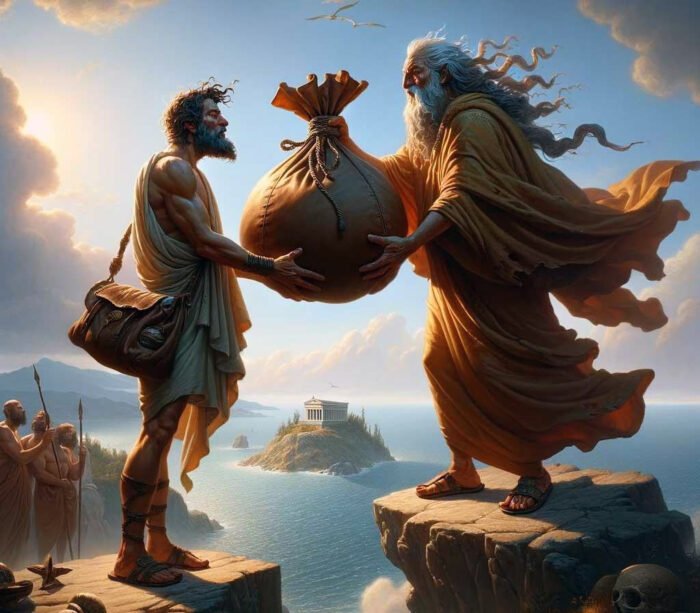
Escaping the Cyclops, Odysseus approaches the floating island of Aeolus, the old lord of the sea and god of the winds, who gives him a sealed bag containing all the bad winds, so he can guide the fleet safely home.
However, the crew opens it before reaching Ithaca, believing it contains treasure, and the ships are fiercely driven back off course.
5. The Laestrygonians: The Collapse of the Fleet
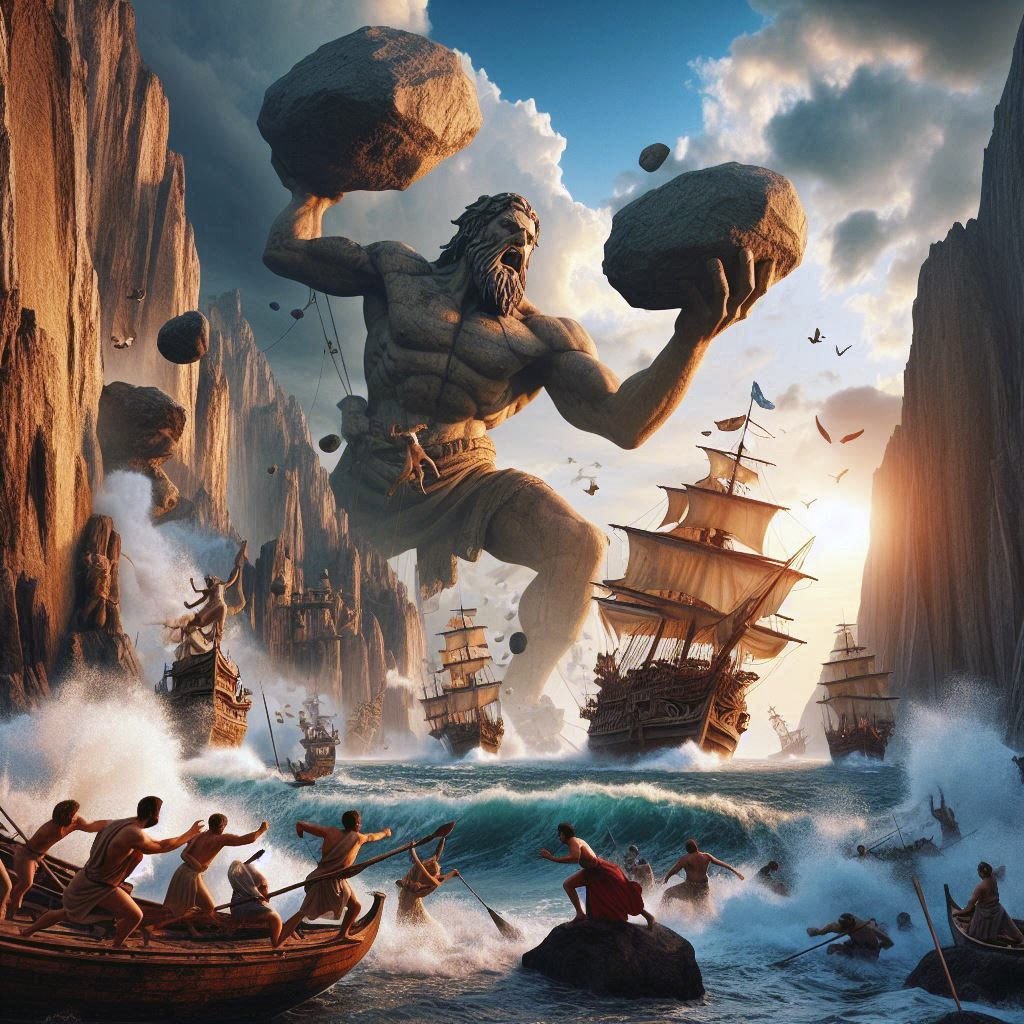
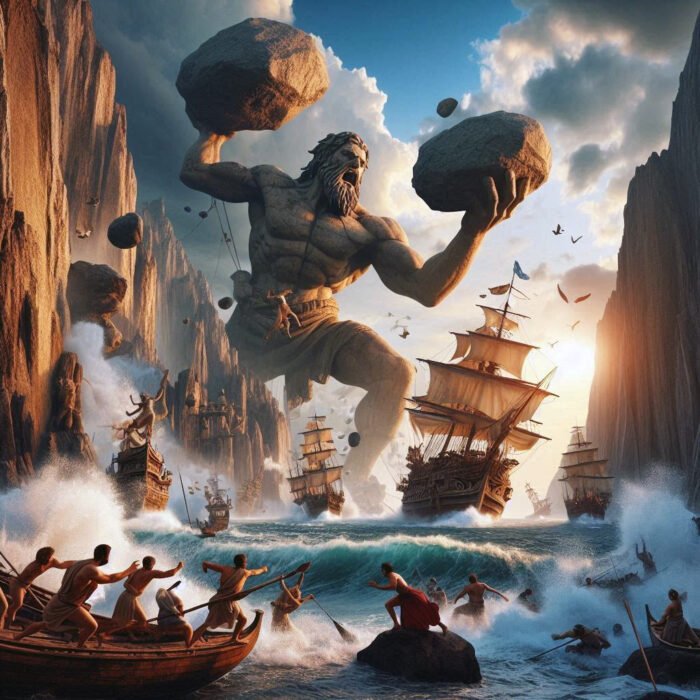
After further wandering, Odysseus reaches the land of some giant cannibals called Laestrygonians. The Laestrygonians destroy most of the fleet, crushing the ships and killing many of the men.
By the time Odysseus escapes, he is left with only a single surviving ship, and the journey becomes one of deep isolation.
6. Circe’s Island: A Pause Outside Time
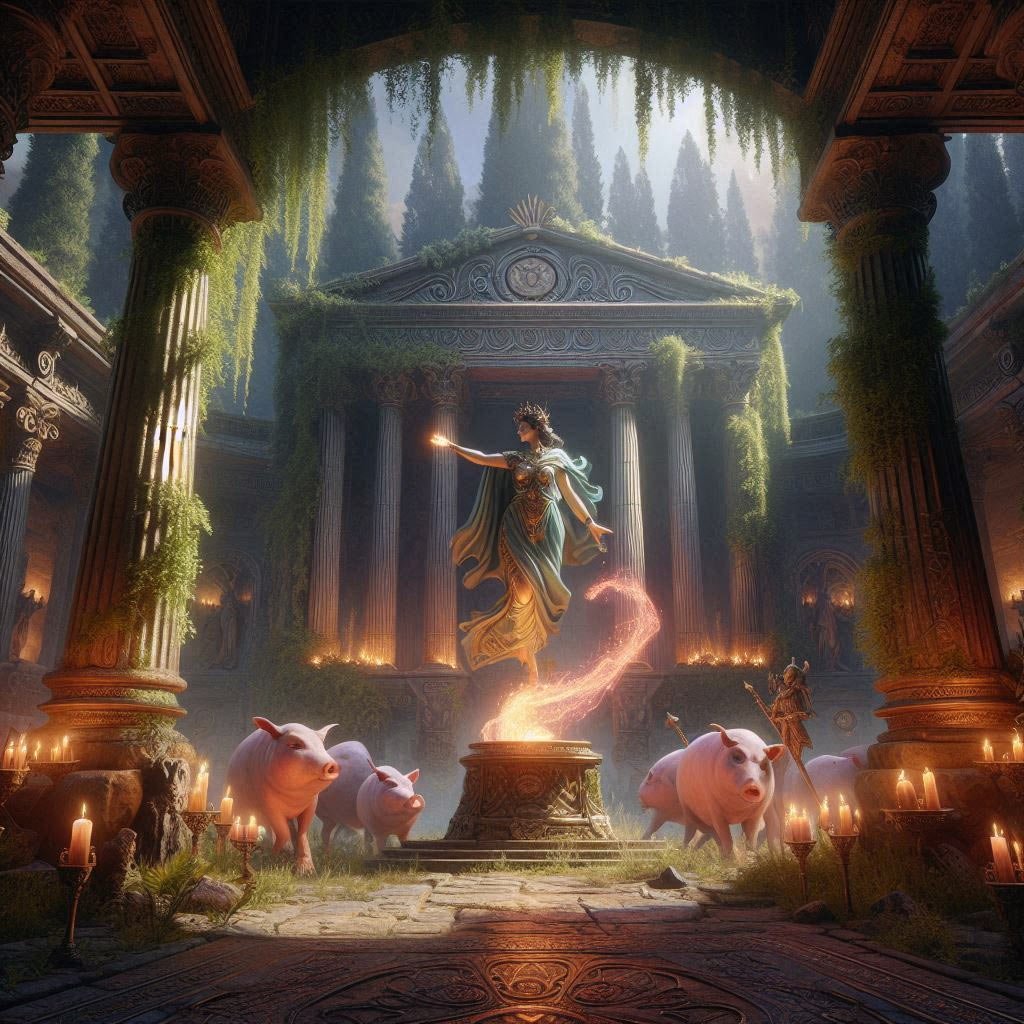
On the island of the witch Circe, the voyage temporarily halts.
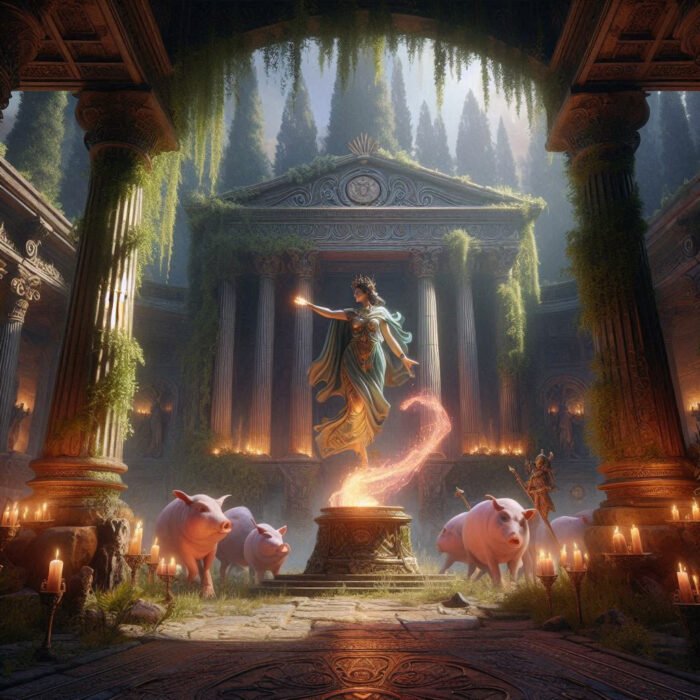
The crew is transformed into pigs, then restored, but held for a year in a place where time no longer behaves like the world they left behind.
When they finally depart, they do so with knowledge of what lies beyond life itself. Where was this island? could be anywhere, but some say it was today’s Corsica.
7. The Descent into the Underworld
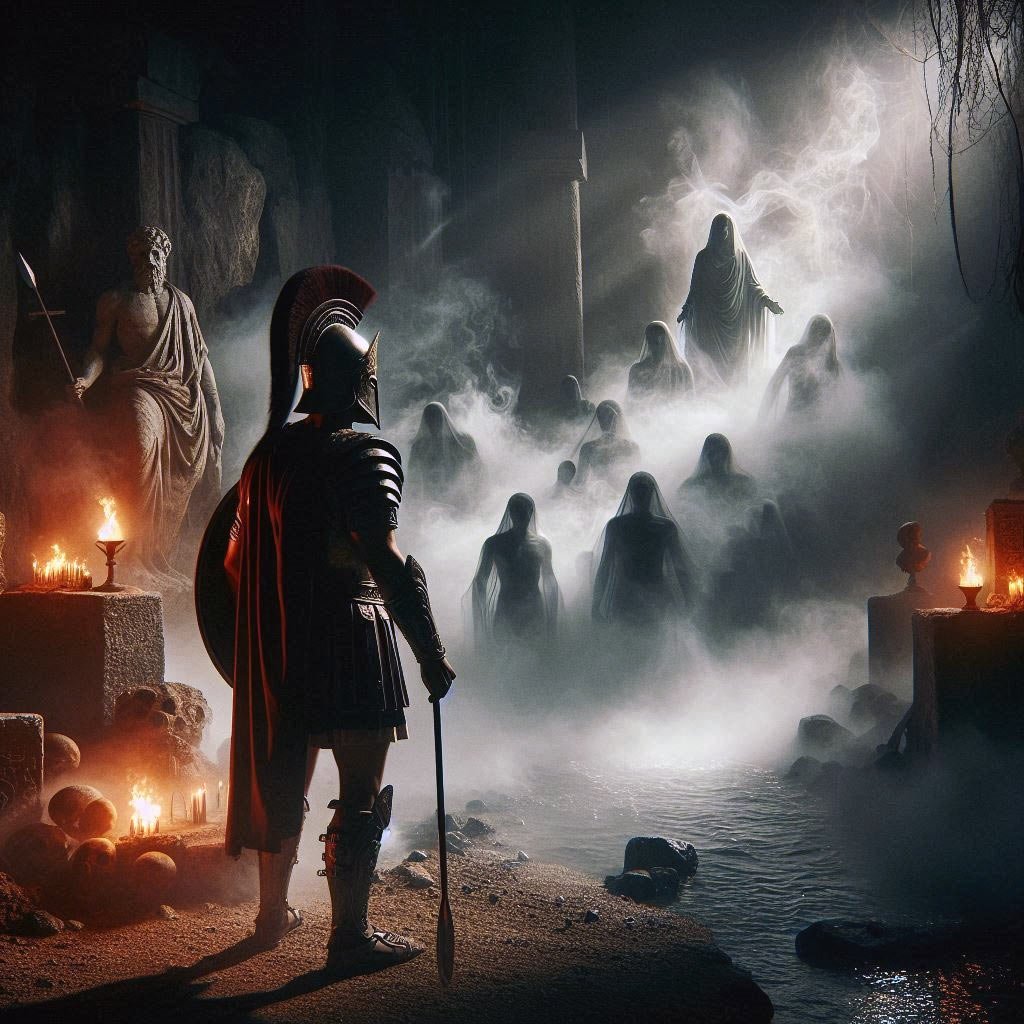
To understand how to return, Odysseus leaves the living world entirely and travels to the dead.
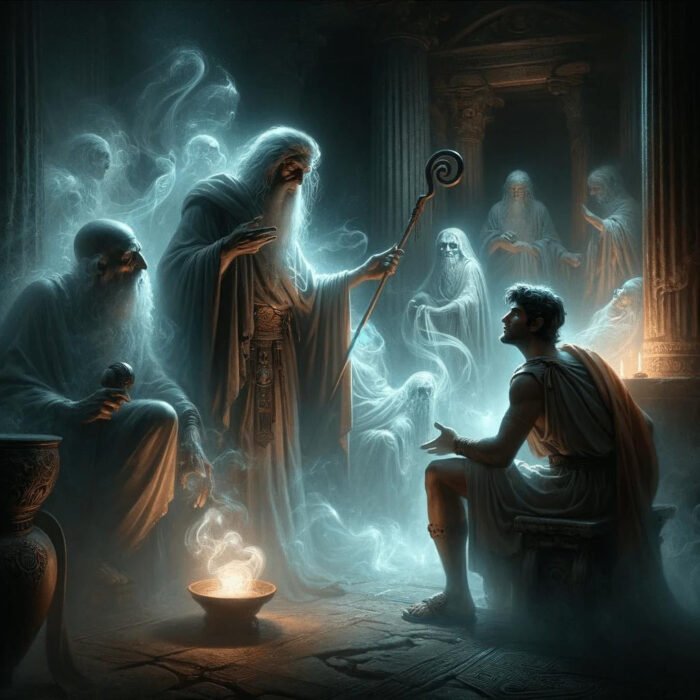
There, he meets the souls of old comrades, including Achilles, and he receives a prophecy by clairvoyant Teiresias that defines the remaining path of his journey, confirming that return is possible—but only under strict conditions.
8. The Sirens
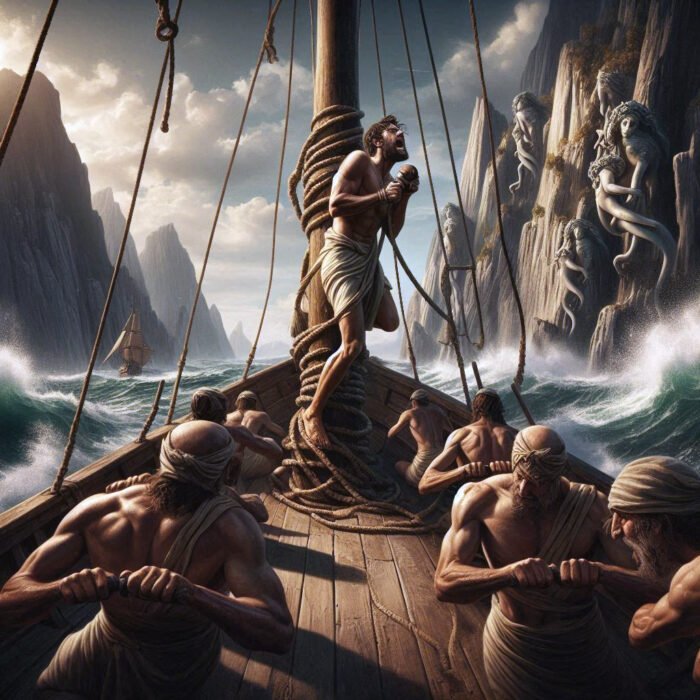
Odysseus passes the island of the Sirens, whose song lures sailors toward destruction. Following Circe’s instructions, the crew blocks their ears with wax while Odysseus listens, tied to the mast of the ship.
In later tradition, the Sirens were often associated with some islands off southern Italy.
9. The Sea Between Danger and Death – Scylla and Charybdis
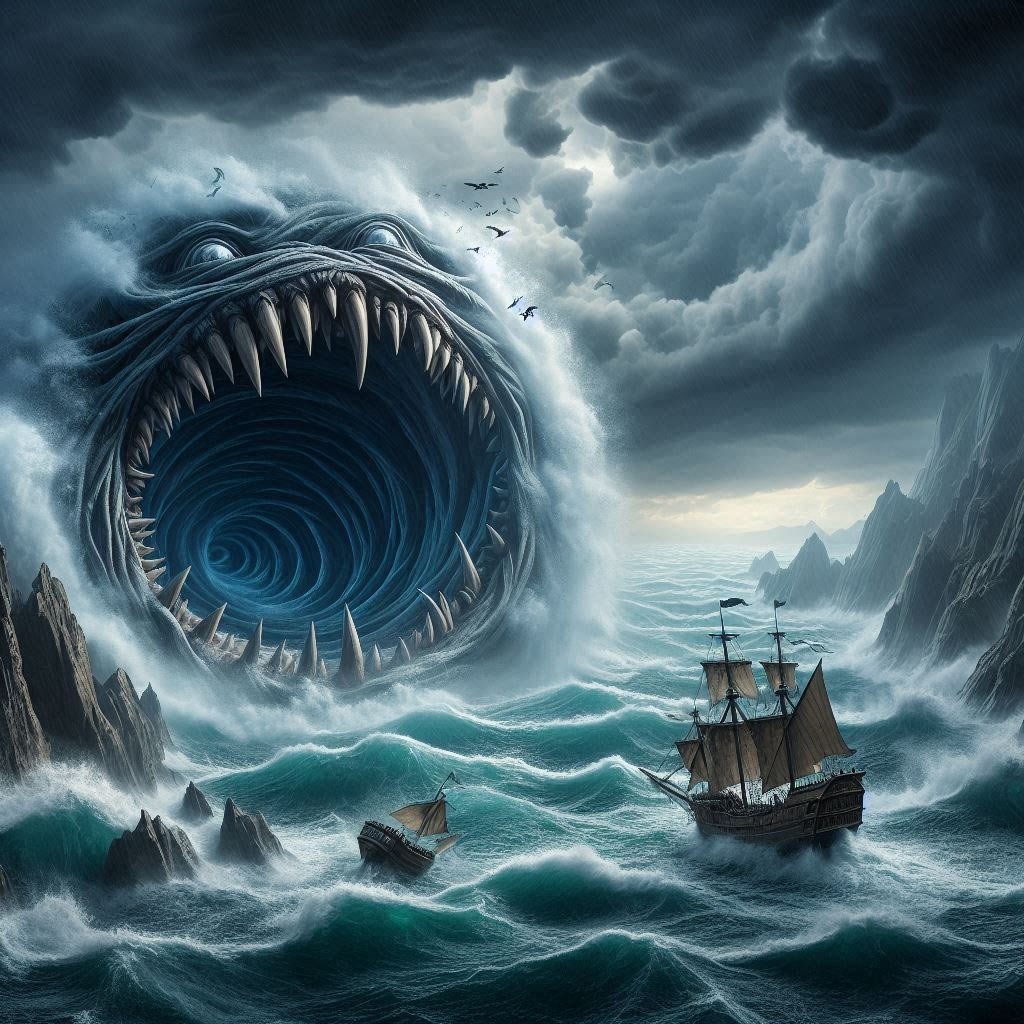
Back at sea, the journey becomes purely navigational survival.
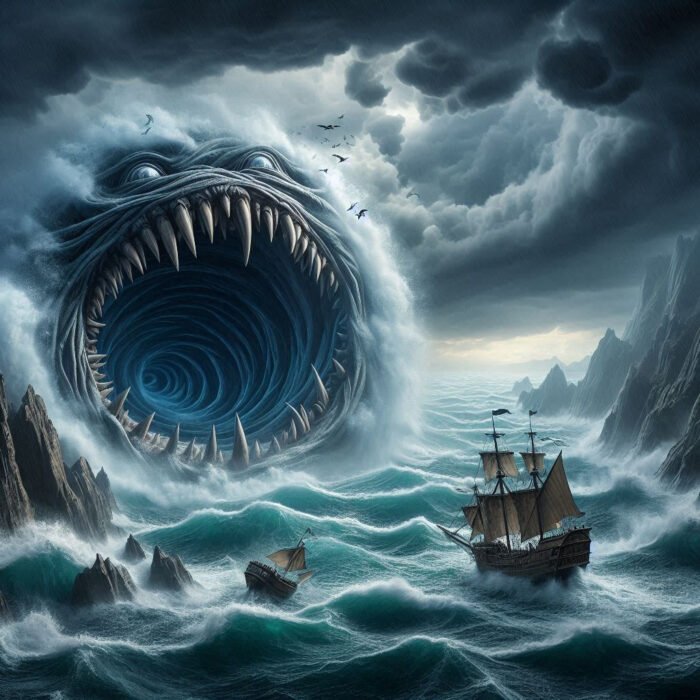
It’s where Odysseus passes through the narrow strait of Scylla and Charybdis, where every choice guarantees loss. The voyage is no longer about progress, but controlled destruction.
In later tradition, Scylla and Charybdis were commonly associated with the Strait of Messina between Sicily and mainland Italy, whose narrow and dangerous waters matched the description of the episode.
10. The Final Sacrifice: The Cattle of Hellios (Sun)
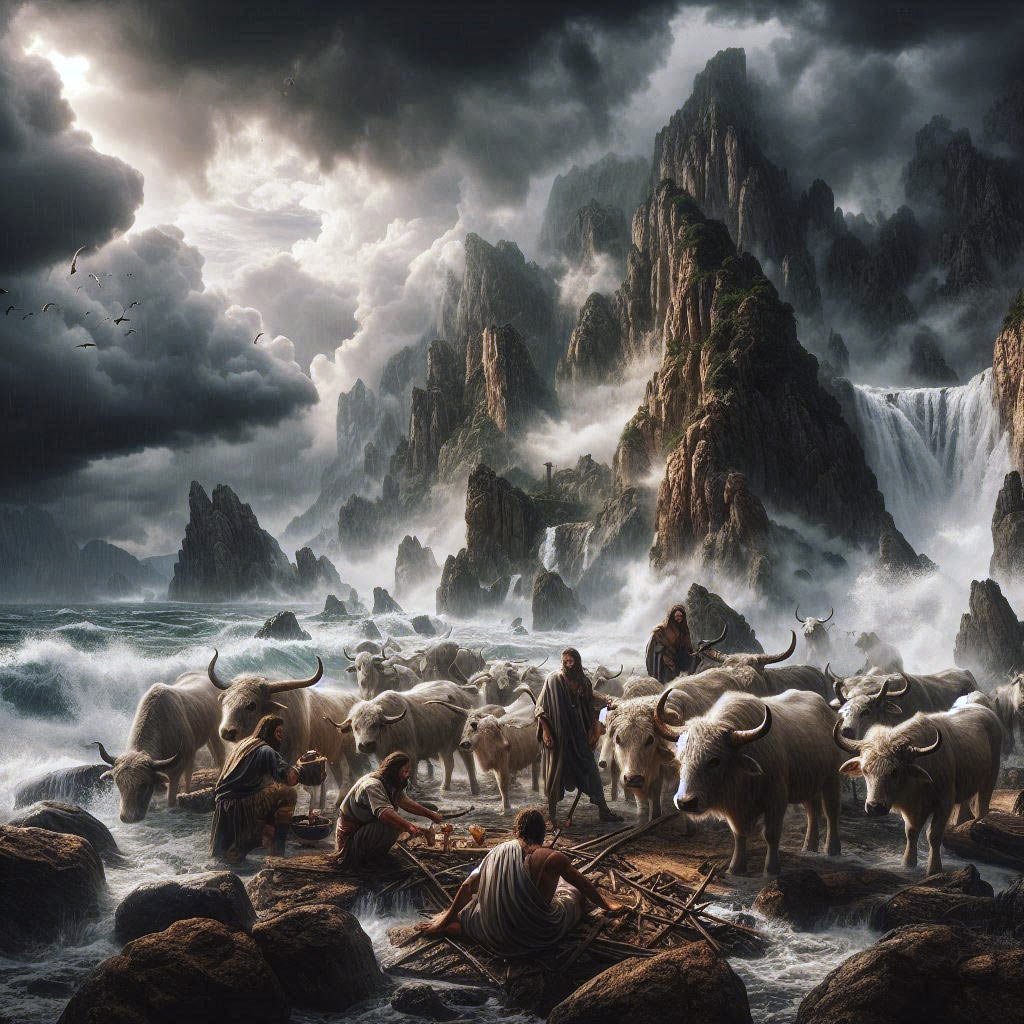
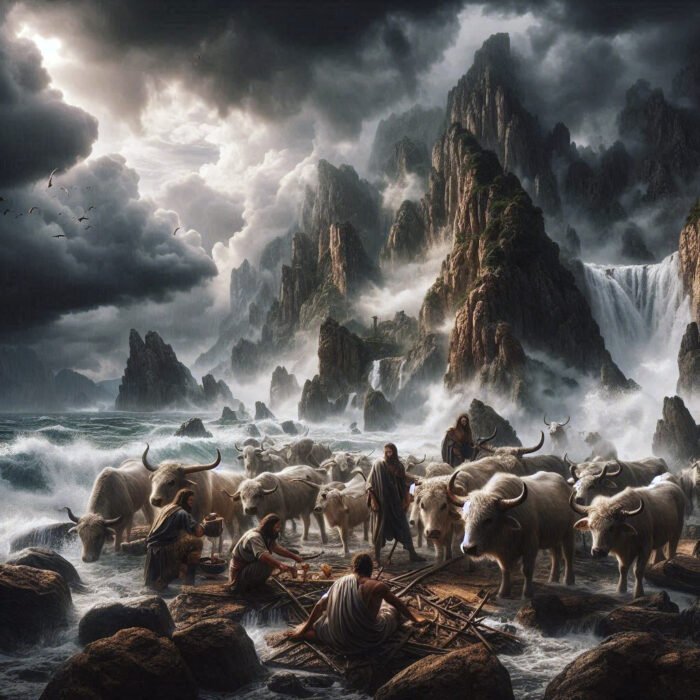
On Thrinacia, the island of Helios, the sun god, Odysseus’ crew ignores divine warnings and kills the sacred cattle of the god.
This act removes the last protection they had, and after their departure, Zeus destroys the ship with thunder. Odysseus becomes the sole survivor of his fleet. Thrinacia is believed to be Malta or an island close to East Sicily.
11. Calypso’s Island and the Release from Ogygia
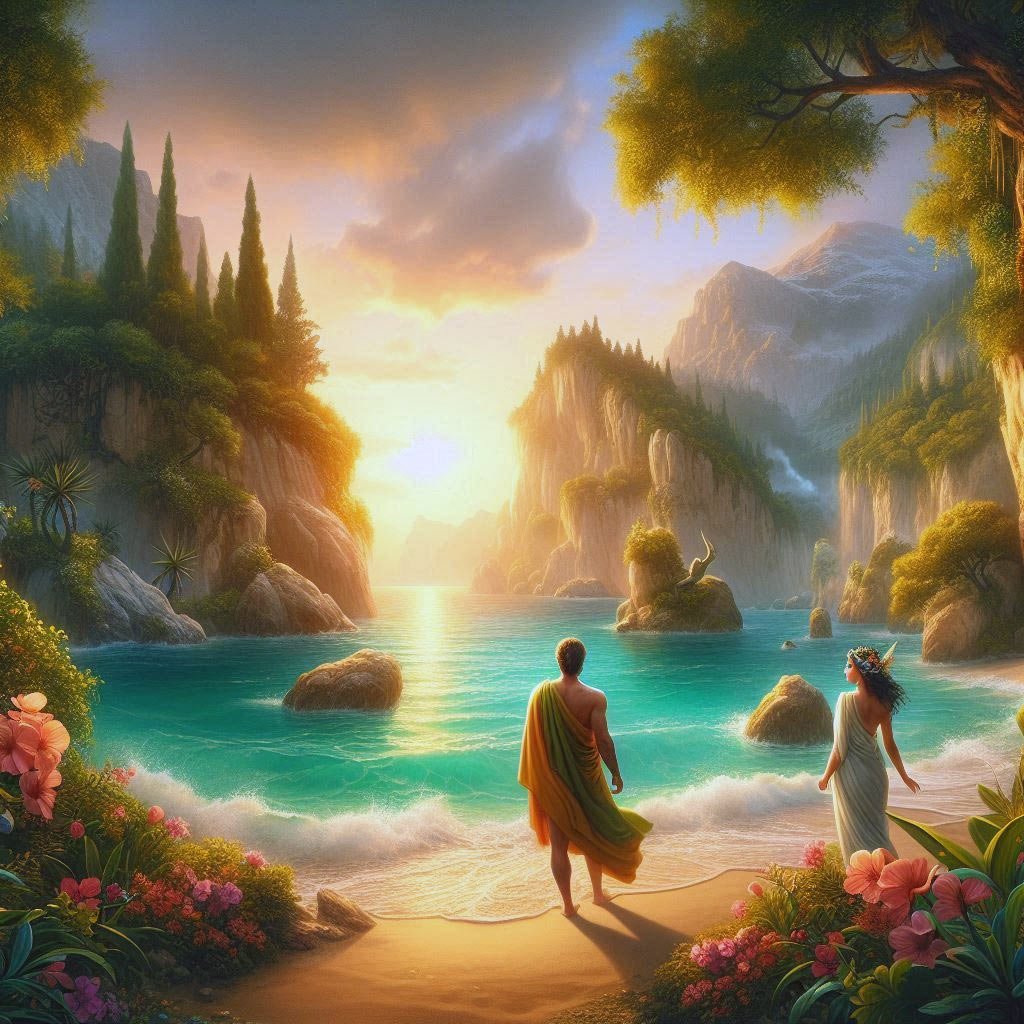
After the last ship sank, Odysseus managed to swim to an island where he remained for years, on the island of Calypso, named Ogygia. Some scholars say it could be the small island of Othonoi, northwest of Corfu; others identify it with Malta.
Athena persuades Zeus to allow Odysseus to return home, leading to the gods’ order for his release and ending his long period of isolation outside the human world.
12. Shipwreck on the Island of the Phaeacians
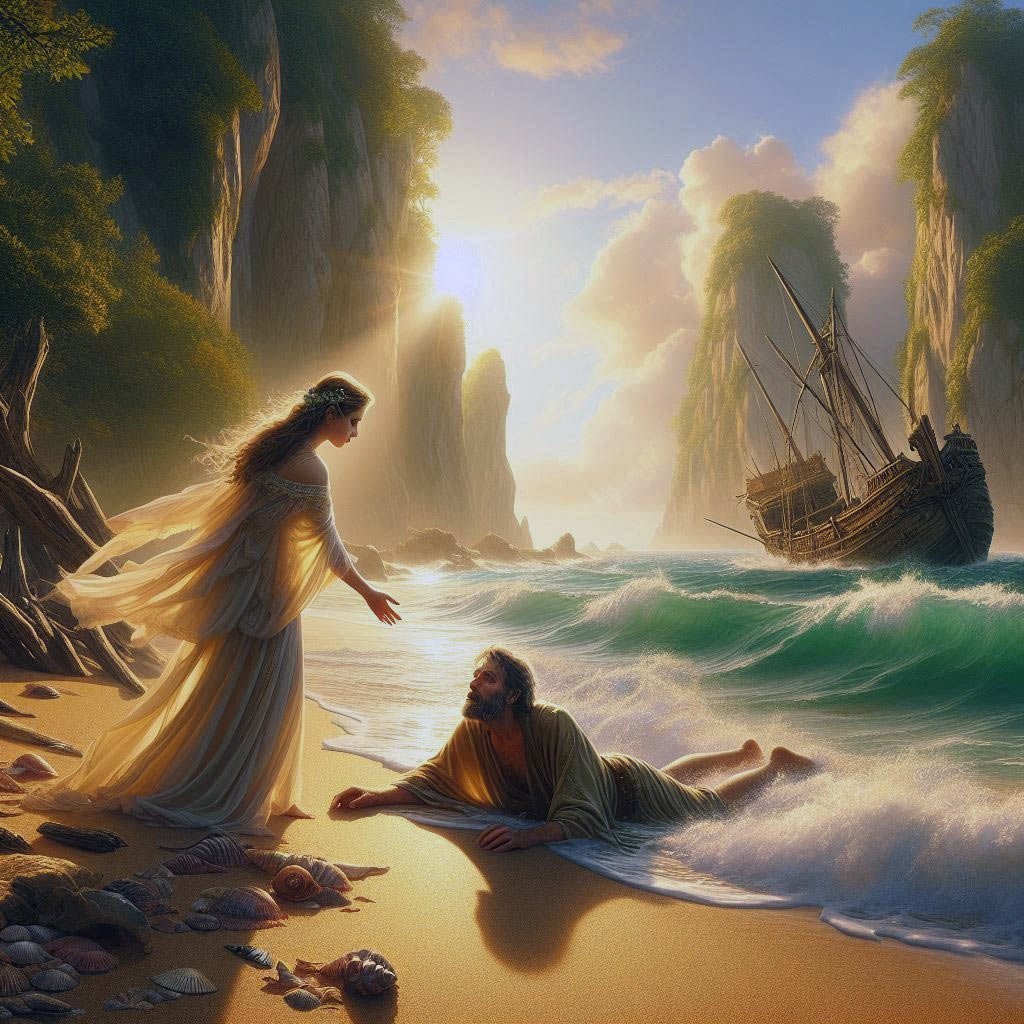
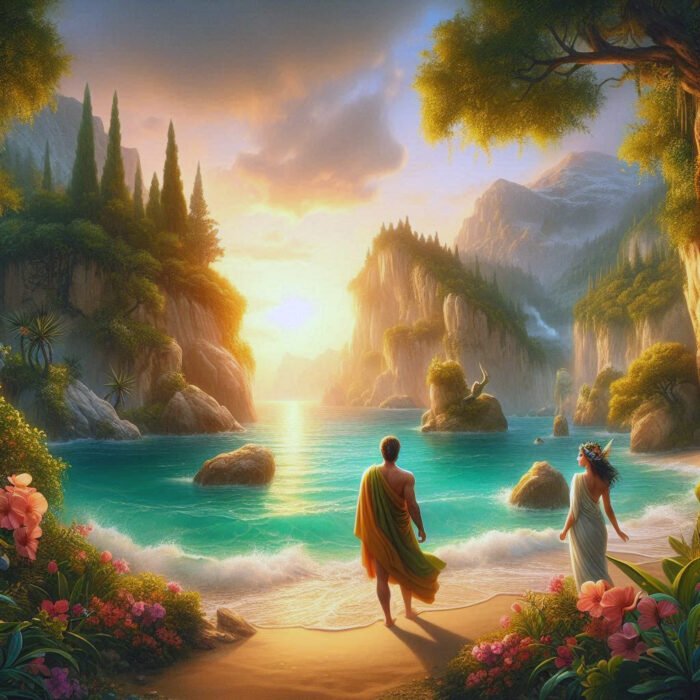
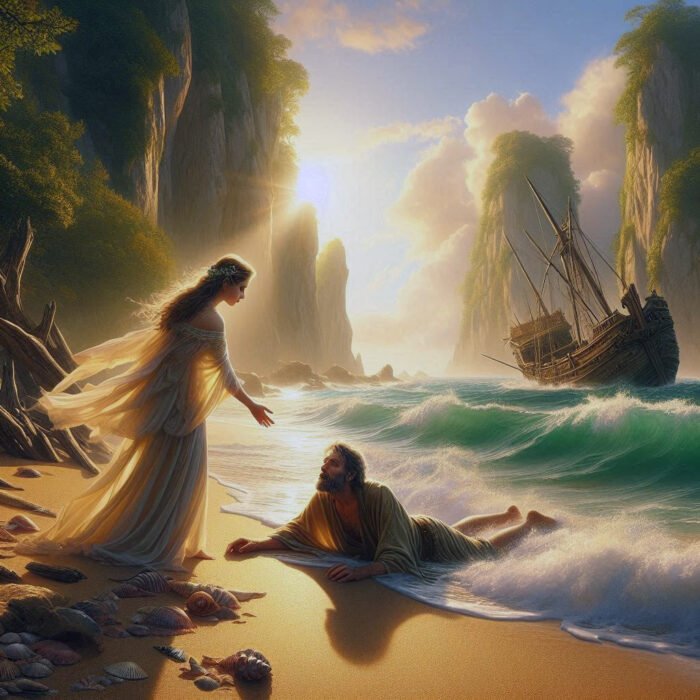
After leaving Calypso’s island on a raft, Odysseus is struck by Poseidon’s final storm and shipwrecked on the shores of the Phaeacians (Scheria).
Scheria, the land of the Phaeacians, was traditionally identified in antiquity with Corfu (Kerkyra), unlike many other locations in the Odyssey whose geography remained totally uncertain.
Exhausted, he is found by Nausicaa, daughter of King Alkinoos.
He is received in the royal court, recounts his journeys, and is then transported home on a Phaeacian ship, finally reaching Ithaca.
👉 on the Island of the Phaeacians episode
13. Return to Ithaca: Hidden Identity
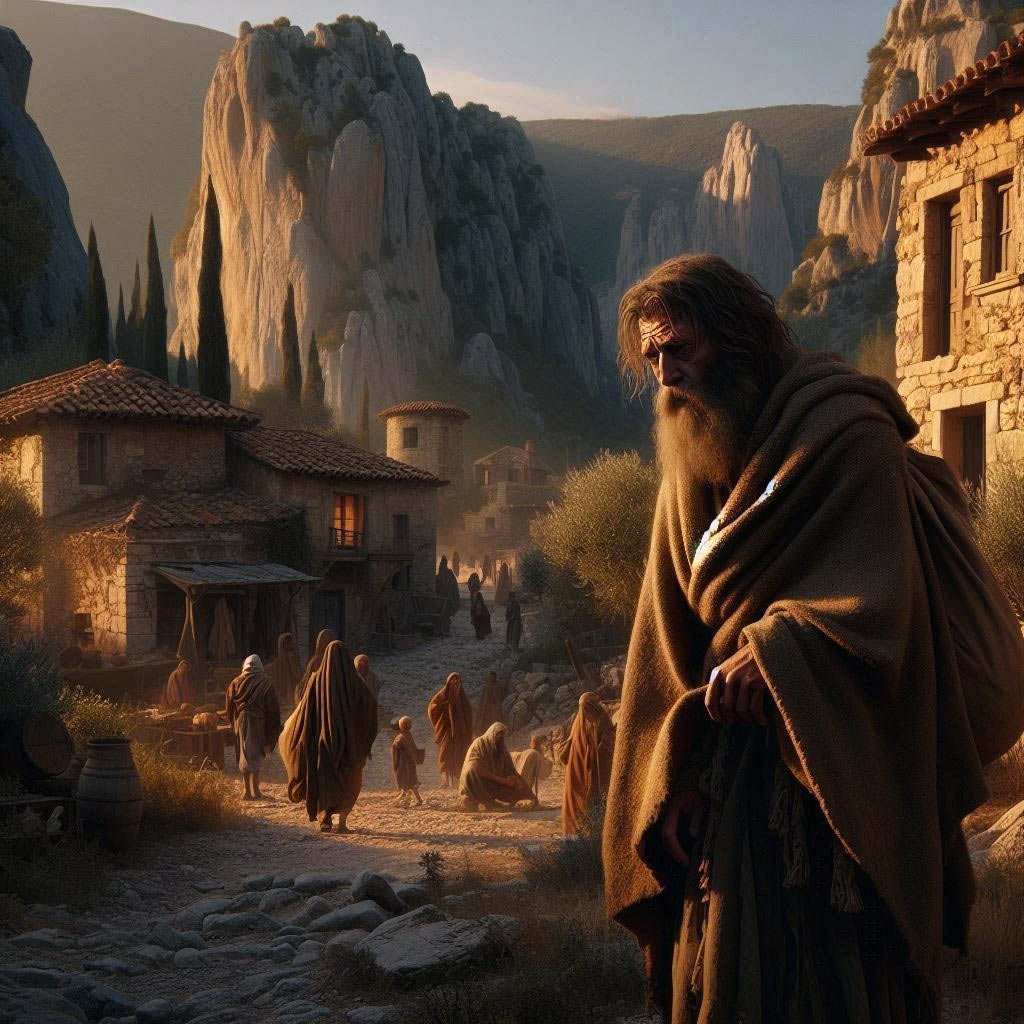
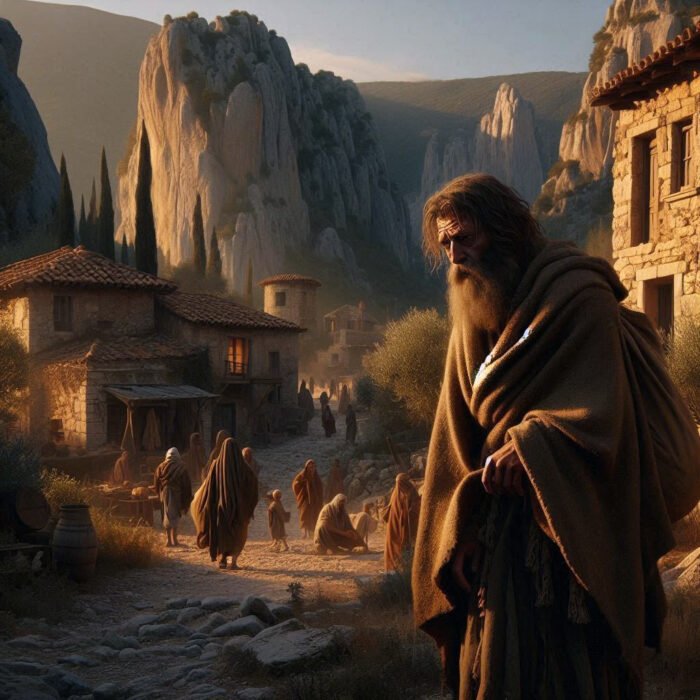
Odysseus arrives in disguise as a beggar, entering a world that no longer recognizes him.
Before reclaiming anything, he must first understand what has happened in his absence and test who remains loyal.
14. The Bow and the End of the Suitors
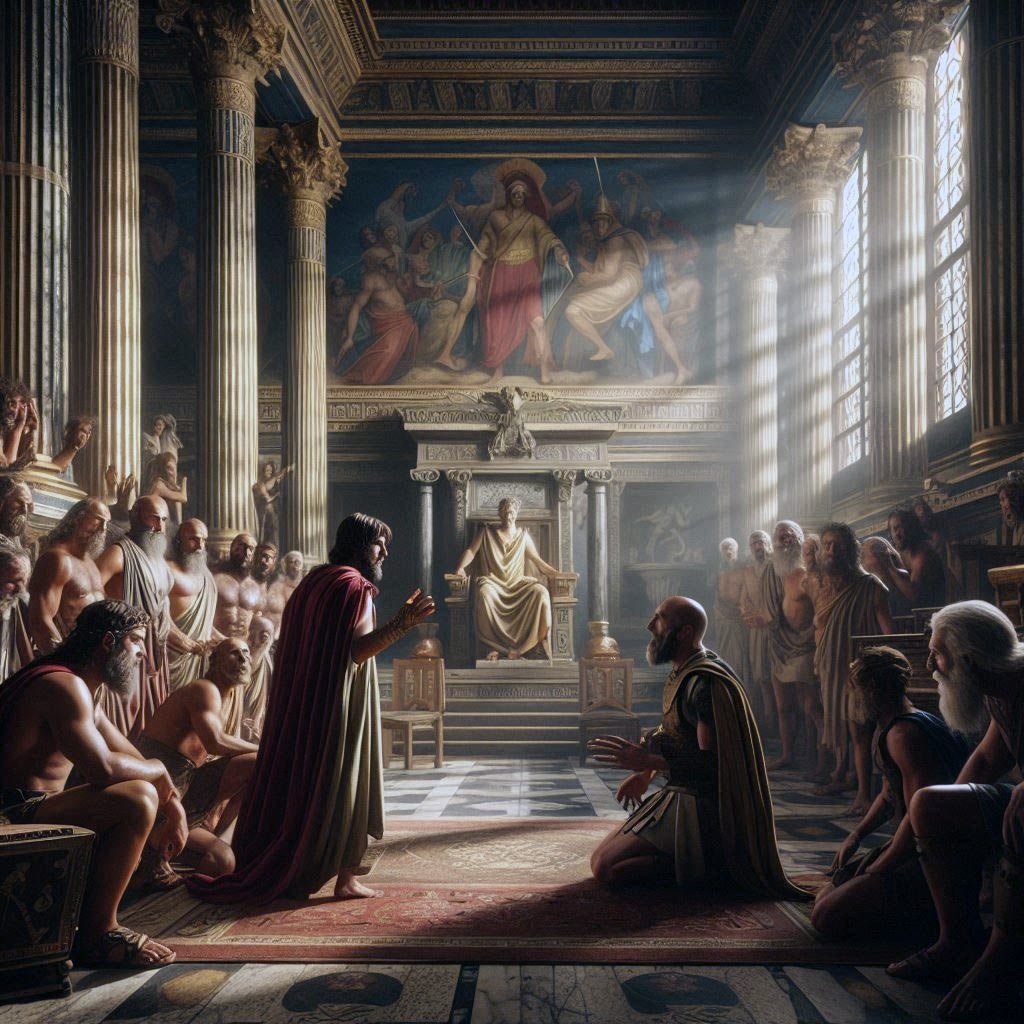
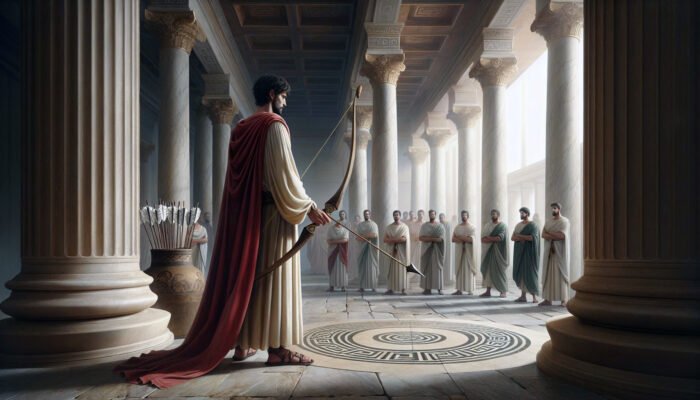
The final confrontation comes not through open battle, but through recognition and control of a single object: the bow of Odysseus. Its ability to use it becomes the turning point where disguise ends, and identity is restored.
Restoration of order in Ithaca
Order is restored not simply through victory, but through the re-establishment of rule, identity, and household structure. The long return reaches completion only when Ithaca itself is stabilized again.
Places in the Odyssey
Homer never identifies the locations of the Odyssey with historical precision, nor does he provide place names that can be securely matched to the Late Bronze Age world. The poem describes a mythic geography, where real maritime experience is blended with legendary and symbolic settings.
Most locations remain uncertain and open to interpretation. However, many scholars and ancient traditions place the narrative broadly within the central Mediterranean basin, particularly the sea routes between Greece, southern Italy, Sicily, and surrounding islands.
Some locations are more strongly associated with real geography in later tradition. The land of the Phaeacians, Scheria, is frequently linked in antiquity with Corfu in the Ionian Sea. Likewise, the encounter with Scylla and Charybdis is commonly associated with the Strait of Messina between Sicily and mainland Italy, a narrow and dangerous passage that matches the description in the poem.
Even the identity of Ithaca itself, the homeland of Odysseus, is debated in scholarship, with different proposals suggesting that the Homeric description may not correspond exactly to the modern island of Ithaca.
Even so, these identifications remain traditional and interpretative rather than definitive. The Odyssey preserves a geography that is as much poetic and narrative as it is navigational.
A Hypothetical Map of Odysseus’ Journey
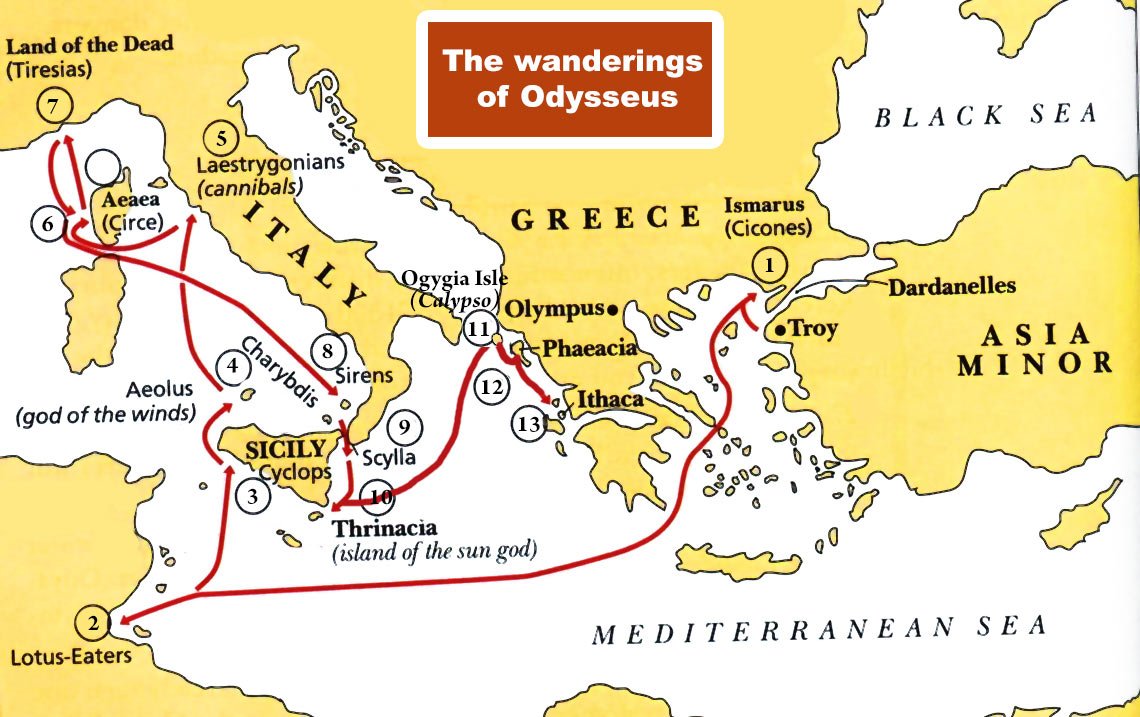
The map presented here does not represent a historically verified route, but a hypothetical reconstruction of Odysseus’ journey based on the most commonly proposed identifications of places mentioned in the epic.
The geography of the Odyssey is not always internally consistent, and many stages of the voyage cannot be reconciled as a literal navigational route. In the later parts of the journey, Odysseus repeatedly loses ships and companions, making a precise reconstruction increasingly difficult or impossible.
Because the poem emerged from centuries of oral tradition before being written down in the 8th century BCE, it blends elements of real Mediterranean geography with mythological landscapes, symbolic episodes, and legendary storytelling. For this reason, the journey of Odysseus is generally understood as a mythic voyage rather than a historical itinerary.
The Values of the Odyssey
- Homecoming (nostos + algos = pain for motherland, meaning nostalgia for motherland)
The entire epic is structured around return, not conquest, but restoration of home and identity. - Identity and recognition
Odysseus constantly hides, reveals, tests, or proves his identity, especially in Ithaca. - Divine intervention
Human actions are repeatedly shaped or redirected by the gods. - Hospitality (xenia)
Good and bad treatment of strangers becomes a recurring moral pattern throughout the epic.
Those who violate the sacred rules of hospitality, especially by treating strangers with hostility or violence, may face punishment from the gods. - Endurance and intelligence
Odysseus survives more through strategy, restraint, and persistence than brute force.