



But Who Was Medousa (Medusa)?
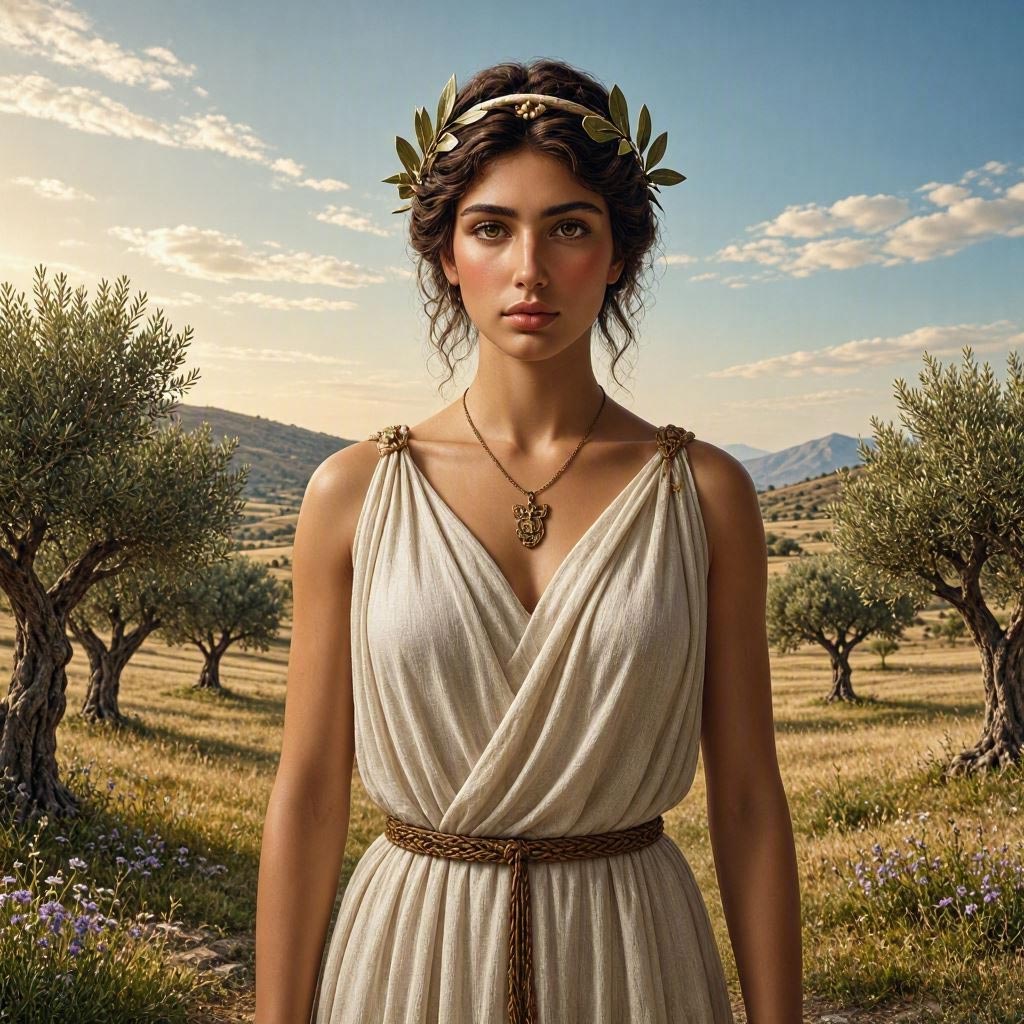
Medousa was not the monster that mythology says. In reality, she was a beautiful woman and a priestess of Athena, serving the goddess in her temple. All priestesses of Athena should remain virgins!
Poseidon desired her, but Medousa resisted him. In the end, Poseidon raped her inside Athena’s temple. A horrible act and example of a male-dominated society.
Yet it was not Poseidon who was punished.
Athena turned her own priestess into a monster. Her beautiful hair became living snakes, and her gaze became so deadly that anyone who looked directly at her was turned to stone.
Medousa was condemned for the violence committed against her.
It is one of the most disturbing stories in Greek mythology: the woman is punished, while the powerful male god escapes punishment.
Medousa’s transformation can therefore be seen as one of mythology’s starkest examples of injustice against women, reflecting a society in which the woman could bear the blame for a man’s actions.
Medousa’s fate was given a remarkable new interpretation
Almost three thousand years after the ancient story first appeared, Medousa’s fate was given a remarkable new interpretation.
In 2008, the Italian-Argentine sculptor Luciano Garbati created a sculpture called Medusa with the Head of Perseus. Instead of showing Perseus holding the severed head of Medousa, as the traditional story does, Garbati reversed the scene.
Medousa (Medusa) is standing with the severed head of Perseus in one hand and a sword in the other.
The sculpture was conceived as a response to one of the most famous representations of the myth: **Benvenuto Cellini’s **Perseus with the Head of Medusa, the celebrated Renaissance bronze displayed in Florence’s Loggia dei Lanzi. Garbati had grown up near Florence and knew Cellini’s sculpture well. His work deliberately turns Cellini’s composition and the ancient story upside down.
Garbati’s Medousa is not portrayed as the hideous monster of the ancient images. Apart from her serpentine hair, she has the body and appearance of a beautiful woman. She does not look triumphant or bloodthirsty. Instead, she appears calm and determined, holding the head of the man who came to kill her.
The sculpture was created in 2008, but it became widely known a decade later. In 2018, a photograph of the work circulated widely on social media, accompanied by the words “Be thankful we only want equality and not payback.” The image attracted considerable attention and eventually led to a New York exhibition.
Then came the most striking setting imaginable.
In October 2020, a seven-foot bronze version of Medusa with the Head of Perseus was installed in Collect Pond Park in Lower Manhattan, directly across from the New York County Criminal Court. The sculpture was part of the NYC Parks Art in the Parks programme and remained on display for several months.
The location was not accidental in its symbolism.
The New York County Criminal Court had been the setting for numerous criminal cases, and the installation came during the period when the #MeToo movement had brought sexual violence, abuse and the treatment of victims into worldwide public discussion. The location also carried a particularly strong association with the sexual-assault case against Harvey Weinstein, whose trial had taken place at the courthouse.
The ancient story had placed Medousa on trial without ever giving her a voice. She was violated, transformed into a monster, hunted, and finally killed.
The modern sculpture puts her in front of a courthouse.
But this time, Medousa is not the accused. She is the one standing with the sword.
The symbolism was quickly embraced by many people as a representation of women’s anger, resistance, and self-defence, and the sculpture became associated with #MeToo. The MWTH Project described the work as an inversion of the traditional narrative, presenting Medousa at a moment of empowered self-defence.
There is an interesting irony in this modern interpretation. Garbati has said that when he created the sculpture, he was not aware that Medousa had already become a feminist icon. His starting point was much simpler: he admired Cellini’s Perseus with the Head of Medusa and wanted to reverse the roles of the two figures.
Yet the reversal gave the ancient story a completely different meaning.
For centuries, the image was:
Perseus → holding Medousa’s head.
Garbati changed it to:
Medousa → holding Perseus’ head.
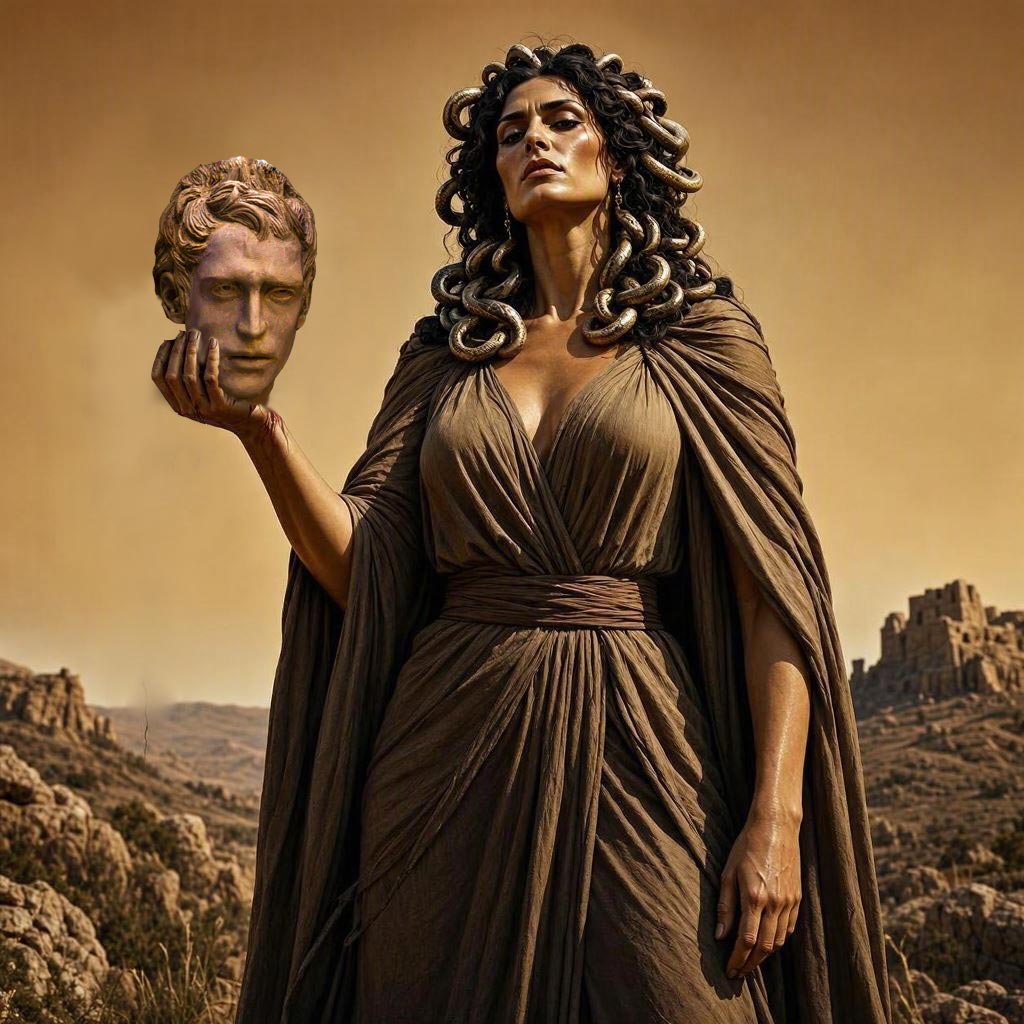
The monster becomes the survivor.
The victim becomes the one holding the sword.
And the woman who was once blamed and punished is finally given the power to tell the story from her own side.
Whether one sees the ancient myth as a reflection of its society or simply as a story that changed through the centuries, the modern Medousa has acquired a meaning far beyond the original legend.
The woman who was once turned into a monster has become, for many, a symbol of resistance.

Comments