



The Acheron River

The Acheron is a real river in Epirus, northwestern Greece. It rises in the mountains and flows through a wild landscape of springs, gorges, and wetlands before reaching the Ionian Sea.
For the ancient Greeks, however, the Acheron was much more than a geographical feature. It was the river of the Underworld, associated with Hades and the passage of the dead. This is one of the most remarkable cases in Greek mythology where an actual landscape became inseparably connected with the world of the gods and the dead.
The name Acheron is usually connected with grief or woe, and the river appears in the ancient literary tradition as one of the waters of the Underworld. In later tradition, Charon carries the souls of the dead across its waters toward Hades.
The association was not simply the invention of poets. Ancient Greeks knew the Acheron of Epirus as a real river, and the strange, remote character of its landscape helped create its connection with the Underworld. The nearby Nekromanteion, the ancient “Oracle of the Dead”, is further evidence of how strongly this particular region became associated with the world of the dead.
And what about the Styx?
The Styx is often presented today as the river of the Greek Underworld. This is misleading when applied to the older Greek tradition.
In early Greek mythology, Styx had a different significance. In Hesiod, Styx is a divine river and a goddess, and the gods swear their most solemn oaths by its waters. It was a small river, more like a series of waterfalls in Arcadia, not simply another name for the Acheron.
The familiar image of Styx as the river crossed by the dead became particularly influential through later literature, especially Roman literature such as Virgil. It should therefore not be used to erase the much older and more direct Greek association between Acheron and the Underworld.
The Acheron remains a real river that can still be visited today — a physical landscape in Epirus that the ancient Greeks connected with one of the deepest ideas in their mythology: the boundary between the world of the living and the world of the dead.
Charon, the Ferryman of the Dead
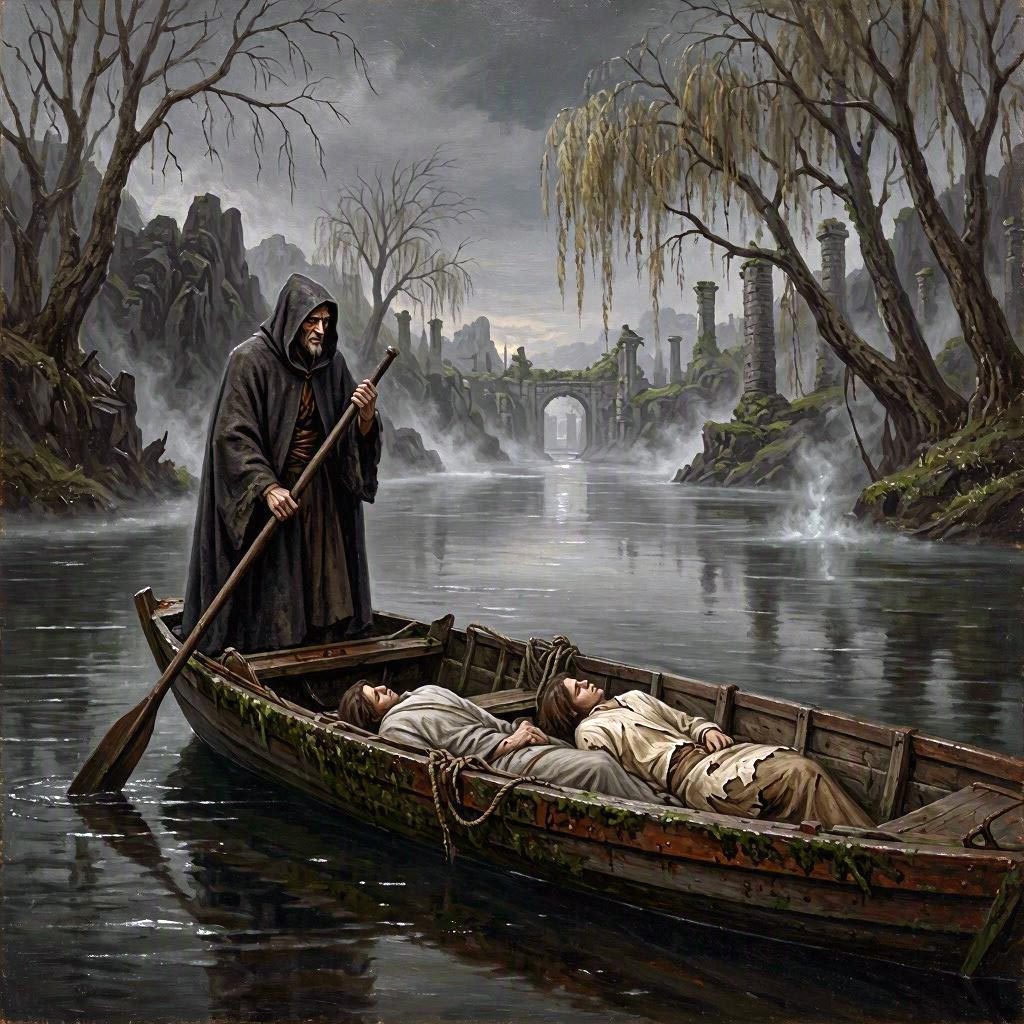
According to the ancient Greek conception of the journey to the Underworld, the dead did not simply disappear into Hades. Their souls had to make a journey.
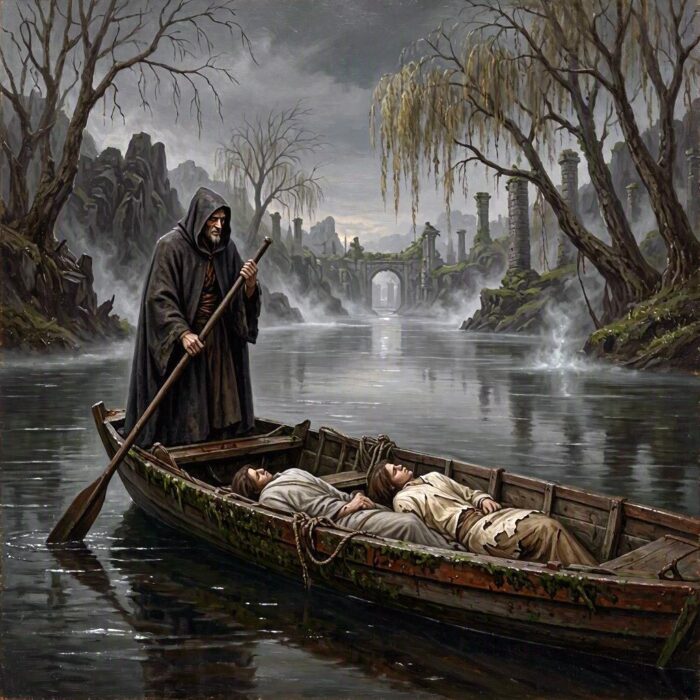
Hermes, in his role as Psychopompos — the Guide of Souls — led the dead from the world of the living to the waters of the Underworld. There, Charon (Χάρων), the grim ferryman, waited in his boat to carry them across.
Charon was not offering his service for free.
The traditional fare was one obol, a small Greek coin. This explains the ancient funerary custom of placing a coin with the dead, most famously in the mouth, so that the deceased would have the means to pay Charon for the crossing. Archaeological evidence confirms that coins were indeed placed with the dead, although in practice the denomination and exact position could vary.
Menippus, the Cynic philosopher who died without money
The idea produced one of the most memorable pieces of humour in ancient Greek literature.
In Lucian’s Dialogues of the Dead, the Cynic philosopher Menippus arrives at Charon’s boat without an obol. After carrying him across, Charon demands his fare:
Χάρων: ἀπόδος, φημί, ἀνθ’ ὧν σε διεπορθμεύσαμεν.
Μένιππος: οὐκ ἂν λάβοις παρὰ τοῦ μὴ ἔχοντος.
In other words:
“Pay me for carrying you across.”
“You cannot take it from someone who does not have it.”
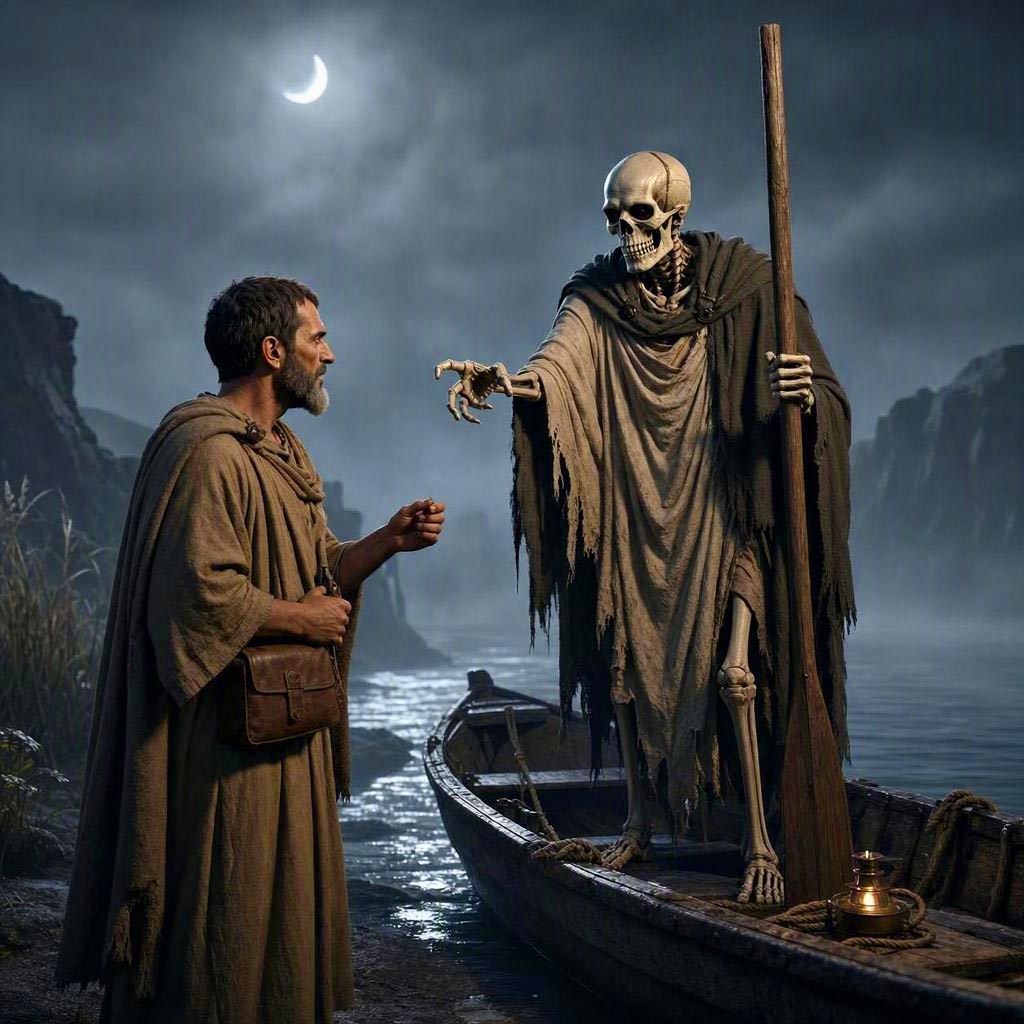
Charon cannot believe that anyone could arrive at his boat without the necessary obol. Menippus simply tells him that he has none. When Charon threatens him, Menippus threatens him back. When Charon insists that everyone must pay, Menippus replies that if he has no money, there is nothing Charon can take.
He even tells Charon that Hermes should pay for him, since Hermes was the one who brought him there. Hermes, naturally, refuses to pay the fares of the dead.
Menippus then points out that he did not cross entirely for free anyway: he helped with the oar and bailed water from the boat. Finally, when Charon asks what he has in his wallet, Menippus reveals that he has only some beans and food for Hecate.
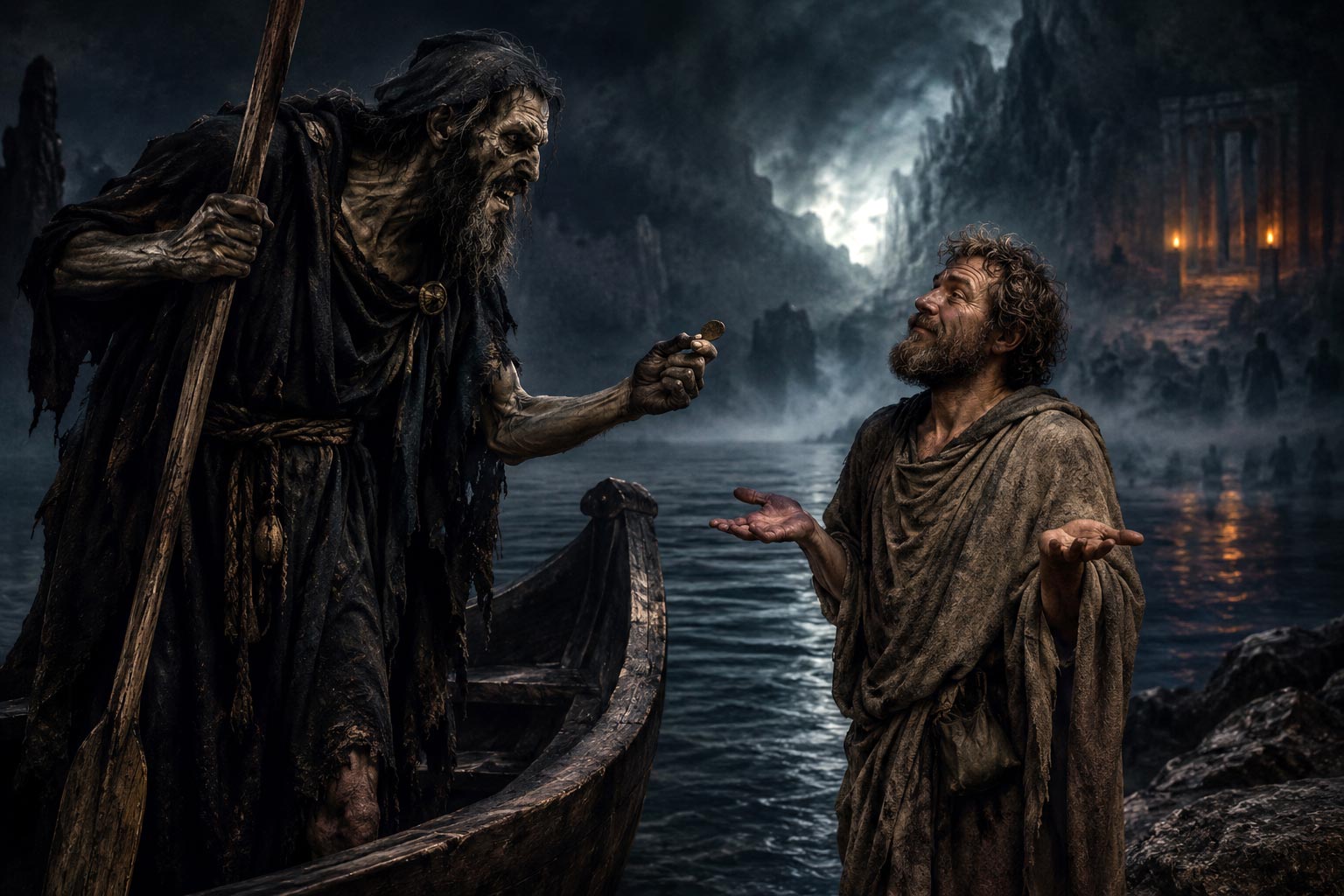
This satirical scene gave us the famous Greek saying:
«Οὐκ ἂν λάβοις παρὰ τοῦ μὴ ἔχοντος.»
Literally:
“You cannot take from one who has nothing.”
It became the proverbial «ουκ αν λάβοις παρά του μη έχοντος», still used today when someone demands something from a person who simply does not possess it.
There is something particularly appropriate about the joke. Even at the gates of the Underworld, Menippus refuses to accept that a rule can create something that does not exist. Charon can demand his obol as much as he likes. A man without an obol cannot pay an obol.
And so, in Lucian’s wonderfully irreverent version of the journey to the dead, the great ferryman of Hades meets a problem that no god, law, or threat can solve:
The passenger has no money.



Comments