



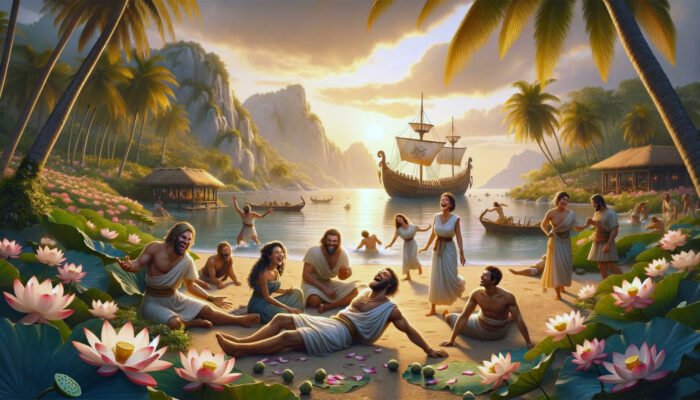
In Odyssey, after the quiet forgetting of the Lotus-Eaters, the sea of Troy gave way once more to something harsher, older, and far more dangerous.
The ships of Odysseus reached the land of the Cyclopes — a world outside law, outside cities, and outside the customs of men.
Here, there were no kings. No councils. No hospitality. Only isolation.
The Cave Without Law
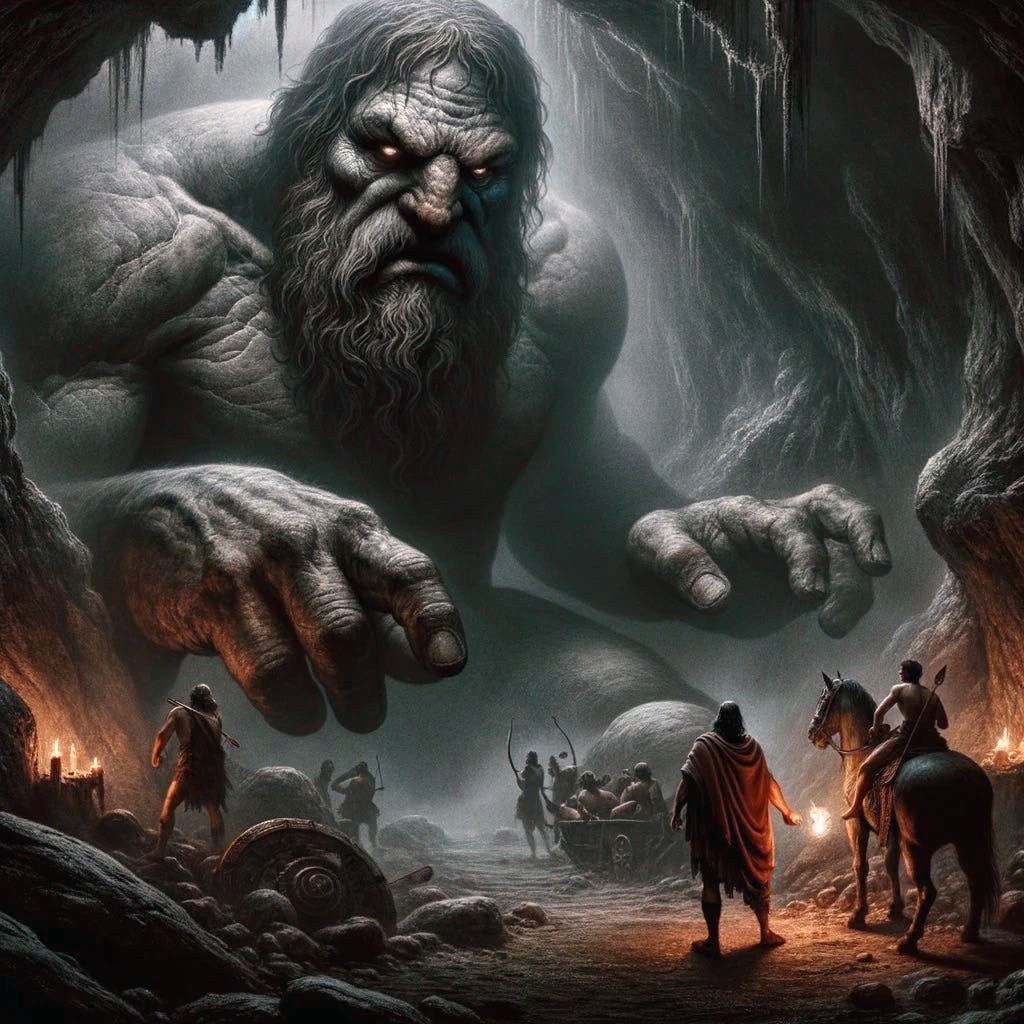
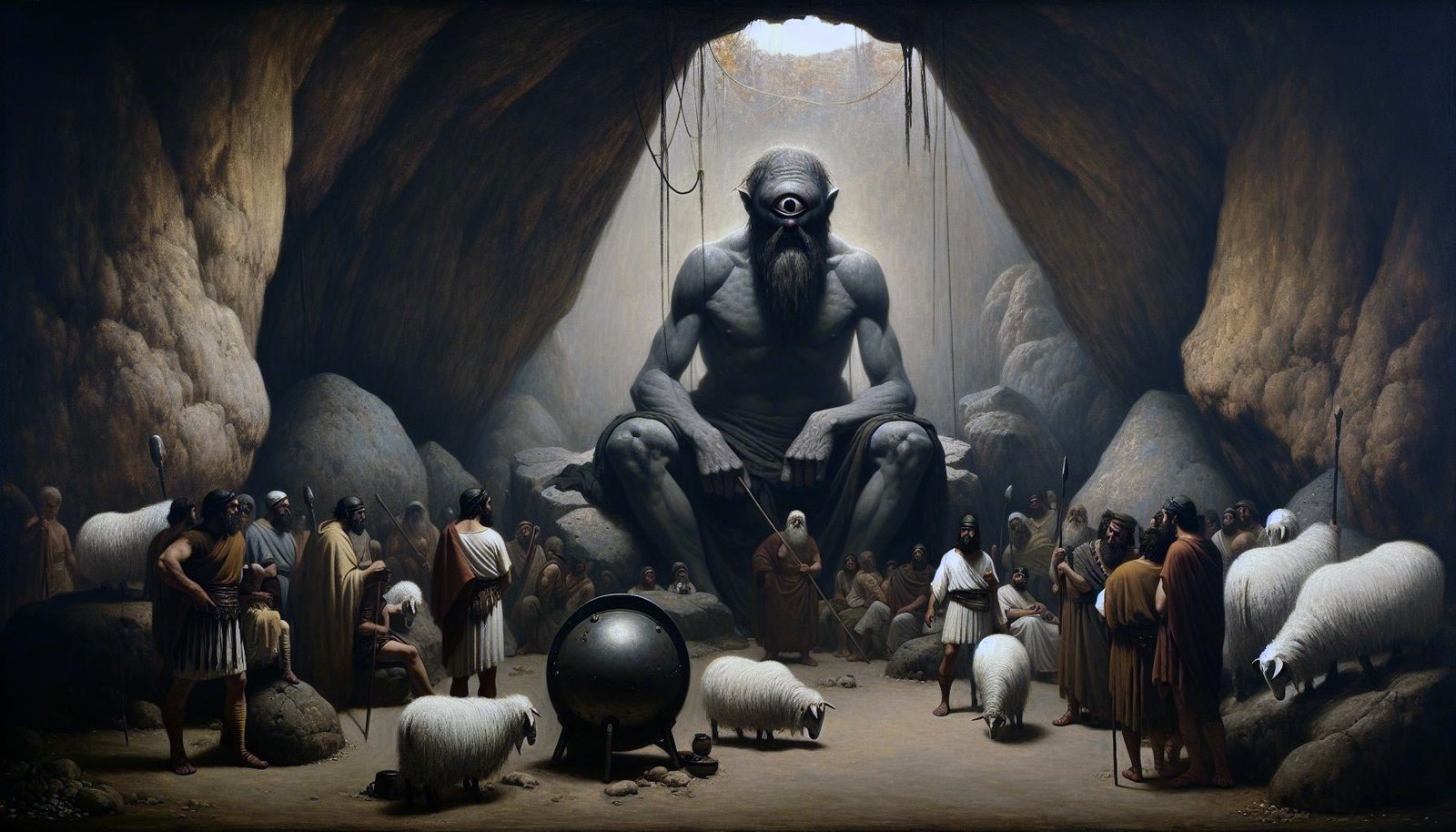
Among these beings lived Polyphemus, the most feared of the Cyclopes, a giant shepherd dwelling alone in a dark cave by the sea.
When Odysseus and his men entered his land, they did not find a society — only flocks, cheese, and silence. Driven by curiosity and need, they waited inside the cave, not knowing they had entered the home of something that did not recognize guests.
When Polyphemus returned, the world closed behind him.
The Devouring
The Cyclops did not greet them. He did not ask their names.
He only asked what food they had brought him — and then took the men themselves.
One by one, the companions of Odysseus disappeared into the darkness of the cave.
There was no battle in the usual sense. Only helplessness.
The Name That Was “Nobody”
Odysseus did not answer strength with strength. Instead, he chose deception.
When asked his name, he said: “No one.”
It was a word that would later decide their escape.
The Blinding
While the Cyclops slept, Odysseus and his remaining men drove a sharpened wooden stake into his single eye, burning and twisting it until darkness replaced sight.
Polyphemus roared in pain, calling out to the other Cyclopes, saying that “No one” had harmed him.
And so no one came.
The Curse of Poseidon
But escape was not the end.
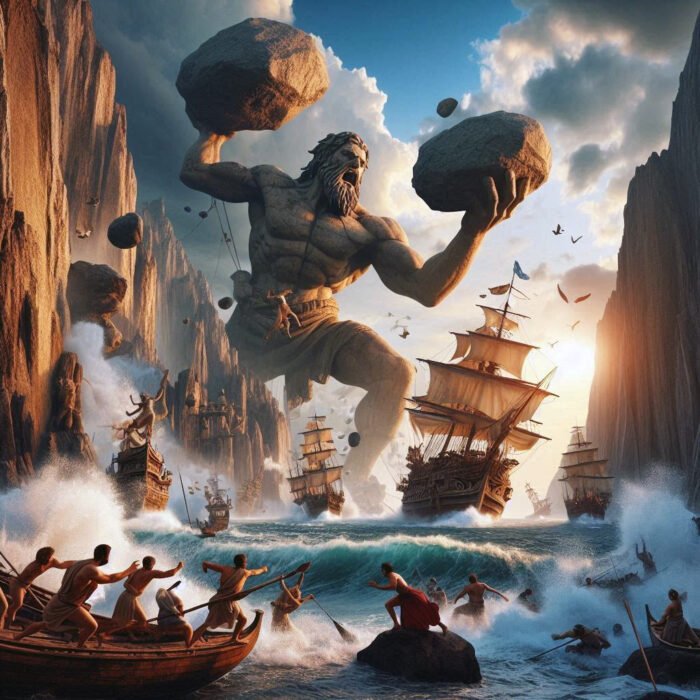
As Odysseus and his men fled to the sea, Polyphemus called upon his father — Poseidon — cursing the man who had blinded him.
From this moment forward, the journey changed its nature.
It was no longer only a voyage home.
It became a passage marked by divine hostility, where the sea itself would remember what had been done in the cave.
A Turning Point of the Odyssey
The encounter with Polyphemus is the true fracture in the return from Troy.
Before him, the journey was difficult.
After him, it becomes personal.
The sea is no longer neutral. It has taken sides.



Comments