



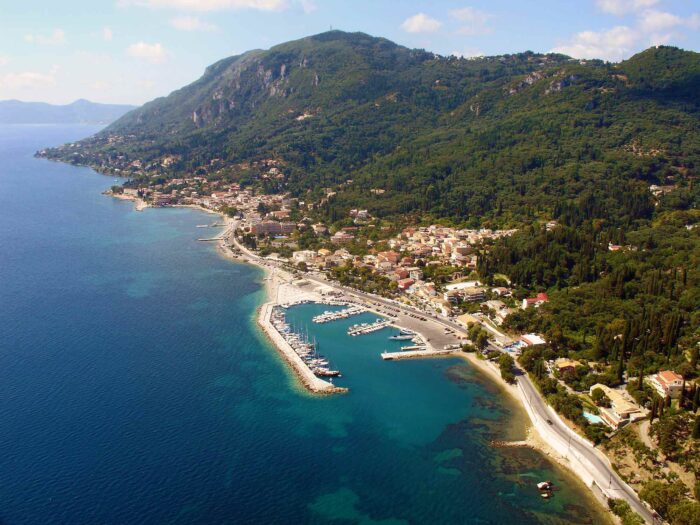
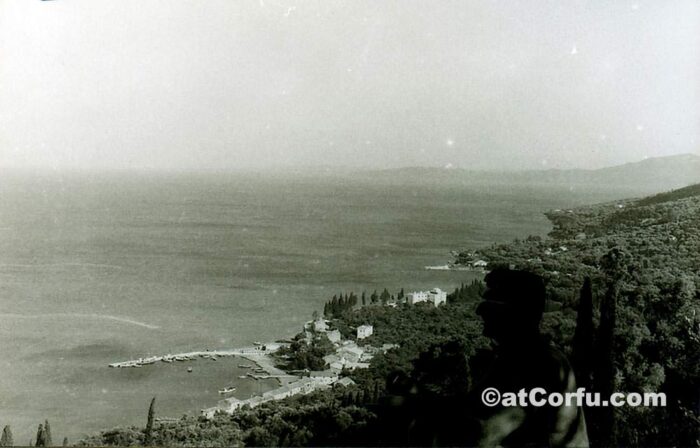
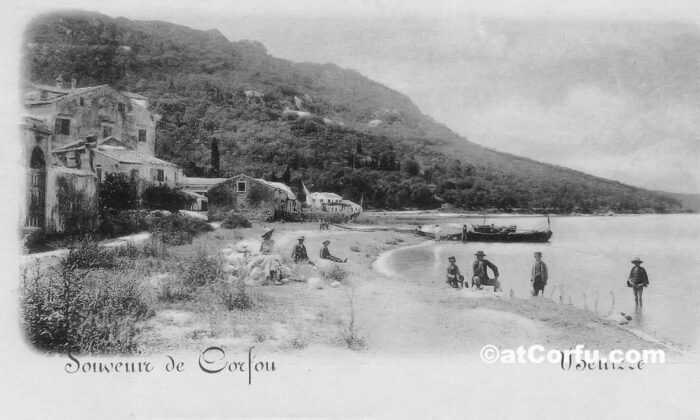
Benitses is a very old village. The history of the area as an inhabited place started in ancient times and was due to the abundant freshwater springs, which made the area favored.
The settlement existed as Penitsai since the 14th century in official documents.

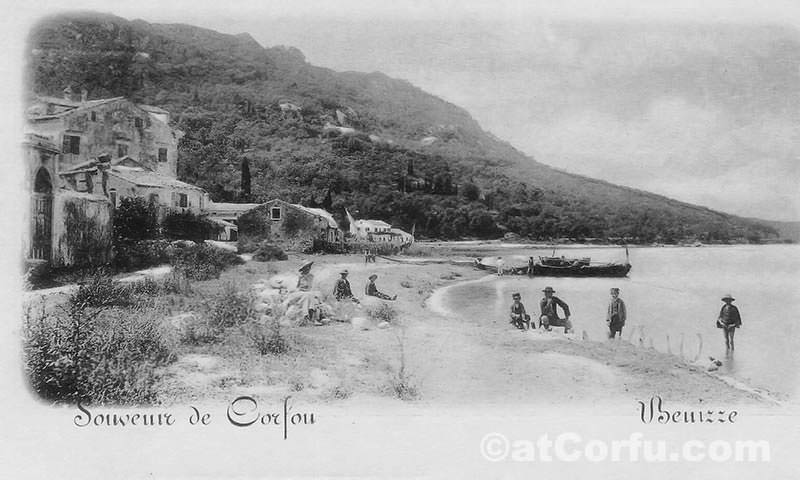
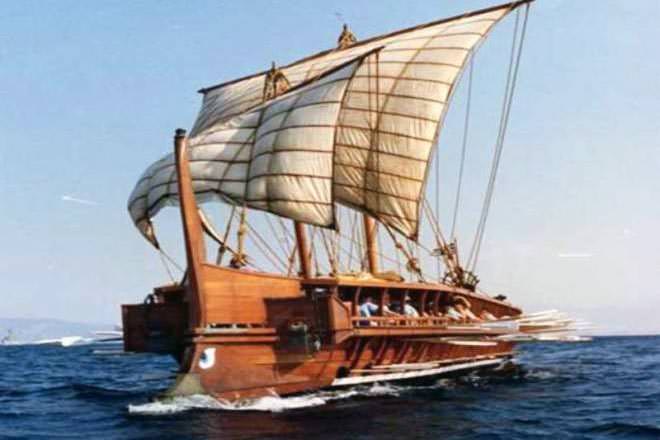
It is estimated that 80% of the water in Corfu is in the hills here, stemming from the limestone rocks of the mountains of Stavros and Agioi Deka, which surround the valley.
The ruins of Roman baths and other finds demonstrate that not only was it inhabited, but that it was also a particularly important part of the island.
During the period of the British domination of the island, the water springs here were channeled, and an aqueduct was built to provide Corfu Town with water, but the Romans, almost two thousand years earlier, had created something similar. Their persistence in building projects such as aqueducts, roads, etc. is famous.
In 1269CE, Charles Anjou, the French King of Sicily, occupied the whole island of Corfu; hence followed the ‘period of Anjou.’ It was then that the island was divided into four departments—regions called Gyrou, Orous, Mesis, and Lefkimis, respectively — names that are still in use today.
In the battles that took place then were also ships from Genoa.
One of them sank off the old fortress, and all the surviving sailors swam ashore.
The conditions of the time did not allow them to return home, and so they remained on the island.
One detail: the Genoese captain was called Spinoula, and all the sailors were named after him by the local people; finally, they all ended up with the surname Spinoulas.
This is a story regarding the origin of the many Spinoulas families around the island, which we have no reason to doubt because it was told to us by a member of the Spinoulas family!
In 1537, the Turks, in one of several failed attempts to seize the town of Corfu, took 20.000 men from the rural areas prisoners and sold them as slaves in the slave markets of Egypt and Constantinople.
This was a massive humanitarian disaster and nearly caused the extinction of the island population. The countryside was devastated, and there were not enough people to cultivate the land and tend the olives, which were the main product of the island.
The Venetians saw the danger and gave privileges and land to those from the Ottoman-occupied Greece who wanted to come and settle in Corfu.
So a wave of immigration was created, mainly from Epirus, mainland Greece, the Peloponnese, and even Crete.
The vast majority of residents of Benitses come from those who settled here at that time; the names with two syllables, such as Zochios, Bellos, Boikos, Kontos, Nastoulis, etc., come from Epirus and especially an area called Souli.
The name Moraitis is from the Morea (Peloponnese).
Many others whose names end in – opoulos came from the Peloponnese, and others from the island of Crete.
Most of the present inhabitants of Benitses (about 70%) have their distant origins in Epirus.
Origin of the name Benitses
There are several theories about the origin of the name, and many resemble the folk tales told by older people.
One of them says that the name belonged to a pirate who came to admire and loot the village, while others say that the pirate’s boat was called Benitses!
This theory is more like a legend that has little to do with reality, but it adds color to our history.
The true origin of the name Benitses is clearly shown in official government documents from the period of the Angevins and before the Venetian period, when even in the 13th century, the area was referred to as Penitisai, a word derived from the Ancient Greek word “Penio” that means a place that has rivers and is generally rich in water.
Indeed, Benitses is rich in water and used to have two small rivers that reached the sea where the harbor is now.
Later, the name Penitisai changed over the years into Penitsai and finally into the current Benitses.
Benitses in the 20th century

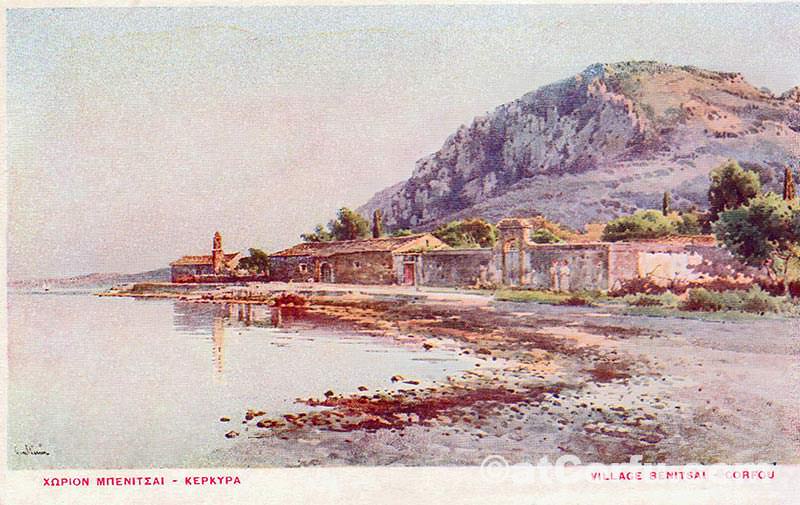

So the people settled on the banks of the river during the Middle Ages, and this river and its sources helped them survive and flourish.
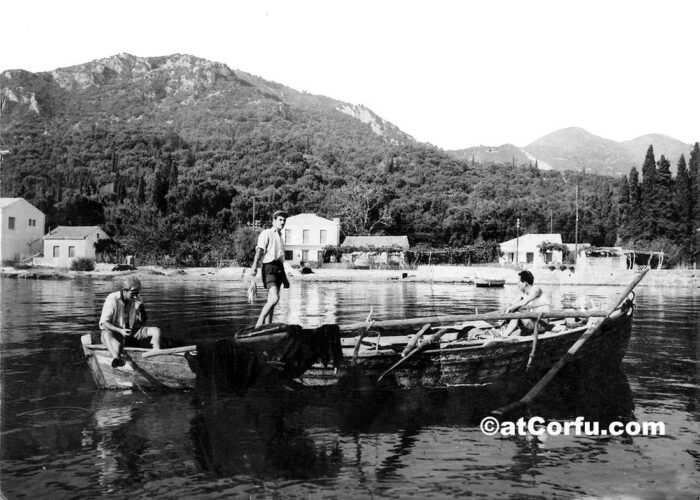
Millstones were built near the springs, and the river was used for the boats that went to the mills, carrying flour and olives from all around the coast of Corfu.
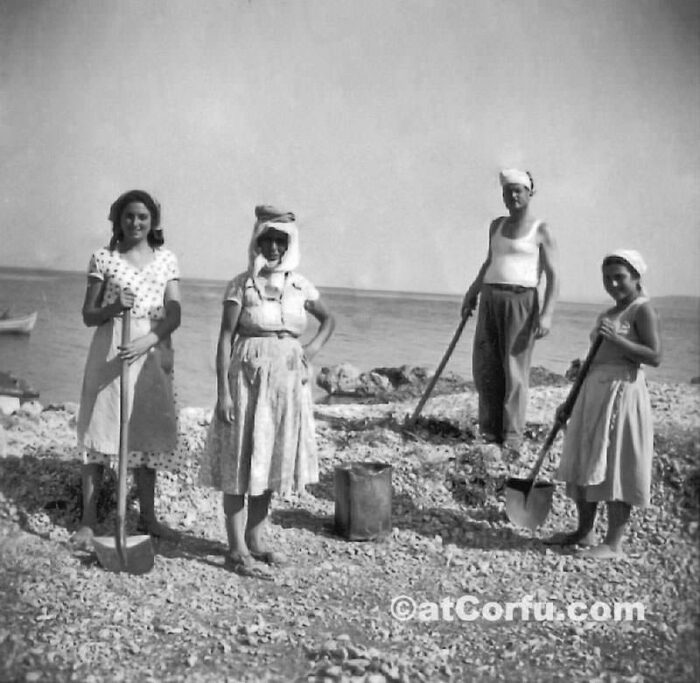
Much later, in the early 20th century, conditions changed; the mills did not produce enough, and they were not able to feed the growing population.
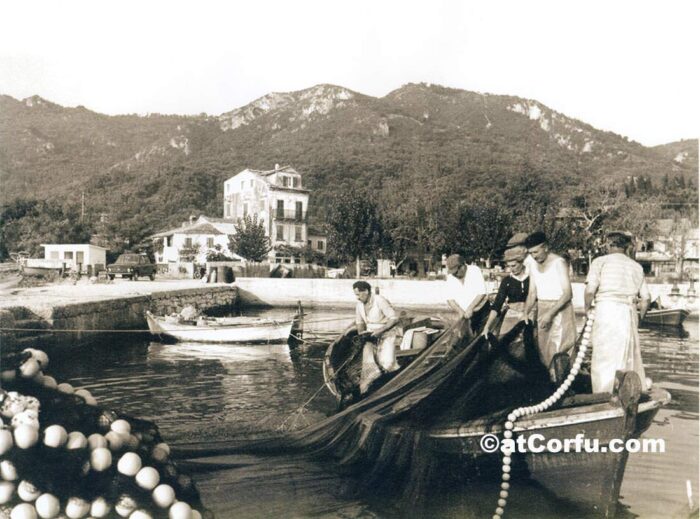
So residents turned to fish, and the river passing through the village was a hindrance, so they blocked the flow in the riverbed, and the river followed another direction and now flows to where the hotel Potamaki is today.
The old riverbed was turned into a road, which is now the main street of the old village.
It’s not possible to see the mouth of the river (Trafos in local dialect) today because it has shrunk so much that you pass it without noticing.
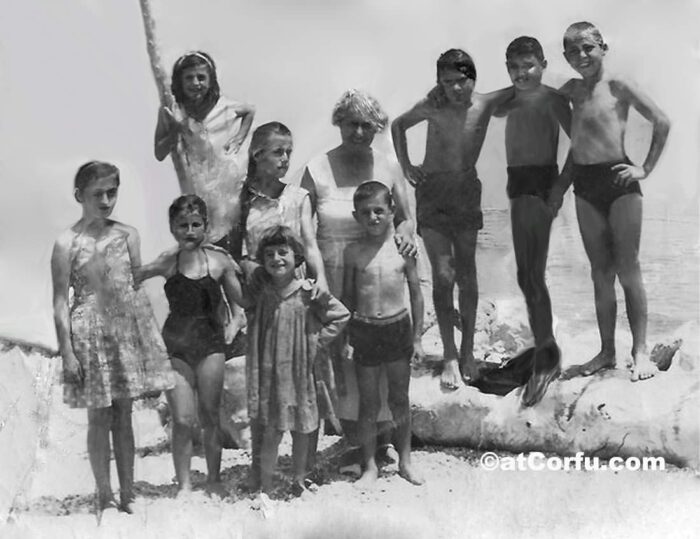
The life and habits of inhabitants changed radically with the advent of mass tourism that began in the 60s and reached a peak in the 80s.
The Old Historic Buildings of Benitses
In Benitses, there are some very old and beautiful buildings, some of them more than 5 centuries old.
We tried to collect as much information as we could about the most important of them. It was really difficult, as most old people who knew about them are dead, and the living ones are so old that they can’t remember much or, strangely, don’t want to talk about them.
Here is what we have learned about these houses, with the promise to add as much information as we can in the future.
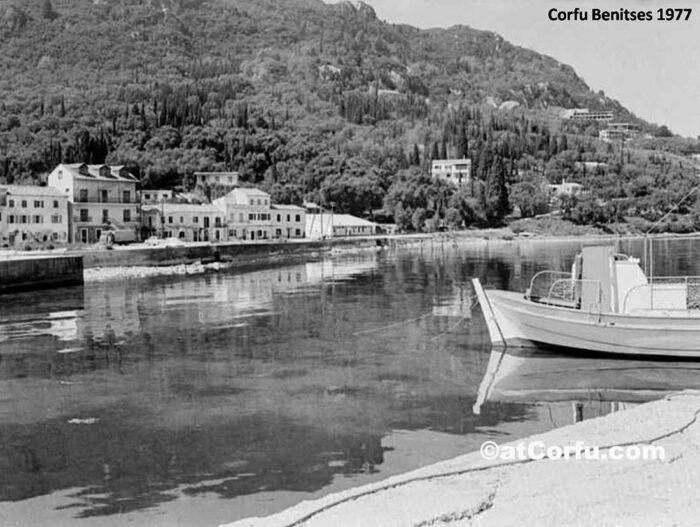
The tall building at the entrance of Benitses’ old port
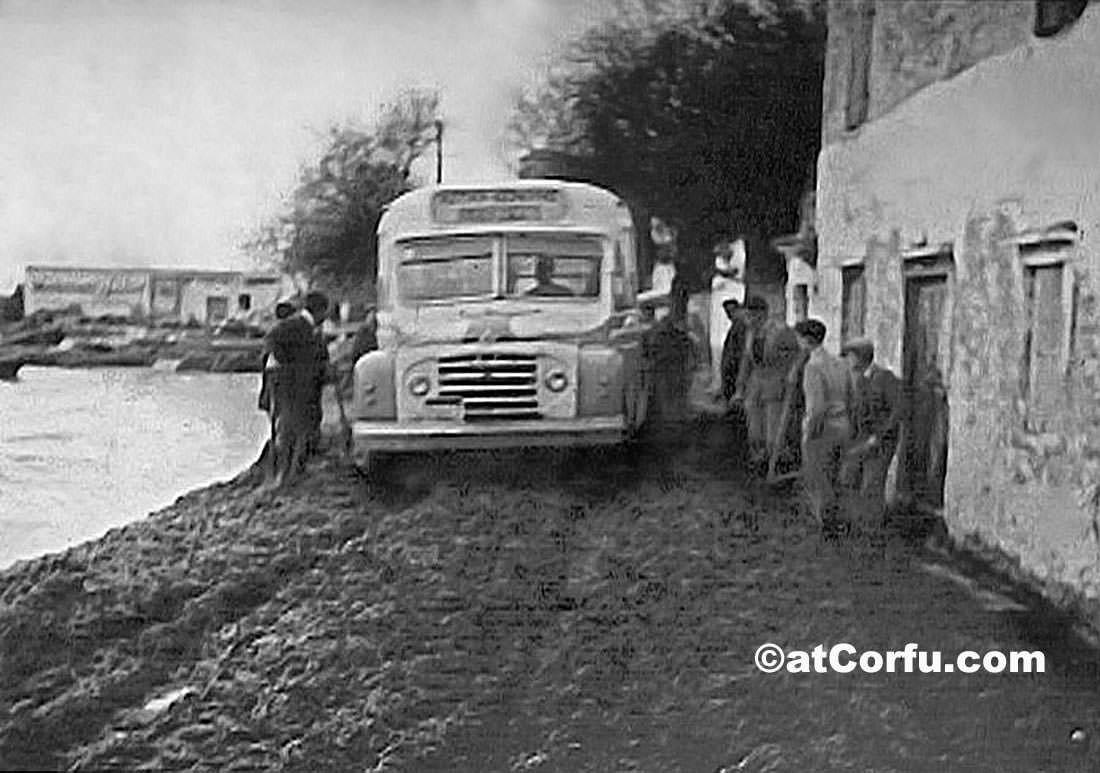
This beautifully tall and slim neoclassical building was built right on the banks of the river that flows through the old Benitses port, when the main road that leads up to the old village was a river.
It must be older than 4 centuries, but details from its early history are not known.
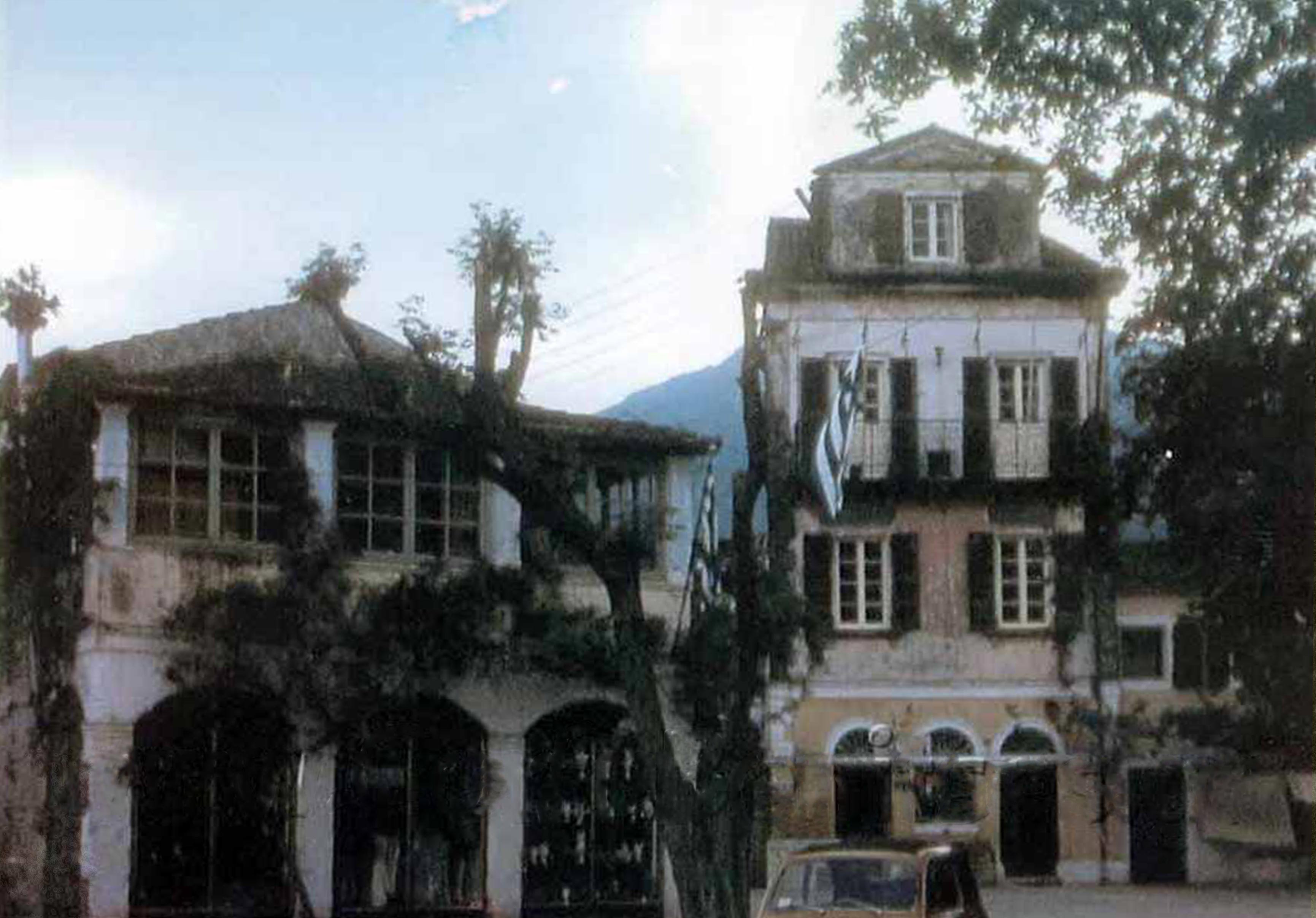
Owners during the early 20th century were the three Vandoros brothers, Memas and Aggelos, who were traders in Corfu’s Jewish sector, and Spiros, who was a lawyer.
EDES, a right-wing partisan group led by Napoleon Zervas, had its headquarters in the Vandoros building from 1945 to 1949, just after the war.
Serafim was a priest living in Messonghi, who later became an Archbishop. He was a member of this right-wing partisan group of EDES. He used to go around the area, always riding on a horse.
An Italian family with 2 daughters was living on the first floor during the Italian occupation(1941-1943)
In the same building, on the ground floor, and after 1949, the traders Matios and Likouris opened a general commercial shop, where they sold potatoes, onions, etc. Οnce they were robbed in the area of St. John of Pigeons by a gang of Greeks from southern Albania; their leader was the grandfather of today’s hotelier in Corfu.
From 1953 to 1958, the ground floor was a barbershop run by Yiannis Kontos(Bourelas), and from 1958 to 1971 it was one of the two kafeneions that existed in Benitses before the 80s.
This was the kafenion Skaloma, named after the area; indeed, the area around the port and at the seaside is called Skaloma.

Today, the building belongs to the Bellos family, as they bought it in 1971 from Spiros Vandoros.
The Grapevine Restaurant of Nikos Bellos, or Klimataria, is operating today on the ground floor.
The other building in the photo – Finanza
The other building in the photo doesn’t exist today. It was called Finanza back in 1941 and used to be the headquarters of the Italian occupation army; many members of the resistance were severely tortured inside this building.


Later, it became a restaurant owned by Stefanos Kefallonitis until it was demolished before 1974, when the square of Benitses and the new road were constructed.
The building of the Township
This house was built almost 3 centuries ago and was owned by an Italian noble named Palaviccini.
Later, it became the property of Varvitsiotis, a family of famous notaries, and after the death of the last family member, it was donated to the state for public use. It is known today as the Varvitsiotis Legacy.
In this building were always the offices of the local municipality, many years ago, in a small office at the backside of the building, while the rest was used as a customs office.
The first customs officer was someone named Harilaos Pateras. During his duty here, he married Lina Kouris, a local girl from the wealthy Kouris family.
The customs office moved to Corfu in 1962.
From 1962 to 1965, a school for young women was operating in the building; most of these girls were coming from other villages all over Corfu.
Yes, it sounds strange now, but in Greece of the 60s, schools were teaching young girls how to become good housekeepers.
This school, in 1965, moved a few yards further north to another building for a few more years until it permanently closed down in 1972.
Girls were living inside the house, and many of them met and got married to men from Benitses.
Today, the first floor of the building belongs to the municipality, while the ground floor is rented for commercial purposes.
The building of the Pagiatis family
Built by an Italian, the owner was another Italian named Palermo.

Then the Pagiatis family stayed there for more than 4 decades, and the house today belongs to them.
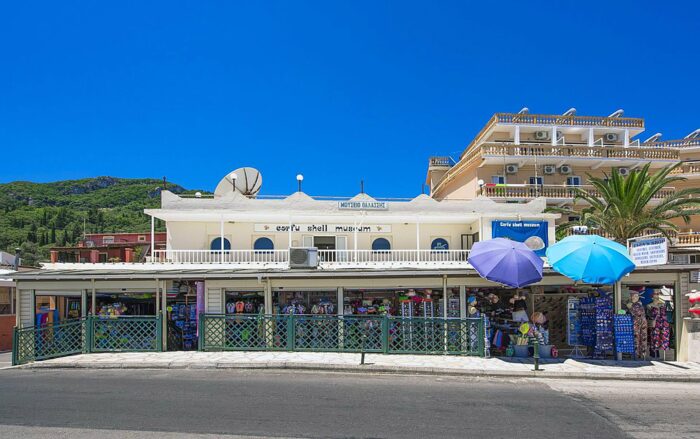
In this new photo, the house is completely renovated and different from the original building.
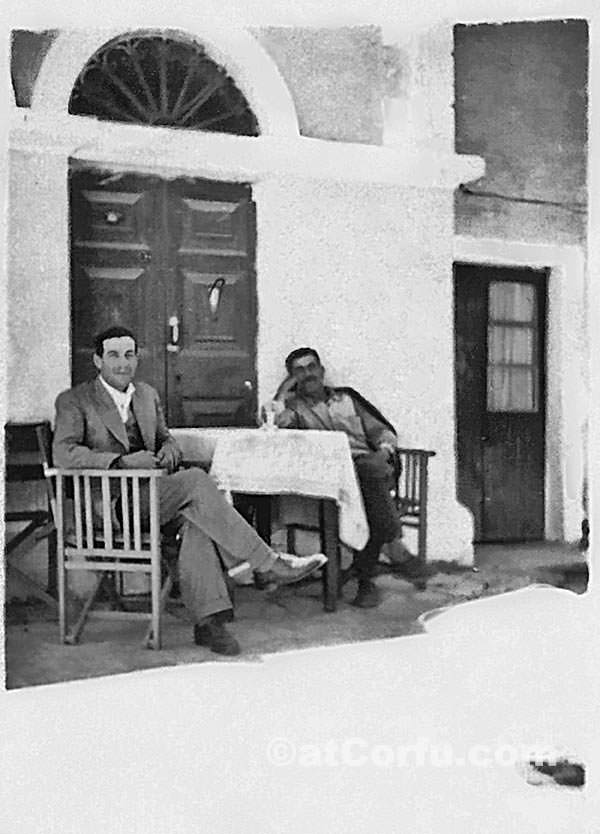
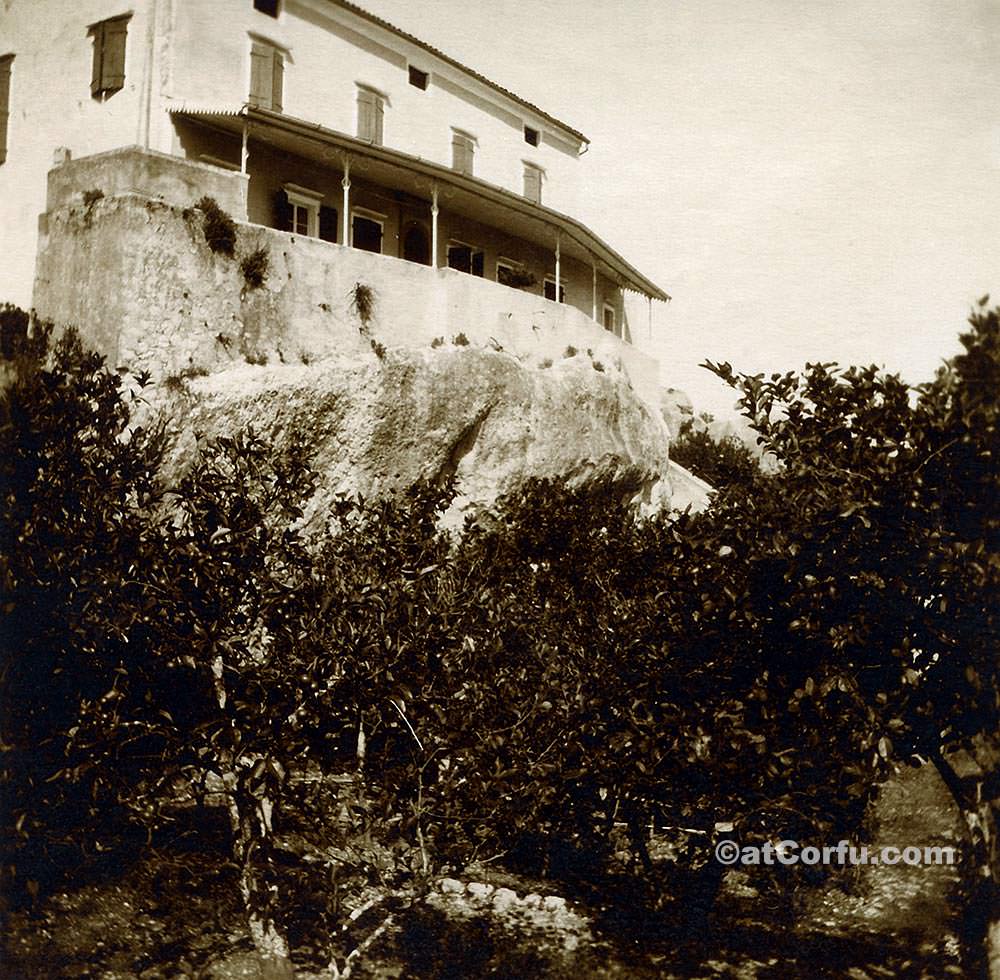
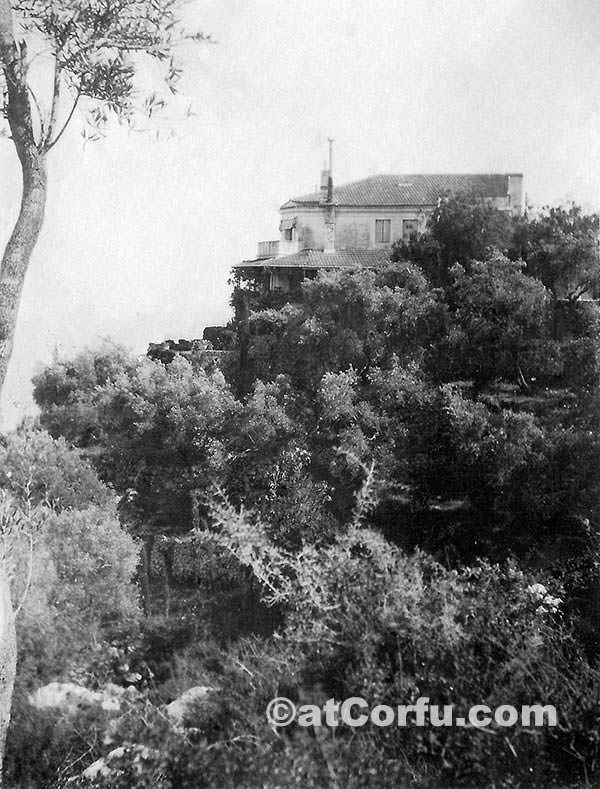
Photos of old Benitses buildings





Back to Benitses main page

Comments