



Prehistoric Corfu

Corfu has been inhabited since prehistoric times. During the last Ice Age, lower sea levels connected the island more closely to the Greek mainland. As glaciers melted between 10,000 and 8,000 BCE, rising waters gradually separated Corfu, giving it the insular character it retains today.
Evidence of Paleolithic settlement has been discovered in several locations across the island, including the areas around Agios Mattheos in the southwest and Sidari in the northwest. These findings indicate that human communities lived on Corfu thousands of years before the emergence of the first known civilizations in Greece.
Alongside its archaeological heritage, Corfu is also associated with a rich tradition of legends and epic tales. According to Corfu mythology, the island was named after the nymph Corcyra, whom Poseidon carried to the island.
Ancient traditions also identify Corfu with Scheria, the homeland of the Phaeacians described in Homer’s Odyssey, where King Alkinoos and Princess Nausikaa welcomed Odysseus and helped him continue his journey home to Ithaca.
While these stories remain an important part of Corfu’s cultural identity, they belong to the realm of legend rather than verifiable history. Archaeological evidence has yet to confirm a direct connection between the island and the mythical Phaeacians.
Over the centuries, Corfu attracted settlers and traders from various regions, including Illyria, Sicily, Crete, the Aegean islands, and mainland Greece. These successive waves of migration helped shape the island’s culture and laid the foundations for the historical developments that followed.


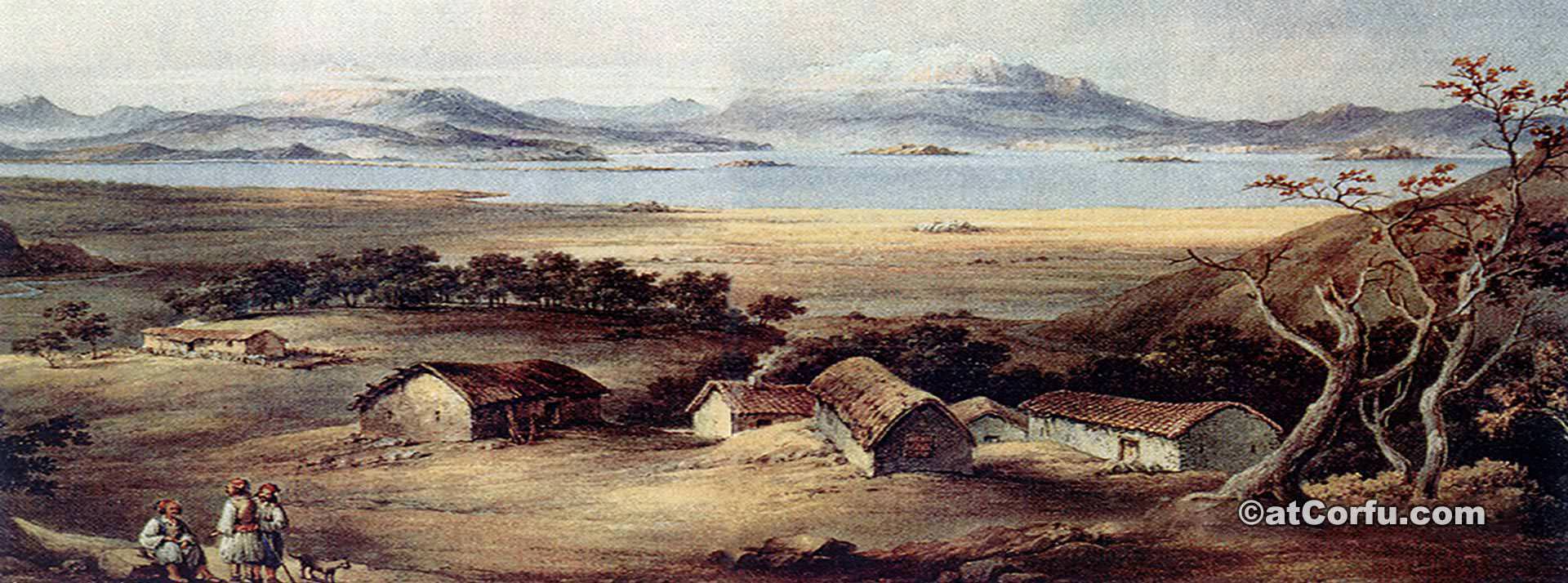


The Ancient times – the first Greek colonization

Corfu’s history officially started around 775 BCE, with the arrival of Dorians from Eretria of Euboea. This initial settlement saw a significant boost in 750 BCE when Dorian refugees from Corinth, led by Hersikrates, established a robust colony.
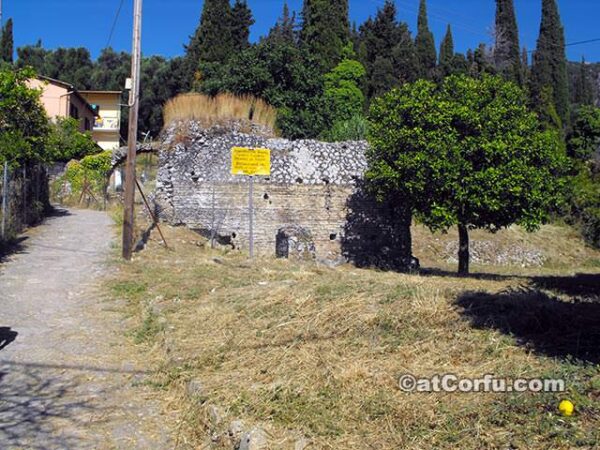
Corinthian influence expanded, giving rise to colonies like Epidamnos in ancient Illyria (now Dyrrachium in Albania) and the city of Corfu in present-day Garitsa and Kanoni peninsula.
In 492 BCE, Corfu town, or Kerkyra in Greek, marked a milestone by being the first Greek city-state to build a fleet of triremes. The harbor, now the site of the modern airport, housed this formidable fleet, second only to Athens in ancient Greece, boasting over 300 triremes.
Corfu’s expansion led to a clash with Corinth, resulting in the first naval battle in 680 BCE. After the Corinthians’ failed attempt to occupy Corfu, the Athenians recognized the island’s naval strength and formed a defensive alliance, sending triremes for support.
This alliance endured through the Peloponnesian War, where Corfu actively supported Athenian interests. In 435 BCE, a Corinthian fleet of 150 ships challenged Corfu, but with Athenian assistance, the Corinthians retreated.
In 375 BCE, Corfu joined the Athenian Confederation, playing a role noted by historian Thucydides in the Peloponnesian War, contributing to Greece’s weakening and fracturing.
The war’s inevitability was rooted in Sparta’s concerns about Athens’ expansionist policies. Corfu’s history became intertwined with broader conflicts, leaving an indelible mark on the ancient Greek landscape.



Comments