



Tips for People Who Have Questions about Corfu Island
We give some direct and short answers about Corfu below.
Beaches in Corfu
Does Corfu have sandy beaches?

Yes, Corfu has many sandy beaches, mainly on the west and southwest coasts.
Some of the most popular sandy beaches include:
- Glyfada Beach: One of the most popular, with soft golden sand and clear waters.
- Agios Georgios Beach: A long sandy beach in the northwest, quieter with beautiful views.
- Issos Beach: Fine sand and shallow waters, ideal for families.
- Kavos Beach: A long sandy beach in the south, known for its lively atmosphere and water sports.
What are the Beaches like in Corfu?
Corfu’s beaches are diverse, ranging from long sandy shores to pebbled and rocky coves.
- Types: Sandy beaches, pebbles, rocky bays, and secluded coves
- Water: Clear, clean, with turquoise to deep blue colors
- Water sports: Widely available, including windsurfing, kayaking, and jet skiing
- Amenities: Many beaches have sunbeds, bars, and restaurants, while others remain unspoiled
- Access: Most are easy to reach; some require a short walk or boat
- Crowds: Popular beaches can be busy in summer, while others stay quiet
Corfu offers both lively beaches and peaceful spots, depending on what you prefer.
Are there Beaches in Corfu Town?

Corfu Town does not have proper sandy beaches, but there are a few spots where you can swim.
Nearby beaches within a short drive include:
- Dassia Beach: Sandy, clear waters, about 13 km north
- Ipsos Beach: Pebble beach with water sports and lively atmosphere
- Kontokali Beach: Small sandy beach, calm and family-friendly
- Glyfada Beach: One of the best sandy beaches, about 16 km west
Within the town, locals swim at:
- Faliraki (Mpania tou Alekou): A small rocky spot below the Old Fortress
- Mon Repos Beach: Near Garitsa Bay, a simple and popular local swimming area
Is the Sea warm in Corfu?
Yes, the sea in Corfu is warm enough for swimming from May to October.
- May: around 18°C (64°F)
- July–August: up to 26°C (79°F)
- September–October: around 22°C (72°F)
Temperatures can vary slightly, but the sea is generally comfortable throughout the summer.
Where are the Sandy Beaches in Corfu?
Most sandy beaches in Corfu are on the west and southwest coasts.
Some of the best include:
- Glyfada Beach: Popular, with golden sand and clear waters
- Agios Georgios Beach: Long sandy beach in the northwest
- Sidari Beach: Sandy beach known for its unique rock formations
- Arillas Beach: Quiet, family-friendly, with shallow waters
- Issos Beach: Wide sandy beach with dunes
- Kavos Beach: Long sandy beach with a lively atmosphere

Weather in Corfu
What is the weather like in Corfu per month?
Corfu has a Mediterranean climate with warm, sunny summers and mild, wetter springs and autumns.
- April: 12–19°C (54–66°F), mild with some rain
- May: 15–23°C (59–73°F), warm with occasional showers
- June: 20–28°C (68–82°F), warm and mostly sunny
- July: 23–31°C (73–88°F), hot and sunny
- August: 23–31°C (73–88°F), hot, sunny, and busy
- September: 20–28°C (68–82°F), warm and pleasant
- October: 16–23°C (61–73°F), cooler with some rain
The weather can vary slightly year to year. For detailed monthly data, see the page about the weather.
Language in Corfu
What language is spoken in Corfu?
The official language in Corfu is Greek.
Do they speak English?
However, English is widely spoken, especially in tourist areas, hotels, restaurants, and shops, so visitors can easily communicate.
Other languages such as Italian, German, and French are also spoken by some locals working in tourism.
English is taught in schools, so most younger people speak it fluently.
There was also a local Corfiot dialect in the past, but today only a few words remain in use.
General Information about Corfu
What does Corfu mean?
The name Corfu comes from the Greek word Koryphes (peaks).
It refers to the two peaks of Mount Pantokrator, visible from the sea.
Is Corfu a real place?
Yes, Corfu is a real Greek island in the Ionian Sea.
It is a popular destination known for its beaches, nature, and history.
Where is Corfu in Greece?
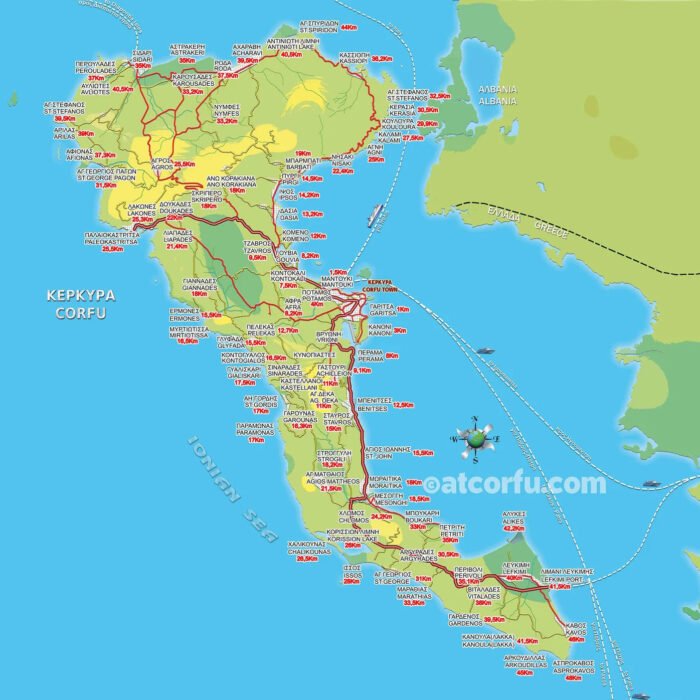
Corfu lies off the northwest coast of Greece, in the Ionian Sea.
It is the northernmost Ionian island, close to Albania and about 575 km from Athens.
What size is Corfu?
Corfu covers about 593 km².
It is around 64 km long and up to 32 km wide, with a coastline of about 217 km.
What is the Population of Corfu?
The island has about 99,000 residents (around 107,000 including nearby islands).
Why is Kerkyra called Corfu?
Kerkyra is the Greek name.
Corfu comes from the Latin version of Koryphes (peaks), which evolved into the current name.
Is Corfu part of the EU?
Yes, Corfu is part of Greece, which is a member of the European Union and uses the euro.
Which Hellenic island is closest to the UK?
Corfu is the closest Greek island to Western Europe, as it is the westernmost part of Greece.
Which sea is Corfu in?
Corfu is in the Ionian Sea, part of the Mediterranean, off the northwest coast of Greece.
Travel & Practical Questions
Where is the airport in Corfu? What is it called?
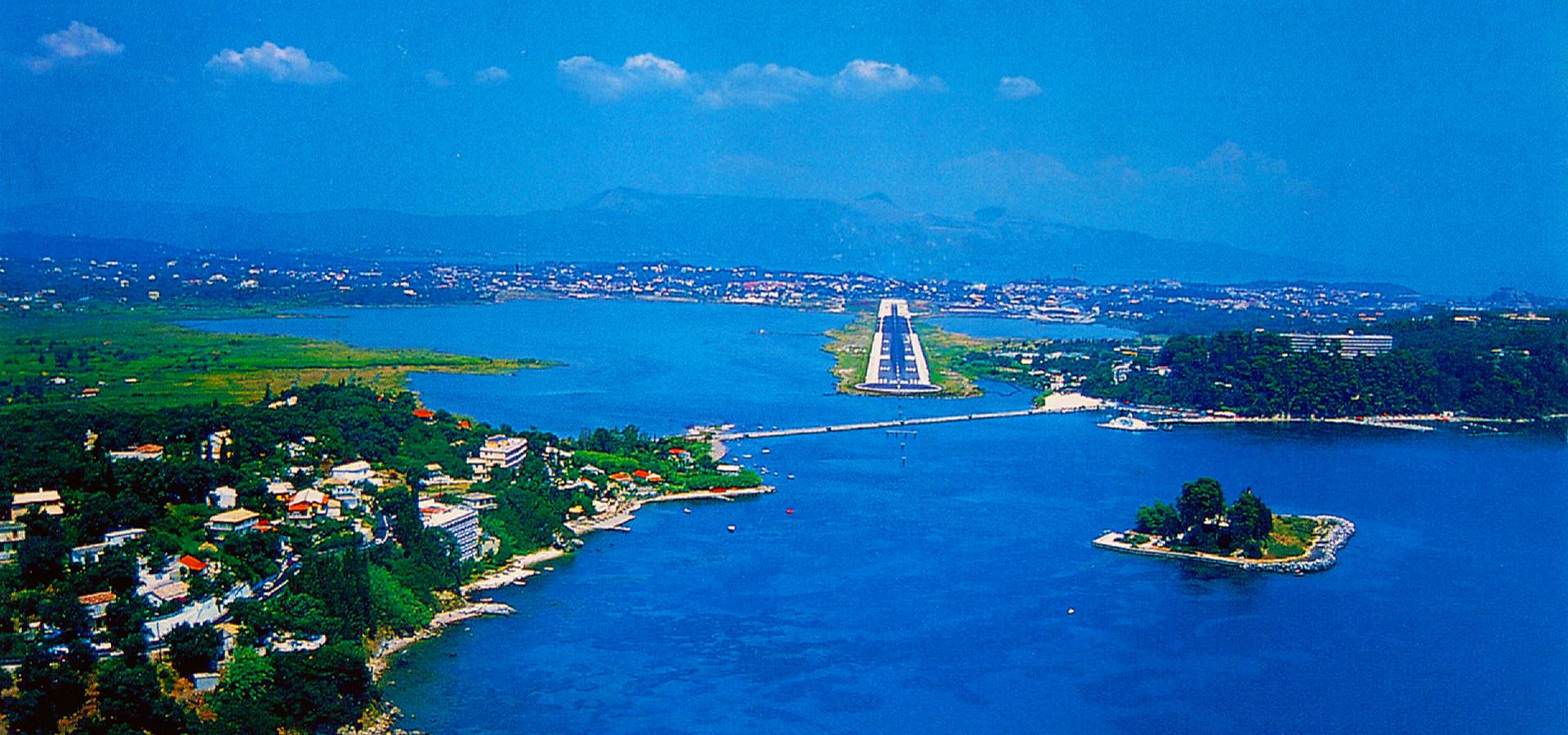
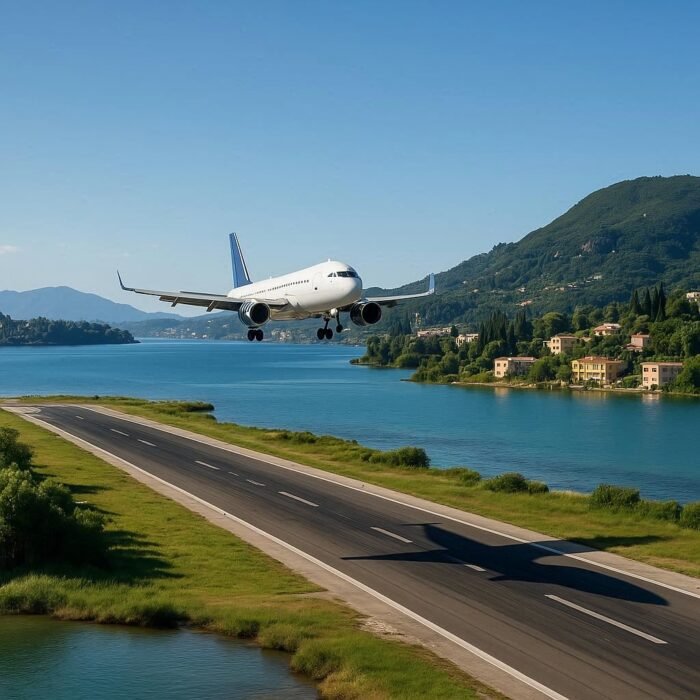
Corfu Airport is located about 3 km south of Corfu Town, on the east coast.
Its official name is Ioannis Kapodistrias International Airport (CFU).
It serves both domestic and international flights, with taxis, buses, and car rentals available.
Where can Families go to Corfu?
- Corfu is very family-friendly, with plenty of activities and places to visit:
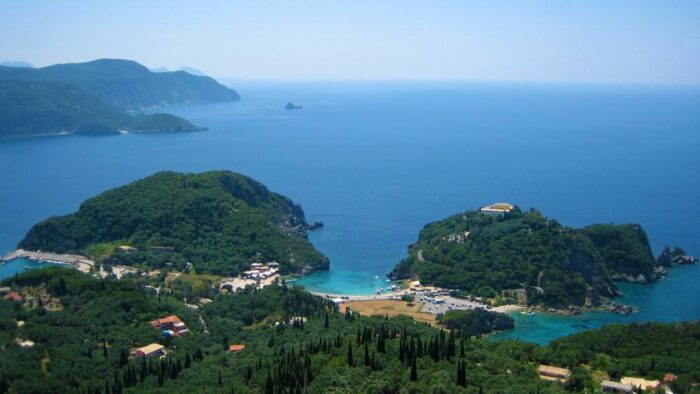
- Beaches: Glyfada, Agios Georgios, Sidari, Paleokastritsa
- Aqualand: One of the largest water parks in Greece
- Corfu Old Town: Easy to explore, with history and open spaces
- Achilleion Palace: Scenic and interesting for older kids
- Corfu Donkey Rescue: A fun and educational visit
- Mount Pantokrator: Great views for a simple outing
- Boat trips: Trips to Paxos, Antipaxos, or along the coast
Check here for the Best Resorts for Families
Practical Information
Which is the prettiest Hellenic island?
There is no single “prettiest” island — it depends on personal taste.
Popular choices include:
- Santorini: sunsets and volcanic views
- Mykonos: nightlife and beaches
- Crete: size, history, variety
- Zakynthos: turquoise waters
- Corfu: green landscapes and Venetian charm
Which Hellenic Island has the best beaches?
Several Greek islands are known for excellent beaches:
- Zakynthos: Navagio (Shipwreck Beach)
- Crete: Elafonisi (pink sand)
- Corfu: Paleokastritsa, Glyfada, Agios Georgios
- Naxos: long sandy beaches
- Milos: unique rock formations
The “best” depends on whether you prefer sandy, secluded, or dramatic beaches.
Is there a Volcano in Corfu?
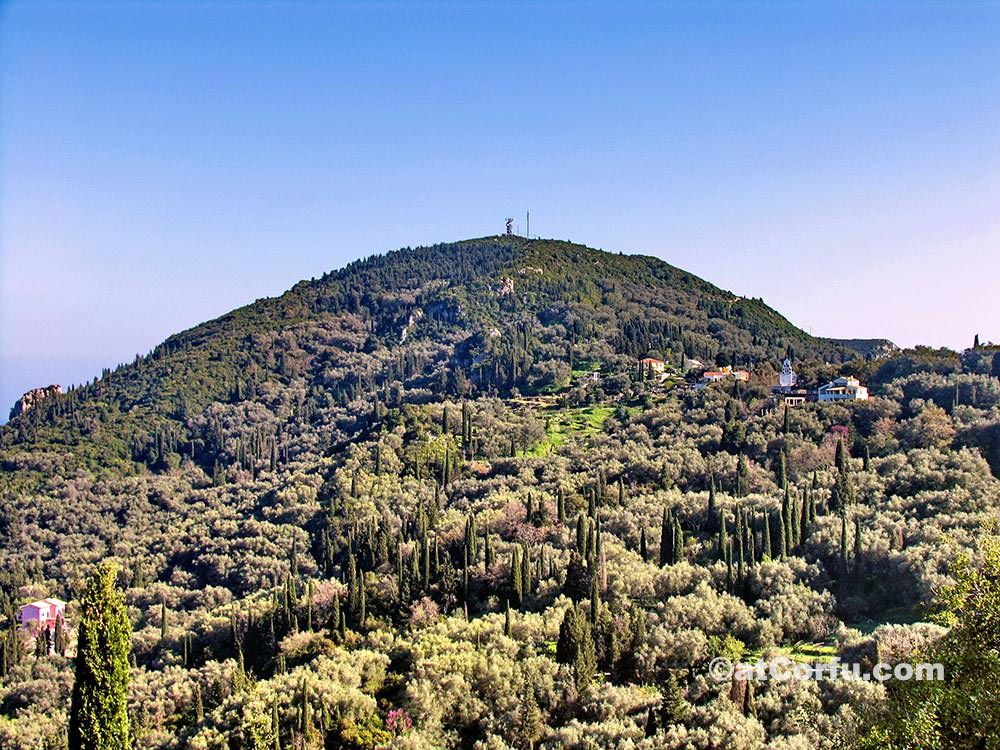
No, there are no active or dormant volcanoes in Corfu.
The island is not part of Greece’s volcanic arc. Its landscape is mainly limestone hills and mountains.
There may have been volcanic activity millions of years ago, but today Corfu is geologically stable.
Culture, History & Meaning
What is Corfu famous for?

Corfu is known for:
- Beaches: Clear waters and a mix of sandy and rocky shores
- Old Town: UNESCO site with Venetian architecture
- History: Influences from Greeks, Venetians, French, and British
- Culture: Festivals, especially Easter celebrations
- Nature: Green landscapes, mountains, and olive groves
- Food: Local cuisine and products like olive oil and kumquat
What food do they eat in Corfu?
Corfu cuisine blends Greek and Venetian influences. Typical dishes include:
- Sofrito: Beef in white wine and garlic sauce
- Bourdeto: Spicy fish stew
- Pastitsada: Pasta with meat and tomato sauce
- Savoro: Fried fish with vinegar and raisins
- Stifado: Meat stew with onions
- Moussaka: Classic Greek casserole
Also common: fresh salads, seafood, olive oil, local wine, and kumquat products.
Where were the Durrells filmed?

The Durrells was filmed in Corfu, mainly in:
- Corfu Town (Old Town, Liston, Esplanade)
- Kalami Bay (the Durrells’ house location)
- Paleokastritsa & Agios Georgios (beaches)
- Achilleion & Mon Repos Palace
- Danilia Village

Comments