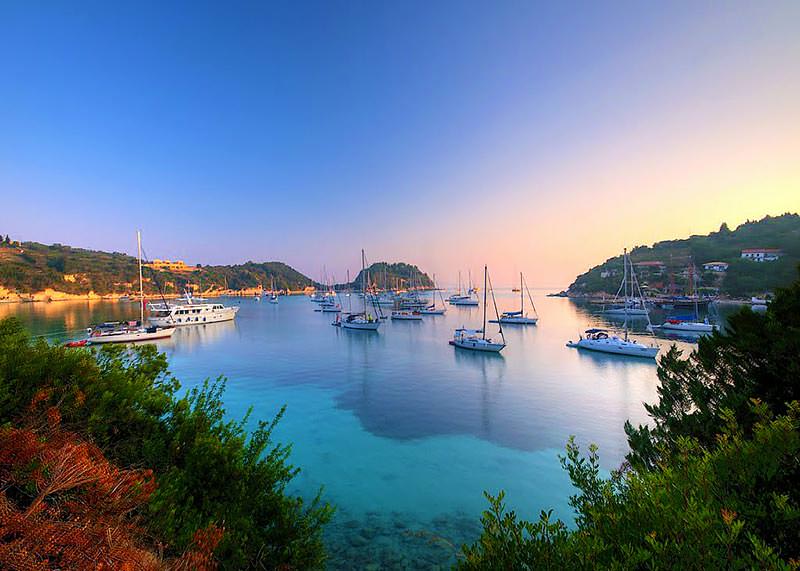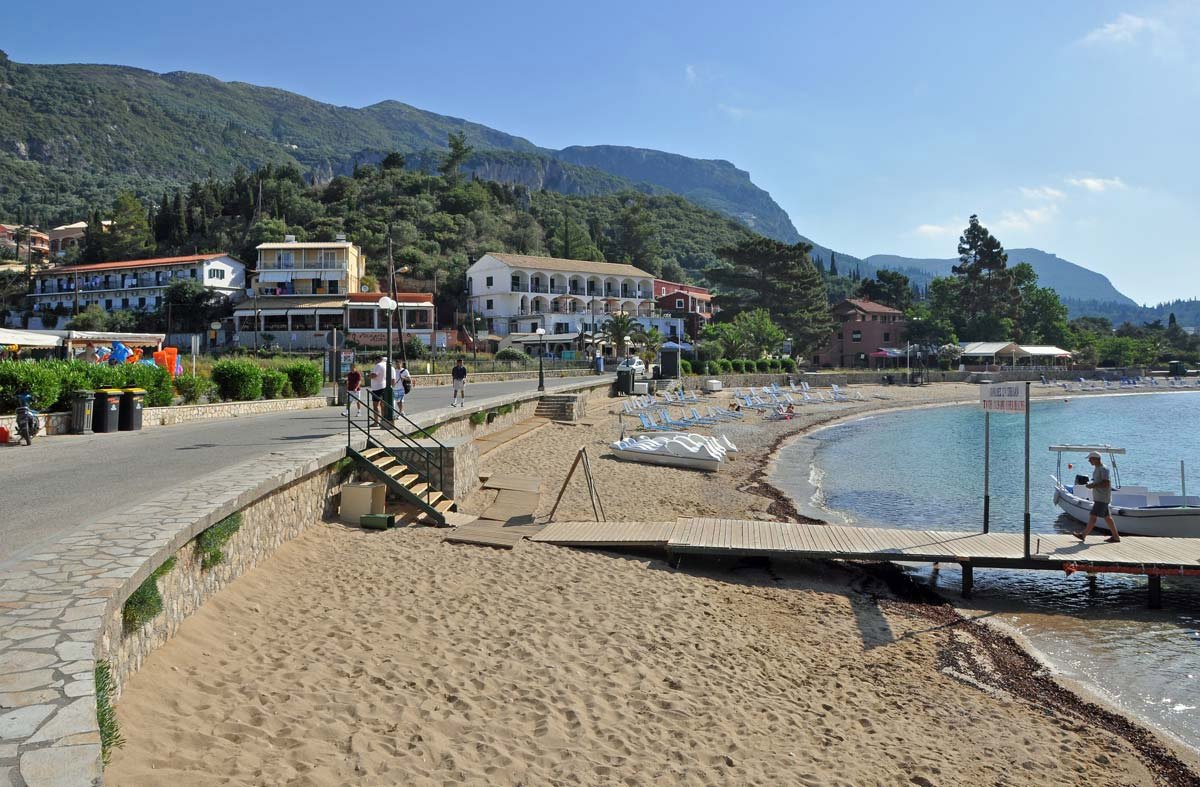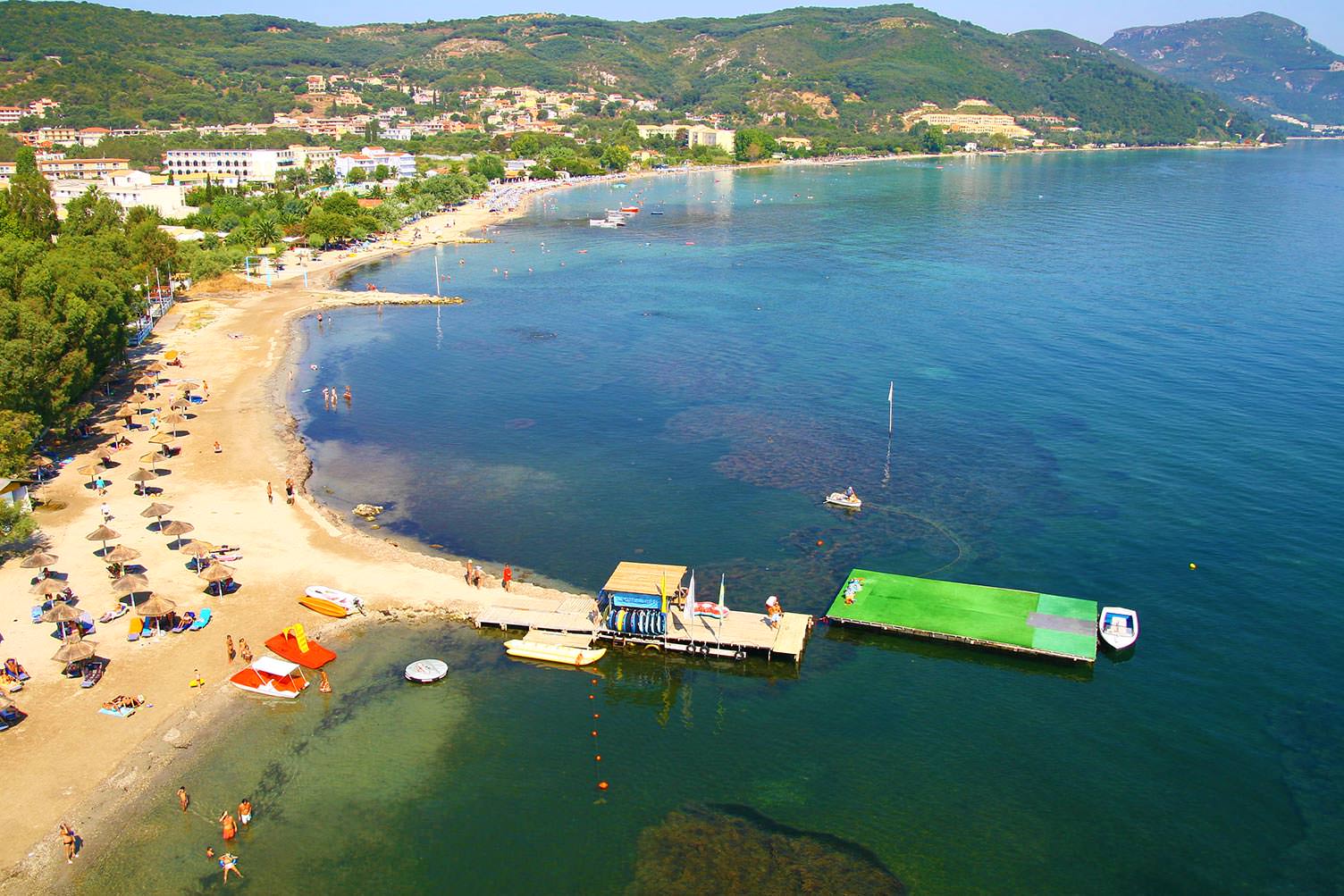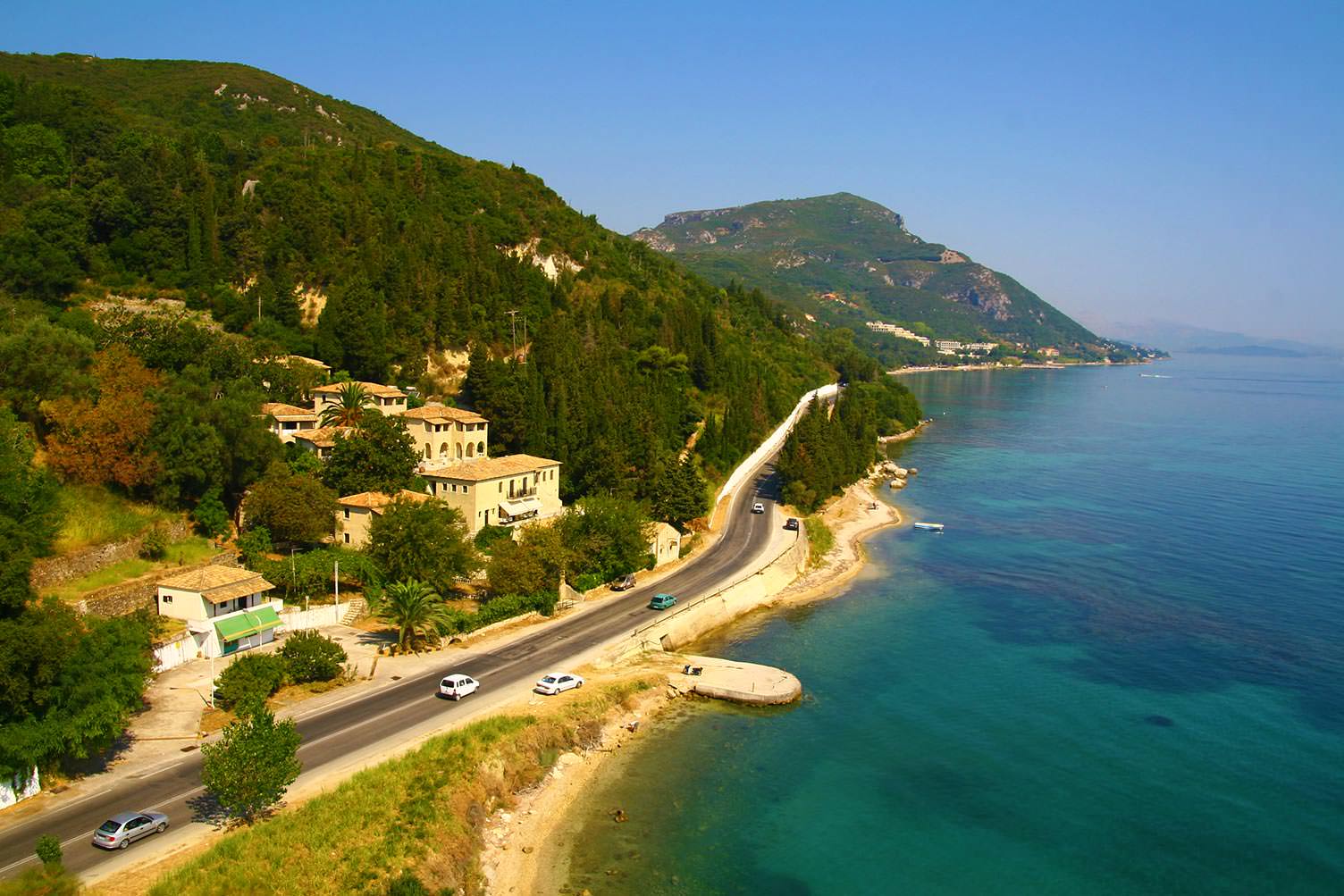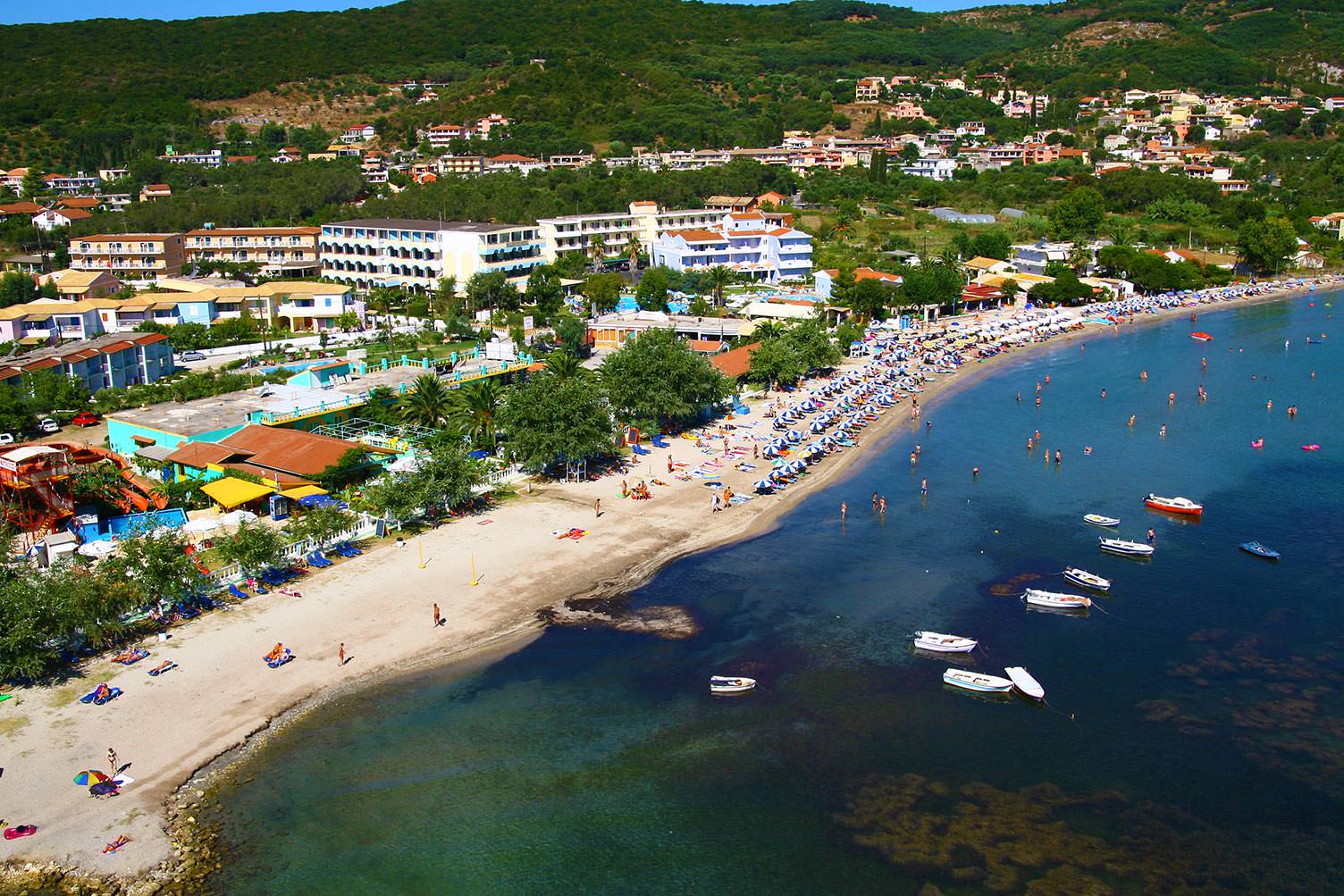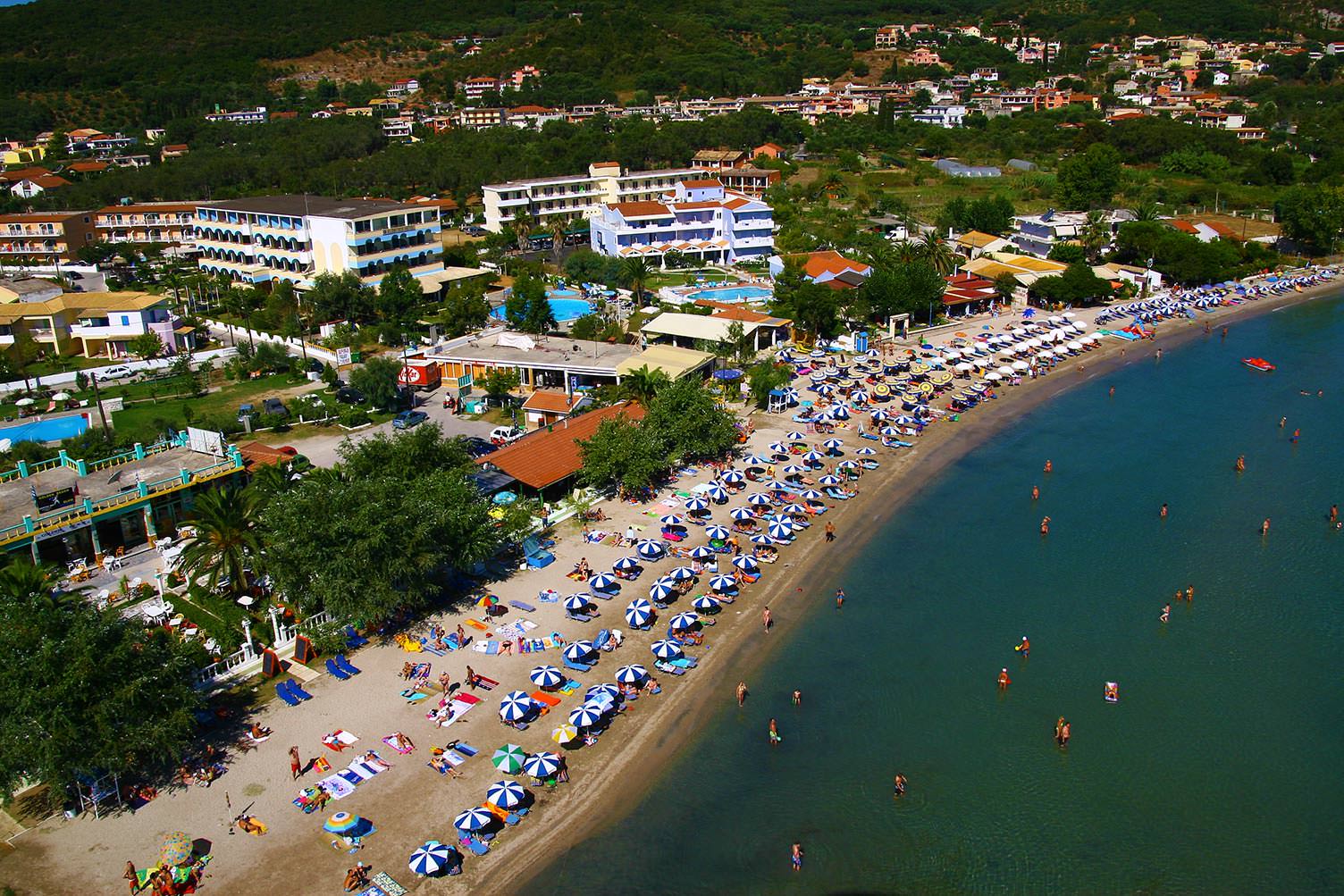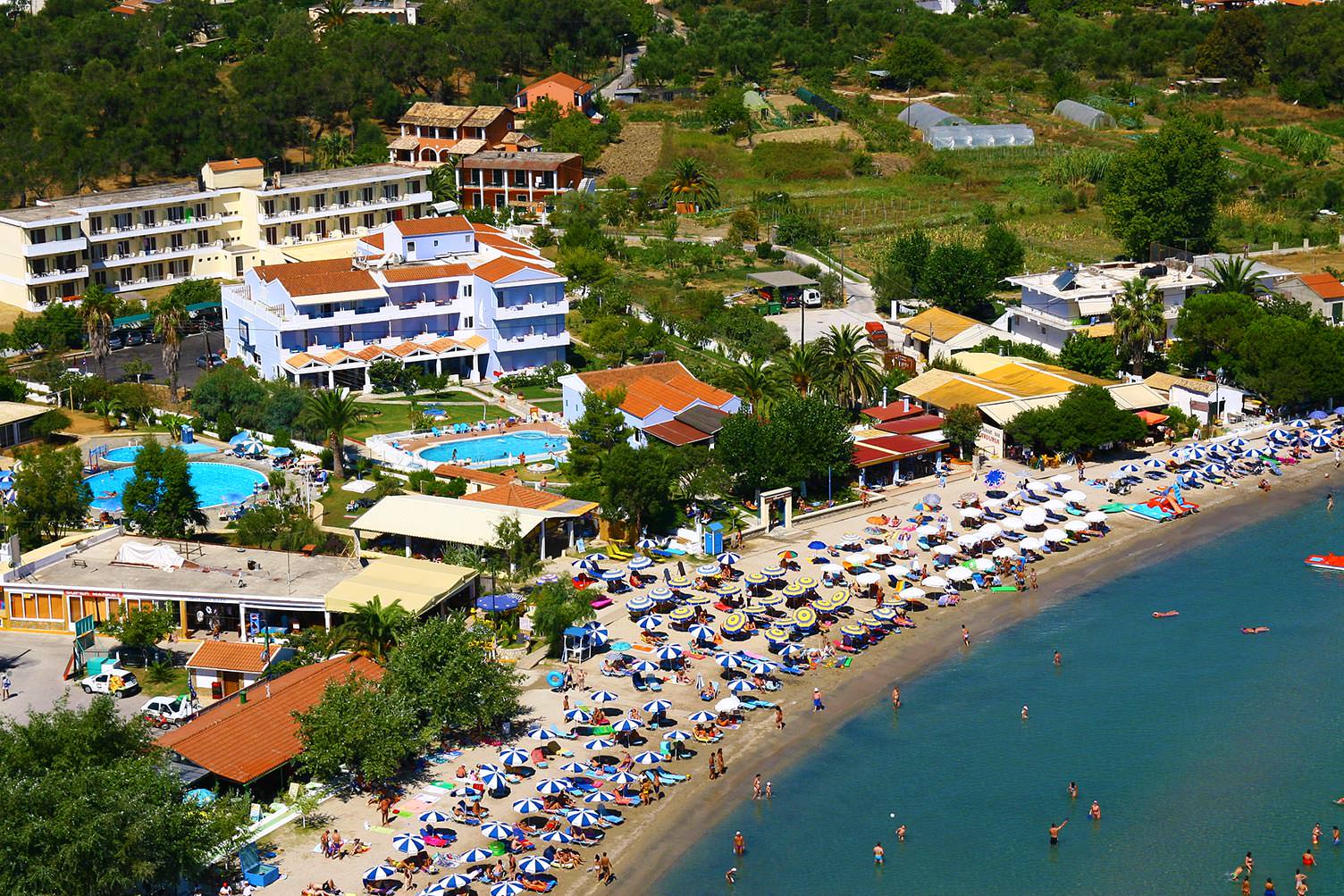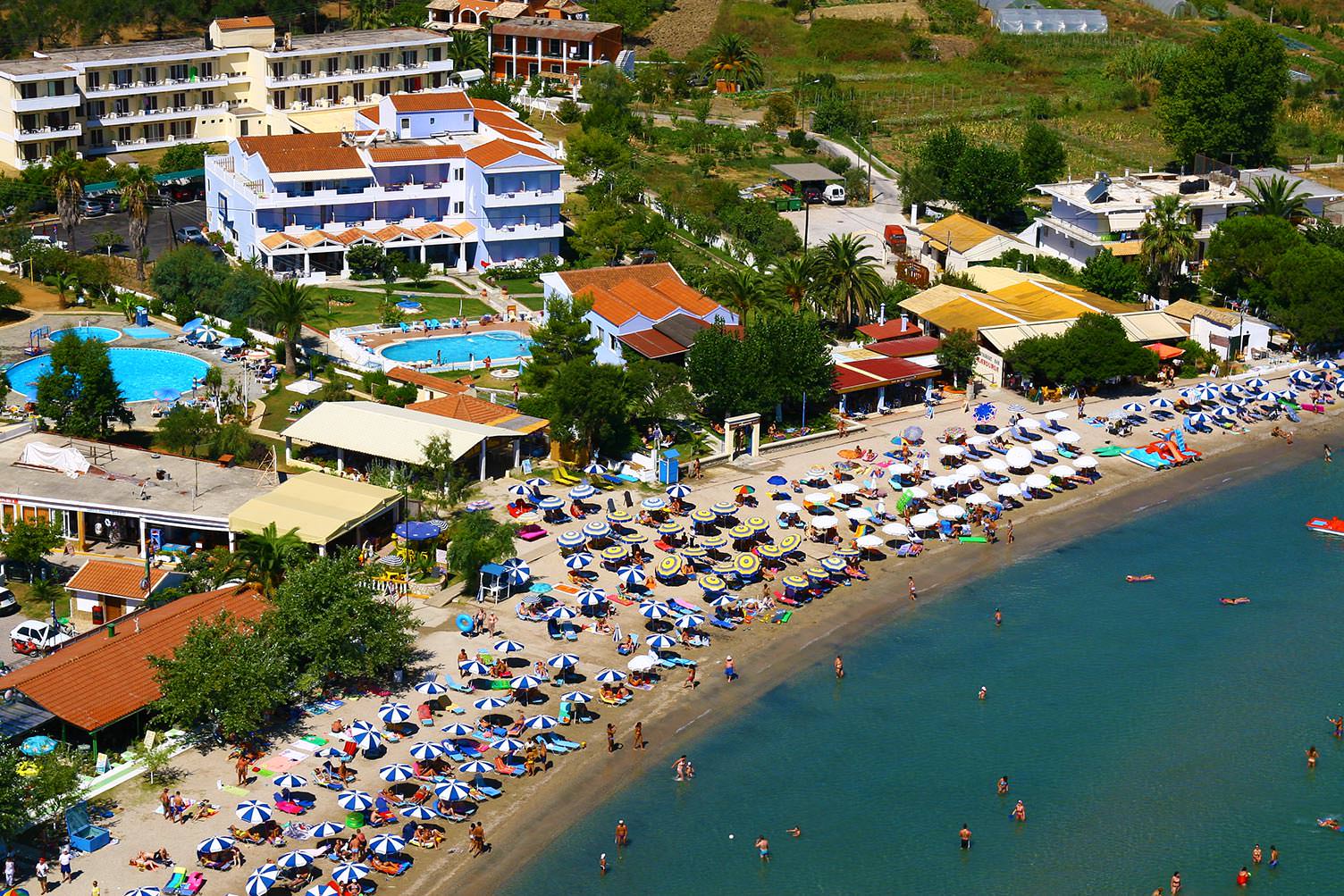

Agios Spiridon beach in Paleokastritsa

Paleokastritsa, Corfu: Best Beaches, Boat Tours & Travel Guide

Paleokastritsa is one of the most beautiful coastal areas in Corfu, located on the island’s dramatic west coast, around 25 km from Corfu Town. Known for its turquoise bays, sea caves, green cliffs, and crystal-clear water, it is one of the island’s most popular destinations for swimming, boat trips, and seaside holidays.

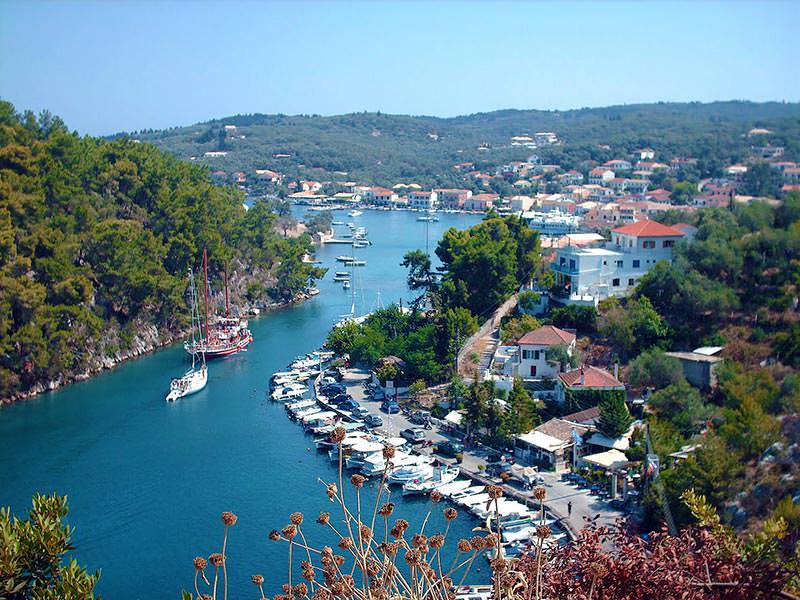
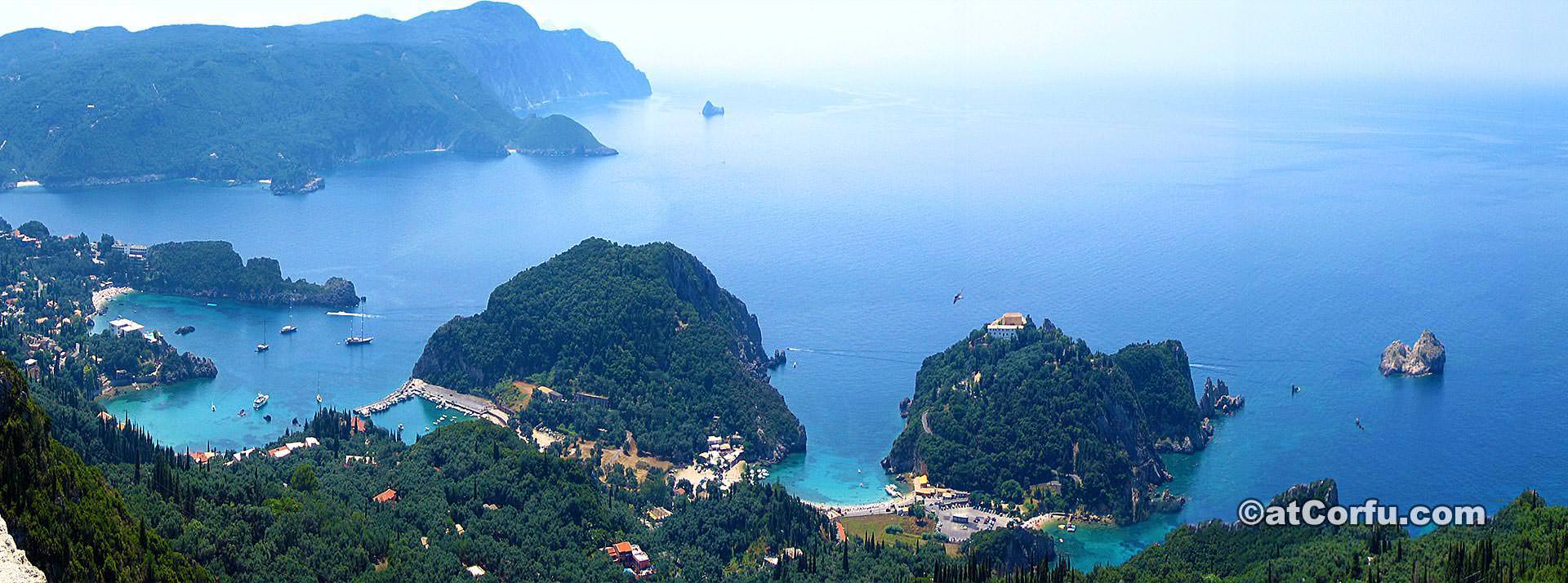
Paleokastritsa view from Lakones mountain village
Paleokastritsa view from the Lakones mountain village

Unlike many beach resorts in Corfu, Paleokastritsa is not built around one long beach. Instead, the coastline is divided into a series of small coves separated by rocky headlands, each with different water conditions, scenery, and atmosphere.

The area is especially popular with visitors seeking clear water, snorkeling, boat rentals, and scenic beaches set amid lush green hills. It is also one of the best places in Corfu for exploring sea caves and hidden beaches accessible only by boat.

Why Visit Paleokastritsa?

  • Some of the clearest water in Corfu
  • Multiple beaches and coves within walking distance
  • Excellent boat trips and cave exploration
  • Ideal for snorkeling and swimming
  • Beautiful scenery with cliffs and olive groves
  • Good mix of hotels, apartments, tavernas, and bars
  • Easy access from Corfu Town and the airport

Although Paleokastritsa gets busy in July and August, especially around the central beach, the area still offers quieter corners and hidden swimming spots if you explore beyond the main road.

Paleokastritsa Beaches

Paleokastritsa is famous for its collection of small beaches and rocky coves spread across several bays. Most beaches are organized with sunbeds, umbrellas, tavernas, boat rentals, and water sports facilities.

The water here is usually cooler than other parts of Corfu because of underwater currents coming from the Adriatic Sea, but it is also exceptionally clean and clear.

1. Agios Spiridon Beach

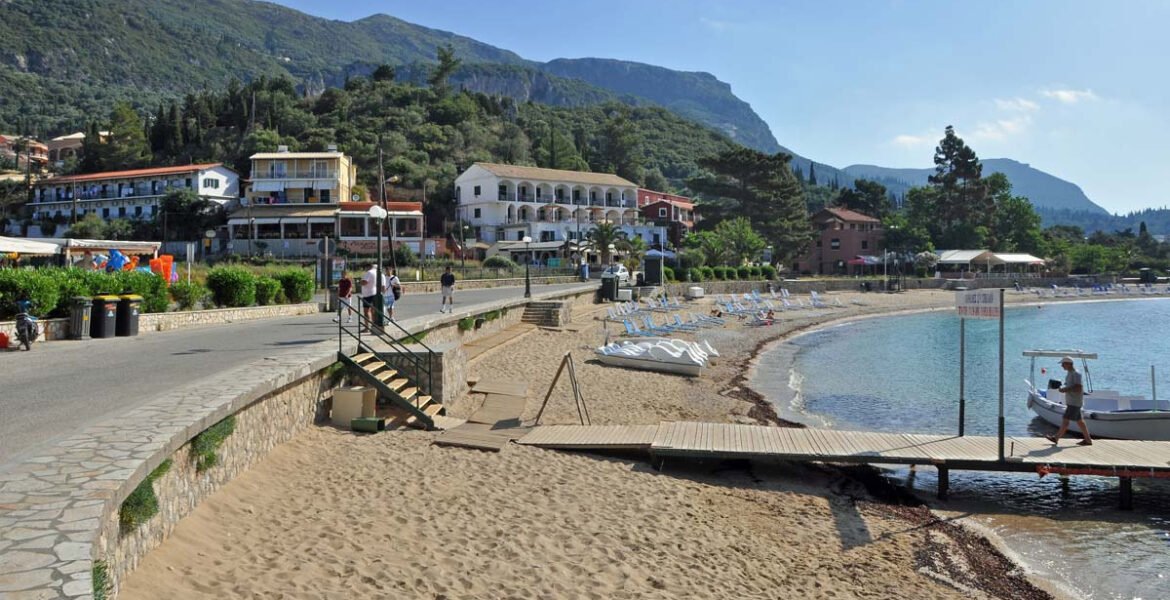
Agios Spiridon beach in Paleokastritsa

Agios Spiridon is the main and most famous beach in Paleokastritsa. Located in the center of the resort, it is a relatively small sandy and pebble beach with calm turquoise water surrounded by green cliffs.

This is the best option for visitors staying in the center of Paleokastritsa because restaurants, hotels, mini markets, and boat tours are all within walking distance.

The beach becomes crowded quickly during peak summer months, especially between 11:00 and 16:00.

  • Best for: families and first-time visitors
  • Water: calm and crystal clear
  • Facilities: sunbeds, tavernas, boat rentals
  • Parking: limited in high season

2. Agios Petros Beach

Agios Petros Beach Paleokastritsa Corfu
Agios Petros Beach in Paleokastritsa

Agios Petros Beach sits inside one of the western coves and is slightly quieter than Agios Spiridon. It has deep blue water, smooth pebbles, and excellent swimming conditions.

The beach is partly organized and is a good choice if you want easier access to boat rentals and cave tours.

3. Ampelaki Beach

Ampelaki is one of the smallest beaches in Paleokastritsa, but also one of the prettiest. Surrounded by rocky cliffs and greenery, it has transparent water ideal for snorkeling.

Because of its size, the beach fills up early during summer.

4. Alipa Beach

Alipa Beach is next to the small harbor of Paleokastritsa, where fishing boats, water taxis, and rental boats depart daily.

The beach itself is small, but the harbor area is one of the most important activity centers in Paleokastritsa.

From here, you can hire small motorboats and visit nearby sea caves and isolated beaches along the coast.

5. Platakia Beach

Platakia is a quieter pebble beach with very clear water and fewer facilities compared to the central beaches.

It attracts visitors looking for a more relaxed atmosphere away from the busiest parts of the resort.

6. Agia Triada Beach

Agia Triada is another scenic cove known for calm swimming conditions and beautiful water colors. The beach is partially organized and usually less crowded than Agios Spiridon.

7. La Grotta Area

La Grotta is not a traditional sandy beach but a famous swimming platform built into the rocks above the sea.

It is known for diving platforms, deep water swimming, and dramatic scenery. The area is especially popular with younger visitors and people looking for sunset drinks by the sea.

Hidden Beaches South of Paleokastritsa

Some of the best beaches near Paleokastritsa are actually the hidden coves south of the resort, accessible only by boat or coastal paths.

These secluded beaches have emerald water, white pebbles, and almost untouched scenery, making them some of the most beautiful swimming spots on the west coast of Corfu.

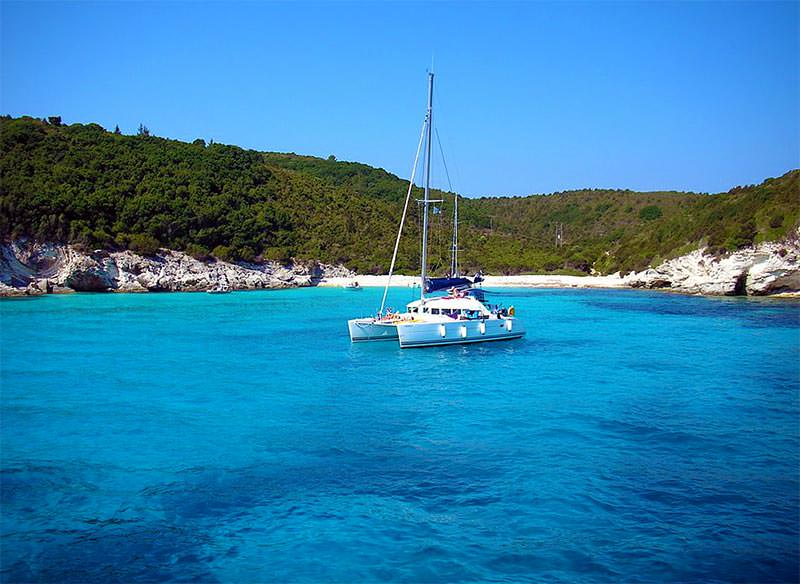
If you plan to rent a boat or join a boat trip, make sure to also visit the hidden beaches south of Paleokastritsa:

Secluded Beaches of West Corfu

Boat Tours & Sea Caves

Exploring the Caves

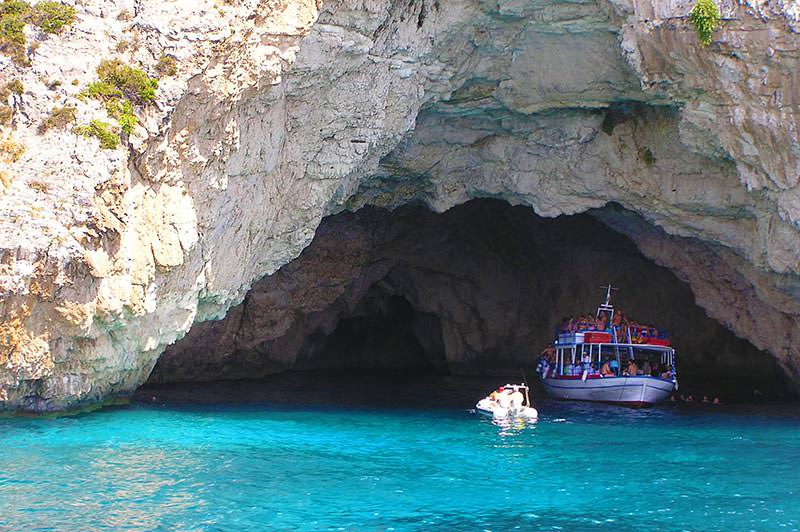
Paleokastritsa is one of the best places in Corfu for exploring sea caves. Small boats depart continuously from the harbor area and from Agios Spiridon Beach throughout the day.

Visitors can choose between:

  • Organized cave tours with local captains
  • Self-drive motorboat rentals
  • Water taxis to remote beaches
  • Kayak rentals

The most famous caves include:

  • Blue Eye Cave
  • Nausicaa Cave
  • Agios Nikolaos Cave

Boat trips usually last between 30 minutes and 2 hours, depending on the route.

The best time for cave exploration is during the morning when the sea is calmer, and visibility inside the caves is better.

Is the Water Cold in Paleokastritsa?

Yes, the sea in Paleokastritsa is usually cooler than many beaches on the east coast of Corfu. Even during summer, the water can feel refreshing, especially in the morning.

However, the cooler temperature is also one reason why the water remains exceptionally clear.

From June to September, most visitors find the sea comfortable for swimming.

Paleokastritsa Monastery

The Monastery of Theotokos overlooks the coastline from one of the rocky headlands above Paleokastritsa.

Originally founded in the 13th century, the monastery is one of the most visited religious sites in Corfu. The current buildings mainly date from the 18th century.

From the monastery grounds, visitors can also enjoy distant views of Aggelokastro perched dramatically on the cliffs to the northwest.

Visitors come for:

  • Sea views from the monastery terrace
  • Traditional Corfiot architecture
  • Religious icons and frescoes
  • The small monastery museum

The monastery is easy to reach by car or on foot from the central beaches.

How to Get to Paleokastritsa

Distance from Corfu Airport

Paleokastritsa is approximately 24 km from Corfu International Airport.

The drive usually takes between 35 and 45 minutes, depending on traffic.

Transport Options

  • Rental Car: Best option for flexibility and exploring nearby beaches.
  • Taxi: Fastest but more expensive.
  • Green Bus: Budget-friendly public transport connecting Corfu Town with Paleokastritsa.

Where to Stay in Paleokastritsa

Paleokastritsa offers accommodation for all budgets, from simple studios to upscale hotels with sea views.

Best Areas to Stay

  • Near Agios Spiridon: Best for walking access to beaches and restaurants
  • Hillside hotels: Better views and quieter surroundings
  • Near Alipa harbor: Best for boat trips and excursions

Is Paleokastritsa Worth Visiting?

Yes — especially if you enjoy scenic beaches, swimming, snorkeling, and boat exploration.

Paleokastritsa offers a very different landscape compared to the flatter sandy resorts on Corfu’s east coast. The dramatic cliffs, hidden coves, and clear water make it one of the island’s most photogenic areas.

Although it becomes busy during high season, it remains one of the best destinations in Corfu for beach-hopping and coastal scenery.

Visitors looking for nightlife and large beach clubs may prefer Corfu Town, Kavos, or Sidari, but for natural beauty and swimming, Paleokastritsa is among the top places on the island.

Best Time to Visit

  • May–June: Green scenery, fewer crowds, cooler sea
  • July–August: Warmest weather and busiest period
  • September: Warm sea, quieter atmosphere, ideal conditions
  • October: Less crowded but occasional rain

Final Thoughts

Paleokastritsa combines some of the clearest water in Corfu with dramatic scenery, hidden coves, and excellent boat exploration.

Whether you want organized beaches with facilities or isolated swimming spots accessible only by sea, the area offers some of the best coastal experiences on the island.

For many visitors, Paleokastritsa is not just one of the best places in Corfu — it is the highlight of their trip.

Nissaki, Corfu – Beach & Village Guide

The resort of Nissaki Beach at Sinies

Nissaki hotel at Sinies
Nissaki Hotel at Sinies

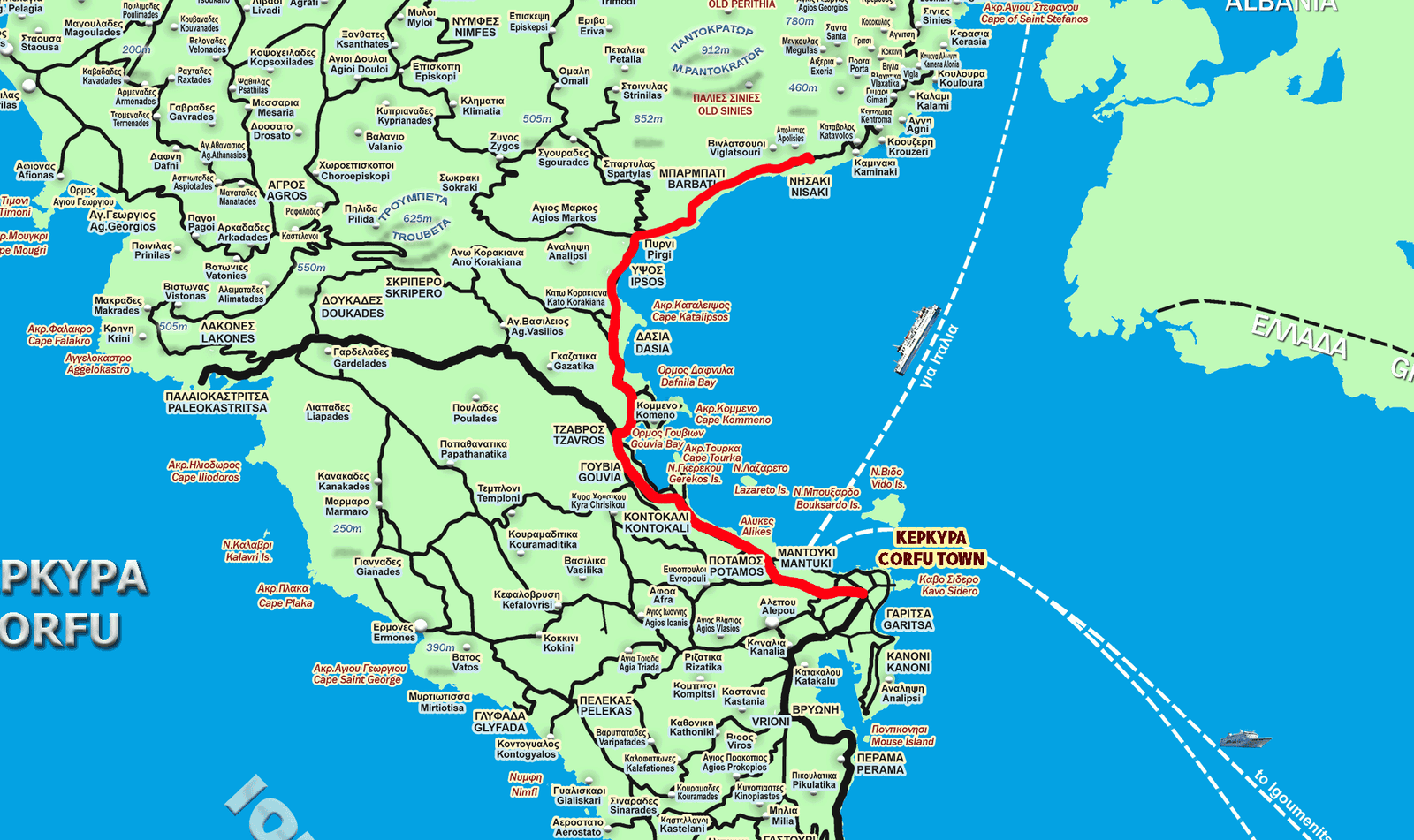
Nisaki is a spread-out coastal area on the northeastern side of Corfu, set among the slopes of Mount Pantokrator and forming part of the island’s most scenic beaches in Corfu region.

The name means “small island,” and the original islet is still visible, now connected to the mainland and home to one of the island’s oldest tavernas.

The area stretches from Agni in the north down to the bridge over the ravine that separates it from Barbati. Agni, in particular, is well known for its excellent food, with its waterfront tavernas offering one of the most enjoyable dining experiences on the island.

Further south, another bay serves as a popular stop for boat trips, where visitors often swim, dive from the rocks, or explore sea caves. Above the water, a small abandoned chapel overlooks the bay, built in earlier times by returning sailors.

Boats can be rented from the small harbor, and water taxis operate along the coast. The main road runs high above the shoreline, around 80 meters up, with several shops and viewpoints along the way offering spectacular views across the sea toward Corfu Town and the mountains of Epirus.

The surrounding hillside villages, including Kaminaki, add to the charm of the area, though exploring here often requires a good level of fitness due to the steep terrain.

Moraitika: Beach, Village & Resort with Map

Moraitika: The only sandy beach on the east coast

Moraitika Beach is a long, sandy stretch on the east coast of Corfu, making it one of the more comfortable and accessible beaches in Corfu for swimming and sunbathing.

The shoreline is soft and gently shelving, with calm, shallow waters that are ideal for families and relaxed swimming. The fine sand runs along a well-organized beachfront, offering plenty of space to settle in, with easy access to sunbeds, tavernas, and seaside cafés just steps away from the sea.

Moraitika beach
Moraitika beach

 The busy resort of Moraitika is on the southeast coast of Corfu, 18 km from the airport.

The old village of Moraitika sits on a hill at the base of which the modern resort is found, stretching down to the shore.

Moraitika and the wider area

Moraitika has developed into a large area that starts from the hill of the old village and reaches the sea and the neighboring area of ​​Messonghi, with which it tends to unify.

The so-called tourist center is located on both sides of the main road that leads to the south of Corfu, where there are the most shops, restaurants, bars, and nightclubs, and the biggest traffic, especially in the evenings.

Between the main road and the beach, there is a huge area that in recent years has been filled mainly with hotels and apartments, followed by dozens of restaurants, bars, and nightclubs, slowly claiming the title of the most lively part of the village.

But also in the old village, which is dominated by narrow streets and traditional houses with small courtyards, there is some tourist development.

Here you will find some nice traditional tavernas and many rooms to rent.

Moraitika Map

Moraitika and Messonghi Map

A little of Moraitika’s tourist history

Don’t forget that Moraitika was an old tourist destination since the 1970s, although in the shade of Benitses, there were many tourists and some well-known nightclubs that were visited by many tourists from Benitses and the rest of southern Corfu. Unforgettable is the club-disco of the era “Scorpios”.

Scorpios are situated in the old part, south of the traditional village and away from the main street, up on the hill.

It was a lively nightclub until the 80s, it was the alternative escape from the famous Spiros on the Beach of Benitses, where we escaped with the girls we met at Spiros on the beach to run away from the…competition and the many potential lovers !!! Beautiful years…

Moraitika as a tourist resort

The sea here is perfect for children, a mixture of sand and shingle, getting deeper very gradually indeed, so it is very safe. This side of the island is also protected as it looks across to the mainland, and often when the sea is rough on the west coast, it is calm here.

Families return again and again, renewing friendships with Corfiots they have known over the years, and relaxing in the bars and tavernas which they have visited in previous years. This is the charm of Moraitika- any change is gradual, a visitor coming back after some years’ absence will still be able to recognize his favorite haunts, and will also be remembered by the proprietors.

In the cool of the evening, many people stroll up the hill into the old village, where there are also some bars and tavernas where locals and visitors alike relax whilst enjoying the view over the bay.

Moraitika is also a good base for exploring the south of Corfu, its delightful old villages hidden up in the hills, the attractive coves and fishing villages of the east coast, and the long sandy stretch, almost 30 kilometers long, on the west.

Buses pass through going south, and also north to Benitses and on to Corfu Town, which well repays exploration, especially in the evening when it is less crowded- and cooler.

Pictures from the beach at Moraitika


Lefkimmi Town: The Vibrant Heart of South Corfu

Posted in: All Corfu Resorts 0

The small town of Lefkimmi

Lefkimi town in south Corfu

As the largest town and a vibrant hub in the southern part of the island, Lefkimmi is a captivating blend of diverse landscapes, flourishing olive groves, sun-kissed beaches, and intriguing buildings steeped in historical significance.

Welcome to Lefkimmi, the lively heart of southern Corfu!

Step into the enchanting world of Lefkimmi, Corfu’s vibrant second-largest town that promises a delightful adventure! Imagine strolling through picturesque olive orchards that stretch out under the warm Greek sun, offering a soothing retreat for both the eyes and the soul.

Venture further, and you’ll discover an array of stunning beaches that beckon you to bask in the golden sands and embrace the turquoise waves.

But that’s not all – Lefkimmi’s charm extends beyond its natural beauty. The town’s architecture tells a tale of its rich history, with buildings that hold the whispers of times gone by.

From quaint cottages to structures of profound historical importance, every corner offers a glimpse into the past and a step towards understanding the island’s fascinating heritage.

So whether you’re a history enthusiast, a nature lover, or someone simply seeking to soak in the beauty of Corfu’s southern landscapes, Lefkimmi welcomes you with open arms and an abundance of captivating experiences waiting to be explored.

About Lefkimmi

Nestled in the southernmost corner of the island, just 40 km away from Corfu Airport, Lefkimmi beckons with its charming streets adorned with historic merchants’ mansions and captivating cottages undergoing rejuvenation.

Take a leisurely seat by the riverside, savor a delicious meal or refreshing drink, and relish the mesmerizing ebb and flow of life passing by. Follow the tranquil river to its meeting with the sea, where you can indulge in a revitalizing swim in the warm embrace of the Mediterranean waters.

Discover the town’s captivating churches, including an Italian-style gem that graces the upper town with its elegance. Venture down a well-marked road that leads to the harbor of Alikes, formerly bustling with horses transporting salt from the flats to be processed. Today, this picturesque sanctuary is a haven for diverse birdlife, including graceful flamingos and migratory wonders.

Lefkimmi’s harbor remains a hub for local fishermen, who bring in their catches with a touch of timelessness. Nearby, a charming beach is adorned with cozy tavernas that extend a warm Greek welcome, offering a taste of authentic local flavors.

Observe as locals venture into the sea with rakes in hand – an age-old tradition to uncover hidden shellfish amidst the sandy shores. The waters here are shallow, inviting, and perfect for families, creating a haven for little adventurers.

Oh, and the bustling port, near the meandering river’s mouth, has emerged as Corfu’s second operational harbor. Experience the convenience of daily ferry services to the mainland’s Igoumenitsa port – a cost-effective journey for savvy travelers seeking an alternative route.

The allure of Lefkimmi lies not only in its captivating present but also in its rich past, weaving tales that resonate with each charming corner you explore.

Lefkimmi has its own Identity

Step into the enchanting world of Lefkimmi, where tradition and timelessness intertwine to create a village that feels like stepping back in time. With approximately 5,000 vibrant souls, it proudly claims its spot as the second-largest town and the thriving heart of the island’s southern embrace. But Lefkimmi is more than just numbers – it’s a living story, a fusion of tales from its villages, and Potami, all converging to shape its unique identity.

Although not very far from the bustling Corfu Town, Lefkimmi is a world apart. It’s as if a tranquil spell has been cast upon this village, a refuge from the fast-paced world. While its neighbor Kavos has danced with the spotlight of tourism, Lefkimmi remains gracefully untouched, a testament to its authenticity.

As you wander through its narrow streets, you’ll be greeted by an almost dreamlike atmosphere. Traditional elements flourish here, with old-world merchants’ mansions and Venetian-style houses standing tall, wearing the patina of time. These structures, often untouched or weathered by the years, are like living history lessons that whisper tales of the past. This, my friend, is where Lefkimmi’s charm truly shines.

Imagine strolling along these winding paths, where the air is fragrant with the aroma of freshly brewed coffee, the hum of chatter from charming cafes, and the clink of glasses in tavernas.

The village seems to have a rhythm all its own, an embrace of both past and present. Here, you’ll catch glimpses of old Corfiots leisurely guiding their donkeys, women gracefully balancing pots on their heads as they carry them home, and locals sharing moments over a glass of ouzo, right on the sidewalk outside their cozy cottages.

So let yourself be whisked away to the timeless world of Lefkimmi, where history dances in every corner and the spirit of the village warmly embraces you. It’s a place that whispers stories of yesterday while inviting you to create new memories today.

Origin of the locals

The tapestry of Lefkimmi’s villages is woven with threads of diversity and shared stories. Nestled within its historic streets are tales of people who journeyed from distant shores, bringing with them the essence of their origins.

These villages have opened their arms to individuals hailing from various corners of Greece, but it’s the island of Crete that holds a special place in this mosaic of cultures. Like whispers carried by the winds across the Aegean Sea, In the medieval era, Cretans found their way to Lefkimmi, leaving an indelible mark on the village’s identity.

Imagine the vibrant rhythm of Crete intermingling with the timeless melody of Lefkimmi. The people who journeyed from the Cretan shores brought with them their customs, their flavors, and their unique perspectives. It’s as if a bridge was formed between Crete and Corfu, connecting these two distinct worlds through a shared love for Lefkimmi.

The echoes of Crete can be heard in the lively conversations held in cafes, the sizzle of traditional dishes being prepared in local kitchens, and the laughter that resonates in the air. Lefkimmi, with its embrace of these newcomers, has become a canvas where the colors of Crete blend harmoniously with the rich hues of Corfu.

In this enchanting fusion, the essence of Crete has seeped into the fabric of Lefkimmi’s daily life. It’s a reminder that no matter how far one travels, the heart always yearns for a sense of belonging. As you traverse Lefkimmi’s winding streets and explore its hidden corners, you’ll find that every nook and cranny tells a story – a story of people from Crete who found a second home in this charming village by the sea.

So, let your imagination soar as you envision the fusion of Crete’s spirit with Lefkimmi’s essence, creating a tapestry that is as intricate as it is beautiful. It’s a testament to the power of shared journeys, where different worlds unite to create something truly extraordinary.

Historic fact

Lefkimmi’s storied history also encompasses heroism from World War 2, where locals orchestrated a daring rescue of a crashed Lancaster bomber’s crew. Their bravery guided them through occupied terrain, ultimately leading to a rendezvous with a British submarine in Kontokali.

What to Do and See in the wider area of Lefkimmi?

Explore the villages

Calling all photography enthusiasts, Lefkimmi’s hidden gems are waiting to be captured through your lens! Explore the charming villages of Melikia, Anaplades, Riglades, Potamos, and Agioi Theodoroi, where picturesque neighborhoods and time-honored Venetian mansions await.

Each corner is a canvas for your creativity, a symphony of history and architecture that’s a photographer’s dream come true.

Beaches

Speaking of warm waters, the local beaches draw both locals and tourists like a magnet. Bouka Beach, Molos Beach, and Alykes Beach offer a perfect haven for relaxation, while still, waters ensure that even the youngest beachgoers are safe to splash around. As you venture south, the vibrant area of Kavos awaits. Unlike the serene Lefkimmi, Kavos boasts not only shallow waters but also an intense nightlife that adds a thrilling contrast to this paradise.

The Saltplans

Lefkimmi has something truly enchanting for you. The mesmerizing Lefkimmi Saltworks, a breathtaking wetland known as the Alykes Saltmarshes. Imagine centuries of salt extraction taking place against a backdrop of serene beauty. The Venetian buildings, now restored, once held the precious salt and echoed with whispers of history until 1988.

Spread across approximately 2000 acres, the Saltmarshes are part of the revered Natura 2000 conservation network, especially cherished for their avifauna. Over 180 bird species call this place home, making it a paradise for birdwatchers.

And the star of the show? The flamboyant flamingos refused to leave and graced the skies with their vibrant presence year-round. Imagine witnessing a spectacle of over 3,000 flamingos in 2011 – an awe-inspiring sight indeed. The warm, shallow waters create a natural incubator for their eggs, and you’ll be left in awe of nature’s wonders.

Overall

So whether you’re chasing the perfect shot or craving an escape to nature’s embrace, Lefkimmi beckons you with its irresistible allure. Don’t miss your chance to uncover the treasures that lie within this captivating corner of Corfu.

Kavos, Corfu – Nightlife, Beach & Travel Guide

Kavos at the end of the Island – The favorite resort for young British

Kavos, located at the southern tip of Corfu, is best known for its long sandy beach, one of the most lively beaches in Corfu, popular for swimming and water activities during the day.

Kavos beach
Kavos beach

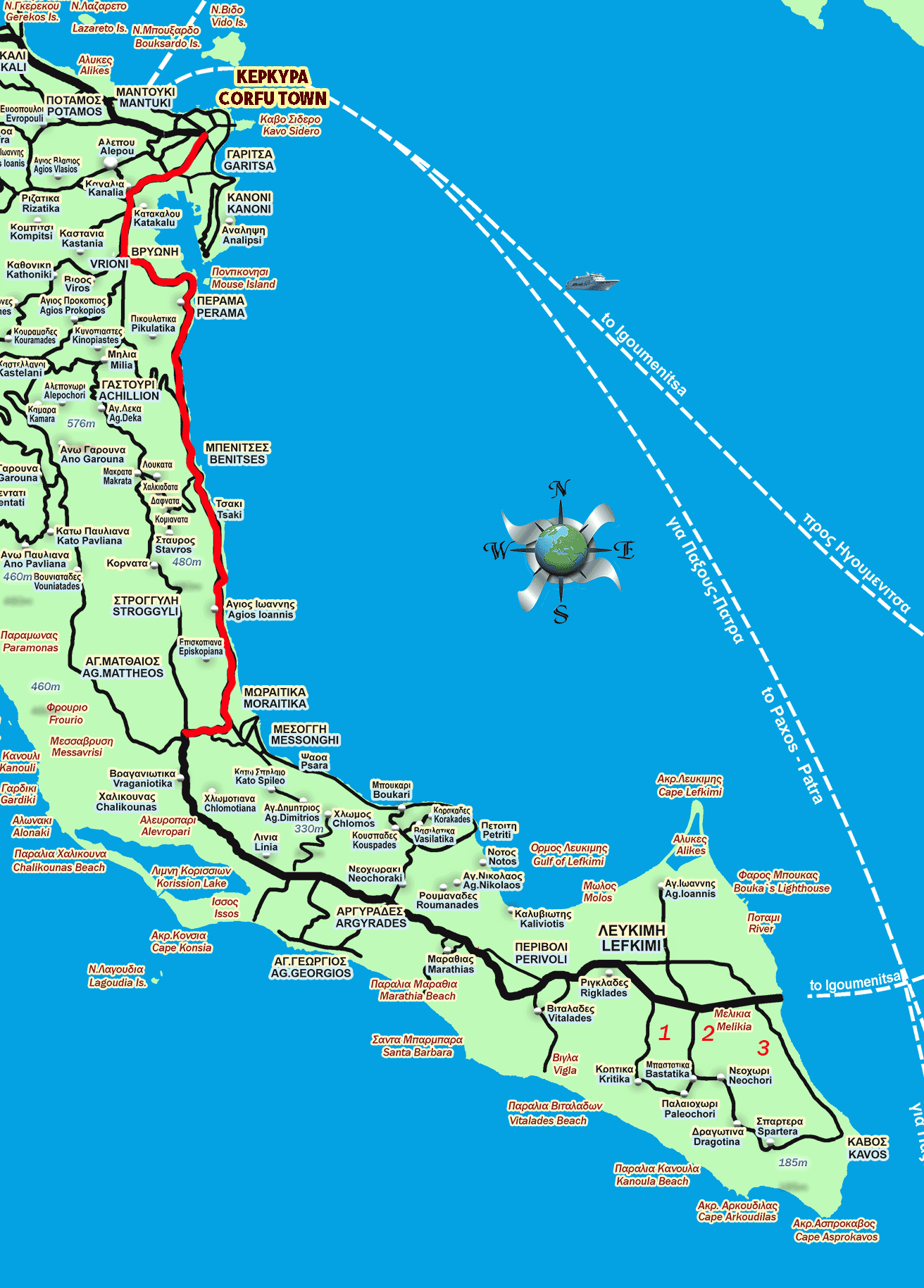
Kavos is inside the region of Lefkimi and 45 kilometers from Corfu town, currently the most popular tourist destination on the island.

Preferred mainly by young British tourists because of its rich and notorious nightlife offered by the many nightclubs, which offer cheap drinks, and due to the very cheap accommodation offered compared to other destinations.

In the area, there are approximately 15,000 beds divided between cheap hotels, apartments, or studios, but also in some more expensive hotels outside the noisy settlement.

In Kavos, nobody sleeps before 06-07 in the morning, so this is the equivalent of Malia in Crete and Laganas of Zakynthos, and certainly not a good choice for families, as in the area, very often various misdeeds happen.

Kavos Map
Kavos Map


Beach in Kavos

Kavos features a large sandy beach about 2 km long with shallow and a little cold water due to the open sea, and some streams.
It is fully equipped with bars, restaurants, lounges, and umbrellas, but also many opportunities for water sports and any activity that may be of interest to young people who go there, including football pitches, tennis, volleyball, karts, the opportunity for bungee jumping, and an amusement park.

There are also numerous clubs with swimming pools and pool bars, which are packed with people day and night.

Nightlife in Kavos

Kavos is known for its lively and bustling nightlife scene. The town is located on the southern tip of the island of Corfu and is a popular destination for young people looking for a fun and exciting vacation experience.

There are plenty of bars, clubs, and restaurants in Kavos that cater to different tastes and preferences. The main strip in Kavos is home to a variety of bars and clubs that stay open until the early hours of the morning. Some of the most popular spots include Atlantis, Futures, and Buzz Bar.

In addition to the bars and clubs, Kavos also has several beach parties and events that take place throughout the summer months. Many of these events are hosted by local bars and clubs and feature top DJs and live music.

It’s worth noting that Kavos has a reputation for being a party town, and some of the nightlife can be quite rowdy and wild. If you’re looking for a more relaxed and low-key experience, you may want to consider staying in one of the nearby towns or villages.

Clubs

Kavos is known for its vibrant nightlife scene and has a variety of clubs to suit different tastes and preferences. Some of the popular clubs in Kavos include:

  1. Future Club – Future Club is one of the biggest and most popular clubs in Kavos. It features a large dance floor, state-of-the-art sound and lighting systems, and hosts regular events and parties.
  2. Atlantis Club – Atlantis Club is another popular club in Kavos that attracts both locals and tourists. It has a spacious outdoor area with a pool, as well as a large indoor dance floor.
  3. Empire Club – Empire Club is a newer addition to Kavos’ nightlife scene but has quickly become a favorite among visitors. It features a stylish interior, a rooftop terrace with stunning views of the sea, and hosts regular events with top DJs.
  4. Rolling Stone Club – Rolling Stone Club is a smaller and more intimate club in Kavos, but is known for its great music and lively atmosphere. It has a dance floor, and outdoor seating area, and hosts themed parties throughout the week.
  5. Quayside Village Club – Quayside Village Club is a popular spot for those looking for a more relaxed and laid-back atmosphere. It’s located on the beachfront and features a pool, comfortable seating areas, and hosts regular events and parties.

These are just a few of the many clubs and bars that Kavos has to offer. It’s always a good idea to ask locals or hotel staff for recommendations based on your preferences.

The nightlife is the hallmark of Kavos; you can not ignore it. The party in Kavos lasts all day, better to say it lasts all hours that tourists do not sleep, loud music, dancing and drinking plenty of beer starting from the beaches during the day and at evening are carried along the streets and bars which are playing music blaring and the nightclubs and streets become one.

In the evening, the beaches become slightly quieter, seaside clubs playing Lounge and chill-out music, and a little overwhelmed by the most romantic that remain on the beach until the morning.

The tourist development of Kavos

During the decades of the 70s and 80s since culminated in destinations such as Benitses, Dassia, and others, Kavos was just an almost deserted beach with only 2 traditional restaurants waiting desperately for a few visitors from the tourist cruising boats that made ​​a stop there for 1-2 hours mainly for lunch at noon.

Also, the road leading there was miserable, narrow, with many holes, and it was a feat to get there.

But today, roads have become highways and are now among the best roads on the island!!!

Slowly, some accommodation started to be built in the area between Kavos and the Port of Lefkimi, and some small bars next to two seaside restaurants.

Mid 80 things began to change, not in Kavos but in other destinations.

Especially in Benitses, things changed radically in the 90s, residents reacted and kicked out the club 18-30 and others, such as the so-called 20s, tourist agents responsible for this kind of youthful mass tourism.

Kavos had the advantage that the residents did not stay permanently in the area but mainly in Lefkimi town, so the defusing desperate seeking by young British tourists could be done without disturbing the residents of the area; therefore, these agencies directed all this mass tourism stream massively to Kavos.

The development of Kavos has gotten its way; the rest is easy to imagine.


Kanoni, Corfu – Viewpoints, Church & Airport Spotting Guide

Posted in: All Corfu Resorts 0

Kanoni – The peninsula south of Corfu town

The peninsula of Kanoni

The cosmopolitan Kanoni is located 3 km on average from the center of Corfu town.

It is one of the most famous Corfu sights. It covers the entire peninsula south of Corfu Town.

In antiquity, there was the ancient city of Corfu, founded in the 8th century BC by Dorians who came from Corinth (a Greek town near Athens), with the ancient temple of Artemis, the monuments, and the citadel at the present location of Analipsis.

The area has many large hotels, restaurants, clubs, and other shops that turn Kanoni into a busy tourist destination. Until a few years ago, the Corfu Holiday Palace Hotel in Kanoni was housed in the Corfu Casino.

The Casino today has been moved to another hotel in Corfu, the Corfu Palace Hotel in Dimokratias Avenue, between Garitsa and Esplanade square.

How did the name Kanoni come from?

Kanoni got its name because, on the promontory at the end of the peninsula, there was a battery cannon that has been there since 1798, pointing out to sea to protect the island.

In Victorian times, it was a popular stroll in the cool of the evening, and we can imagine the men in their uniforms and the ladies in crinolines.

Today’s visitors are more comfortably dressed but still enjoy taking a coffee at one of the bars, enjoying superb views over Vlacherna convent- a small whitewashed building that is said to be a miniature replica of the famous Vlacherna convent in Constantinople- better known now as Istanbul.

Fittingly, Ancient Corfu port stood almost where the airport is currently

On the hill facing the departure terminal is a piece of wall believed to be 2500 years old, all that is left of the watchtower and wall of the ancient city.

Residents here often find cannonballs and pieces of pottery when they are gardening.

The shift of the town of Corfu from the Kanoni area

It is well known that the ancient city of Corfu was located here and moved to its current position somewhere around 500CE. The theory is that the harbor gradually silted up and became impassable for shipping, so the townspeople moved to the present site of Corfu Town, where a fort was constructed to protect them.

The historical truth is completely different, though. The ancient city of Corfu was destroyed by Visigothic invaders in the 5th century AD, and this forced the residents to abandon it.

Sights in Kanoni

Ancient Temples

Further inland is the remains of the temple of Athena, and just outside the gates of Mon Repos Palace is a large site still being evaluated by archaeologists.

Apart from these, and the foundations of a small temple actually on the grounds of Mon Repos, there is little else left now as Kanoni has become a very popular suburb of Corfu Town and has several hotels, as well as many apartments.

Spotting Airplanes as they land or take off

Plane spotters also abound here as the view of take-offs and landings at the airport is uninterrupted; at times, the watchers are higher than the approaching aircraft.

Mon Repos Palace

Mon Repos Palace, the birthplace of Prince Philip, Duke of Edinburgh, has now become extremely popular with joggers and walkers- its many trees providing welcome shade.

A walk through the grounds is always pleasant, and an escape from the crowds in town.

The palace itself houses a small but interesting museum, with both permanent and temporary exhibits.

Church of St Jason and St Sosipatros

Tucked away near Mon Repos is one of Corfu’s most beautiful churches, the 10th-century church of St Jason and St Sosipatros- the two missionaries who converted the islanders to Christianity.

The church is one of the few examples of Byzantine architecture on Corfu, domed and arched, and it stands in a large square.

On the walls are the remains of frescoes, and the custodian welcomes visitors and will open on request if he is working on his land next door.

This church is the finest example of the Byzantine heritage, but there is a signposted trail to the remains of another four churches in the area, showing that this sleepy suburb was once the hub of a thriving metropolis.

The Mystery of an ancient lemon eucalyptus tree

Some mysteries remain from the dim and distant past…On an estate on the promontory is an ancient lemon eucalyptus tree, believed by tree specialists to be 900 years old- how did it get there when Australia, home of the eucalyptus, was not visited by Westerners until the 18th century?

Near it is a ficus, the third-largest in the world, also a rarity in these climes.

What sailors brought these back, or were seeds randomly blown ashore from one of the ships at anchor in the harbor below?

Beaches around Kanoni

Kanoni is blessed with a variety of beautiful beaches in its vicinity, offering a delightful coastal experience. Also offers the most magnificent views of Mouse Island with the monastery of the Pantokrator and Vlaherna, the monastery of which is joined via a small bridge.

Here are the two notable beaches near Kanoni:

  • Vlaherena Beach: Located just off the coast of Kanoni, a small islet known for its picturesque charm. Accessible by boat, this pebble beach is surrounded by crystal-clear waters, making it a popular spot for swimming and snorkeling.
  • Mon Repos Beach: Situated near Kanoni, Mon Repos Beach boasts soft golden sands and calm waters. This serene beach is ideal for relaxing under the warm sun and taking refreshing dips in the sea.

These beaches near Kanoni provide a diverse range of coastal experiences, allowing visitors to relax, soak up the sun, and immerse themselves in the natural splendor of Corfu’s coastline.

Overall

Overall, Kanoni in Corfu offers a unique blend of natural beauty, historical significance, and tranquil surroundings. Whether you’re seeking breathtaking views, cultural exploration, or a serene getaway, Kanoni is a destination that captures the essence of Corfu’s charm.

1 37 38 39 40 41 42 43 52