The 7 best beaches of Corfu in a map, according to our opinion.
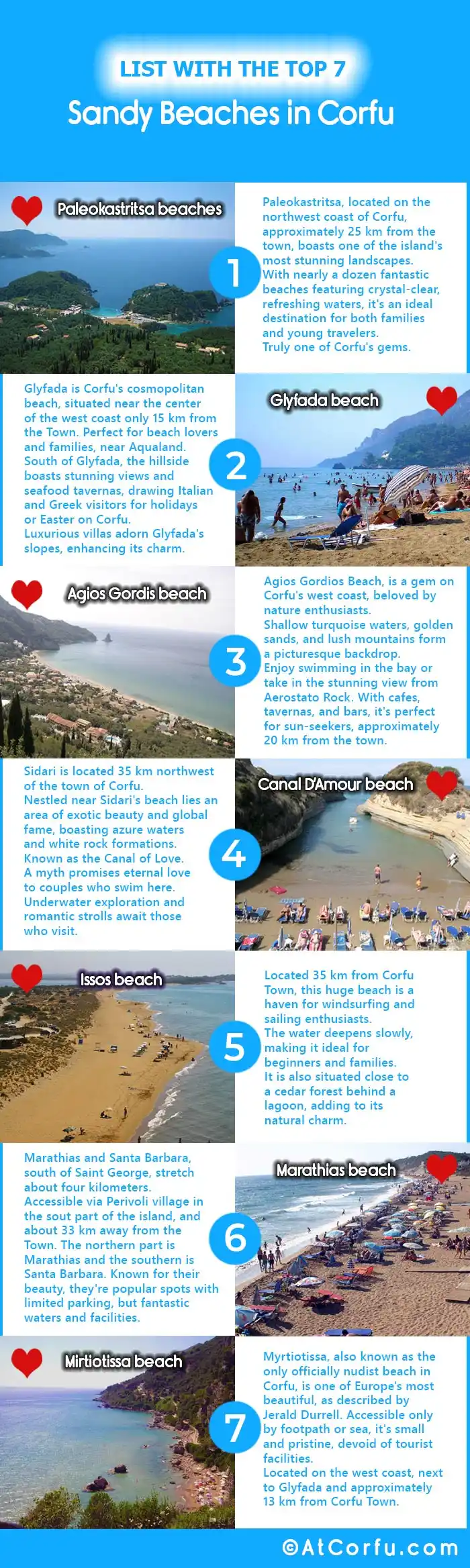


The 7 best beaches of Corfu in a map, according to our opinion.

You arrive in Greece expecting sunshine, sea, and calm conversations.
Then you step into a café or walk down a busy street and hear someone shout something that sounds aggressive, fast, and emotional — followed by laughter, or a completely normal conversation continuing as if nothing happened.
That’s the moment most visitors realize something important:
Greek “swear words” don’t behave like swear words in other languages. This is where outsiders often misunderstand Greek communication. Words that look harsh are often just social glue.
You might hear someone suddenly yell “gamoto” in frustration while waiting for a bus that’s late again. A second later, they’re talking normally to the person next to them.
No argument. No drama. Just emotion released into language.
In another situation, you might hear “re” thrown into almost every sentence. “Re” doesn’t translate neatly — it’s not polite or rude on its own, but it changes tone completely depending on how it’s said. It can soften a sentence, sharpen it, or make it feel like a friendly punch in the shoulder.
At first, it feels like chaos.
But it’s not.
It’s rhythm.
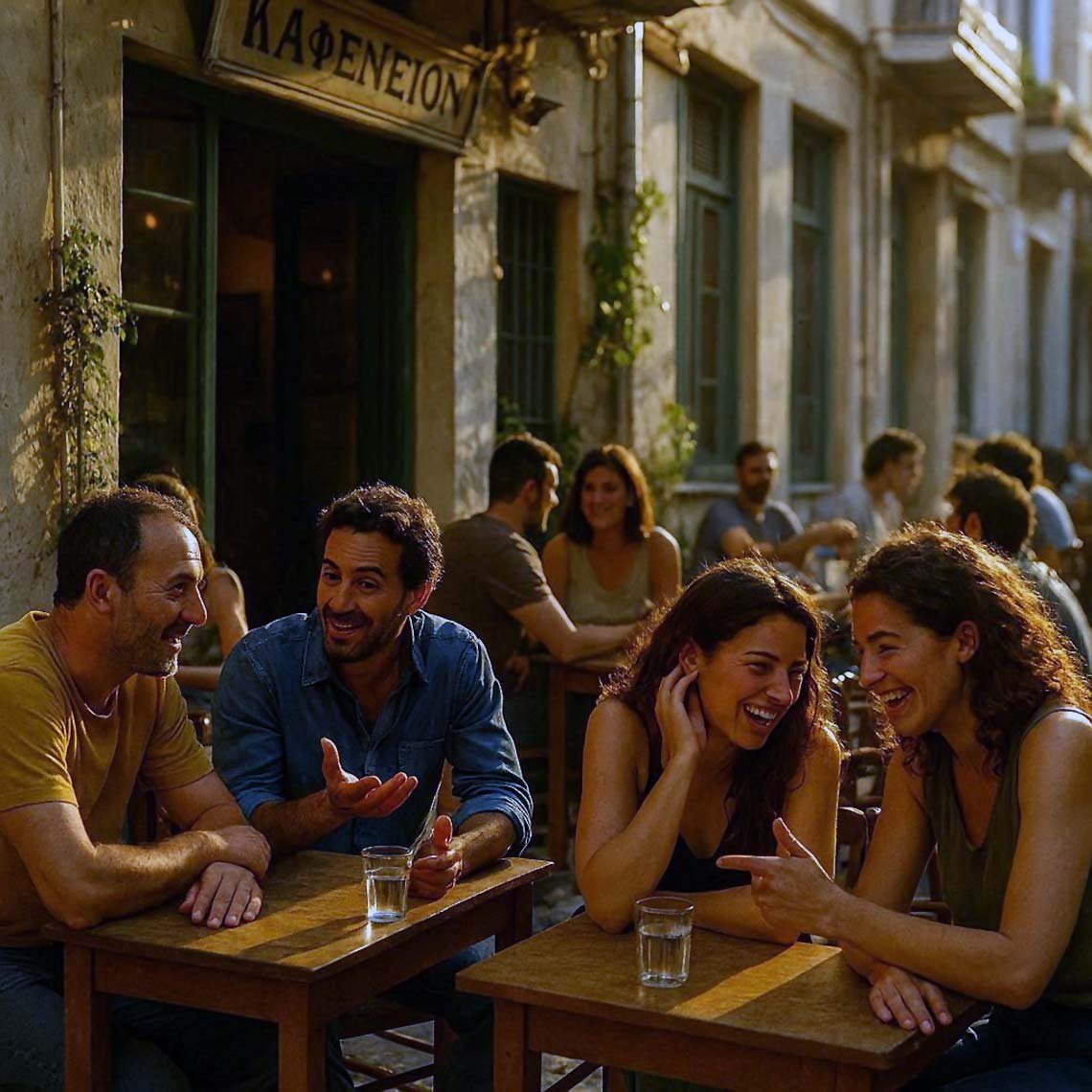
Spend enough time in Greece, and you’ll notice that speech is rarely flat. It rises, falls, speeds up, explodes, and then resets immediately.
Someone might turn to a friend and say something like:
“Ela re vlaka, pame tora.”
On paper, it looks like an insult. In reality, it’s often just friendship in motion — loud, direct, unfiltered.
A moment later, the same friend might be called something like “kopanos” after missing something obvious. It lands closer to teasing than offense. No tension follows it.
Not everything is friendly, though.
There’s a point where tone changes — and you feel it immediately.
In traffic, for example, everything becomes sharper. Someone cuts in unexpectedly, and you might hear “skata” explode into the air like a reflex rather than a sentence. It’s not a directed conversation. It’s a pure reaction.
Or a sudden “skase” — short, direct, cutting through everything. In another language, it might sound extremely harsh, but in Greek speech, it can appear in moments of annoyance, argument, or even heated joking, depending on who is speaking.
The difference is never the word alone.
It’s everything around it.
There is also a category of language that does carry real weight. These are not casual expressions anymore — they are tied to anger, disrespect, or serious conflict.
If someone uses words like “poustis,” the situation has changed. The tone is no longer playful or casual. It signals hostility or deep insult depending on context.
The same applies when someone is called a “lamogio” — it doesn’t describe a moment of frustration, but a judgment of character, usually implying someone is dishonest or manipulative.
In these moments, Greek stops being flexible and becomes direct.
But even then, tone still matters more than outsiders expect.
To a visitor, the intensity of Greek speech can feel overwhelming at first. Words fly quickly, volume rises, emotions are visible.
But what looks like conflict is often just a communication style.
Friends argue loudly and laugh five minutes later. People insult each other in ways that would sound extreme elsewhere, yet no one treats it as a rupture in the relationship.
At the same time, when something is truly serious, you feel that shift immediately — the same language becomes sharp, deliberate, and final.
That contrast is what makes Greek speech so difficult to translate literally.
If you try to learn Greek swearing as a list of meanings, it won’t make sense in real life.
Because none of it works in isolation.
A single word can change meaning completely depending on:
What sounds like an insult can be affection.
What sounds like a joke can be a warning.
What sounds neutral can be aggressive.
And sometimes, it’s just noise released in the middle of a moment.
If you stay long enough in Greece, you stop translating these words in your head.
You start hearing something else instead — not vocabulary, but intention.
And that’s when it finally clicks:
Greek swearing isn’t about the words.
It’s about life happening too loudly to be polite.
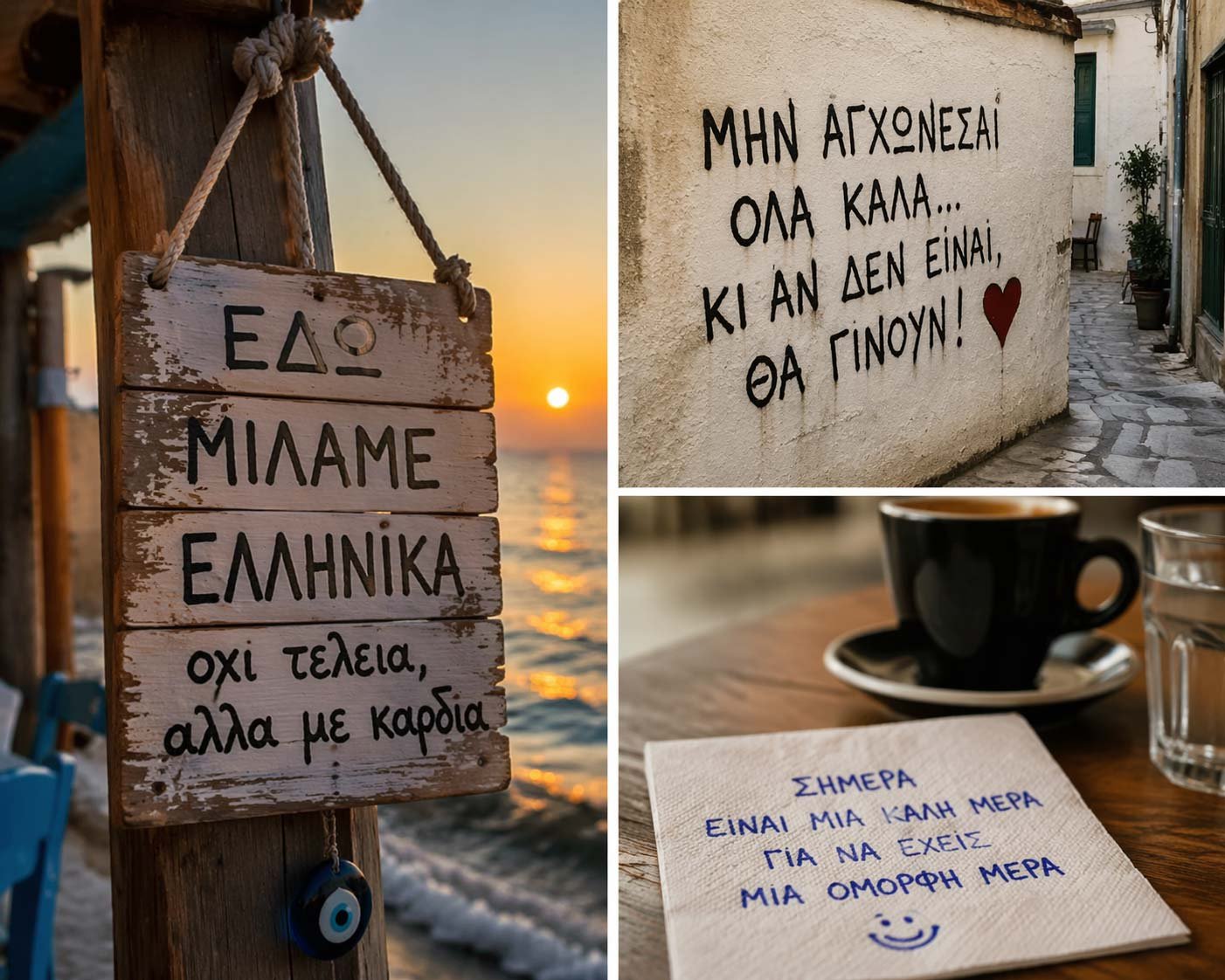
Αυτό το άρθρο μου έβγαλε το λάδι, αλλά θα στρίψω διά του αρραβώνος πριν πάρω ανάποδες και με πιάσουν στα πράσα, γιατί θα γίνει της Πόπης και θα τα πάρω στο κρανίο. Αλλά προκειμένου να βγάλω το φίδι από την τρύπα, θα κάνω την πάπια μέχρι να πω δεν βαριέσαι…
Greek idioms don’t just describe life — they perform it.
Greek Idioms and Everyday Expressions in Context explores how Greek is spoken in real life, focusing on the meaning and use of everyday idioms beyond literal translation.
Instead of listing phrases, this guide explains each expression in a natural context, showing how it works in real conversation and how tone or situation can shift its meaning.
All expressions are explained by a native Greek speaker, reflecting authentic, lived-in language rather than textbook or overly formal interpretations.
This selection includes around 18 carefully chosen idioms commonly used in everyday speech.
Many cannot be translated word-for-word into English, which makes their real usage essential to understanding them.
Each entry aims to reflect how Greeks truly speak in everyday situations, offering a practical and culturally grounded view of the language.
“Έλα μωρέ” is one of the most versatile expressions in everyday Greek, with a meaning that shifts depending on tone, context, and the relationship between speakers. It functions more as an emotional reaction than a literal phrase, often combining dismissal, familiarity, disbelief, or playful annoyance.
It is commonly used to downplay something or signal that it should not be taken too seriously. In other contexts, it can express frustration when something feels exaggerated or unnecessary.
Among close friends, it often becomes affectionate and humorous, adding warmth and shared understanding to the conversation.
Its strength lies in its flexibility: it does not have a fixed meaning, but reflects attitude and emotion in speech, like a verbal shrug that can range from irritation to affection.
Example:
“I lost my wallet…” — “Έλα μωρέ…”
“Κάνω την πάπια” literally translates as “I do the duck” and is used when someone pretends not to notice something to avoid involvement, responsibility, or awkwardness. The image is humorous, suggesting a duck that appears indifferent while things happen around it.
The expression is often linked in popular tradition to a Byzantine official known as “Papias,” said to avoid responsibility and act unaware, though this remains an informal and unverified explanation.
Due to his name “papias” that sounds the same as papia (duck), the expression shifted wrongly to the bird.
In everyday use, it describes situations where someone is clearly aware of what is going on but chooses to act oblivious. It is commonly used when responsibility is shared or avoided, and no one wants to openly acknowledge a problem.
The phrase is playful in tone but can also carry mild criticism, suggesting avoidance or passive behavior, though it remains widely used in informal speech.
Example:
“Who broke the vase?” — everyone “kanei tin papia”.
“Τα πήρα στο κρανίο” is a vivid Greek expression describing a sudden and intense burst of anger. Literally meaning “I took them to the skull,” it conveys emotions rising sharply to the head, reaching a point of loss of control.
It uses the “skull” (kranio) as a metaphor for pressure, capturing the moment when emotional intensity becomes overwhelming, and reaction turns immediate and uncontrollable.
The expression is highly common in informal speech and is used to dramatize frustration or rage. It does not simply mean being annoyed, but reaching a breaking point where patience is lost completely.
Despite its intensity, it is often used with exaggeration or humor, especially when recounting past events, giving anger a slightly theatrical tone.
Example:
“Με ξαναέγραψε τελευταία στιγμή και τα πήρα στο κρανίο.”
“Μου έφυγε το καφάσι” is a slang expression describing a sudden emotional impact, usually surprise, admiration, or being completely taken aback. It refers to the moment when something is so striking that it temporarily disrupts your composure.
The expression uses “kafasi” (a wooden or plastic crate) as a metaphor for the head, creating a humorous image of mental shock or disorientation, as if something inside you “drops” or slips out of place.
In everyday speech, it is used when a person sees someone, something, or a situation so impressive or unexpected that it momentarily overwhelms them. The reaction can range from admiration and attraction to shock or disbelief depending on context.
It is a playful and informal expression often used in storytelling among friends to exaggerate a reaction, capturing that instant where reality feels unexpectedly intense or “different.”
Example:
“Μπαίνω στο μαγαζί και τη βλέπω… μου έφυγε το καφάσι.”
“Δεν βαριέσαι” comes from the verb βαριέμαι (“to be bored”), so literally it means “don’t get bored/don’t be bored.”
In everyday spoken Greek, however, the literal meaning has largely faded. The phrase has shifted into an attitude of acceptance or resignation, meaning “it doesn’t matter,” “let it go,” or “whatever.”
It is used when something goes wrong or is not worth stressing about anymore, marking a shift from concern to indifference or emotional release.
Example:
“I lost the job… δεν βαριέσαι.”
A common toast meaning “to our health” (Greek: Στην υγειά μας).
It is used when saying “cheers” in social gatherings and is one of the most frequently heard expressions in Greece when people raise their glasses — whether at a family dinner, a seaside taverna, or a casual coffee with friends.
Beyond a polite phrase, it carries a sense of togetherness, expressing a shared wish for health, longevity, and good moments.
Even in informal settings, it is often said warmly, with eye contact and the ritual of clinking glasses.
Example:
“Stin ygeia mas! Finally, we’re all together again.”
“For Greece, damn it!” (Greek: Για την Ελλάδα, ρε γαμώτο)
It is a spontaneous, highly emotional phrase spoken by Βούλα Πατουλίδου after her victory at the 1992 Summer Olympics. It has no literal meaning; instead, it is an outburst of emotion, pride, and intense relief at the moment of success.
It can simultaneously carry a meaning similar to “damn it!” and “finally!”, expressing a burst of tension at the peak of an achievement or effort. It is not a calm statement, but an emotional release that can include both relief (“we finally made it”) and intensity (“it’s done, we did it”).
“Χαλαρά” literally means “in a relaxed way,” but in everyday Greek it goes beyond describing an action and reflects an attitude.
It is used when something should happen without stress, pressure, or urgency, meaning “take it easy” or “no need to rush.” It is often said to calm someone down or ease tension in the moment.
The expression is strongly associated with Thessaloniki and is often linked to a more relaxed rhythm of life and communication.
Example:
“Will we make it on time?” — “Chalara.”
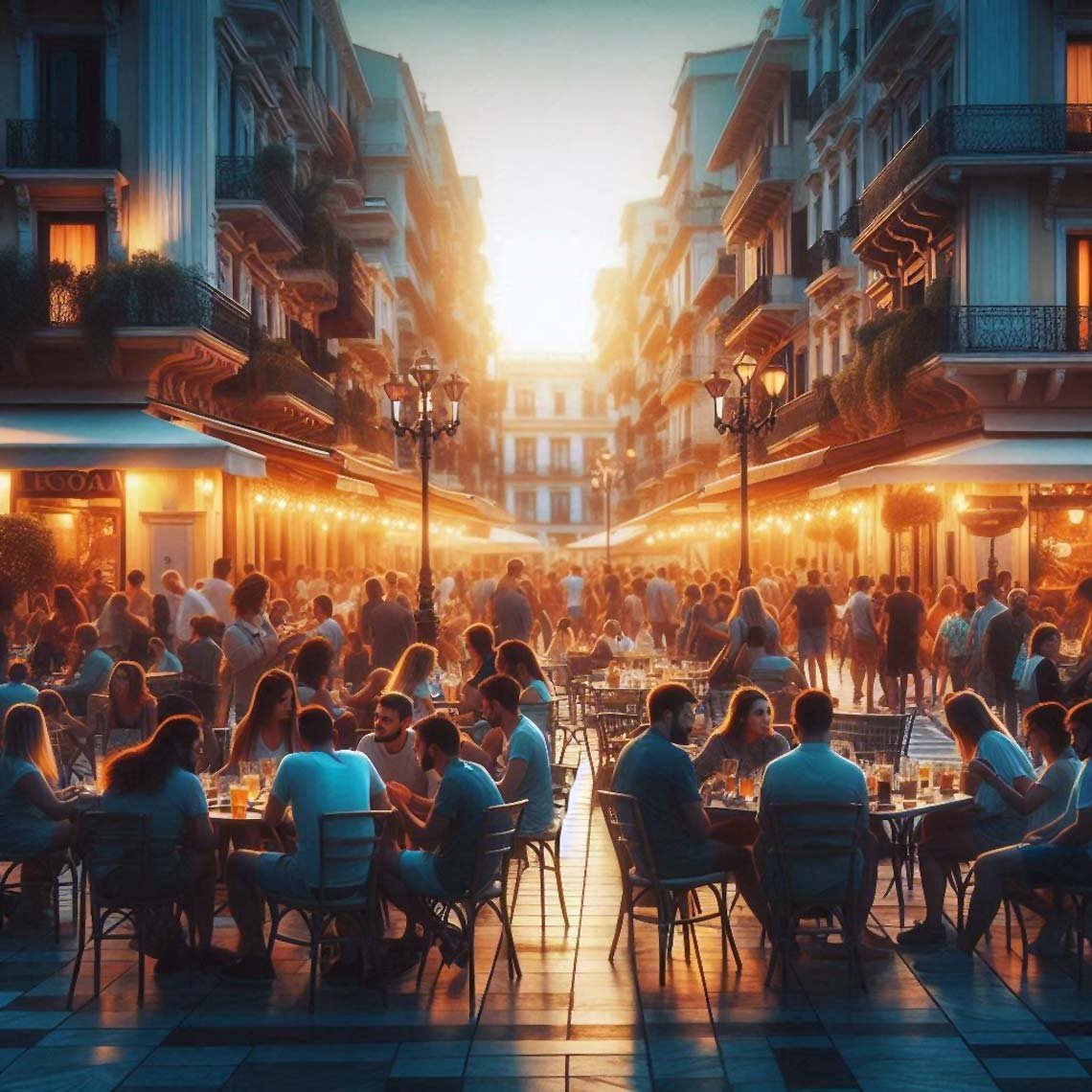
“He puts water in his wine” (Greek: Βάζει νερό στο κρασί του).
The expression originates from the ancient Greek practice of diluting wine with water, since wine was not typically consumed “neat” (akratos), but mixed to reduce its strength and maintain sobriety during symposia.
Today, it is used metaphorically to describe someone who softens their opinion, compromises, or makes a stance less strict or intense than it originally was.
In everyday Greek conversation, it often appears in contexts such as arguments, relationships, or situations where a person who was once firm or uncompromising becomes more flexible over time. It is no longer about wine, but about attitude and behavior.
Depending on context, it can carry either a mildly positive tone, suggesting reasonableness and compromise, or a slightly critical one, implying that someone has backed down too much.
Example:
“After so much refusal, he finally changed his mind… he put water in his wine.”
“A bad dog never dies” (Greek: Κακό σκυλί ψόφο δεν έχει).
The expression comes from observations of rural life and nature, where tough and aggressive stray dogs often survived despite harsh conditions and constant hardship. Over time, it became a metaphor for people with a difficult or “hard” character who seem to endure illness, adversity, or challenges without being easily defeated.
Literally, the phrase does not form a logical sentence in either Greek or English and should not be read word-for-word. It is a traditional proverb whose meaning is entirely metaphorical.
In everyday use, it describes someone resilient or unusually hard to bring down — a person who keeps overcoming difficulties. It is often used with a mix of admiration and irony for someone who “never goes down easily,” including cases of serious illness or major life challenges followed by recovery.
A sharp refusal meaning “that’s out of the question” or “no way that’s happening,” literally “they didn’t slaughter (any animals)” (Greek: Δεν σφάξανε).
The expression comes from older times when meat was scarce, and animals were slaughtered only on special occasions such as festivals or major celebrations. In that context, it could literally imply that there was nothing to offer, and metaphorically that expectations or hopes were unrealistic.
In modern everyday speech, it has shifted completely in meaning. When someone says “de sfaxane,” they are not referring to food or violence, but rejecting an idea outright.
It is used for requests or suggestions that feel unrealistic, unfair, or simply not going to happen, and functions as a direct refusal with emphasis and attitude. The tone is strongly dismissive, often carrying frustration or irony, similar to “let’s be serious” or “don’t even think about it.” Depending on context, it can sound playful among friends or firm in an argument.
Example:
“Can I borrow your car for the weekend?” — “De sfaxane.”
A light, informal expression meaning ‘uh-oh, we’re in trouble’ or ‘we’re in trouble’ used when something small or manageable has just gone wrong (Την βάψαμε).
This is the mildest of the three and is often said the moment you realize something is not going as planned, but before things get serious.
It can refer to small mistakes, forgotten tasks, or minor inconveniences that still feel fixable. The tone is usually half-serious, half-humorous, like an early warning signal among friends.
Example:
“I locked the house but left the keys inside…Κλείδωσα το σπίτι αλλά άφησα τα κλειδιά μέσα… tin vapsame.”
A light, informal expression meaning “uh-oh, we’re in trouble,” used when something small or manageable has just gone wrong (Greek: Την βάψαμε).
It is the mildest of similar expressions and is usually said the moment you realize something is not going as planned, but before the situation becomes serious.
It refers to minor mistakes, forgotten tasks, or small problems that still feel fixable. The tone is typically half-serious and half-humorous, acting as an early warning among friends.
Example:
“I locked the house but left the keys inside… την βάψαμε.”
A very vulgar slang expression meaning “we’re seriously screwed” or “we’re completely in trouble” (Greek: Την πουτσίσαμε). It is used only in very informal contexts among close friends.
This is the strongest and most crude version in the group, typically used as an emotional outburst rather than a literal statement. It expresses frustration in a raw, exaggerated, and often humorous way when things have gone very wrong.
It often appears in chaotic or hopeless situations, sometimes accompanied by nervous laughter, reinforcing a shared sense of collective misfortune.
Example:
Used among friends when a situation goes badly wrong, and consequences are expected.
A very rough folk expression used when a situation has completely derailed, and nothing can be done except observe and accept it (literally: “shit in high ground and watch”).
The expression is commonly associated with folk tradition from the time of the Greek Revolution, when the klephts would climb to high ground and look around during the most basic human moments, to check if Turks were around, though this remains an informal and unverified explanation.
It is used when a situation is beyond control, and any further effort feels pointless. Its meaning is entirely metaphorical and far removed from the literal wording.
Rather than simple indifference, it conveys a sense that things have fundamentally gone wrong, leaving only ironic or resigned observation as a response. Depending on tone, it can sound humorous, bitter, or exhausted.
It is often used to comment on failed plans or collapsing efforts when the outcome is already obvious.
Example:
“Constant power cuts, everything’s falling apart… xese psila kai agnanteve.”
A Corfiot carnival street-satire tradition (Greek: Πετεγολέτσα) where humor, irony, and public mockery are performed theatrically, often targeting local politics.
It is a traditional form of performance from Corfu, especially during the carnival period, combining acting, satire, and improvisation through exaggerated characters and situations that comment on social and political life.
Its purpose goes beyond entertainment, serving as a public critique expressed through humor and irony. A key feature is the use of the Corfiot dialect, often exaggerated for comedic effect.
In some cases, performances extend into the streets, with actors appearing from balconies and windows, turning the old town into a live, multi-level stage. The tone is usually playful and sarcastic, but can also become sharply critical depending on the subject.
Example:
“During carnival, Petegoletsa performances use exaggerated Corfiot dialect to satirize local politicians from balconies and streets.”
A traditional folk expression meaning that a planned situation has completely collapsed and is over, literally “the bride (farted), the wedding is over” (Greek: Έκλασε η νύφη, σχόλασε ο γάμος).
The expression is rooted in the old social perception that even a single inappropriate or “shameful” act by the bride during the wedding ceremony could irreparably offend the groom’s family, leading to the immediate collapse of the marriage before the celebration even began.
A strong folk expression meaning “He is trying to gain even from the smallest thing / He is being extremely stingy or opportunistic,” literally “extract the fat from a fly” (Greek: Βγάζει από το μύγα ξύγκι).
This phrase is used for people who try to benefit financially or materially from every tiny opportunity, even when there is almost nothing to gain. It carries a critical tone and is often said about someone who is perceived as overly cheap, calculating, or constantly trying to “win” even in trivial situations.
The imagery is deliberately exaggerated: a fly is something useless and tiny, so trying to extract “fat” from it symbolizes extreme greed or pettiness.
It is informal, slightly mocking, and often used in everyday speech when describing stingy or overly opportunistic behavior.
Example:
“He does bazaars even for 1 euro…Greek: Ακόμα και για 1 ευρώ κάνει παζάρια… vgazei apo to myga xygki.”
Greek idioms and everyday expressions rarely remain within their literal meaning. Over time, most of them have shifted far away from their original imagery and now function primarily as metaphors shaped by tone, context, and shared cultural understanding.
What begins as a concrete image or phrase often becomes entirely abstract in real conversation — a reaction, an attitude, or an emotional shortcut rather than a direct statement.
This is one of the most distinctive features of Greek as it is actually spoken: language is rarely single-layered.
Almost every expression carries a second meaning beneath the surface, and in many cases, the literal interpretation is no longer relevant at all in everyday use. Instead, meaning is carried by rhythm, emphasis, and situational awareness.
In this way, Greek idioms reveal a language built on dualities — between literal and metaphorical, seriousness and humor, calm and emotion, formality and informality.
The same phrase can shift meaning completely depending on how it is said and who says it, creating a living system of expression that is deeply contextual rather than fixed.
This flexibility is what makes spoken Greek both challenging and uniquely expressive: it is not just about what is said, but how, when, and why it is said.
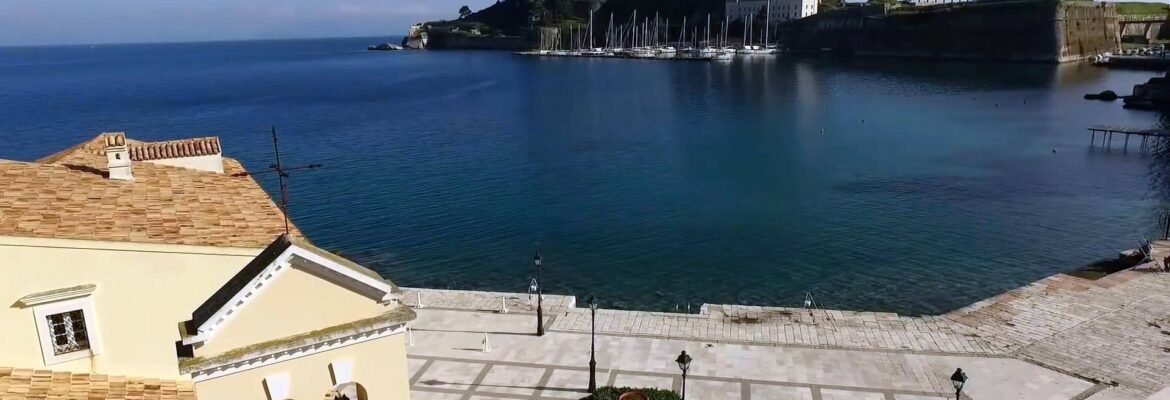
Corfu Town is not a typical beach destination, but there are several small spots nearby where you can swim and enjoy the sea. Most of these are pebble or rocky areas rather than long sandy beaches, but they offer clear waters, scenic views, and easy access from the town center.
Below are the main beaches and swimming spots in and around Corfu Town.

Faliraki is a small, organized beach located below the Old Fortress, near the historic center. Access is via a short path from Arsenios Street.
Although compact, it is one of the most convenient places to swim in Corfu Town. The water is usually calm, though it can be affected by passing boats.
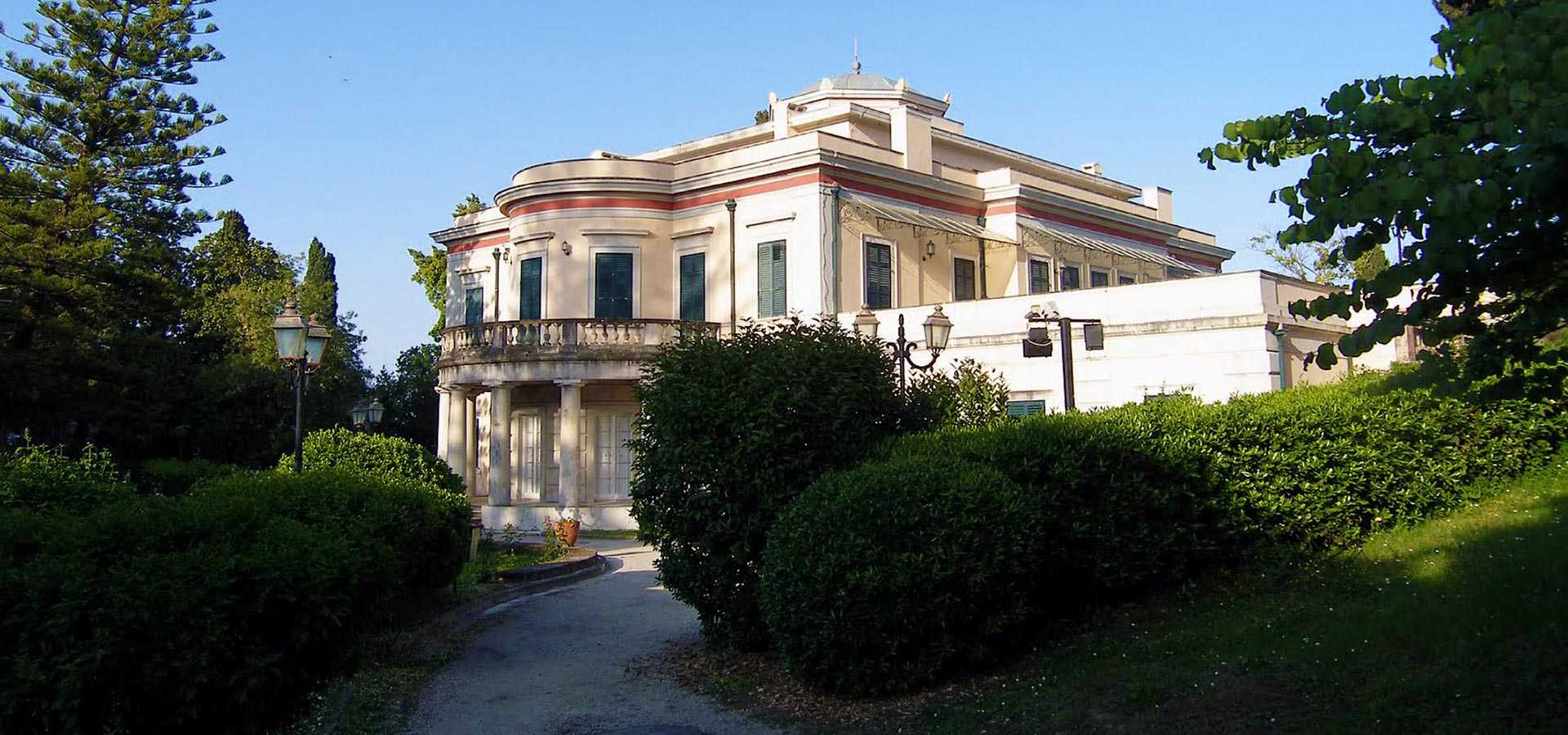
Located at the southern end of Garitsa Bay, Mon Repos is one of the most popular beaches near Corfu Town. It is set in a green, quiet area next to the historic Mon Repos Palace.
This is one of the best options if you want a more traditional beach experience close to the town.

Anemomylos is not a traditional beach, but a swimming spot along the coast of Garitsa Bay. The area features a mix of rocks and small pebbles, with a jetty often used for entering the water.
Kanoni offers a small pebble beach with some of the most iconic views in Corfu. From here, you can see Pontikonisi (Mouse Island) and the Vlacherna Monastery.

The Nautical Athletic Club of Corfu (NAOK), located near the Old Fortress, is mainly a sports facility rather than a traditional beach. However, the area is sometimes used for swimming.
Facilities include:
This spot is more suitable for activities than for a typical beach day.
While Corfu Town doesn’t offer large sandy beaches, it provides several convenient swimming spots within walking distance. For bigger and more organized beaches, you’ll need to travel outside the town, but for a quick swim, these locations are more than enough.
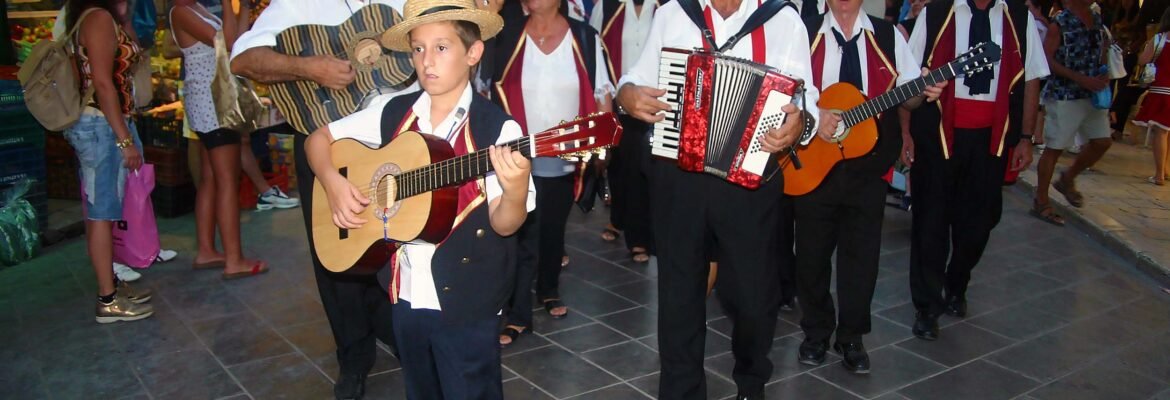
Corfu is one of the most musical islands in Greece, known for its strong tradition of philharmonic bands and Western-influenced music. From historic orchestras to local serenades, music remains a central part of life on the island.
Shaped by Venetian rule, Corfu introduced opera to Greece and developed a unique musical identity that continues today through its bands, festivals, and cultural institutions.
Fast forward to 1840, and the Philharmonic Society of Corfu was founded. Over the years, this society has weathered the tides of time and continues to thrive, a living testament to the island’s enduring love for music. The very essence of Corfu is steeped in melody, as conversations flow like verses of a song and melodies are woven into the fabric of everyday life.
The rise of philharmonic orchestras and bands on Corfu was part of a larger European trend in the 19th century, as music associations sprang up across the continent. Thanks to the island’s sons and daughters studying in European universities, Corfiots became an integral part of this musical revolution. The island’s philharmonic bands shine most brightly during the vibrant Easter celebrations when their enchanting performances captivate both locals and visitors alike.
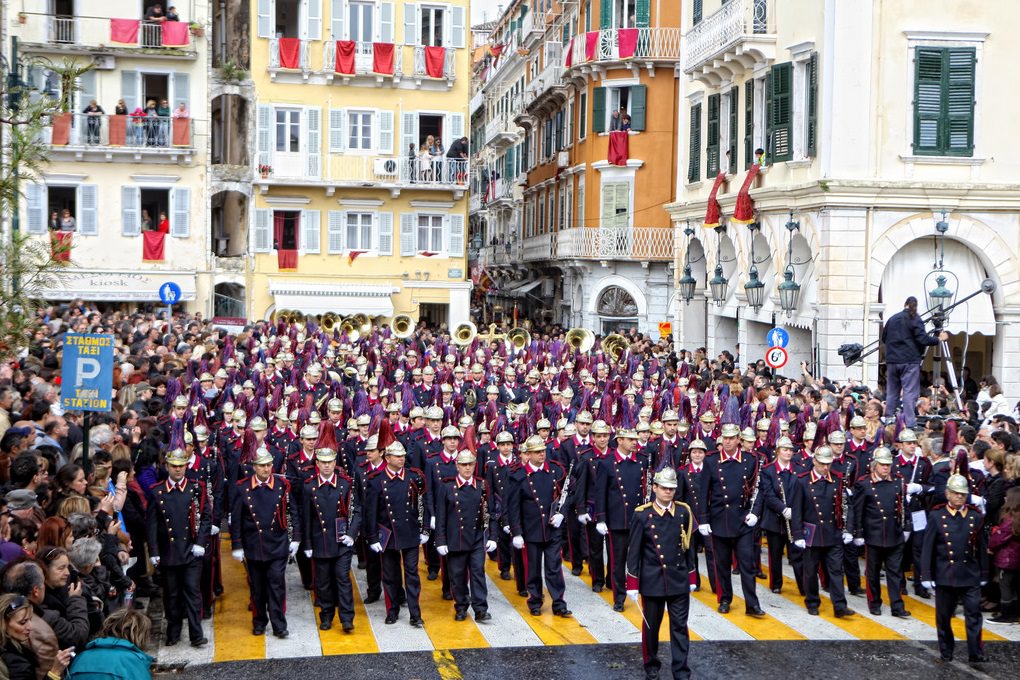
The birth of philharmonic orchestras on Corfu traces back to 1837, when Queen Victoria’s edict prohibited the British Army Band from participating in Orthodox events. This inspired the birth of the Corfiot Philharmonic Orchestra, known as the “Philharmonic Society of Corfu.” Established on September 12, 1840, its founding members included Spyridon Xyndas, Petros Kouartanos, Ioannis Kallonas, and Nikolaos-Halkiopoulos Mantzaros. Foreign residents fondly referred to it as “La Banda Grecca,” and the society’s uniforms were adorned in blue and red – the island’s iconic colors.
The legacy of Spyridon Xyndas is a dazzling gem in Corfu’s musical crown. He composed the first Greek opera, a remarkable feat that echoed through time. Yet, it was his fellow band member, Nikolaos Halkiopoulos-Mantzaros, who gifted Greece with its National Anthem. Setting Dionysios Solomos’ stirring poem “Hymn to Liberty” to music in 1830, Mantzaros left an indelible mark on Greece’s cultural landscape.
Mantzaros’s musical legacy extended beyond symphonies and compositions; he dedicated much of his life to teaching music and nurturing the talents of future generations. The echoes of his influence continue to resonate in the island’s educational institutions and musical aspirations.
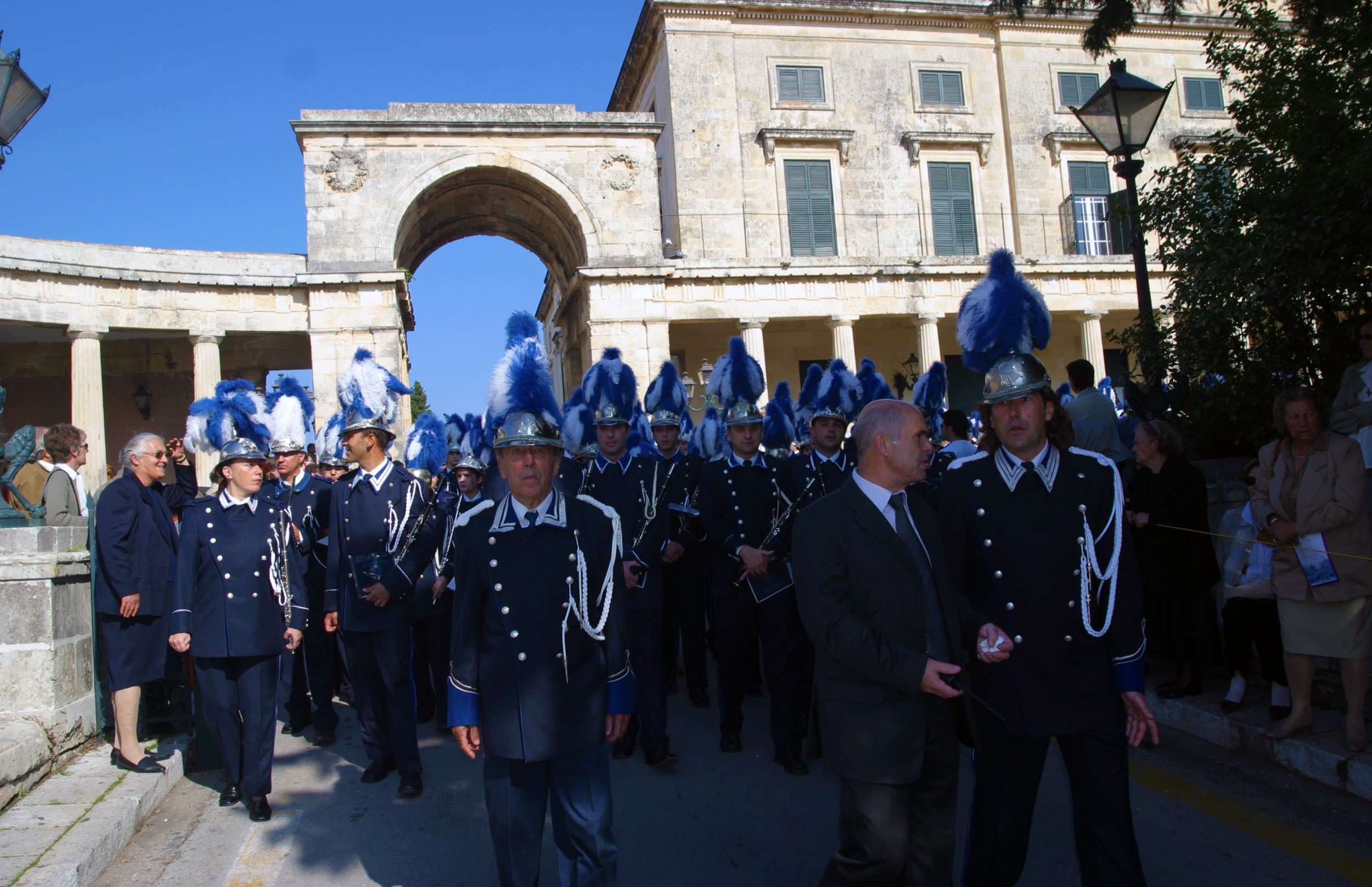
In 1890, the Mantzaros Philharmonic Society was born, weaving its own musical chapter into Corfu’s story. With blue and white uniforms that reflect Greece’s hues, this society has played a significant role in shaping the island’s musical landscape for over a century.
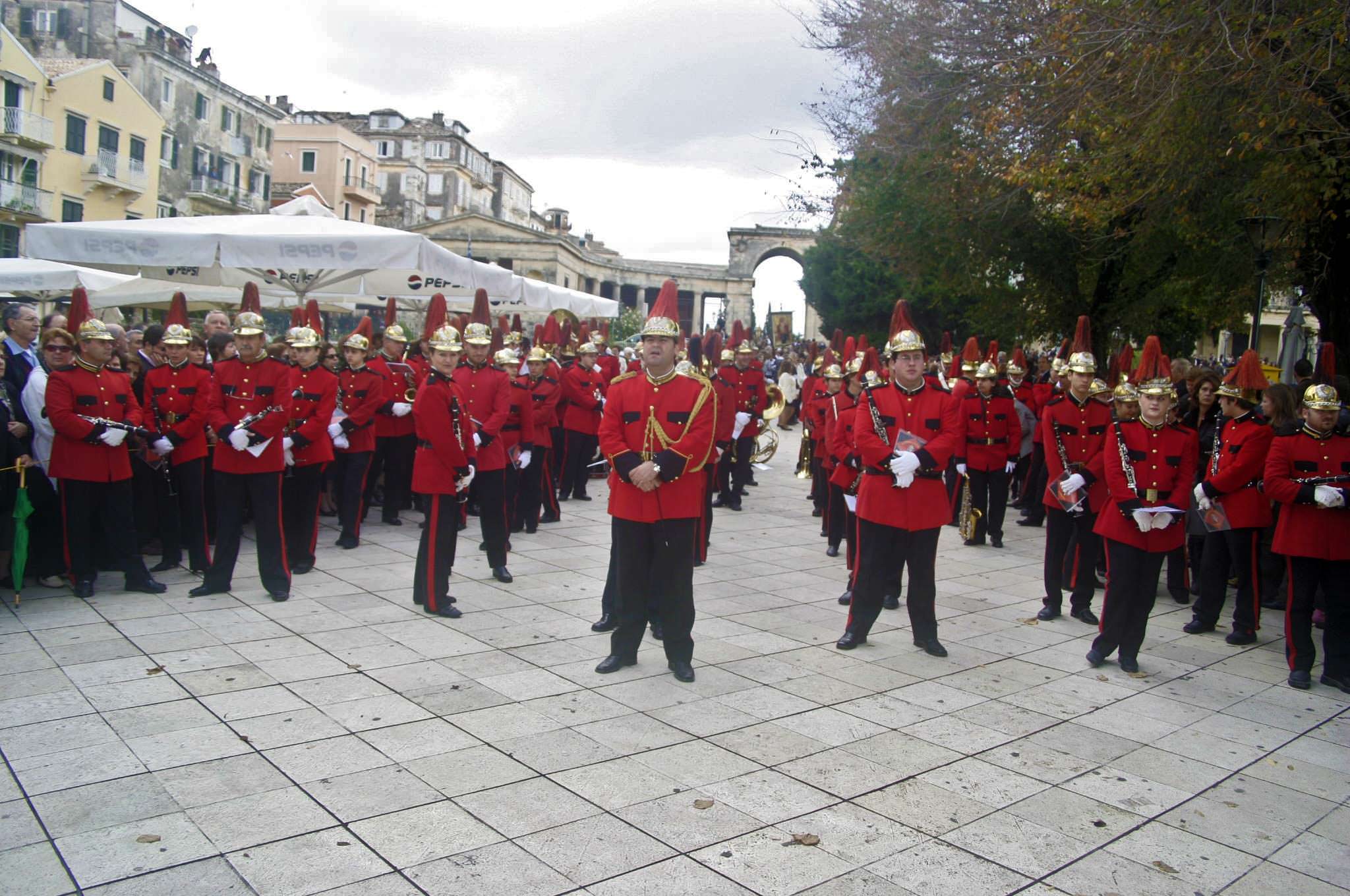
And the musical journey didn’t end there. In 1980, the Kapodistrias Philharmonic Association of Corfu emerged, embarking on a mission to enrich the island’s musical realm. Making its debut appearance on New Year’s Eve of 1981, this association swiftly became one of Corfu’s largest cultural and musical education centers. Its tireless efforts have nurtured a new generation of musicians, contributing to Greece’s evolving musical landscape.
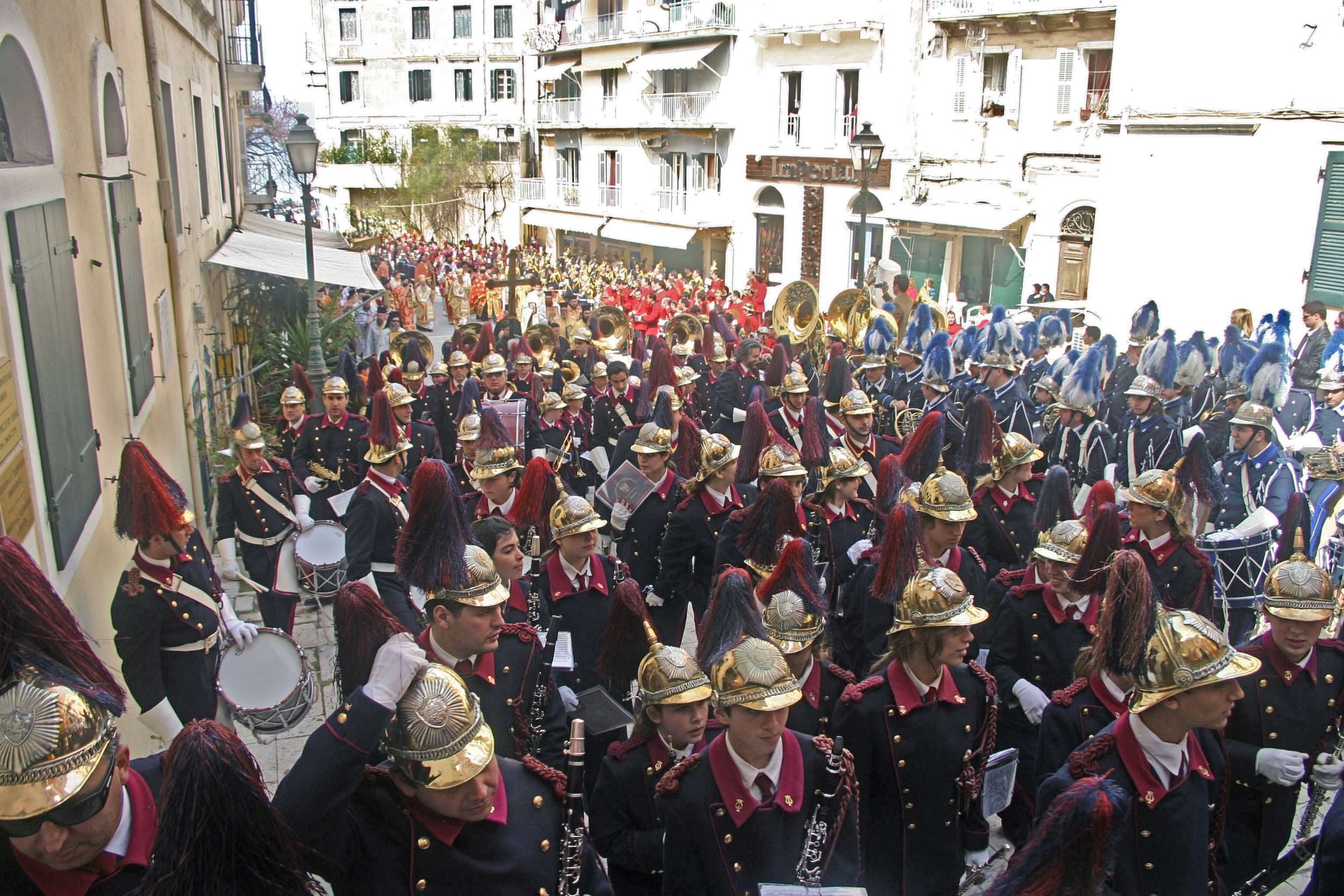
The musicians who dedicate their hearts to Corfu’s philharmonic bands are often not professionals, but their passion for music is boundless. They become mentors, guiding younger generations toward becoming accomplished soloists, conductors, and teachers in Greece’s vibrant musical scene.
It’s awe-inspiring to think that an island with a population of just 120,000 residents hosts more than twenty major music education organizations, accompanied by a multitude of music-related clubs. The School of Music under the Ionian University’s auspices further underscores the island’s commitment to nurturing musical talent. Music is, indeed, interwoven with Corfu’s soul, playing a profound role in shaping its rich cultural identity.
As you stroll through the charming streets of Corfu, an unexpected symphony captures your senses. The melodic notes of guitars, accordions, and a choir fill the air, leading you to a delightful surprise. It’s as if the entire neighborhood has joined in song, infusing the atmosphere with celebration. Is it a special event or a festivity? The answer lies in the captivating world of Corfu’s Kantadori, or perhaps better known as the ‘Troubadours.’
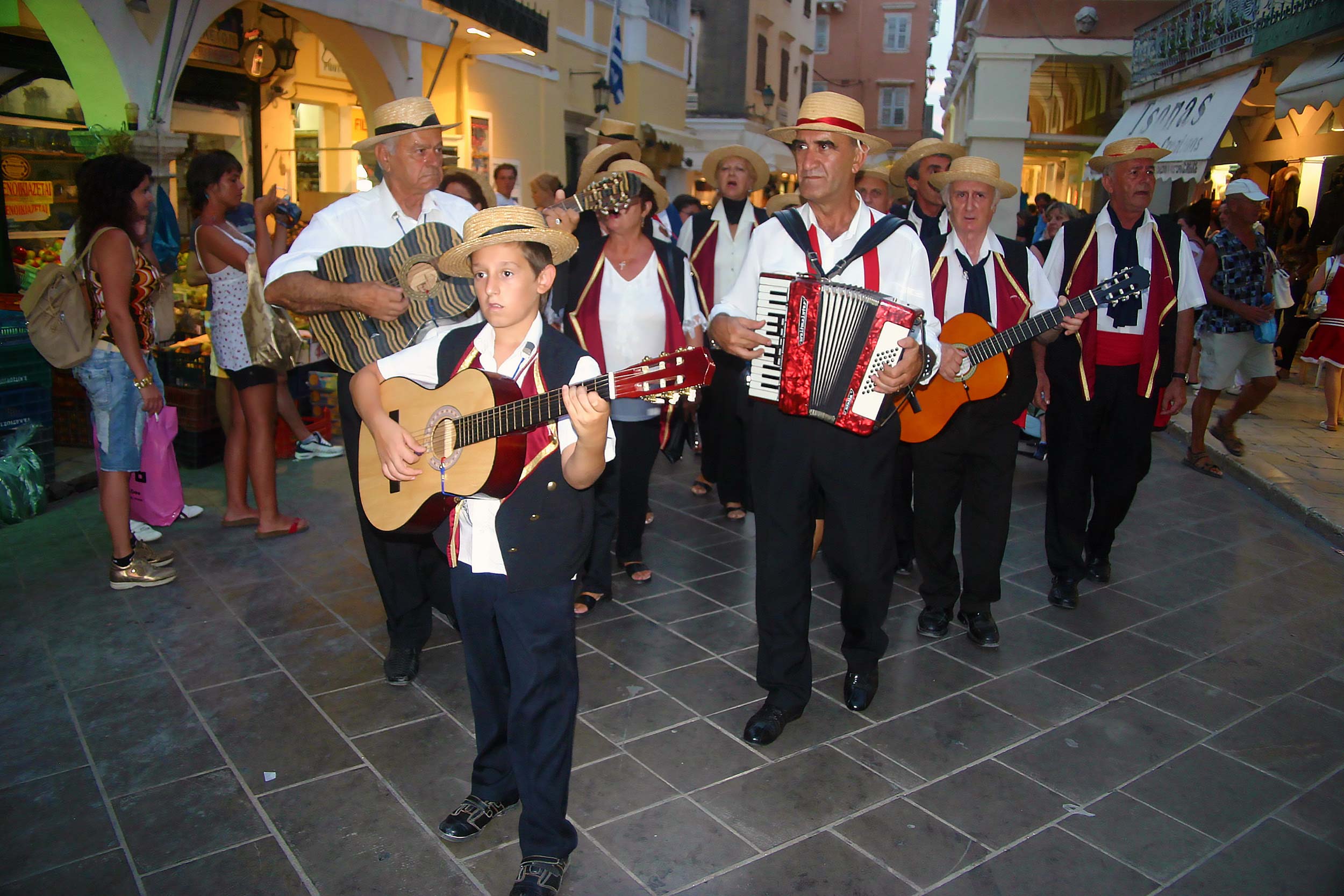
Dressed in traditional costumes, these groups of people take to the cobblestone streets of the old town, offering spontaneous and enchanting moments of entertainment to both residents and visitors. Their music and songs create an atmosphere of wonder and joy, not just within the cantonments but also at weddings, festivals, and a variety of island events. They are an integral part of Corfu’s cultural heritage, weaving melodies that echo across time.
Corfu, often dubbed the ‘most musical island in Greece,’ holds a unique position due to its historical influences and Venetian past. The island’s musical tapestry is a vibrant blend of Western harmony and Ionian charm, a result of its exposure to the art, literature, and music of the West. This influence gave birth to a distinctive style that is both familiar and uniquely Corfiot.
At the heart of this musical legacy lies the chant, an urban folk song that resonates with the spirit of Corfu. The chants feature Western polyphony and are performed by groups rather than soloists. Created by composers from the Ionian School of Music and the Modern Greek National School of Music, these melodies are often accompanied by guitars and mandolins or sung a cappella. The influence of Italian culture is evident in the very name, derived from the Italian verb ‘cantare,’ meaning ‘I sing.’
Intriguingly, Corfu’s philharmonic bands take center stage during Easter celebrations, a testament to the island’s profound connection with music. As Greece’s third most popular tourist destination, Corfu welcomes over a million visitors annually, drawn not only by its scenic beauty but also by its musical charisma. From the romantic serenades of yesteryears to the dynamic Kantadori of today, music continues to enrich the island’s culture and heritage.
As the sun sets over Corfu’s picturesque landscapes, the Troubadours of Love emerge, evoking the spirit of medieval minstrels. Like their European counterparts, these wandering performers bring folk music to life, weaving stories of love, beauty, and the sea. Their melodies resonate with the heart, capturing the essence of a bygone era while enchanting modern audiences.
In their traditional Corfiot attire, they strum guitars, play accordions, and sing in harmony, creating an atmosphere that transports you to a world where love is idealized and celebrated. Much like the troubadours of old, these modern minstrels channel emotions through their music, sharing stories of courtly love and the beauty of life.
Today, Corfu’s musical heritage remains a treasure trove of melodies and memories, rooted in its history and culture. The Kantadori, or Troubadours, continue to serenade the island with their soul-stirring songs, bridging the gap between past and present. So, as you wander through Corfu’s enchanting streets, listen for the echoes of the Troubadours’ melodies and let yourself be transported to a world where music weaves tales of love, joy, and the timeless spirit of this idyllic Greek island.”

There is a huge, long-lasting musical tradition on the island.
The city today has three main philharmonic societies. The Old Philharmonic, the Philharmonic of Mantzaros, and the Philharmonic of Kapodistrias, whose orchestras often give excellent concerts.
There are also bands in many villages, and on certain days they all play in Corfu Town to loud cheers from their supporters.
Italy influenced the musical tradition, and many artists created their music schools with classical influences.
Is the so-called Ionian School of Music divided into two periods? The first until 1870 and the second until the early 20th century.
In Greece, the Ionian School was finally overthrown by the so-called National School, created by the “Germanists” Georgios Nazos and Manolis Kalomiris.
Greek-born Ionian musicians were the Corfiot George Lambellet and Cefalonian Dionysios Lavragas. Members of both the Ionian School and the “National School”.
They were in constant quarrels with “Germanist” Kalomiris, who accused them of the Ionian music being related to the Italian.
The founder of the Ionian School of Music was Corfiot Nikolaos Chalikiopoulos Mantzaros(1795-1872).
The Ionian school includes many important musicians and composers of the first and second periods.
It is worth mentioning some musicians.
Domenikos Padovas (1817-1892), Spyros Xindas (1814-1896), and Spyros Samaras (1861-1917).
Eduardo, Louis, George, and Napoleon Lambellet are members of the large Lambellet family.
Other composers were Joseph Liveralis (1820-1899), Leonidas Alvanas (1823-1881), Joseph Caesaris (1845-1923), Spyridon Caesaris (1859-1946), Dimitrios Andronis (1866-1918), Sotirios Kritikos (1888-1945), and Alexandros Grek (1876-1959).
Pavlos Karrer (1829-1896), Frangiskos Domeniginis (1809-1874), and Dionysios Viscardis (1910-1999).
Suzana Nerantzi from Zakynthos was a great woman pianist and student of Mantzaros in Corfu.
Dionysios Lavragas (1864-1941), Antiochos Evangelatos (1903-1981), and Spyridon Spathis (1876-1959) from Sami island.
Dionysios Rodotheatos (1849-1892).
Antonios Kapnisis (1813-1885), George Lambiris (1833-1889), Lavrentios Kamilieris (1878-1956), Georgios Axiotis (1875-1924), and Georgios Sklavos (1886-1976).

But also in literature, the Ionian Islands have created their own Ionian School.
With writers and poets such as the prominent figure of Dionysios Solomos from Zakynthos (1798-1857), who lived for 30 years in Corfu.
Many others, such as Aristotelis Valaoritis from Lefkada, Andreas Laskaratos and Ioulios Typaldos from Lixouri, Gerasimos Markoras from Kefalonia, Iakovos Polylas from Corfu, Georgios Terchetis, and Andreas Kalvos from Zakynthos.
The term “Eptanissian School” was founded by the great Greek poet Kostis Palamas.
Kostis Palamas introduced the literary consciousness and the rivalry between the Dimotiki and Katharevousa. Two forms of the modern Greek language.
One of the main features of the Ionian School was the use of Dimotiki in Poetry.
The immense contribution of Corfiot intellectuals to the formation of the modern Greek state is well known.
The island has produced world-renowned personalities accomplished in many different spheres.
Corfu has given and still gives a lot to Greece, both culturally and economically, through its huge tourist growth, but has not necessarily taken back all that it deserves!
Without mentioning the younger generations, the famous personalities who were born or lived here include:
Ioannis Kapodistrias was a politician who, for several years, served as the Minister of Foreign Affairs of Russia. He was a descendant of a noble family.
From his position, he was involved in many European political affairs, including the constitutional reform of Switzerland, before accepting the responsibility of becoming the first governor of modern Greece.
Nikolaos Mantzaros was another noble, musician, and composer of the Greek national anthem. He was the major representative of the so-called Ionian School of Music.
Dionysios Solomos, our national poet, was born in Zakynthos(Zante) and lived here for the last 30 years of his life.
Spyros Samaras, another musician, was the composer of the Olympic anthem. Yes, the one played during the opening and closing ceremonies of every Olympics.
The famous Italian composer Antonio Vivaldi lived much of his life on the island. As did poets like Gerasimos Markoras, Lorenzos Mavilis, Andreas Kalvos, and Iakovos Polylas.
All the above were members of the Ionian School of Literature.
A former Greek prime minister was Corfiot George Theotokis, whilst his relative Nikolaos Theotokis became the archbishop of Russia.
The important Ecumenical Patriarch Athenagoras and St Filomena were born here.
The unforgettable actor Nikos Kourkoulos originates from Corfu. Also, Albert Cohen and the singers Vicky Leandros and Nana Mouskouri were born here.
There are hundreds of others not mentioned. Even Giacomo Casanova spent much of his life in Corfu and was finally forced to leave as he had an affair with the young wife of the Venetian provost.
Corfu boasts a rich musical tradition, with three renowned philharmonic societies that regularly perform. Influenced by Italian music, the island became the birthplace of the Ionian School of Music, founded by Nikolaos Mantzaros, and produced notable composers like Spyros Samaras, creator of the Olympic anthem.
Corfu’s literary scene also flourished, with figures like Dionysios Solomos, author of Greece’s national anthem, contributing to the Ionian School of Literature. This vibrant cultural history continues to shape Corfu’s identity today.
Things to Do?
Yes, sure, we all know these…
All worth doing, of course. But you will find pretty much the same list on virtually every Corfu travel guide.
This page is about something else.
Let’s leave the usual tourist itinerary aside for a moment and go looking for the things that are a little harder to find, a little stranger, or simply not mentioned very often.
Some are places, some are objects, some are remnants of Corfu’s past, and some are simply things you would probably never have thought existed…
That’s the point.
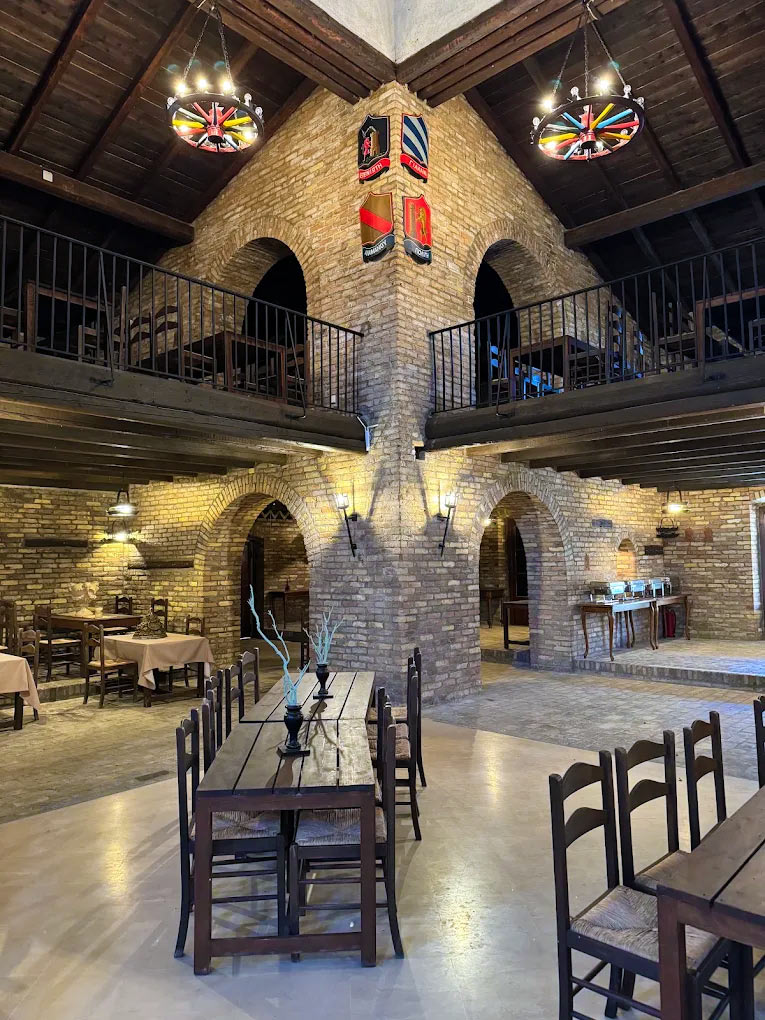
Danilia Village is not an old Corfiot village. It was deliberately created as a replica of one, and that is what makes it an unusual place to visit.
The Bouas brothers created Danilia in the 1970s as a tourist attraction, recreating the appearance and atmosphere of an old Corfiot settlement. It was an ambitious project, and in its heyday in the 1980s Danilia was a very popular attraction, visited daily by tourists.
I remember it from those years, when I was working as a holiday representative and visited Danilia many times. It was considerably more than the picturesque little village you see today. Its streets and buildings were carefully arranged to evoke old Corfu, including features that would be difficult to find together in a real village. Some parts even echoed the narrow streets and layout of Corfu Town.
Shops sold mainly local souvenirs, traditional-looking buildings, and two large spaces presented as old olive mills but adapted for events. Weddings, dinners and other celebrations were held there, while Greek evenings with live music and dancing were a major part of the attraction. There was also a large outdoor area used for Greek dancing and entertainment.
For a time, Danilia was one of those places that was simply part of the Corfu holiday experience.
Then things changed. The attraction declined, the original owners eventually passed away, and the Grecotel group took over Danilia. Its role changed from a large, busy tourist attraction to a more specialised venue for events, dining and selected visits.
Today, Danilia still exists, but in a rather different form. It is operated as a private village replica and event venue, with a folklore museum, traditional café, olive mill, old typography, church and other reconstructed features. Current Grecotel information confirms that it continues to receive visitors, although access and opening arrangements can depend on the season and private events.
Danilia also acquired a new lease of life through the screen. It was used as a filming location for “For Your Eyes Only” and, much more recently, became one of the principal locations for “The Durrells in Corfu“. Grecotel itself describes Danilia as a reconstruction of a traditional 1930s Corfiot village and confirms that The Durrells was filmed there.
So Danilia is an odd piece of Corfu’s tourism history: a village that was built as a tourist attraction, became a very successful attraction, declined, and then found a second life as a film location, event venue and recreation of old Corfu.
It is not hidden, and it certainly isn’t an ancient village. But it is definitely off the beaten track in a different sense — it is something that looks like a piece of old Corfu while having a surprisingly modern story behind it.
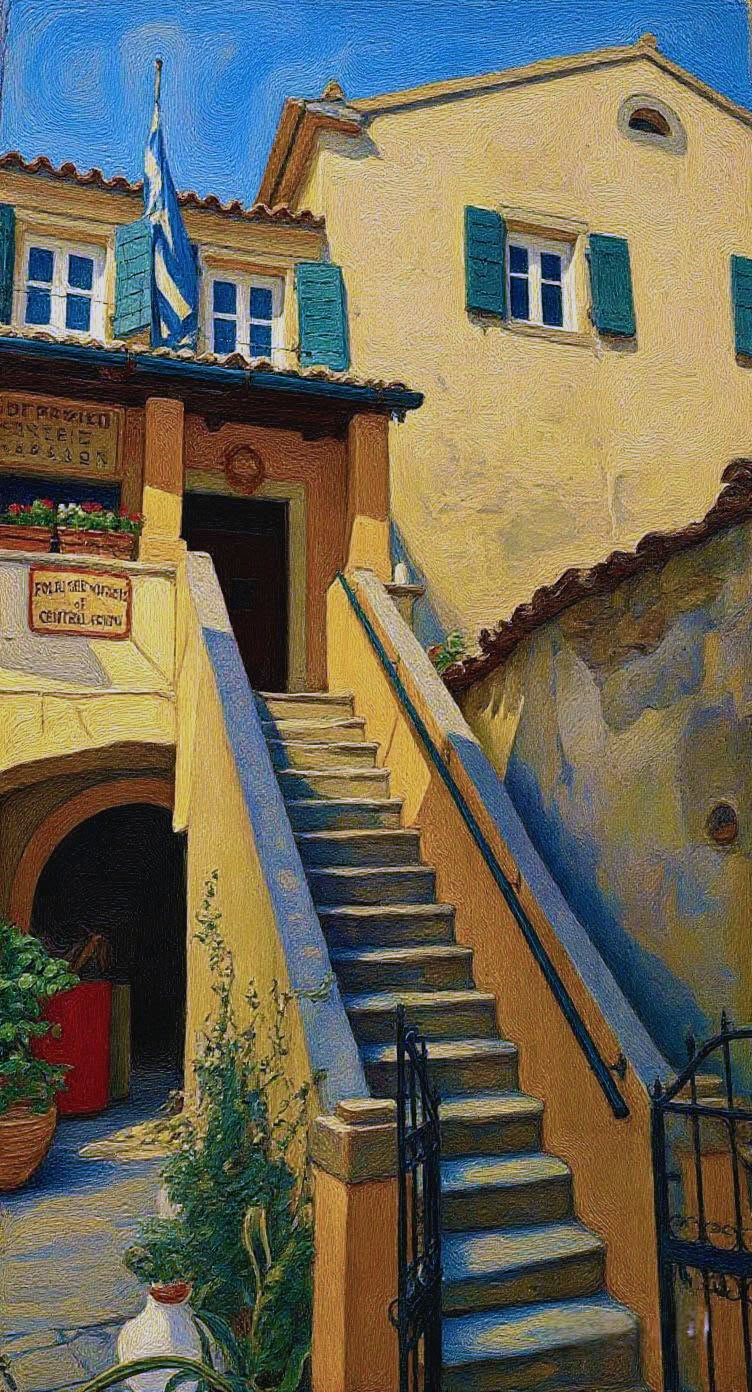
The Folklore Museum of Sinarades “Nikos Paktitis” is housed in a traditional Corfiot house and preserves a remarkably detailed picture of everyday life in Corfu, particularly during the 19th and early 20th centuries.
The collection includes traditional furniture and clothing, household and agricultural tools, fishing equipment, ceramics, handicrafts, church objects, a cobbler’s workshop, Karagiozis figures, and much more.
Sinarades is about 14 km from both Benitses and Corfu town by road, so it is quite close and easy to combine with a visit to the village and the surrounding area.
The museum is currently open daily from May 1 to October 31, 9:00–14:00, with a €3 entrance fee. During the winter period, it can be opened by appointment. The museum lists +30 26610 54962 and laografikosinaradon@gmail.com as contact details.
Official website: Folklore Museum of Sinarades – Nikos Paktitis
While in Sinarades, it is worth allowing some time to wander through the old village itself, with its narrow lanes, traditional houses, stone stairways and old Corfiot architecture. The museum is therefore only one part of the visit.
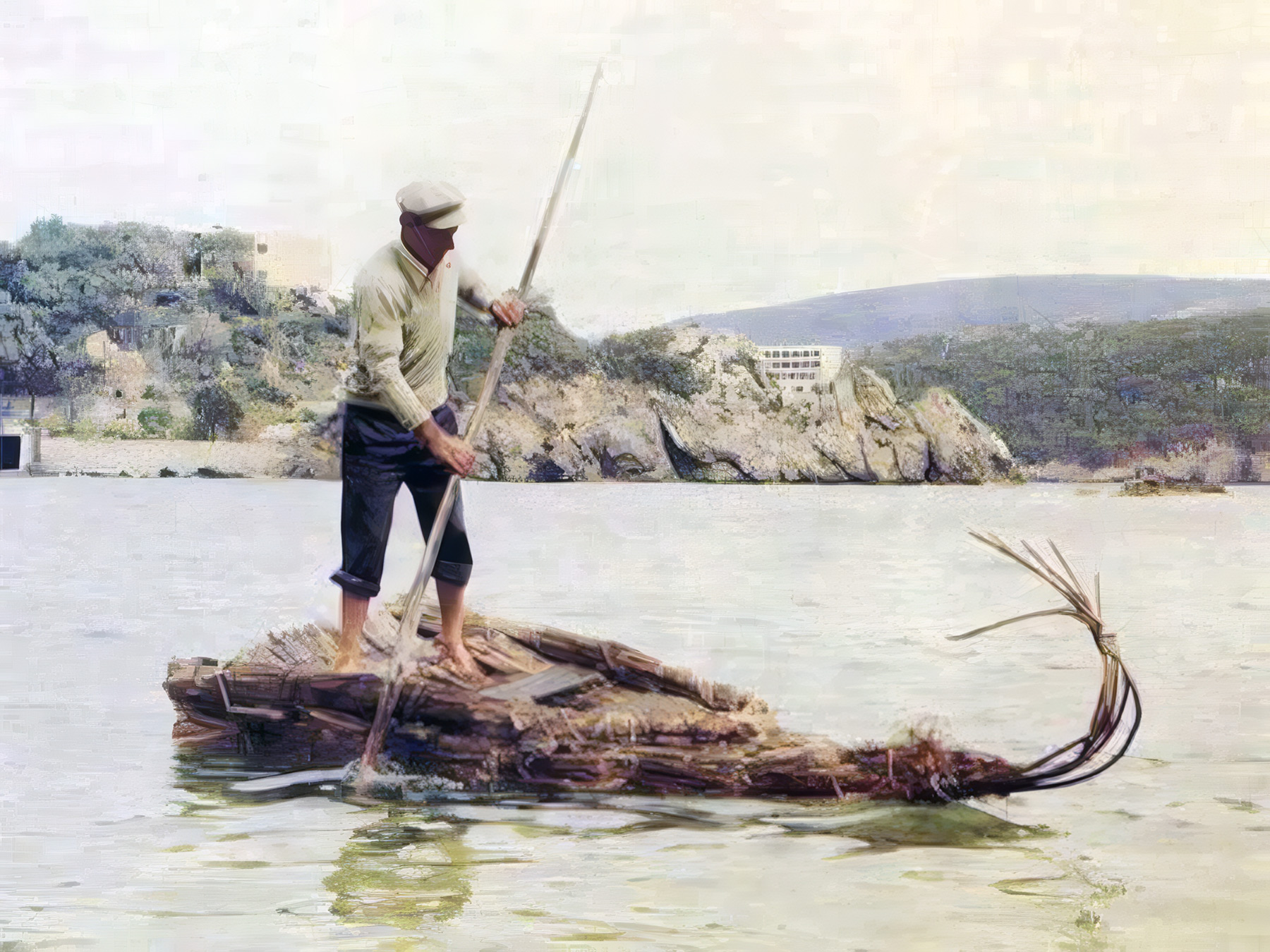
One of the museum’s most unusual exhibits is a papirela (παπυρέλα), the strange traditional fishing boat made from bundles of reeds or other plant material.
Papirelas were once used along parts of Corfu’s coast, particularly the western coast, but the tradition eventually disappeared. The surviving example in Sinarades gives visitors a chance to see this remarkably simple type of boat for themselves.
It is hard to imagine today, looking at a papirela, that something so seemingly fragile was actually used for fishing at sea.
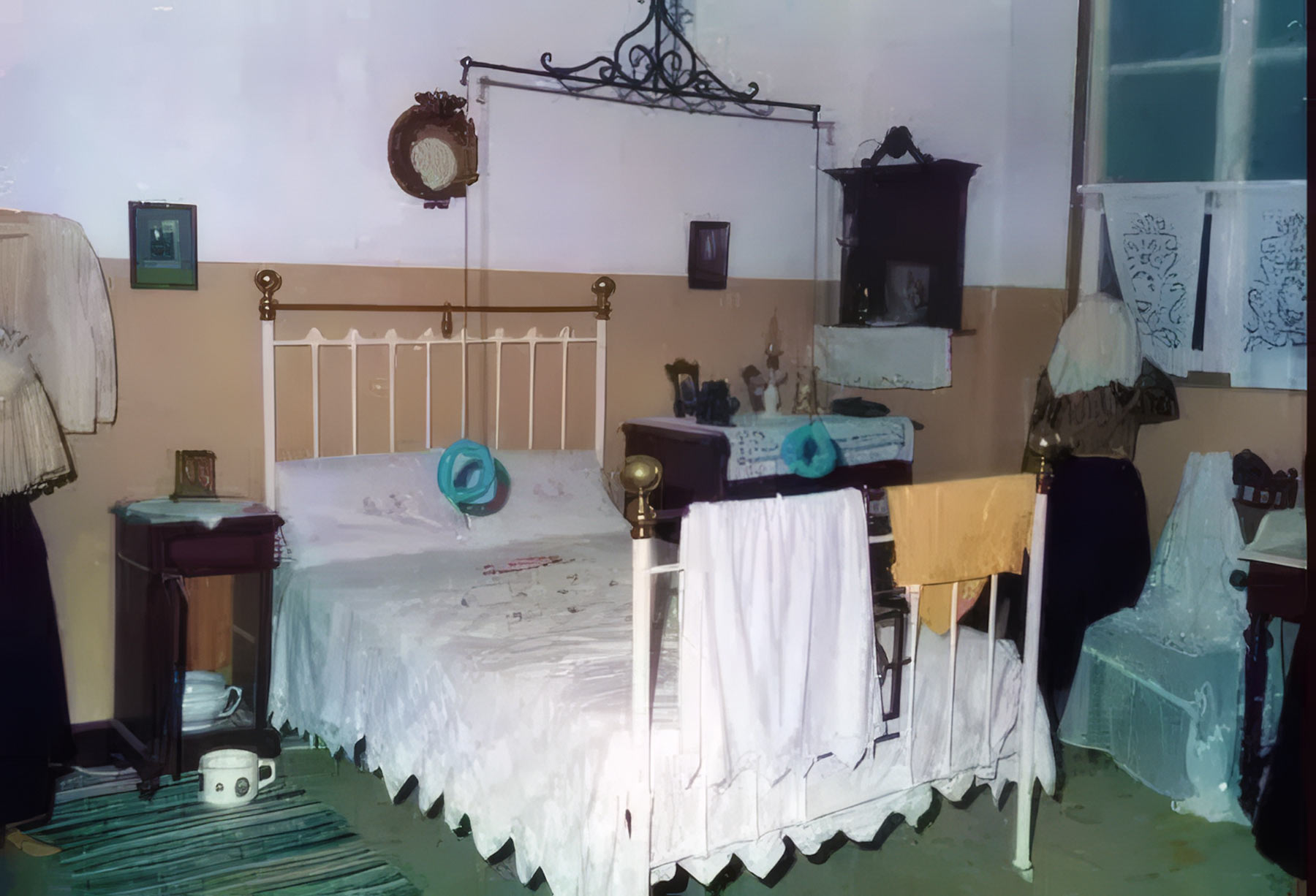
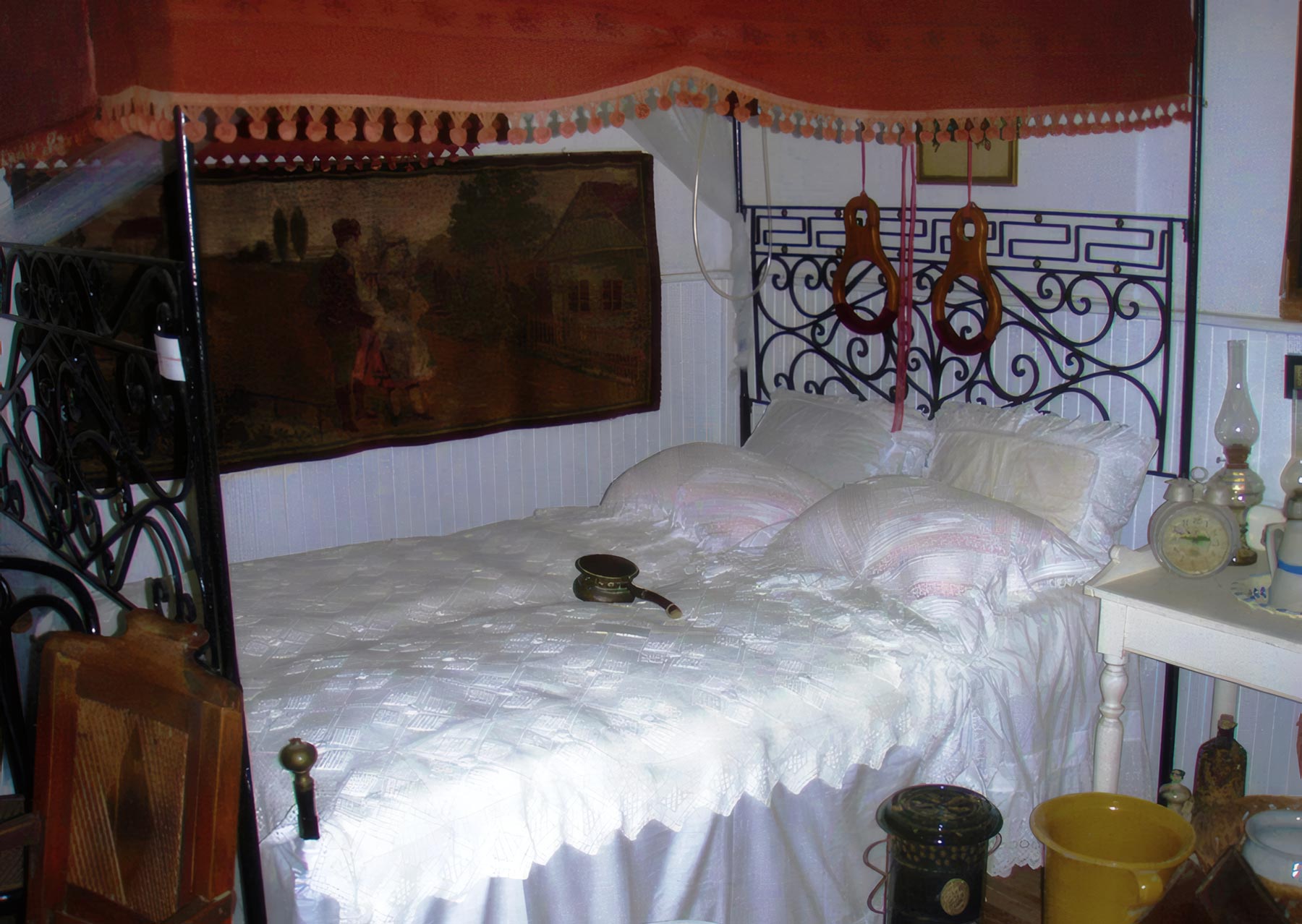
Anapapsolia were used in Corfu from medieval times into the early 20th century, particularly in rural households.
The name may sound mysterious, but it gives away their purpose once you know a little Greek. Ανάπαυση (anápafsi) means “rest”, and anapapsolia comes from the same word — quite appropriate for something whose entire purpose was to let the bride rest her feet while making sex. So the purpose was surprisingly practical.
Anapapsolia were traditionally given to a bride as part of her dowry, usually by her family.
In rural Corfu, women worked extremely hard in the fields and could be exhausted by the end of the day. So, according to the old Corfiot explanation, someone came up with a rather ingenious solution: a way for the bride to rest her feet up while being in bed.
The anapapsolia were ring-shaped supports, made of wood, bronze, or, for wealthier families, even gold, wrapped in fabric so as not to hurt. They were suspended from the ceiling or another construction, and the feet could be placed inside them, allowing the woman to rest her legs without effort.
And yes, this was one of those things people in Corfu used to talk about and laugh about. Once you know what the mysterious little rings were for, you can understand why.
It is one of those wonderfully peculiar objects that tells you much more about old Corfiot life than a collection of grand historical monuments ever could.
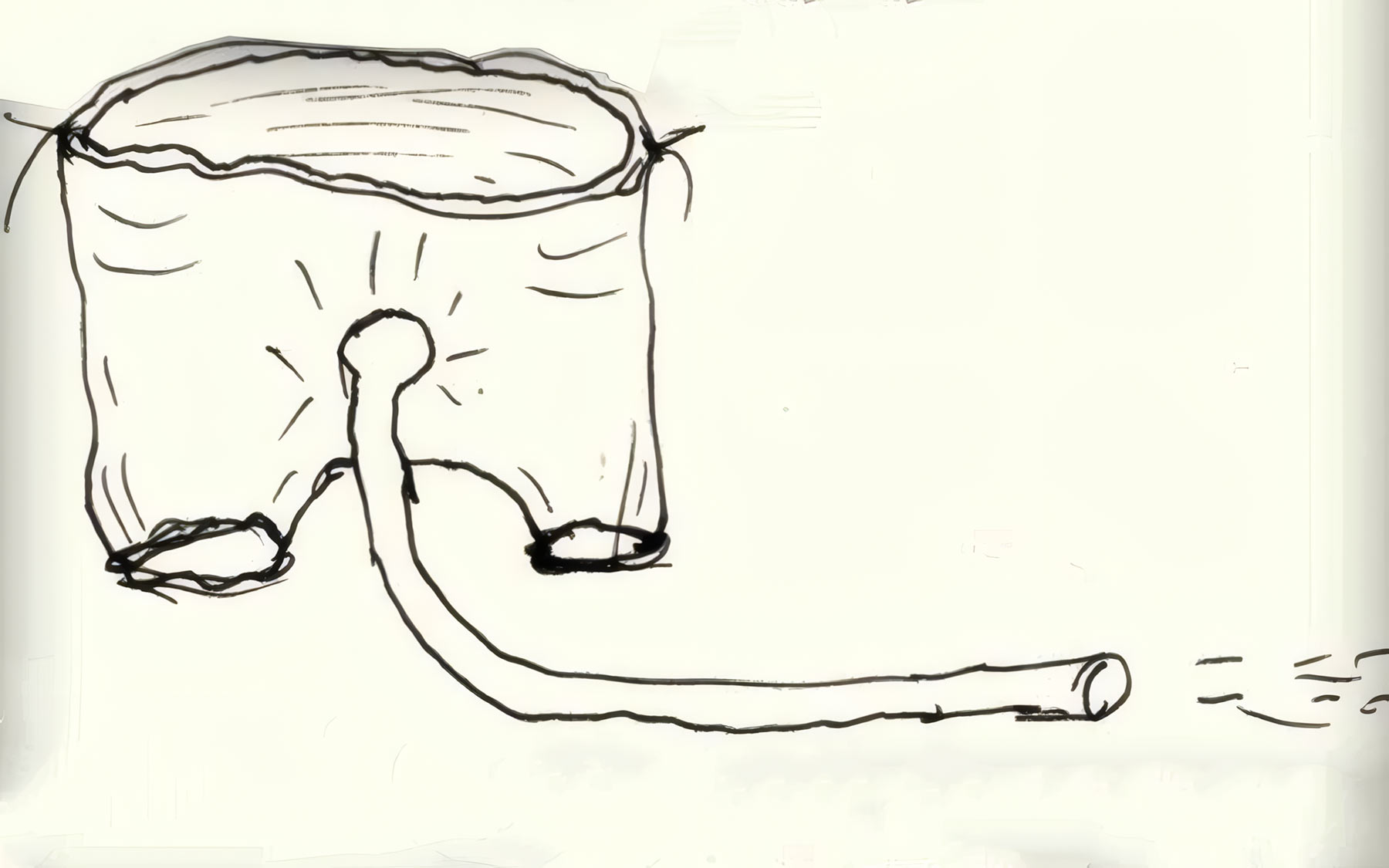
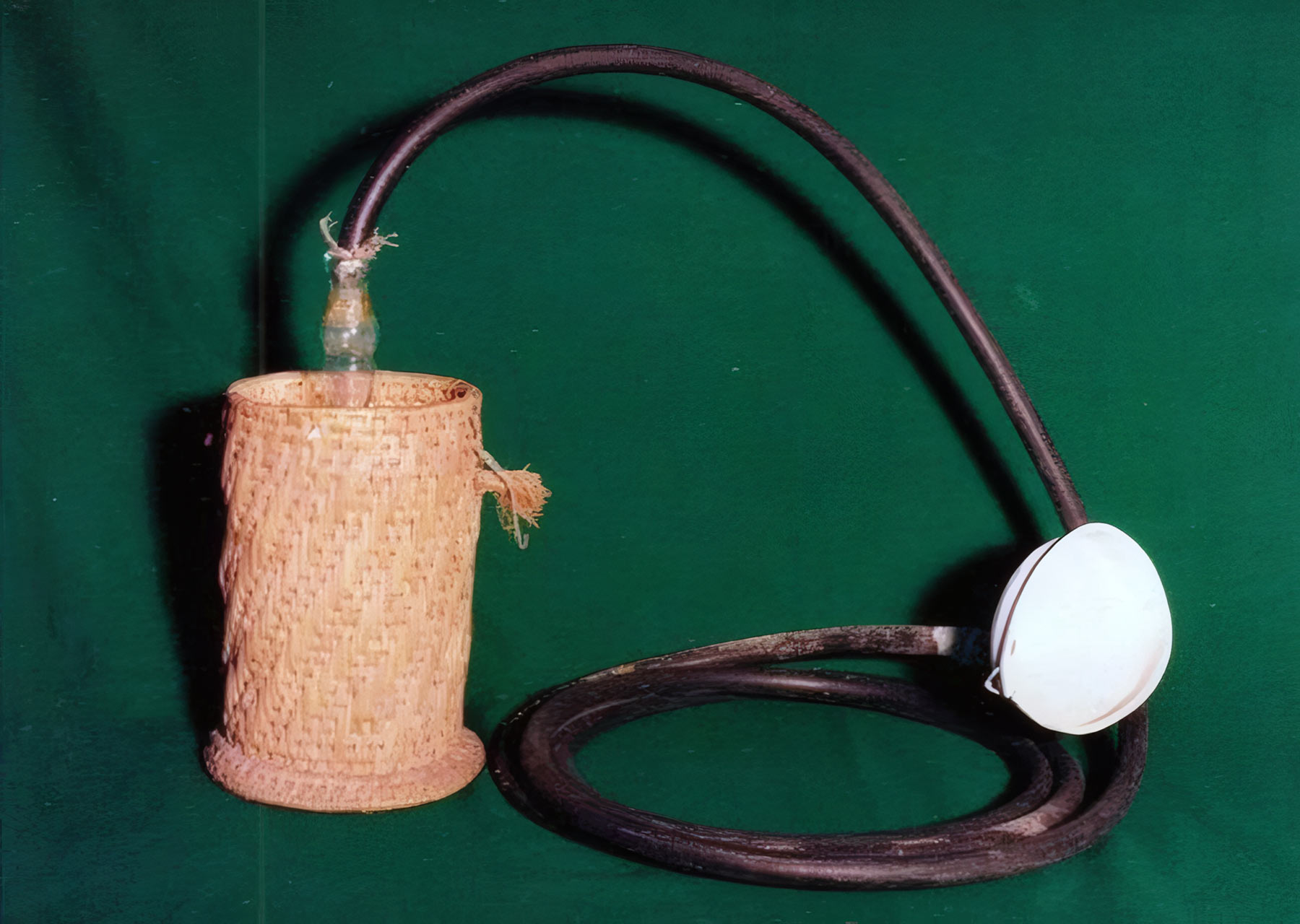
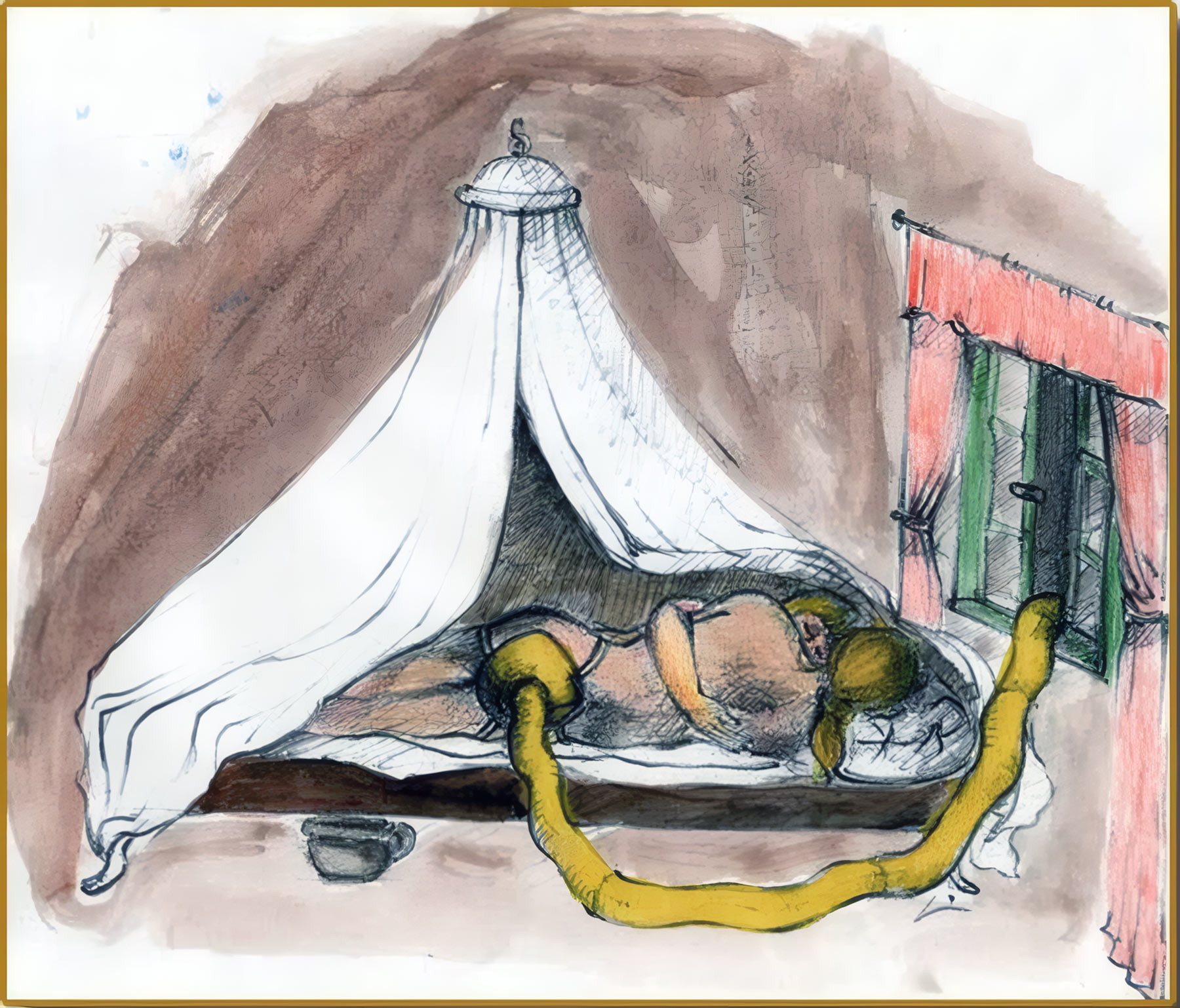
The klaniola (or klaniora) was a rather unusual piece of old Corfiot underwear, made of cloth with a hole at the back and a pipe that led outside the room, allowing gases to escape and helping to avoid unpleasant smells.
It was mainly found in wealthier households; ordinary and poor people generally did not have such a luxury.
And one cannot help wondering whether the outside opening had some kind of grille — otherwise, what would happen if a spider or insect decided to come in the opposite direction? 😄
You may still see an example of this in the Folklore Museum of Central Corfu in Sinarades, along with other curious objects from everyday Corfiot life such as Anapapsolia.
In any case, we have some photos for you to get an idea! As you can notice, there were variations of the…tool!
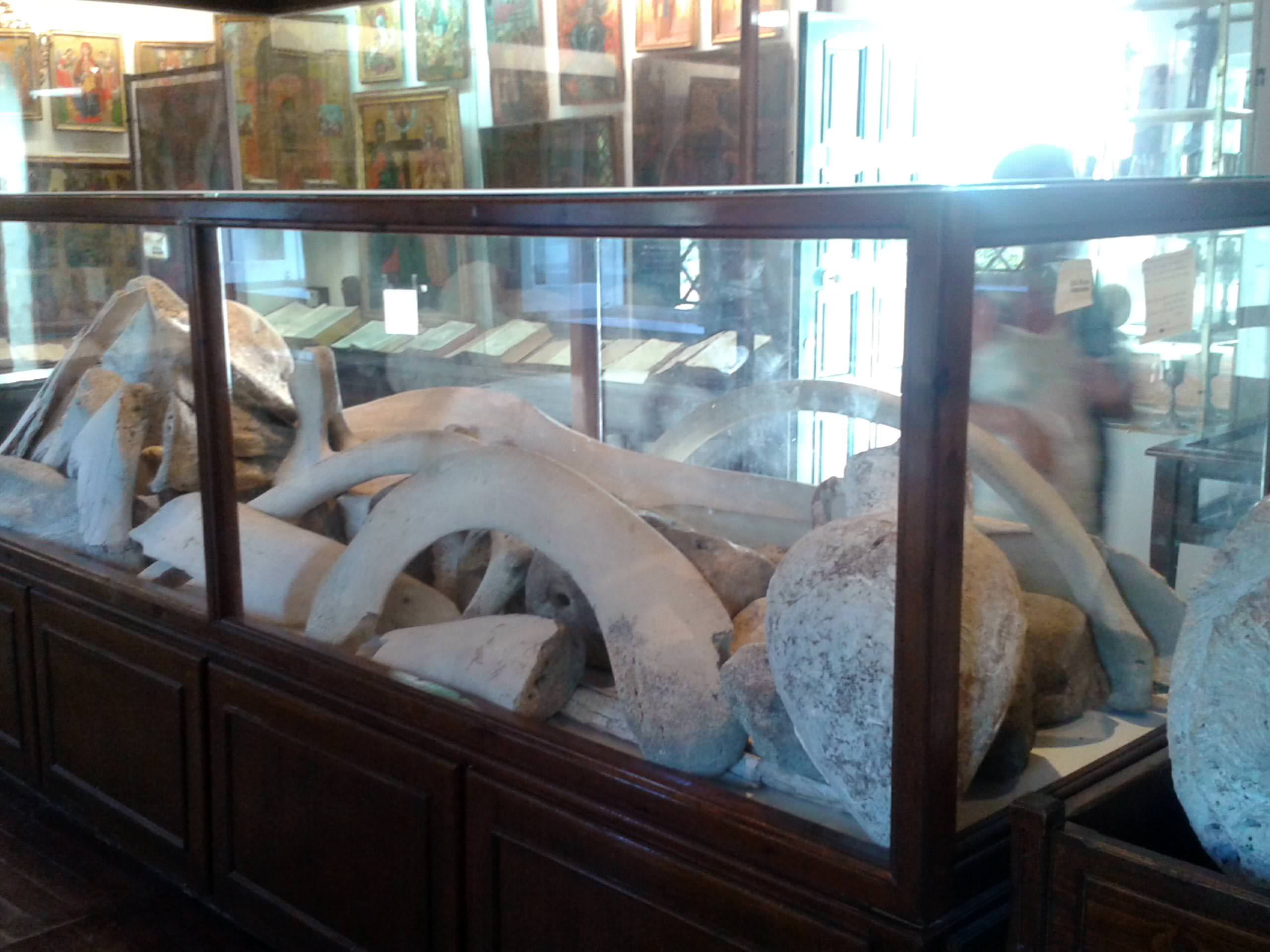
Among the many treasures of Paleokastritsa Monastery, you can find something rather unexpected: the enormous bones of a whale. The monastery’s small museum contains various religious and historical objects, but these huge bones are probably the exhibit visitors least expect to encounter.
According to local accounts, the whale was killed by a Corfiot fisherman in the 19th century, although the details of where and how it was caught are not clear.
It is one of those wonderfully odd details that makes exploring Corfu more interesting. You can visit the famous monastery, admire its spectacular setting above the sea, and then discover that the remains of a giant marine animal have somehow become part of its collection.
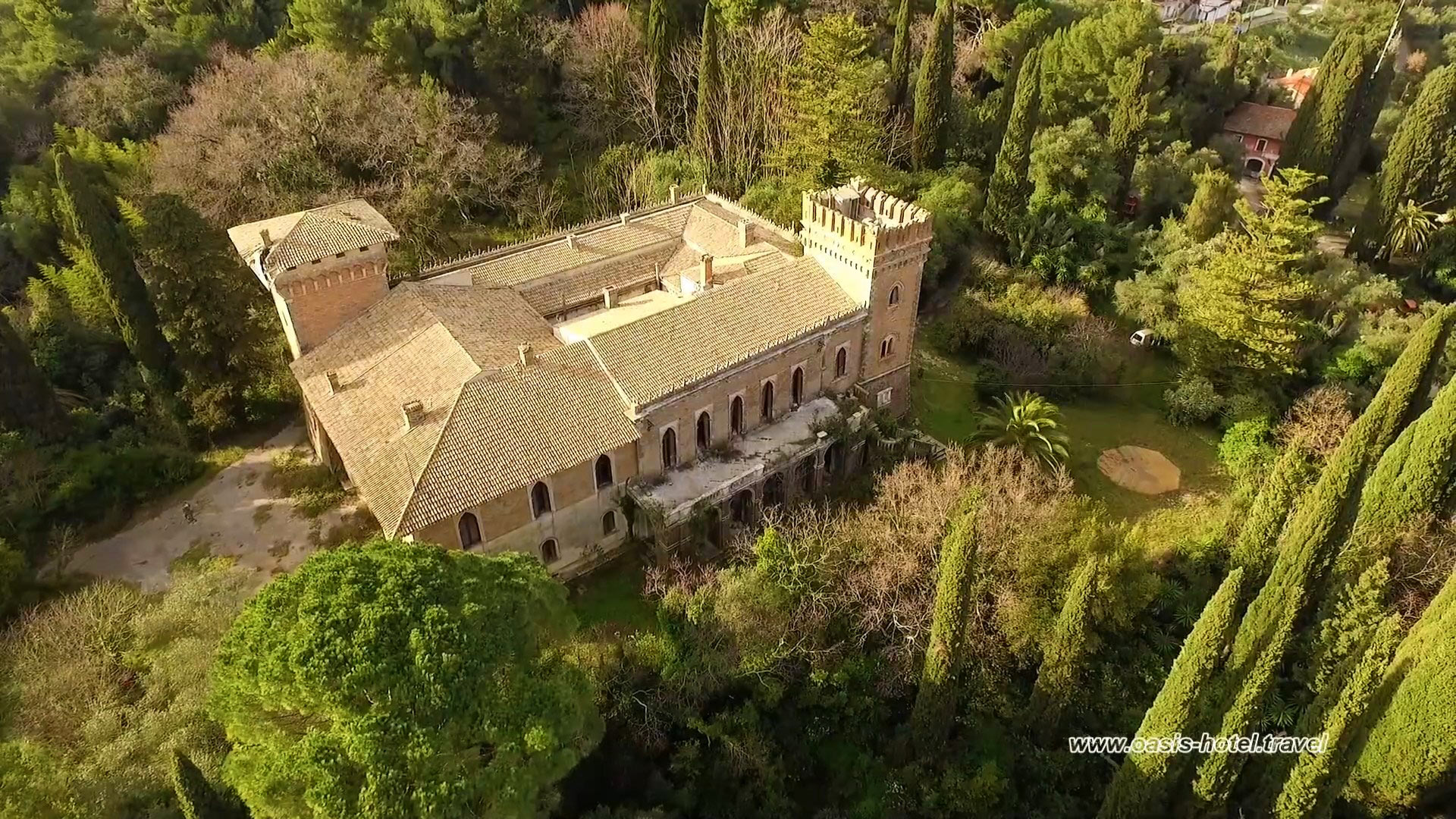
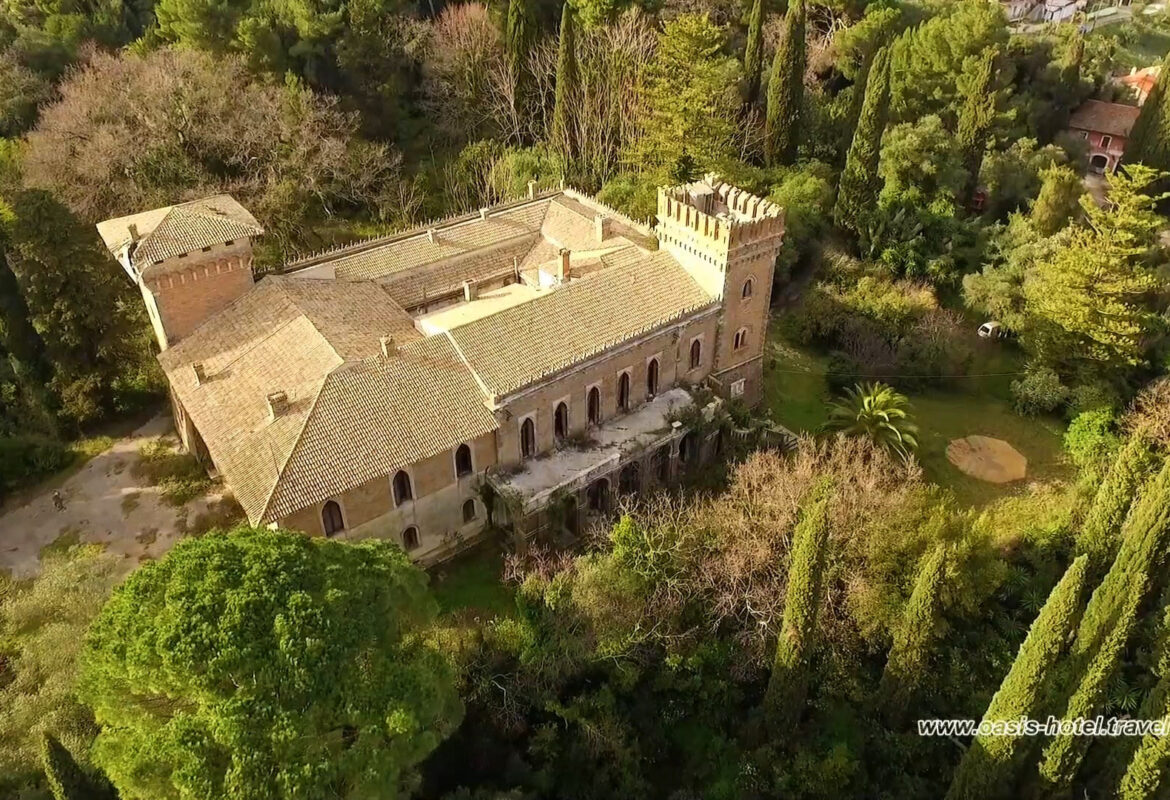
Mibeli Castle, better known as Castello Bibelli, is one of Corfu’s strangest and most atmospheric old estates. Hidden among the greenery of Kato Korakiana, the impressive Neo-Gothic mansion was built around 1905 by the Italian Baron and admiral Luca Bibelli, on the site of an older tower associated with the Polylas family. The estate once had an exotic garden and even a zoo.
Its story became even more unusual after the Bibelli family left Corfu during World War II. The property was taken over by the Greek state and used as a military hospital during the war.
In 1958 it reopened as the luxurious Castello Bibelli Hotel, which remained in operation until the early 1980s.
Today the great building stands abandoned, its beautiful architecture slowly being reclaimed by vegetation.
It is a fascinating place to see from outside, but it is not an ordinary visitor attraction and should not be entered without permission.
The property has been designated a modern monument, and plans have been made for its restoration and conversion into a boutique development.
For anyone interested in Corfu’s forgotten corners, Castello Bibelli is a remarkable reminder of the island’s early tourism era — a former luxury hotel that now looks like a forgotten castle in the woods.
Horse riding is a different way to discover the northeastern countryside of Corfu, using old tracks and paths that are difficult to appreciate from a car. Guided rides are available for both beginners and experienced riders, and some routes pass through the Erimitis nature reserve, with its wild landscape, trails and sea views.
For something genuinely different, the Erimitis nature reserve ride can take you through secluded parts of the northeast and down towards the coast. It is less about riding fast and more about experiencing Corfu’s countryside slowly, from the back of a horse.
For riding in this area, Mistral & Maistro in San Stefano arrange guided rides and horse rental. They can be contacted at +30 6937 486 930 or andremartzoykos@gmail.com.
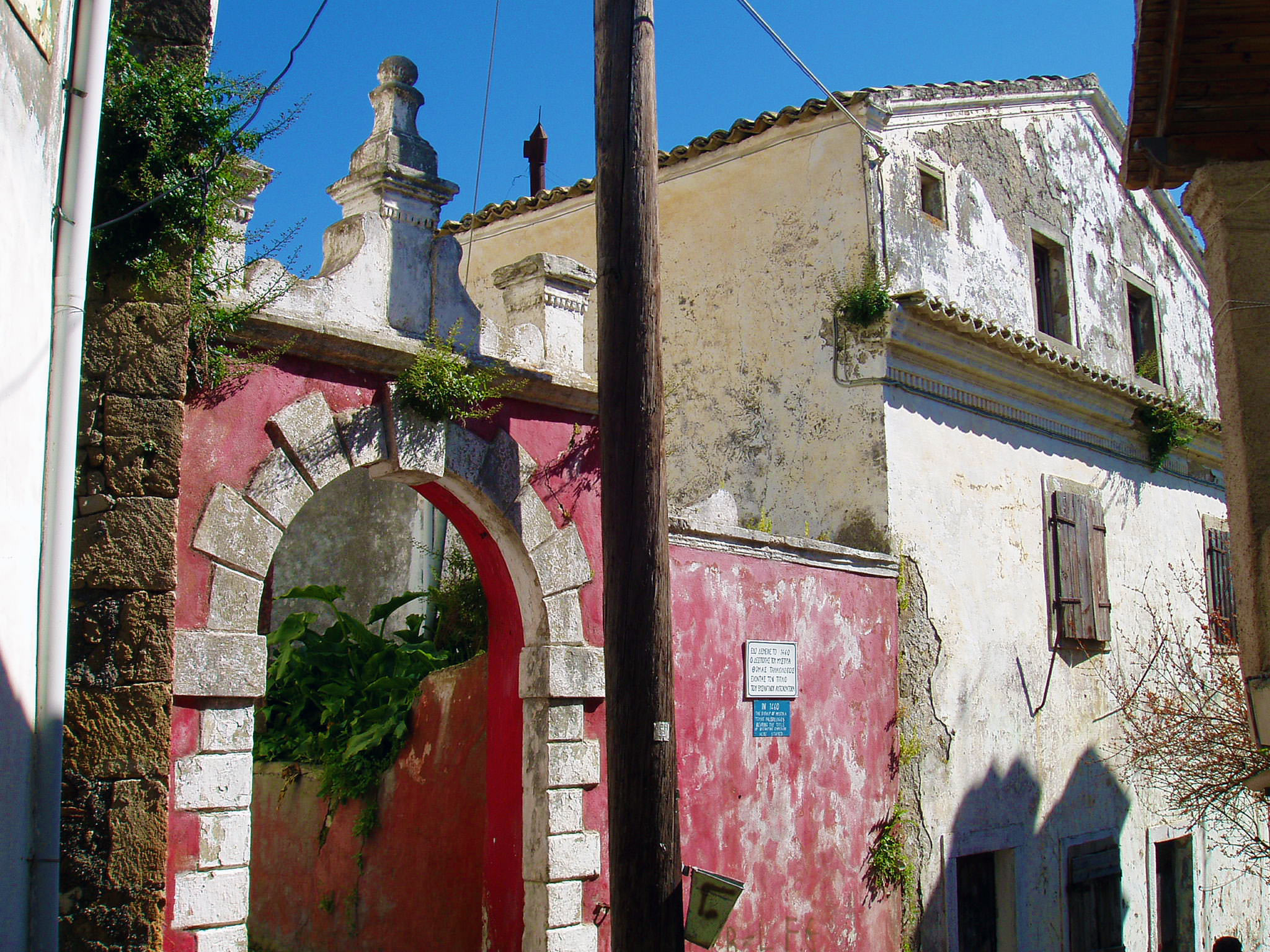
Wander through the narrow, cobbled streets of Chlomos and look for the old mansion traditionally identified as the home of Thomas Palaiologos, Despot of the Morea and brother of Constantine XI, the last Byzantine emperor. The 15th-century mansion is one of the village’s more unusual historical curiosities.
Thomas fled to Corfu after the Ottoman conquest of the Morea in 1460, before eventually leaving for Italy. The red mansion is part of the old village, although it is not a museum or conventional tourist attraction.
You may not find much more than an old house among the other historic buildings of Chlomos, but knowing who is traditionally associated with it gives another reason to explore this beautiful mountain village.
Some of the most interesting little discoveries around Benitses are the old chapels scattered among the olive groves and mountain slopes above the village. They are easy to miss and, unlike the better-known churches of Corfu, are often reached by small tracks and footpaths.


There are other small chapels scattered around the same slopes, including San Stefano Chapel, within the San Stefano estate, which is nevertheless kept open to the public only for a few days of the year.
These are not grand monuments. They are tiny pieces of the landscape, often surrounded by olive trees, rocks, springs and old paths — exactly the sort of places you can pass close to without ever knowing they are there.