
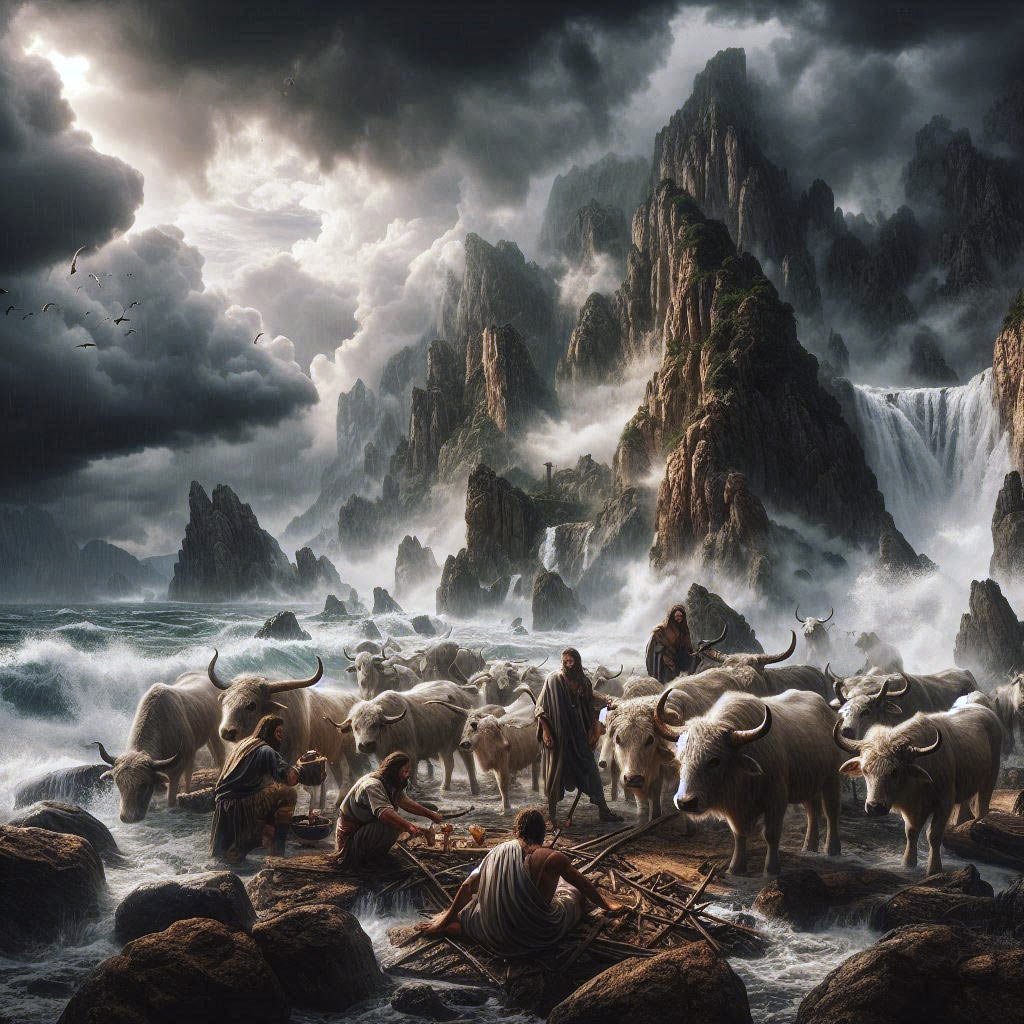
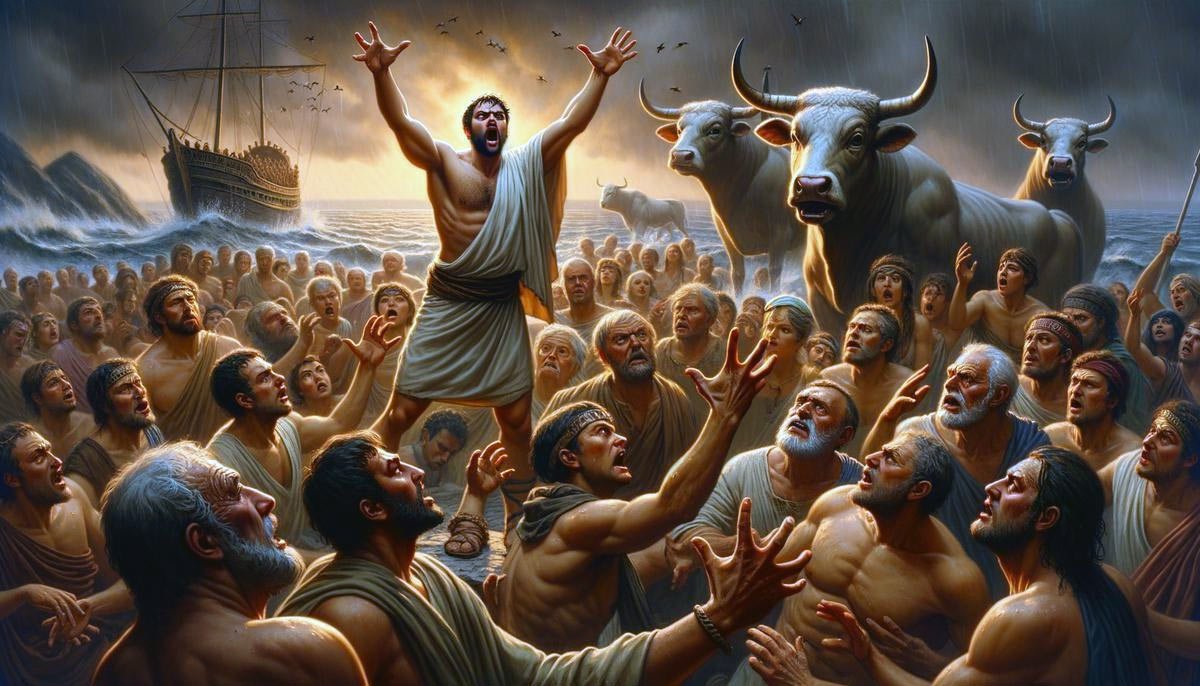
Odysseus crew and the sacred cattle of Helios

The Final Sacrifice: The Cattle of Helios in the Odyssey

Sacred cattle of Helios

By this stage of the Odyssey, the voyage of Odysseus has become a struggle not only against the sea, but against exhaustion, hunger, and the slow collapse of discipline.

After surviving Scylla and Charybdis, the remaining crew reaches Thrinacia — the sacred island of Helios, keeper of the sun and guardian of immortal cattle.

They arrive already warned.

And warnings, in the Odyssey, are rarely ignored without consequence.

The Forbidden Island

Before landing, Odysseus knows the danger of the place.

The sacred cattle of Helios are not ordinary animals. They belong to the order of the gods themselves, untouched by mortal ownership or need.

The command is simple:

Do not harm them.

For a time, the crew obeys.

Hunger Against Restraint

But the sea traps them on the island longer than expected. Storms prevent departure. Supplies disappear. Hunger grows sharper each day.

The men begin to weaken.

In the world of the Odyssey, desperation slowly erodes obedience.

And eventually, while Odysseus is away in prayer and sleep, the crew chooses survival over fear of divine punishment.

The Slaughter of the Sacred Cattle

The cattle of Helios are killed.

Smoke rises from forbidden sacrifice. Meat cooks over open fire while the sea remains unnaturally still, as though the world itself is waiting.

The act is not portrayed as triumph.

It feels final from the moment it begins.

The Wrath of Zeus

When the ships finally leave Thrinacia, judgment follows quickly.

At the demand of Helios, Zeus strikes the ship with a devastating storm and thunderbolt.

The vessel breaks apart.

The sea consumes the last companions of Odysseus.

The Last Survivor of the Odyssey

For the first time in the Odyssey, Odysseus is completely alone.

No crew remains beside him. No fleet survives behind him.

Everything that once left Troy together has now vanished into the sea.

Only Odysseus continues drifting across a world that seems determined to strip away everything except the man himself.

The Meaning of the Final Loss

The destruction at the island of Helios is the true ending of the old expedition.

From this moment onward, the Odyssey ceases to be the story of returning warriors.

It becomes the solitary passage of one survivor moving through the final stages of fate, memory, and homecoming.
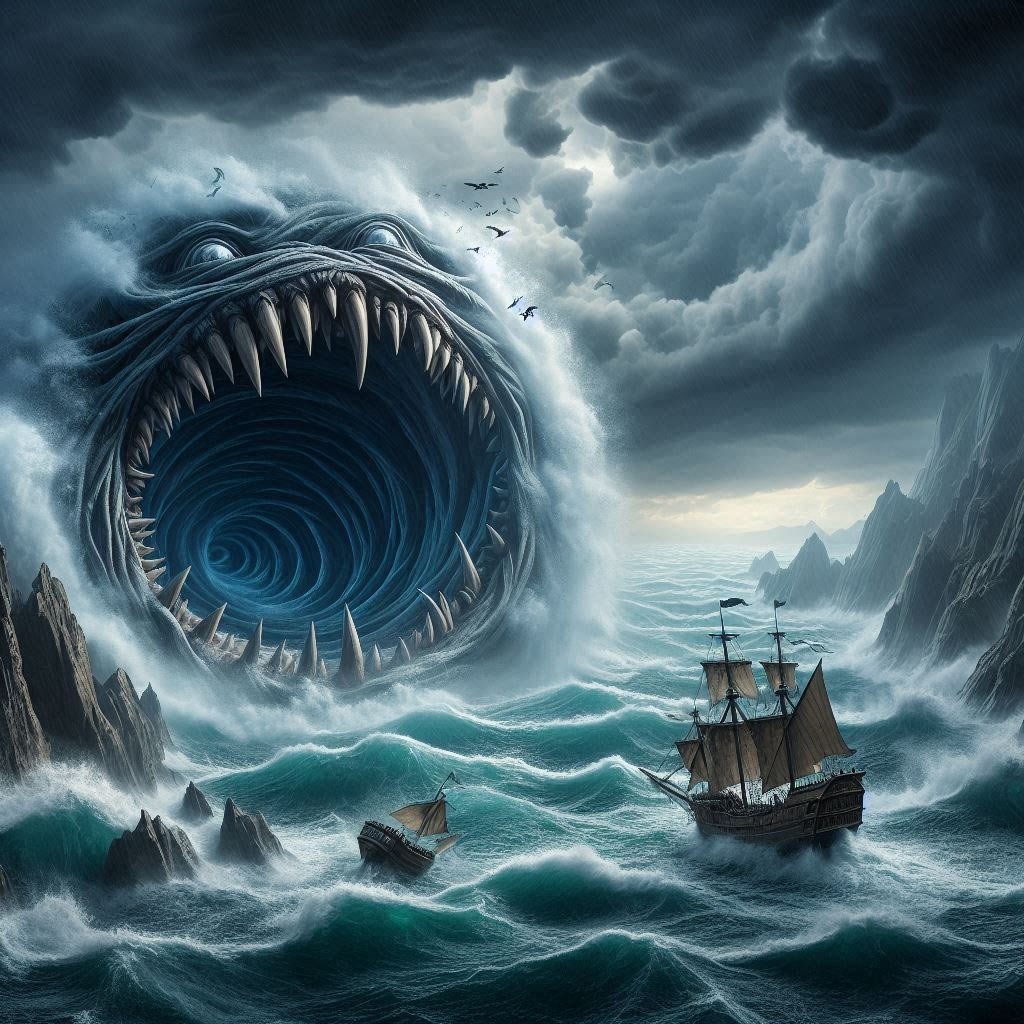
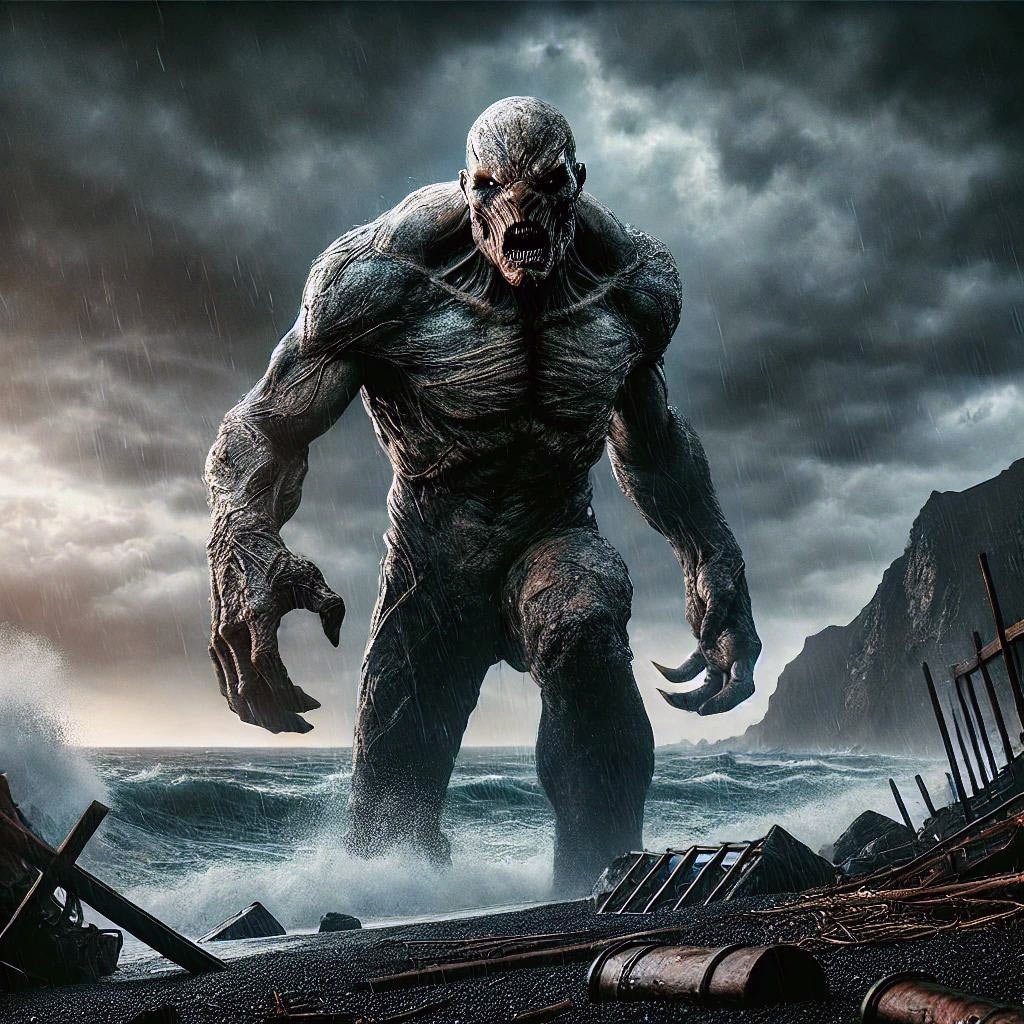
Charybdis

The Sea Between Danger and Death – Scylla and Charybdis

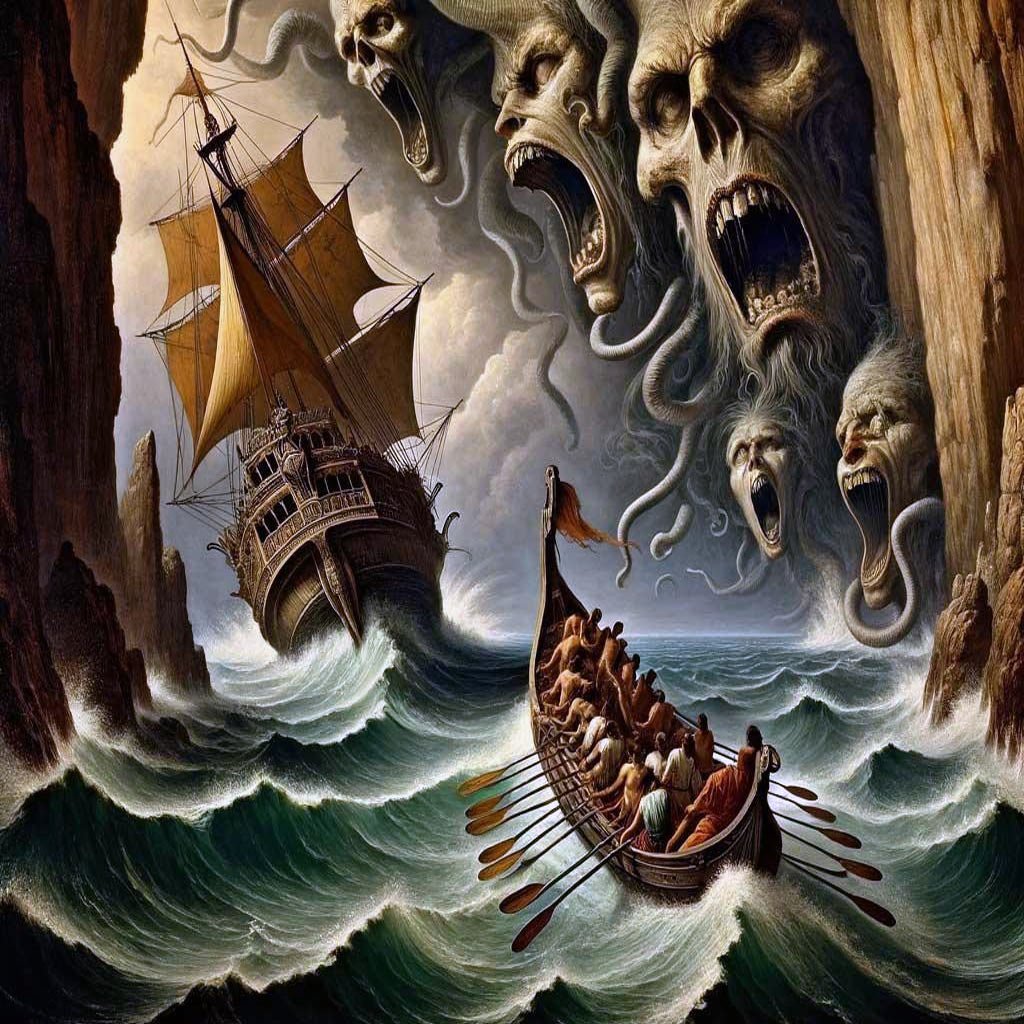
Skyla and Charyvdis
Skyla and Charyvdis

As the voyage of the Odyssey moves deeper into danger, the sea itself begins to feel alive — no longer a road home, but a force closing in from every direction.

After leaving the land of the Sirens, Odysseus must guide his remaining ship through one of the most feared passages in all the Odyssey: the Strait of Scylla and Charybdis.

Here, survival no longer means victory.

It means choosing what can still be saved.

A Strait with No Safe Passage

The waters narrow into a deadly corridor.

On one side waits Charybdis — a monstrous whirlpool that swallows the sea itself, dragging ships into darkness beneath the waves.

On the other side stands Scylla, hidden high among the cliffs, a creature that strikes from above with terrifying speed.

There is no open route between them.

Only degrees of loss.

The Knowledge of Circe

Before reaching the strait, Odysseus had already been warned by Circe.

She tells him a painful truth: he cannot overcome both dangers.

One path risks total destruction.

The other guarantees sacrifice.

For perhaps the first time in the Odyssey, cunning alone cannot create a perfect escape.

Passing Beneath Scylla

Odysseus chooses the path closest to Scylla, steering away from the devouring whirlpool of Charybdis.

The ship survives.

But not untouched.

As they pass beneath the cliffs, Scylla strikes from the shadows above, seizing men from the deck before anyone can react.

The crew disappears into the sky and sea almost instantly.

No battle is possible. No rescue can follow.

Only helpless witnessing.

The Meaning of the Passage

The encounter with Scylla and Charybdis marks a darker maturity in the Odyssey.

Earlier in the journey, Odysseus believed every danger could be solved through intelligence, deception, or bravery.

Now the voyage reveals something harsher:

Some choices do not lead to victory.

Only to lesser ruin.

Between Survival and Loss

The ship sails onward, but the sea behind it remains haunted.

In the Odyssey, the greatest dangers are often not the monsters themselves, but the realization that survival sometimes demands accepting what cannot be prevented.

And still, despite everything, Ithaca remains ahead.

Odysseus tied to the mast of his ship while the sirens-sing

The Sirens in the Odyssey

As the voyage of the Odyssey carries Odysseus farther from the familiar world of men, the dangers he faces become increasingly strange.

Not every threat comes through violence.

Some arrive through desire.

The Island of the Sirens

The Sirens sing
The Sirens sing

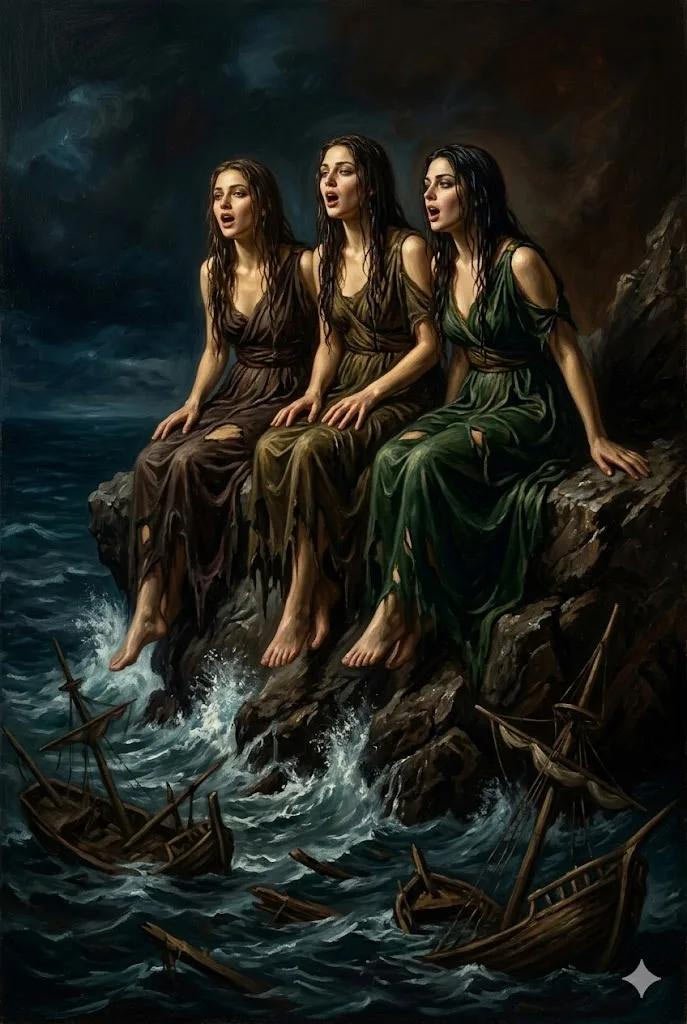
Beyond the wandering seas lies the island of the Sirens — mysterious beings whose voices draw sailors toward destruction.

Their power is not force, but attraction.

Ships that approach them never return.

The shores around their island are said to be filled with the remains of those who listened too closely.

The Warning of Circe

Before leaving her island, Circe warns Odysseus of the danger ahead.

The song of the Sirens promises knowledge, understanding, and irresistible beauty. No ordinary sailor can hear it and still remain master of himself.

But Odysseus, driven by the restless curiosity that shapes the entire Odyssey, wishes to hear their voices and survive.

Bound to the Mast

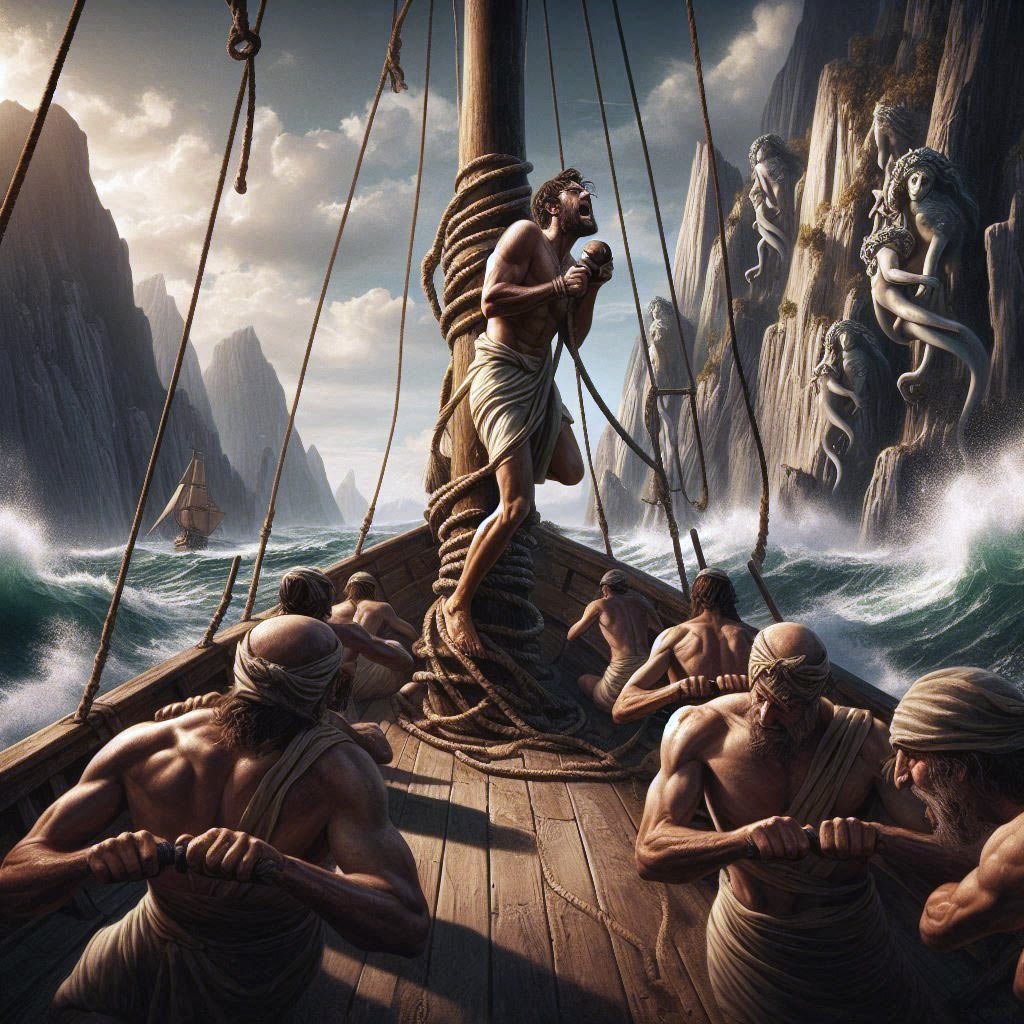
Following Circe’s instructions, the crew seals their ears with wax so they cannot hear the song.

Odysseus alone listens.

To prevent himself from steering the ship toward destruction, he orders his men to bind him tightly to the mast.

And as the ship passes the island, the Sirens begin to sing.

The Song That Cannot Be Resisted

The voices of the Sirens promise more than pleasure.

They promise revelation.

They speak as though they understand every sorrow, every memory, every hidden longing carried within the human soul.

In the Odyssey, temptation often appears not as evil, but as something beautiful enough to make a man abandon everything else.

Between Desire and Survival

As the song fills the air, Odysseus struggles against the ropes, commanding his men to release him.

But the sailors continue rowing in silence, unable to hear either the Sirens or their captain’s desperate cries.

Only when the island disappears behind them does the danger finally loosen its hold.

One of the Great Symbols of the Odyssey

The Sirens remain one of the most enduring images of the Odyssey because they represent more than mythical creatures.

They embody the dangerous pull of distraction, desire, and forgetting — forces capable of drawing travelers away from their purpose forever.

And yet Odysseus survives not by avoiding temptation entirely, but by recognizing its power and binding himself against it.

Tiresias at underworld

The Descent into the Underworld in the Odyssey

Odysseus summoning the spirit of Tiresias in the underworld
Odysseus summons the spirit of Tiresias in the underworld

After the long pause on Circe’s island, the Odyssey of Odysseus turns once more toward darker waters — not of the sea, but of memory, prophecy, and the dead.

To continue the journey home to Ithaca, Odysseus must first do something no living man is meant to do.

He must descend into the Underworld.

A Journey Beyond the Living

In the world of the Odyssey, the Underworld is not a place of travel in the ordinary sense. It is a crossing of boundaries — from breath to silence, from light to absence.

Guided by Circe’s instructions, Odysseus sails to the edge of the world, where the living can go no further.

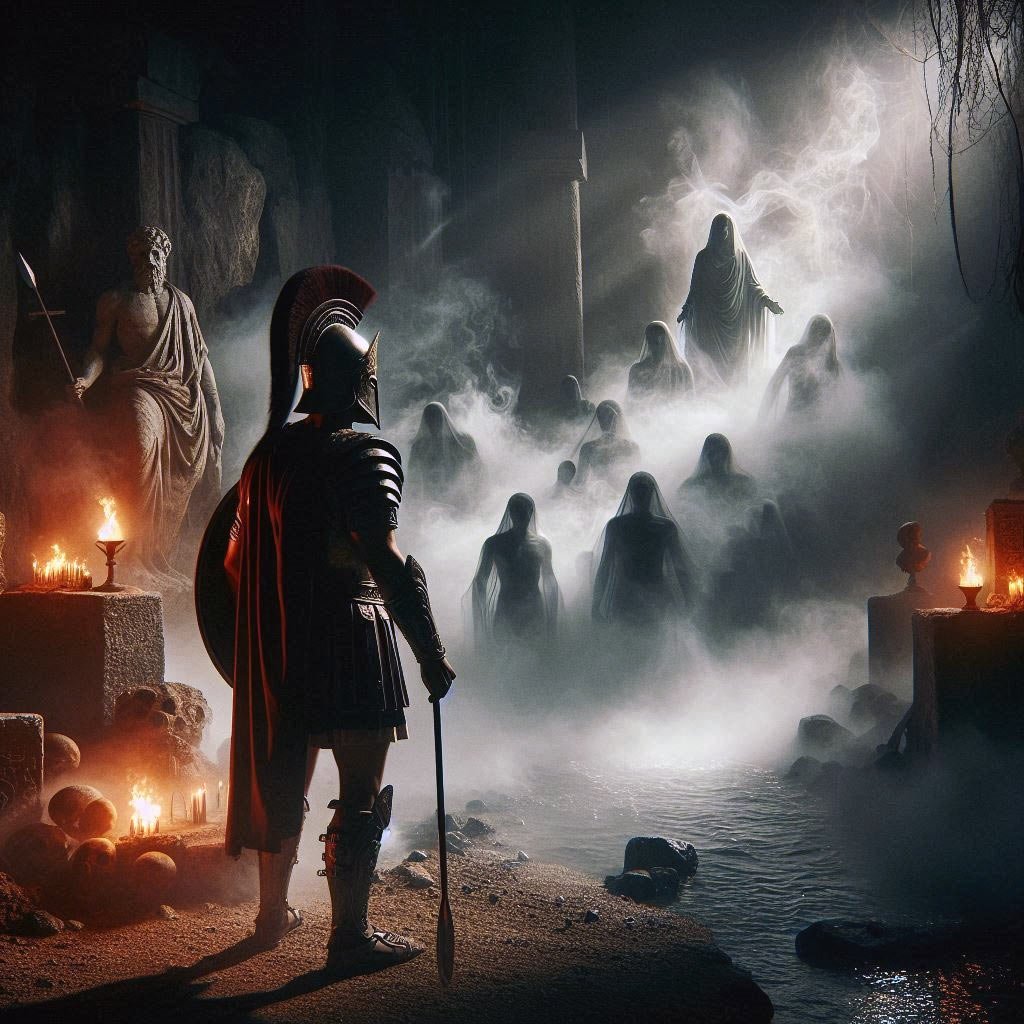
There, he performs a ritual of summoning, calling the dead toward him rather than entering their realm directly.

The Gathering of Shadows

The moment the ritual begins, the dead respond.

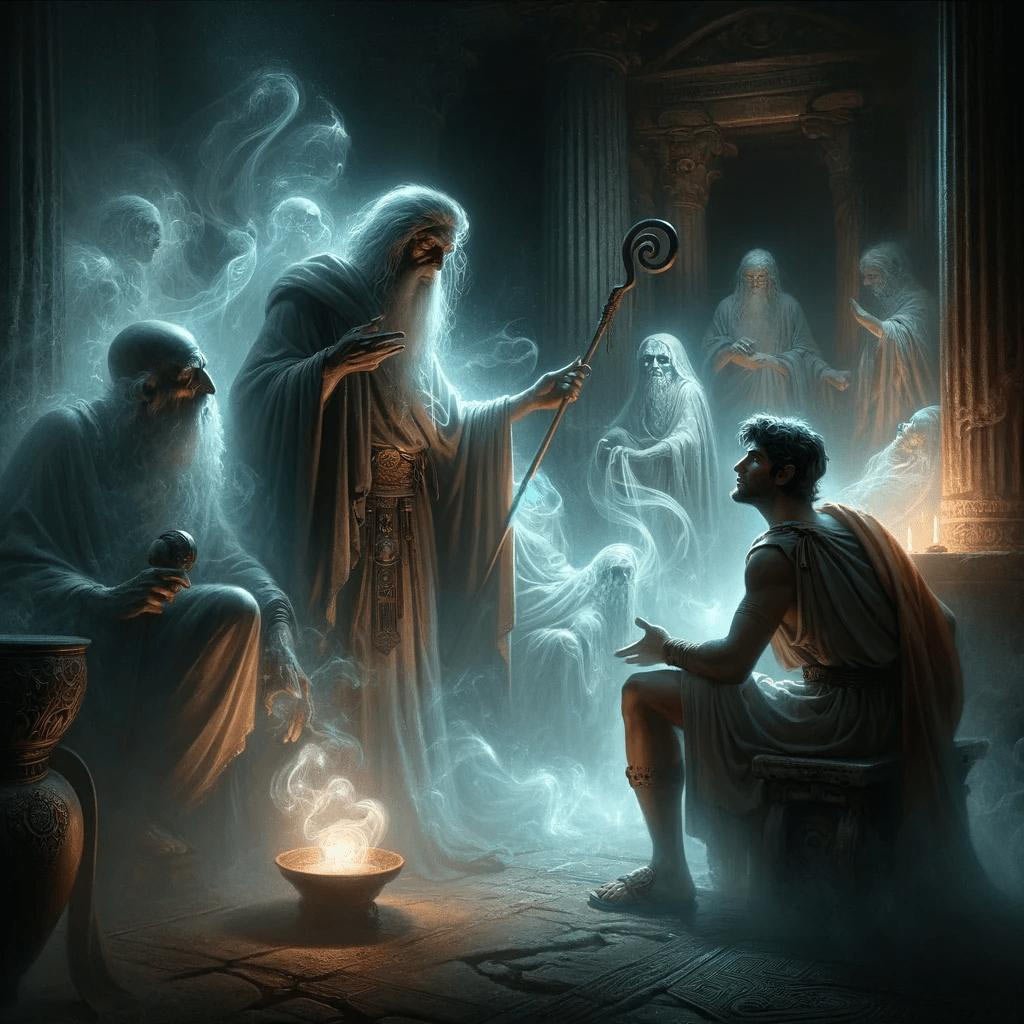
Shadows gather at the edge of perception — souls without flesh, memory without body. They crowd around Odysseus, drawn by offerings meant to give them voice again.

In this fragile space, the living and the dead briefly share the same shore.

But it is unstable. Dangerous. Not meant to last.

Tiresias Speaks

Among the spirits appears the blind prophet Tiresias.

Unlike the others, he retains clarity and purpose.

He reveals what lies ahead in the Odyssey: the path is still open, but it is narrow. It demands restraint, patience, and sacrifice. Above all, it demands that Odysseus control his men and himself, no matter what they encounter next.

The return is possible — but no longer guaranteed by strength or cunning alone.

Encounters with the Past

In the Underworld, Odysseus also sees echoes of his own story — figures from the war, companions lost along the way, and memories that feel more real than the living world.

The journey home is now accompanied by everything that has already been lost.

Nothing is left behind cleanly in the Odyssey.

The Return to Light

When the ritual ends, Odysseus withdraws from the edge of death and returns to the world of the living.

But he does not return unchanged.

He now carries knowledge that no sailor can ignore: the sea is not only water and wind — it is fate, and it remembers.

From this point on, the Odyssey is no longer only a voyage across distance, but a passage shaped by what lies beyond life itself.

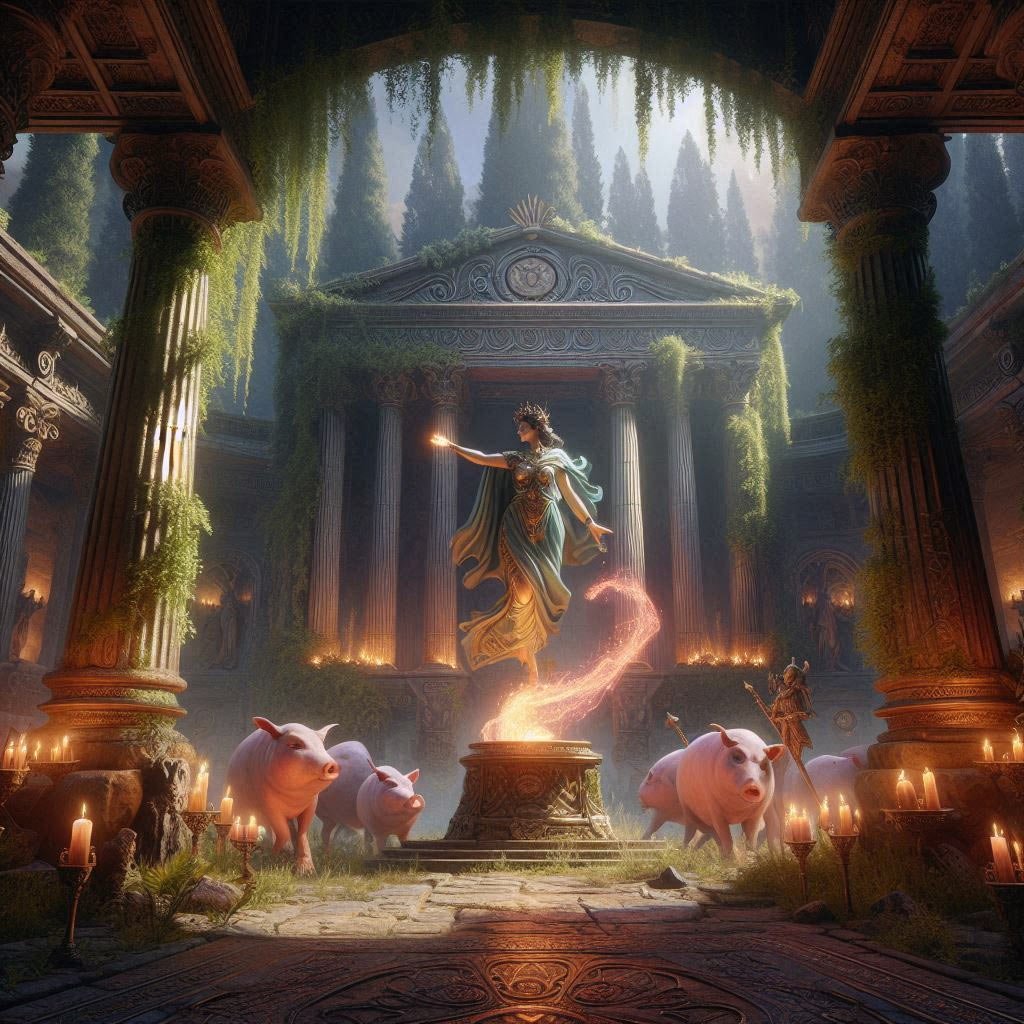
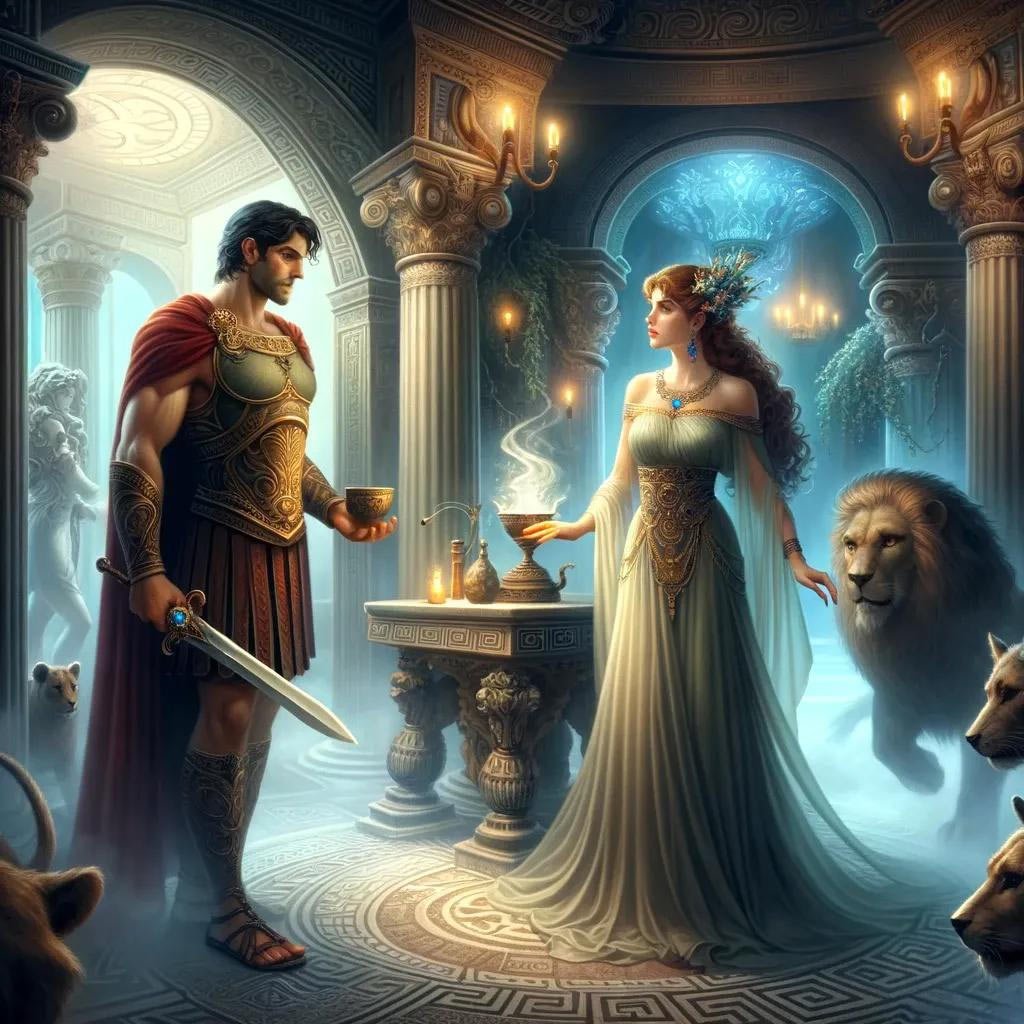
The sorceress Circe transforming Odysseus companions into pigs

Circe’s Island: A Pause Outside Time in the Odyssey

Circe Sorceress
Circe Sorceress

After the destruction of the fleet of the Odyssey by the Laestrygonians, Odysseus is left with only a single surviving ship.

The world of the Odyssey has narrowed now to one vessel, one crew, and an increasingly uncertain horizon.

And then they arrive at an island that feels unlike any other.

The Island That Does Not Move Forward

Circe’s island does not feel like part of ordinary geography.

Time itself seems softened there — not stopped, but loosened, as if days no longer follow each other in a straight line.

The land is beautiful, quiet, and strangely inviting.

Nothing warns the sailors to turn away.

The House of Circe

Deep within the island stands a shining palace belonging to Circe, a figure who is both divine and unsettling — a presence that does not resist strangers, but gently absorbs them.

The crew of the Odyssey, still carrying exhaustion and curiosity, is drawn toward her home.

Only some of them return.

And they are no longer the same.

Transformation Without Violence

In Circe’s presence, the men are not destroyed — they are changed.

They lose their human shape and become animals, as if their nature had been rewritten rather than punished.

The transformation is not loud or violent. It is quiet, almost effortless.

And that makes it more disturbing.

Odysseus Against Enchantment

To save his remaining men, Odysseus enters Circe’s house alone.

Unlike other encounters in the Odyssey, strength is not enough here. Nor is speed. Nor escape.

He must resist enchantment itself.

Guided by divine aid and his own resolve, he confronts Circe not as a warrior, but as a man refusing to forget who he is.

A Year Outside Time

Eventually, Circe is no longer an enemy but a strange kind of host.

Odysseus and his companions remain on the island for a full year in the story of the Odyssey — not in struggle, but in suspension.

Time there does not feel like the world they left behind. It stretches, softens, and almost dissolves.

The journey has paused, but not ended.

The Return of Memory

When Odysseus finally decides to leave, it is not because the island forces him out.

It is because the memory of Ithaca returns with force.

In the Odyssey, even comfort cannot replace home forever.

And so the voyage begins again — deeper now, and more aware of what it costs to continue.

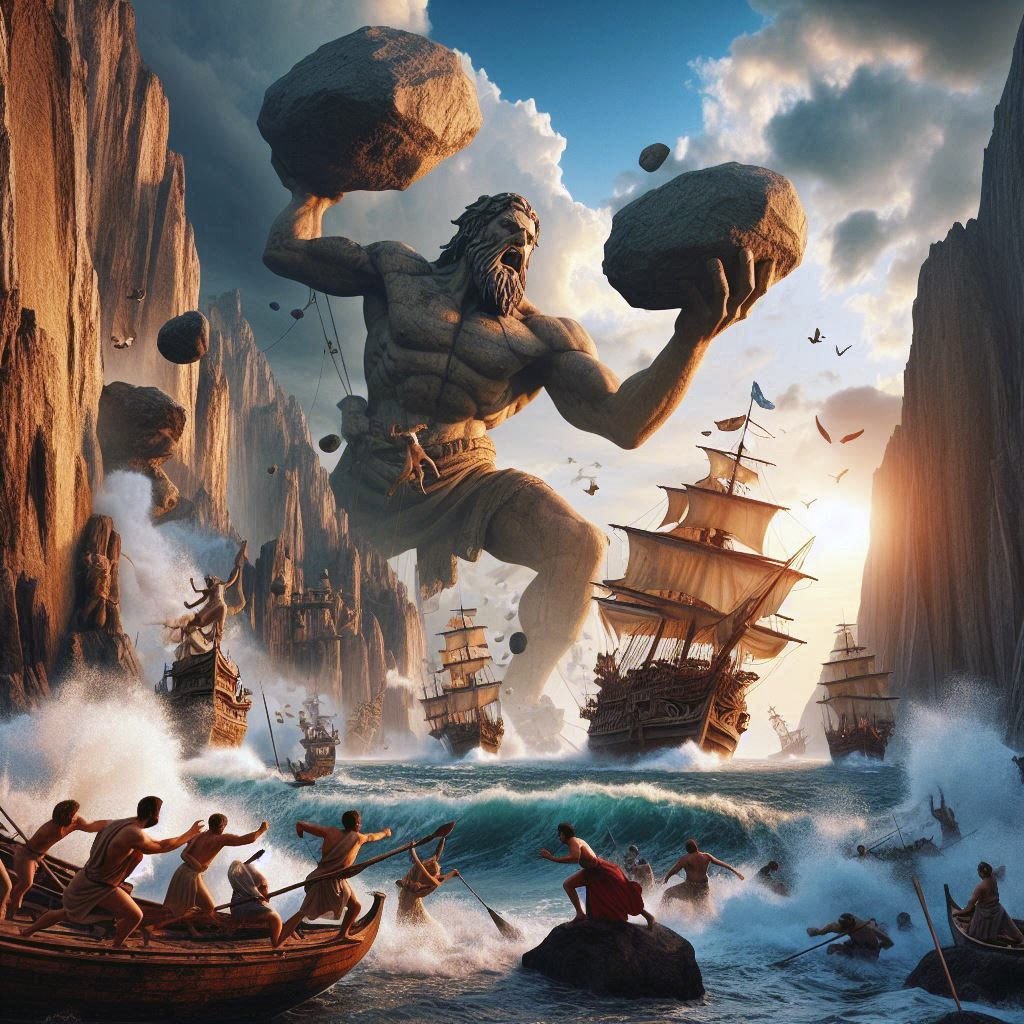
Laestrygonian giants attacking the fleet of Odysseus

The Laestrygonians: The Collapse of the Odyssey’s Fleet

A Laestrygonian
A Laestrygonian

After the chaos unleashed by the winds of Odysseus’s own fleet, the journey in the Odyssey did not return to calm waters.

Instead, it drifted into something far more confined — a place where the sea itself seemed to narrow into a trap.

The Harbor Without Escape

The ships of the Odyssey entered a strange land of steep cliffs and a hidden harbor, where the entrance was so narrow it felt less like a gateway and more like a closing jaw.

At first, the place seemed peaceful. No armies waited on the shore. No signs of war.

But silence, in the Odyssey, is rarely safe.

The Giants Behind the Rocks

The Laestrygonians lived beyond the normal scale of men. Not soldiers, not sailors — but giants, closer to forces of nature than civilization.

When Odysseus sent scouts into their land, they did not return as messengers.

They returned as prey.

The First Strike of Destruction

Without warning, the harbor turned into a slaughter.

Massive rocks were hurled from the cliffs, crushing ships where they stood. Men were speared and devoured as if they were no larger than fish caught in nets.

The calm illusion of the Odyssey collapsed in a single moment of violence.

The Loss of the Fleet

One by one, the ships were destroyed, trapped inside the narrow bay. There was no space to maneuver, no room to escape the closing walls of stone and sea.

Odysseus alone managed to cut his ship free.

Behind him, the entire fleet of the Odyssey vanished.

The Meaning of Collapse

This episode marks one of the most devastating turns in the Odyssey.

It is no longer a journey with companions.

It is no longer a shared return.

From this point on, the Odyssey becomes the path of a single survivor moving through the wreckage of everything that once sailed with him.

1 2 3 4 5 54