

Speak Greek like a Local
Home » AtCorfu Travel Blog » The Living Greek Language » Greek Swear Words & Slang: Meaning & Use

Greek Swear Words & Slang: Meaning & Use

Language  |  DE de_DEEL el
📄 Cite this article

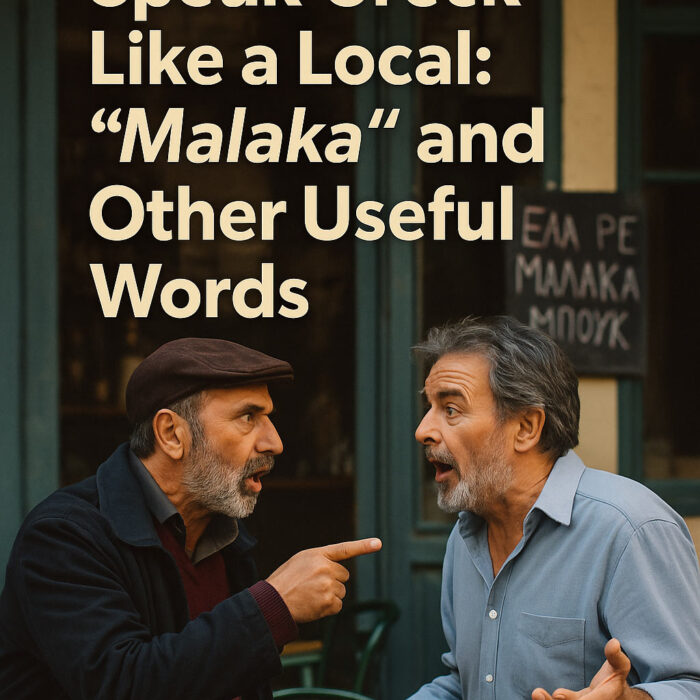
So you’ve heard someone shout “Malaka!” across a Greek street, and now you’re curious. Is it an insult, a joke, or something in between?

If you’ve spent time in Greece, you’ve probably noticed how locals use strong language with a mix of humor, sarcasm, and intensity.

Welcome to the world of modern Greek swear words and insults.

This guide focuses strictly on real Greek swear words, offensive slang, and how they’re actually used in everyday speech — not basic phrases or polite expressions.

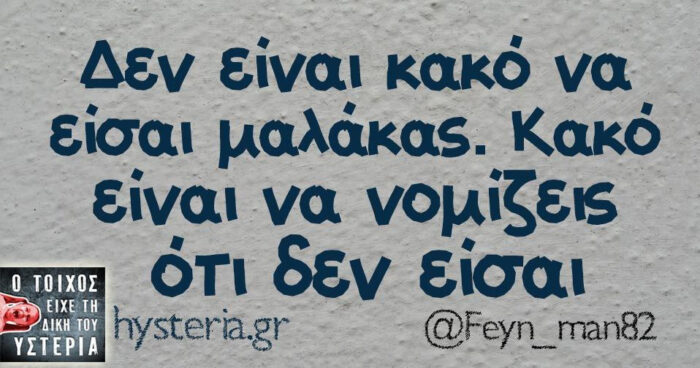
Malaka (Μαλάκας): The Most Common Greek Swear Word

You might’ve heard it in movies, Greek cafés, or from that loud group on the ferry, in short:

Literal Meaning: Wanker (yep).
How It’s Used: Can mean anything from “buddy” to “idiot”; tone and context matter.

How Greek Swear Words Are Actually Used

Greek swear words aren’t just about meaning — they depend heavily on tone, timing, and relationship. The same word can sound friendly, funny, or aggressive depending on how it’s used.

Friends talking

– “Ela re malaka, pame gia kafe?” (“Come on, man, let’s go for a coffee.”)
Friendly and casual — this is how these words are often used between friends.

Playful teasing

– “Re vlaka, ti kaneis?” (“How are you, idiot?”)
A light insult, usually said jokingly.

Angry situation

– “Ante gamisou!” (“Go f*ck yourself!”)
Clearly aggressive — not friendly anymore.

Road rage / frustration

– “Gamoto! Pou pas re?” (“Shit! Where are you going?”)
Strong emotions are common in tense situations.

Greek Swear Words - Infographic
Greek Swear Words – Infographic

Before going through the list, it’s important to understand that Greek swear words are highly context-dependent. Many of them can sound either friendly or offensive depending on tone, relationship, and situation. The examples below are provided to help you recognize and understand them in real conversations — not to encourage their use.

Common Greek Swear Words and Insults

Educational Disclaimer: These words are vulgar and offensive. They are provided to help you understand the culture only. Not to use them ever.

Malakas (Μαλάκας)

Literal Meaning: Wanker
How It’s Used: Can be used as a funny or angry insult, a joke, or among friends. Tone matters. It’s also the closest equivalent to English insults like “jerk,” “idiot,” or even “jerk off” depending on context.

Zoon (Ζώον)

Literal Meaning: Animal
How It’s Used: Funny insult, brute, pig, donkey, beast, or idiot.

Vlima (Βλήμα)

Literal Meaning: Dummy / Blockhead
How It’s Used: Lighthearted, it’s a low-level insult.

Stravos eisai re? (Στραβός είσαι ρε;)

Literal Meaning: Are you blind?!
How It’s Used: Common in traffic arguments.

Re or Moreee (Ρε ή μωρέ)

Literal Meaning: ree, or moreee, comes from “moros”, who is the “fool” in ancient Greek.
How It’s Used: Rude address without using the name. Common in teasing conversations.

Nyhta to pires re malaka?  (Νύχτα το πήρες ρε μαλάκα;)

Literal Meaning: Did you get your driver’s licence at night?
How It’s Used: Yelled at careless or dangerous drivers.
(Referring to a driver’s license insult, implying you got your license by mistake or paid for it without learning how to drive)

Greek Swear Words and Expressions (From Mild to Strong)

Before going through the list, it’s important to understand that Greek swear words are not their literal translation but metaphors. Many of them can sound either friendly or offensive depending on tone, relationship, and situation. The examples below are provided to help you recognize and understand them in real conversations — not to encourage their use.

Educational Disclaimer: These words are vulgar and offensive. Some are also sexually offensive in nature. Shown here for cultural and linguistic learning purposes only. Don’t use them.

In the first group are some of the most common expressions you’ll hear in everyday Greek conversations, often used casually between friends and not always considered offensive.

  • Malista re vlaka (μάλιστα ρε βλάκα) = “Sure, you idiot.”
  • Trelos or Palavos (τρελός) = “Crazy,” teasing or insult.
  • Ante re! (Άντε ρε!) = “Come on!” / “Get lost.”
  • Vlákas (Βλάκας) = “Stupid” or “silly.”
  • Vlakas/Vlammenous (Βλάκας/Βλαμμένος) = “Idiot” or “not very smart, usually in a temporary or situational way.”
  • Karagiozis (Καραγκιόζης) = “Clown,” ludicrous person, the original hero of the theatre of shadows.
  • Megalo palto (Μεγάλο παλτό) = “Useless football player,” usually an expensive player who offers nothing.
  • He just told him some French (Του είπε κάτι Γαλλικά) = When a football player argues with the referee and exchanges heavy words, including “malakas” sometimes.
Laying on a Greek beach
Lying on a Greek beach

Some of the following expressions can be used either playfully or as mild insults, depending on tone and familiarity.

  • Skase (Σκάσε) = “Shut up!” A blunt and often angry expression, but not among the strongest insults.
  • Kai gamo (και γαμώ) = Used to express strong enthusiasm or admiration, similar to saying “awesome” or “amazing” in English, although the literal translation sounds much stronger.
  • Xesou (χέσου) = A dismissive and often harsh expression used to show contempt, similar to “get lost” or “shut up,” although the literal translation is much stronger.
  • Hése mas (Χέσε μας) = A dismissive expression meaning “give us a break” or “leave us alone,” although the literal translation sounds much stronger.
  • Héstika (Χέστηκα) = “I don’t care,” a common informal expression.
  • Ston poutso mas (Στον πούτσο μας) = “We don’t care,” a vulgar but very common dismissive expression.
  • Sta archidia mas (Στα αρχίδια μας) = Same meaning, also very common and informal.
  • Sto mouni mou (Στο μουνί μου) = Female equivalent, rarely used in everyday speech.

The following words are often used to describe someone’s character or behavior, and can function as mild to moderate insults depending on tone.

  • Kargiolis (Καργιόλης) = A generic insult for a man, often implying someone sneaky or untrustworthy; tone can range from teasing to serious.
  • Kopanos (Κόπανος) = “Dumb” or “idiot,” a mild insult, often used in a teasing way. Literally, a wooden tool used for pounding.
  • Koproskylo (Κοπρόσκυλο) = “Lazy person,” a mildly insulting term for someone who avoids work or responsibility.
  • Tsokaro (Τσόκαρο) = An insult for a rude or low-class woman, similar to “trashy” or “uncultured.”
  • Lamogio (Λαμόγιο) = A scammer or shady person; someone untrustworthy or deceptive.

The following expressions are commonly used as exclamations to express frustration, anger, or strong emotion.

  • Skata (Σκατά) = “Shit,” used as an exclamation or in insults; can express frustration, anger, or emphasis.
  • Archídia (Αρχίδια) = “Bullshit,” “nonsense,” vulgar noun; used in expressions to dismiss something as unimportant or false, not commonly used alone as a direct insult.
  • Gamoto (Γαμώτο) = A softened swear meaning “damn” or “shit,” used to express frustration.
  • Gamo to kerato mou (Gamo to kerato mou) = A strong expression of frustration, similar to “damn it.”
  • Ái sto diáolo (Άει στο διάολο) = Go to hell, literally ‘to the devil’.

The following expressions are highly offensive and often used in moments of intense anger or confrontation.

  • Ante gamisou (Άντε γαμήσου) = Go f*ck yourself. Very offensive; can easily start a fight.
  • Kai gamisou (Και γαμήσου) = “Go f*ck yourself.”
  • Tha se gamiso (Θα σε γαμήσω) = I’ll f*ck you up, aggressive threat, not to be said lightly.
  • Na psofiseis (Να ψοφήσεις) = May you drop dead, harsh, pure hatred; not commonly used in public.
  • Na se patisi fortigo (Να σε πατήσει φορτηγό) = “May you get hit by a truck,” an exaggerated expression of anger.
  • Mou espases ta archídia (Μου έσπασες τα αρχίδια) = “You’re driving me crazy,” “You’re getting on my nerves,” vulgar expression; often used jokingly between friends, but can also express real irritation depending on tone.

The following terms are strongly offensive and often sexualized, frequently used to insult someone’s character, especially in a gendered way.

  • Poutana (Πουτάνα) = “Whore,” very insulting; sometimes “poutanaki” means young whore.
  • Burdélo (Μπουρδέλο) = Brothel / metaphorically “State,” or a very badly organized place.
  • Kargiola (Καργιόλα) = A strong and specific insult for a woman, similar to “bitch,” rarely used in a light or friendly way.
  • Skila (Σκύλα) = “Bitch,” a strong and often sexualized insult for a woman, depending on tone and context.
  • Ksekoliasmeni (Ξεκολιασμένη) = “Spreads legs too easily” is highly vulgar.
  • Poustis (Πούστης) = A highly offensive term; historically a slur, but in some contexts it can also mean a sneaky or untrustworthy person. Use with extreme caution.
  • Vizitoudes (Βιζιτούδες) = High-end prostitutes, from the Italian root “vizita.”

The following terms are highly vulgar and direct, often used in aggressive or confrontational language.

  • Kolotripida (Κωλοτρυπίδα) = “Asshole,” a very strong and aggressive insult.
  • Kolos (Κώλος) = “Ass,” very common in everyday speech, used in insults or expressions, e.g., “You look like ass.”
  • Malakizomai (Μαλακίζομαι) = Jerk off, “To masturbate,” vulgar verb; related to “malakas” but not commonly used as an insult by itself.
  • Gamiese (Γαμιέσαι) = “You’re fucked,” a very strong insult.
  • Gamiese patokorfa (Γαμιέσαι πατόκορφα) = An intensified version of “you’re completely fucked,” very strong.
  • Mounopano (Μουνόπανο) = Extremely despicable or disgusting person, very vulgar insult; one of the harshest terms in modern Greek, used to express deep contempt rather than casual anger.
Speak Greek like a Local

Two Famous Gestures

  • Hand to genitals = Hand to genitals = A rude gesture meaning “I don’t care at all about what you think.”
  • The “Moutza” = five fingers extended to the face; it means “get fucked” or more precisely “go to hell.”

In Greek, many of these expressions are highly context-dependent. In fact, most Greek swear words are not used with their literal meaning — they function more like metaphors, shaped by tone, relationship, and situation.

For example, words like “malaka” are often used casually between friends, but can become insulting in a different context. This dual use is very common in everyday Greek conversations.

Because of this, understanding how and when these expressions are used is just as important as knowing their meaning.

Greek Swearing Beyond Insults

Greek swear words aren’t used only to offend — they’re often emotional expressions shaped by tone, context, and relationship.

Language reflects passion. So when your Greek friend yells “Skase re!” (Shut up), check his smile first.

✅ Bonus: Greek Slang Survival PDF

We’ve added a downloadable cheat sheet with key phrases, how to pronounce them, and when not to use them.
📄 Download Greek Swear Words Infographic (PDF)

Final Thoughts on Greek Swear Words

Greek swear words are more than just insults — they reflect emotion, humor, and everyday communication.

Used between friends, they can sound playful. Used in anger, they can escalate quickly. Context always matters.

If you want to understand how Greeks really speak, learning the way of using these expressions gives you a much clearer picture — just be careful how you use them.

Want to go deeper? Explore more Greek slang and common words in our full Greek language and slang collection.

Comments