



Angelokastro (Angel’s Castle) in Paleokastritsa
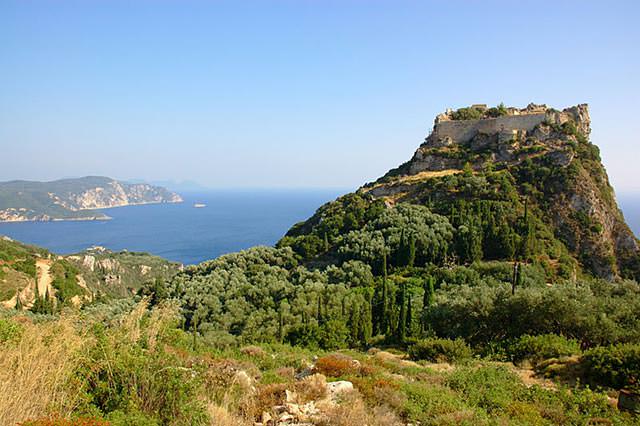
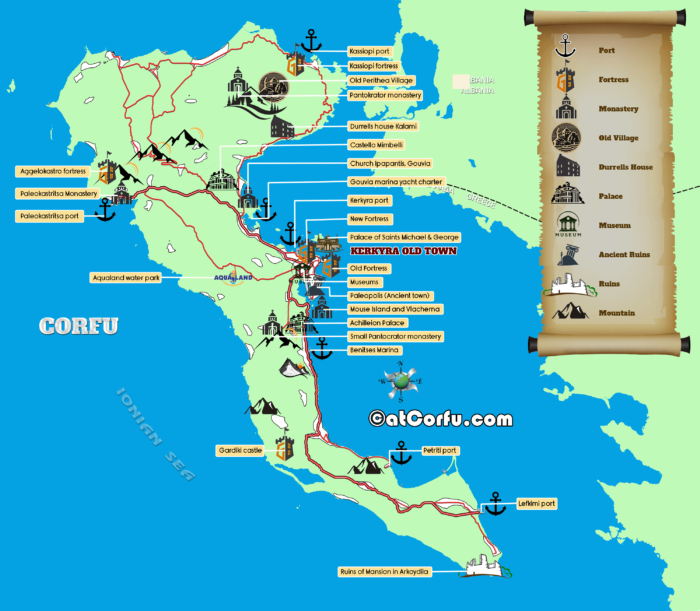
Angelokastro was the westernmost outpost of the Byzantine Empire and the Despotate of Epirus to which Corfu belonged until 1267 AD, it is near the village of Krini north of Paleokastritsa next to a monastery.
Built in the early 12th century AD by the Despot of Epirus Duke Michael-Angelos Komnenos the second, therefore the name Angel’s Castle, and in its prime, in an emergency, it could protect the entire population of the region, about 4000 people.
Inside the castle, two large water tanks and the churches of the Holy Archangels and Agia Kiriaki are preserved.
The church of the Archangels was built in 1784 on the site of an older church.
Agia Kiriaki was built inside a small cave and has 18th-century paintings.
Angelokastro(Angel’s castle) saw many sieges but never fell except once to the Venetians after a six-month siege in 1386.
In 1537 only 8 soldiers of his guard with the help of the residents were needed in order to repel the attack of Barbarossa.
The Turks tried again and failed to conquer the Castle in 1571.
The villages around got their names from the soldiers who took pieces of land to settle on when they retired.
Examples are Makris-Makrades, Vistonas-Vistonas, Doukas-Doukades, Aspiotis-Aspiotades, Kabbadias-Kabbadades, etc.
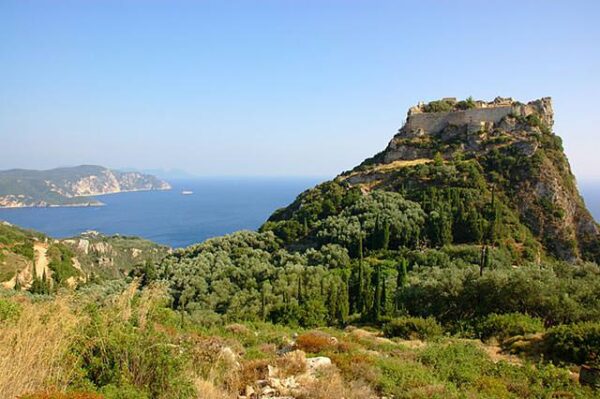
Today the castle is still standing at the top of the rock and it is a strong tourist attraction, a well-preserved piece of history for this magnificent island.
Byzantine Stradioti and the Villages Around Angelokastro
The area around Angelokastro hosted many villages with the suffix -ades, names derived from family groups of soldier-farmers known as Byzantine Stradioti. These settlements had a defensive role and maintained the organization of the rural landscape.
Examples
- Peroulades → from the name Peroulis
- Avliotes → from the surname Avlonitis
- Gousades → from the name Gousis
- Poulimades → from the name Poulimas
- Karousades → from the name Karousis
- Kopsoheilades → from the nickname Kopsaheilis
- Velonades → from the name Velonas
- Rachtades → from the name Rachtas
- Gavrades → from the surname Gavras
- Magoulades → from the name Magoulas
- Kavvades → from the surname Kavvadias
- Kouvanades → from the name Kouvas
- Armenades → from the name Armenis
- Termenades → from the name Termenas
- Aspiotades → from the name Aspiotis
- Manatades → from the name Manatos
- Arkadades → from the name Arkoudis
- Aleimatades → from the name Aleimatas
- Makrades → from the name Makris
- Doukades → from the name Doukas
- Gardelades → from the name Gardelis
- Liapades → from the name Liapis
- Kanakades → from the name Kanakis
- Yiannades → from the name Giannis
- Poulades → from the name Poulis
- Argyrades → from the name Argyros
The suffix -ades is not just a linguistic feature; it preserves the memory of an old social and military organization in the Corfiot countryside, marking the families or clans that settled in the area.
Comments