


Things to Do in Corfu
Yes, sure, we all know these…
- Visit Beaches.
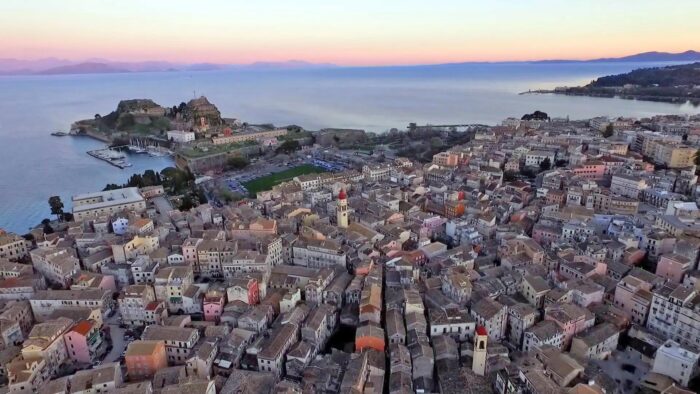
- See Corfu Old Town and its Fortresses.
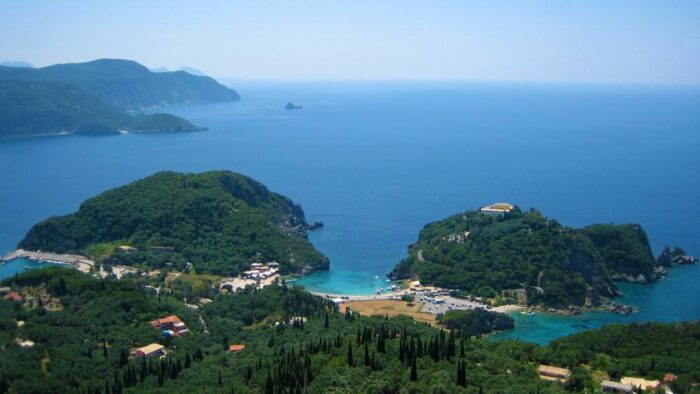
- Visit Paleokastritsa.
- Go on a Boat trip.
- Visit Achilleion Palace.
- See Museums.
- Drive to traditional Villages.
- Enjoy the Nightlife.
- And the list goes on…
All worth doing, of course. But you will find pretty much the same list on virtually every Corfu travel guide.
This page is about something else.
Unusual Things to Do and See in Corfu
Let’s leave the usual tourist itinerary aside for a moment and go looking for the things that are a little harder to find, a little stranger, or simply not mentioned very often.
- Visit Mibeli Castle.
- See the enormous whale bones at Paleokastritsa Monastery.
- Discover the papirela, Corfu’s strange traditional reed fishing boat.
- Visit a traditional-tools/folklore collection and see objects whose names and purposes most visitors have never encountered.
- What is Klaniola for?
- What were Anapapsolia used for?
- Go horse riding through the northeast, potentially reaching secluded areas around Erimitis.
- Explore unusual old houses, mills, workshops and local collections.
- Look for the House of Thomas Palaiologos in Chlomos.
- Visit a Corfiot village that was never a village.
- Chapels on the mountain slopes around Benitses.
- Agia Triada — tiny chapel on a high knoll.
- Agios Nikolaos Vrysiliotis — abandoned chapel by the springs.
- Evangelistria — chapel beside older ruins.
- Taxiarchis — tiny chapel among spectacular rocky terrain.
- Agia Paraskevi.
- San Stefano Chapel — inside the estate, but kept open to the public.
- And whatever other peculiar discoveries we manage to dig up…
Some are places, some are objects, some are remnants of Corfu’s past, and some are simply things you would probably never have thought existed…
That’s the point.
Danilia Village – The Corfu Village That Wasn’t a Village
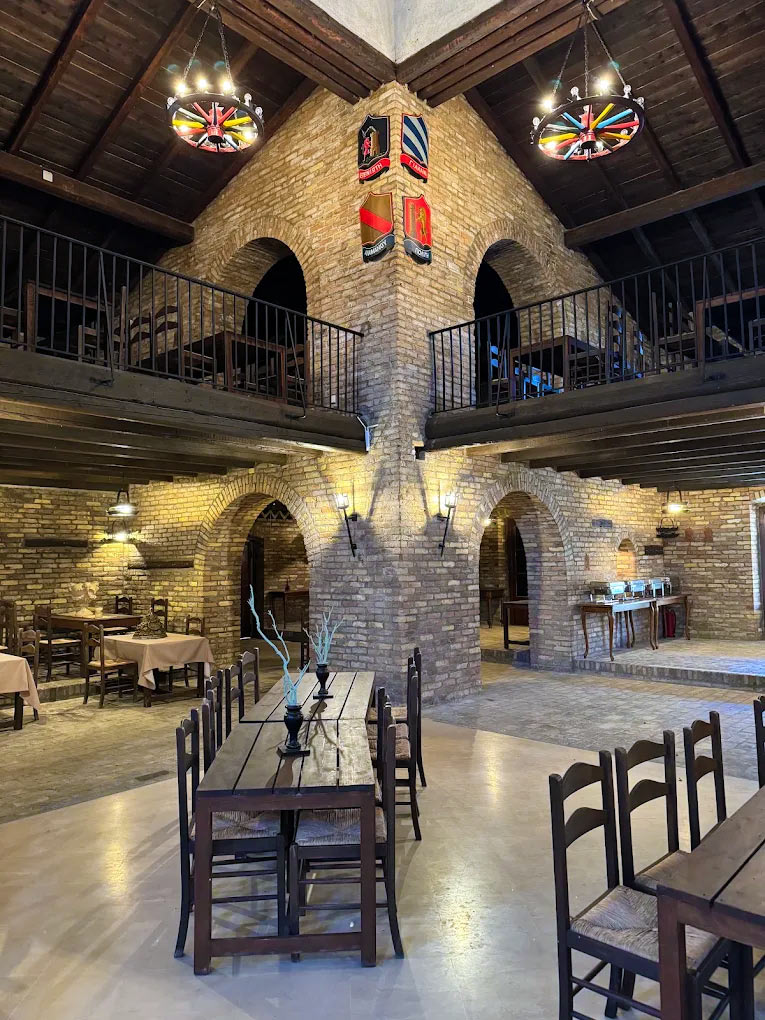
Danilia Village is not an old Corfiot village. It was deliberately created as a replica of one, and that is what makes it an unusual place to visit.
The Bouas brothers created Danilia in the 1970s as a tourist attraction, recreating the appearance and atmosphere of an old Corfiot settlement. It was an ambitious project, and in its heyday in the 1980s Danilia was a very popular attraction, visited daily by tourists.
I remember it from those years, when I was working as a holiday representative and visited Danilia many times. It was considerably more than the picturesque little village you see today. Its streets and buildings were carefully arranged to evoke old Corfu, including features that would be difficult to find together in a real village. Some parts even echoed the narrow streets and layout of Corfu Town.
Shops sold mainly local souvenirs, traditional-looking buildings, and two large spaces presented as old olive mills but adapted for events. Weddings, dinners and other celebrations were held there, while Greek evenings with live music and dancing were a major part of the attraction. There was also a large outdoor area used for Greek dancing and entertainment.
For a time, Danilia was one of those places that was simply part of the Corfu holiday experience.
Then things changed. The attraction declined, the original owners eventually passed away, and the Grecotel group took over Danilia. Its role changed from a large, busy tourist attraction to a more specialised venue for events, dining and selected visits.
Today, Danilia still exists, but in a rather different form. It is operated as a private village replica and event venue, with a folklore museum, traditional café, olive mill, old typography, church and other reconstructed features. Current Grecotel information confirms that it continues to receive visitors, although access and opening arrangements can depend on the season and private events.
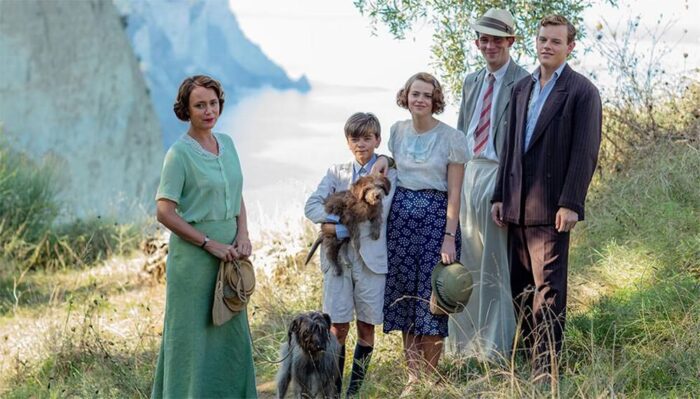
Danilia also acquired a new lease of life through the screen. It was used as a filming location for “For Your Eyes Only” and, much more recently, became one of the principal locations for “The Durrells in Corfu“. Grecotel itself describes Danilia as a reconstruction of a traditional 1930s Corfiot village and confirms that The Durrells was filmed there.
So Danilia is an odd piece of Corfu’s tourism history: a village that was built as a tourist attraction, became a very successful attraction, declined, and then found a second life as a film location, event venue and recreation of old Corfu.
It is not hidden, and it certainly isn’t an ancient village. But it is definitely off the beaten track in a different sense — it is something that looks like a piece of old Corfu while having a surprisingly modern story behind it.
Folklore Museum of Sinarades
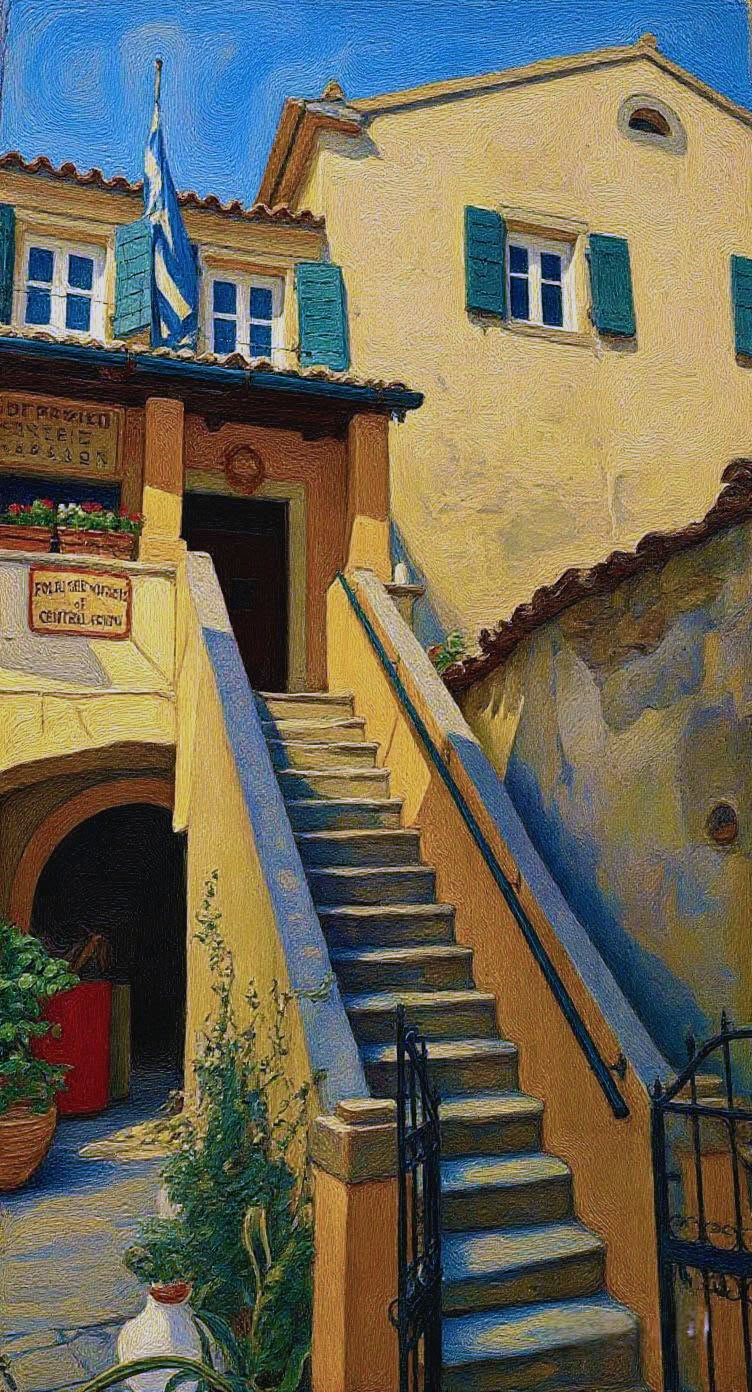
The Folklore Museum of Sinarades “Nikos Paktitis” is housed in a traditional Corfiot house and preserves a remarkably detailed picture of everyday life in Corfu, particularly during the 19th and early 20th centuries.
The collection includes traditional furniture and clothing, household and agricultural tools, fishing equipment, ceramics, handicrafts, church objects, a cobbler’s workshop, Karagiozis figures, and much more.
Sinarades is about 14 km from both Benitses and Corfu town by road, so it is quite close and easy to combine with a visit to the village and the surrounding area.
The museum is currently open daily from May 1 to October 31, 9:00–14:00, with a €3 entrance fee. During the winter period, it can be opened by appointment. The museum lists +30 26610 54962 and laografikosinaradon@gmail.com as contact details.
Official website: Folklore Museum of Sinarades – Nikos Paktitis
While in Sinarades, it is worth allowing some time to wander through the old village itself, with its narrow lanes, traditional houses, stone stairways and old Corfiot architecture. The museum is therefore only one part of the visit.
See a Papirela
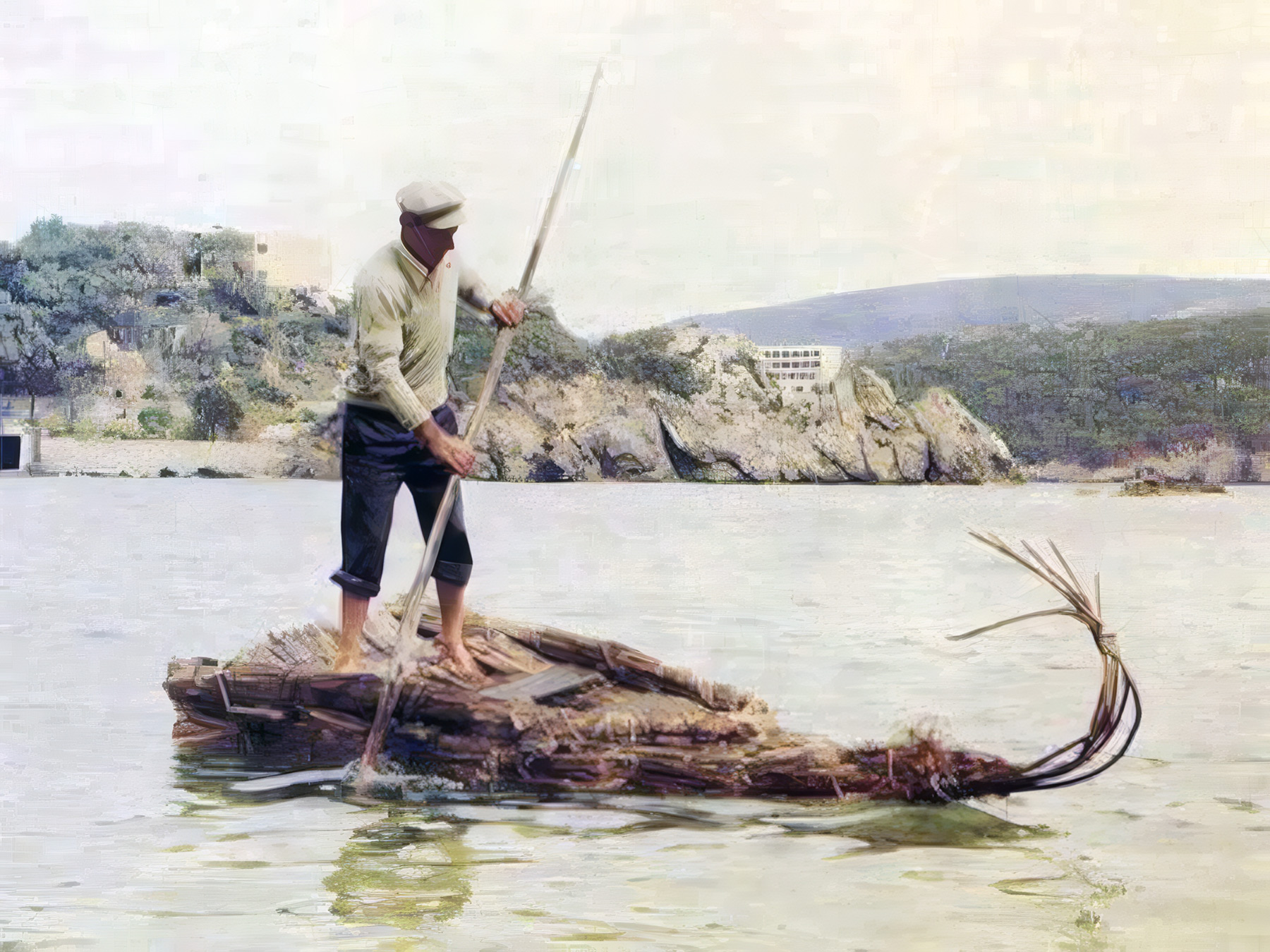
One of the museum’s most unusual exhibits is a papirela (παπυρέλα), the strange traditional fishing boat made from bundles of reeds or other plant material.
Papirelas were once used along parts of Corfu’s coast, particularly the western coast, but the tradition eventually disappeared. The surviving example in Sinarades gives visitors a chance to see this remarkably simple type of boat for themselves.
It is hard to imagine today, looking at a papirela, that something so seemingly fragile was actually used for fishing at sea.
What Were Anapapsolia Used For?
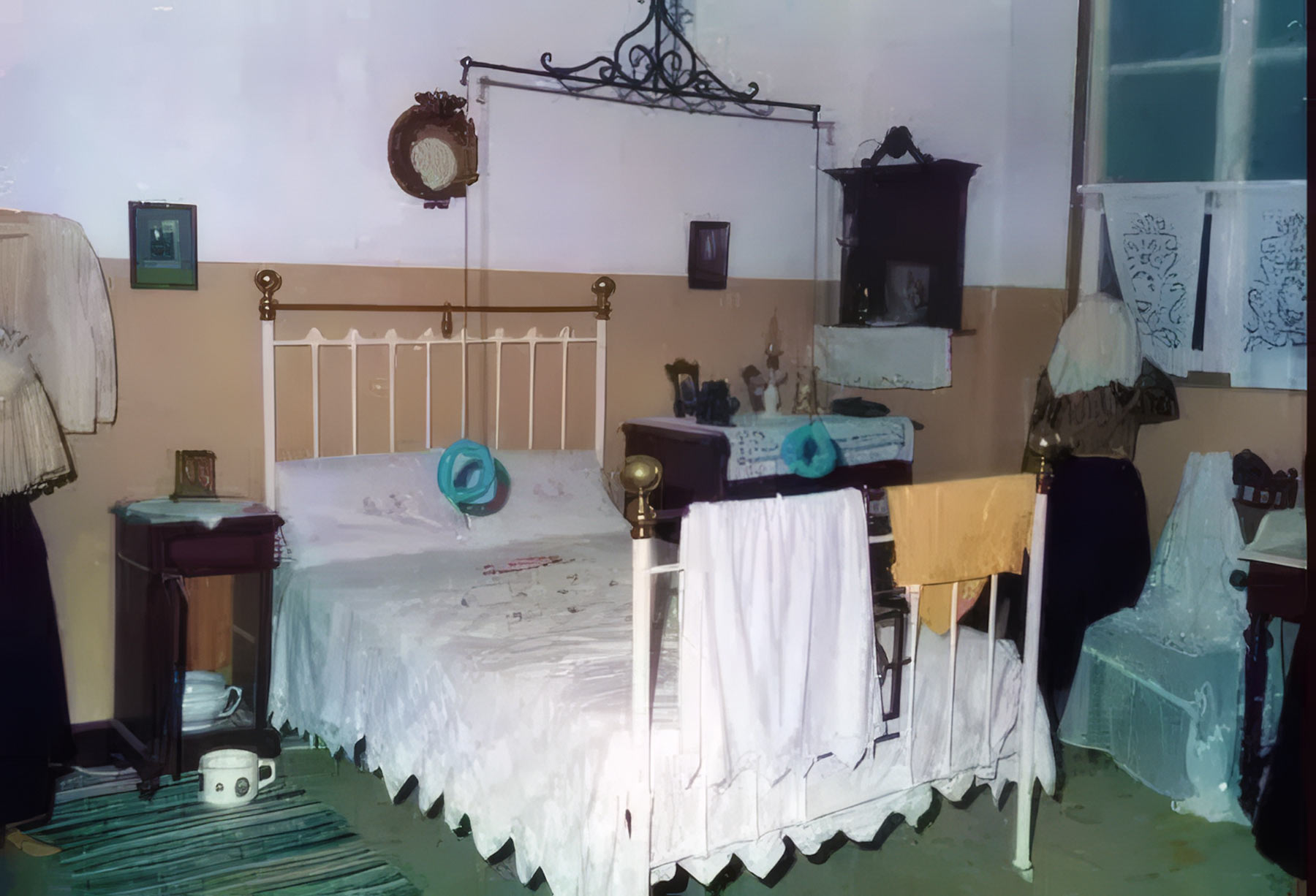
Anapapsolia were used in Corfu from medieval times into the early 20th century, particularly in rural households.
The name may sound mysterious, but it gives away their purpose once you know a little Greek. Ανάπαυση (anápafsi) means “rest”, and anapapsolia comes from the same word — quite appropriate for something whose entire purpose was to let the bride rest her feet while making sex. So the purpose was surprisingly practical.
Anapapsolia were traditionally given to a bride as part of her dowry, usually by her family.
In rural Corfu, women worked extremely hard in the fields and could be exhausted by the end of the day. So, according to the old Corfiot explanation, someone came up with a rather ingenious solution: a way for the bride to rest her feet up while being in bed.
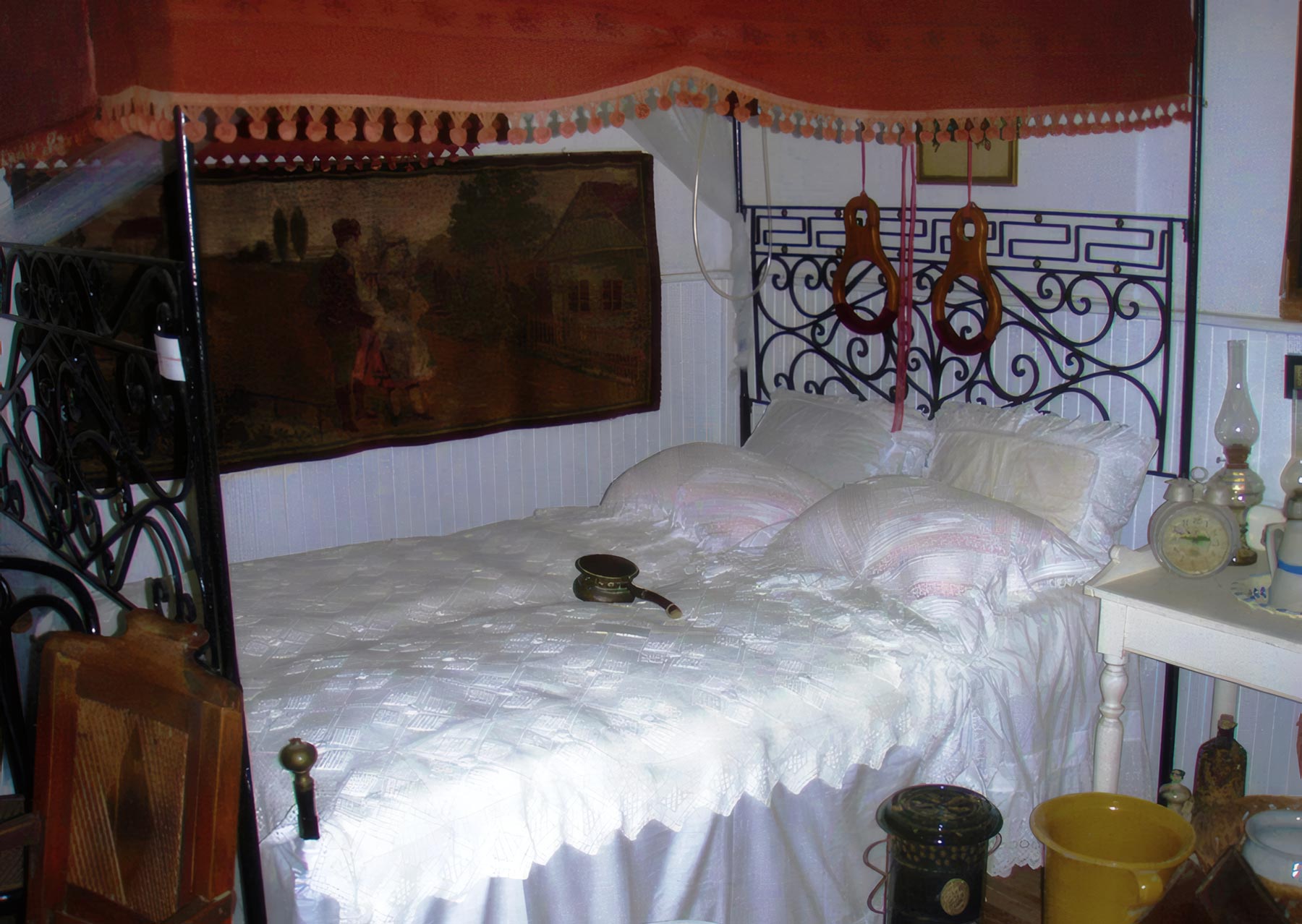
The anapapsolia were ring-shaped supports, made of wood, bronze, or, for wealthier families, even gold, wrapped in fabric so as not to hurt. They were suspended from the ceiling or another construction, and the feet could be placed inside them, allowing the woman to rest her legs without effort.
And yes, this was one of those things people in Corfu used to talk about and laugh about. Once you know what the mysterious little rings were for, you can understand why.
It is one of those wonderfully peculiar objects that tells you much more about old Corfiot life than a collection of grand historical monuments ever could.
What Was a Klaniola?
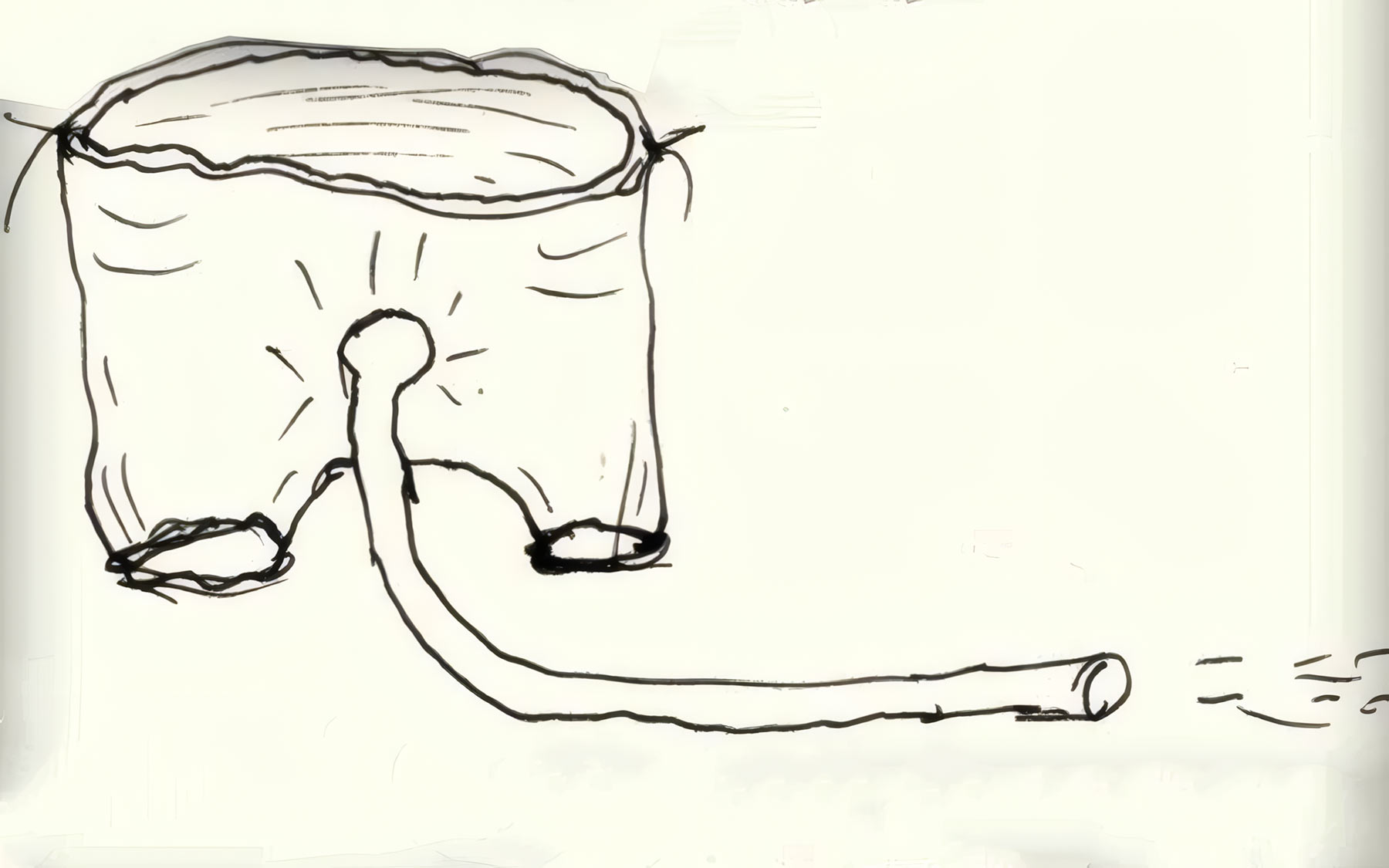
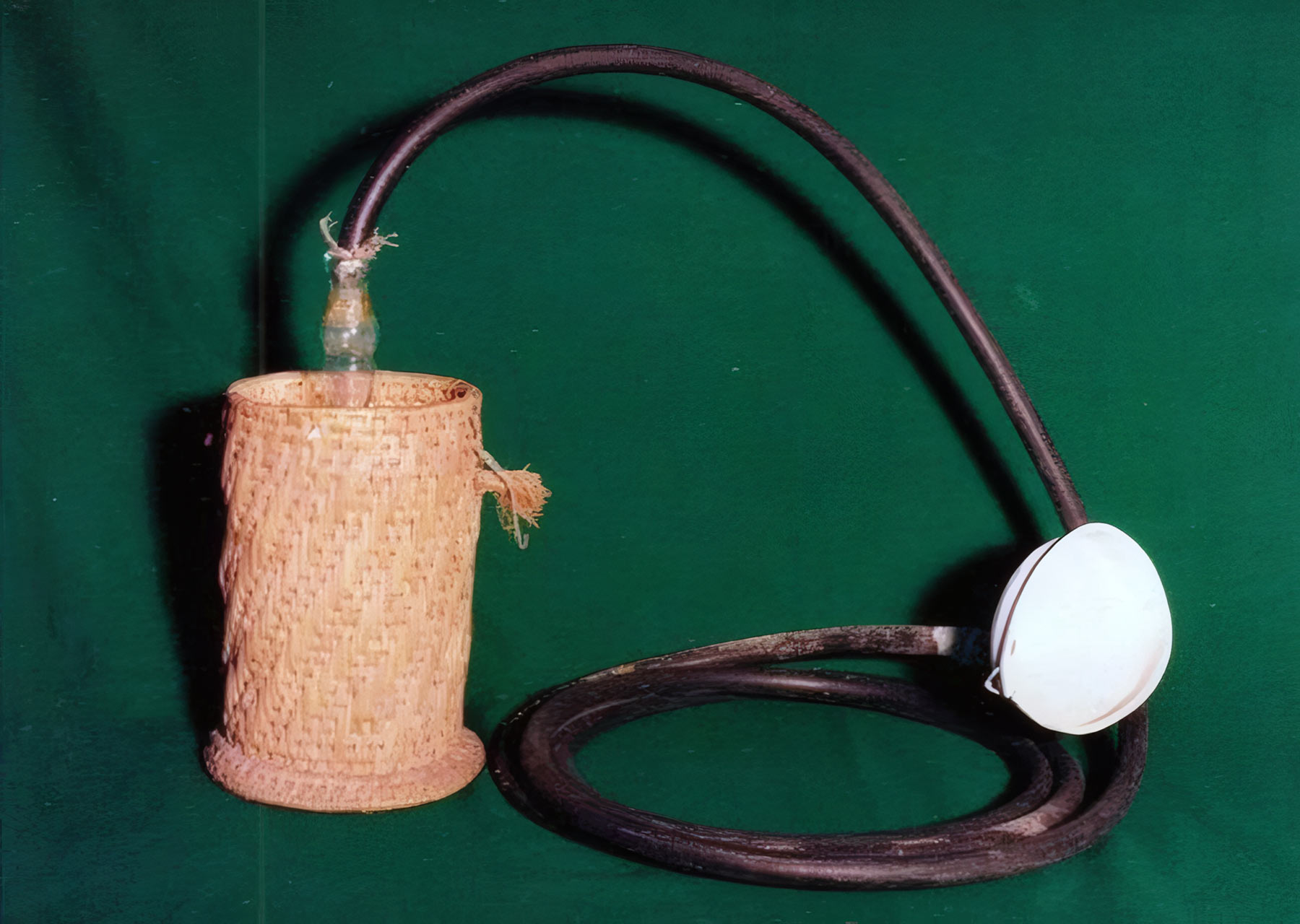
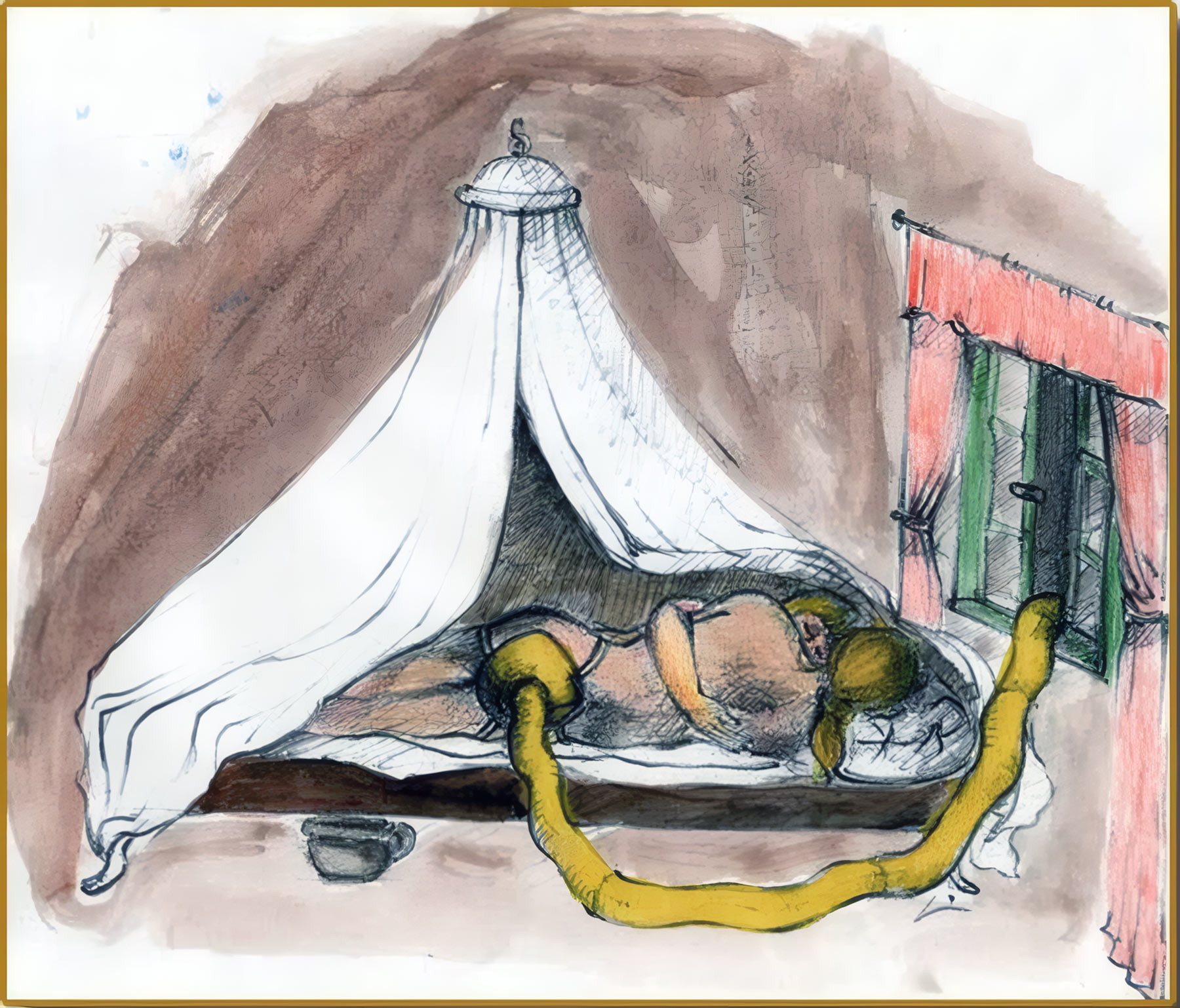
The klaniola (or klaniora) was a rather unusual piece of old Corfiot underwear, made of cloth with a hole at the back and a pipe that led outside the room, allowing gases to escape and helping to avoid unpleasant smells.
It was mainly found in wealthier households; ordinary and poor people generally did not have such a luxury.
And one cannot help wondering whether the outside opening had some kind of grille — otherwise, what would happen if a spider or insect decided to come in the opposite direction? 😄
You may still see an example of this in the Folklore Museum of Central Corfu in Sinarades, along with other curious objects from everyday Corfiot life such as Anapapsolia.
In any case, we have some photos for you to get an idea! As you can notice, there were variations of the…tool!
See the Enormous Whale Bones at Paleokastritsa Monastery
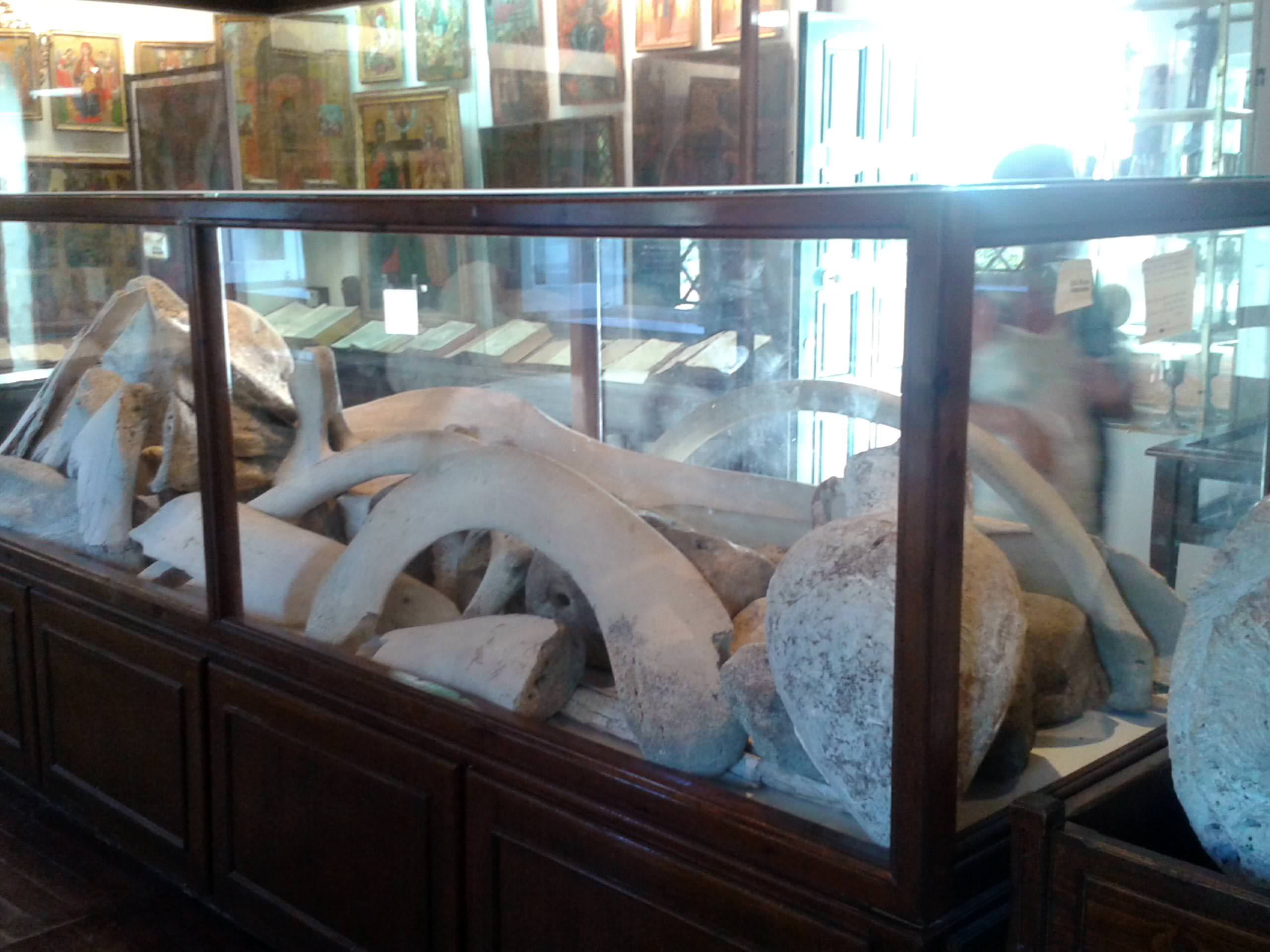
Among the many treasures of Paleokastritsa Monastery, you can find something rather unexpected: the enormous bones of a whale. The monastery’s small museum contains various religious and historical objects, but these huge bones are probably the exhibit visitors least expect to encounter.
According to local accounts, the whale was killed by a Corfiot fisherman in the 19th century, although the details of where and how it was caught are not clear.
It is one of those wonderfully odd details that makes exploring Corfu more interesting. You can visit the famous monastery, admire its spectacular setting above the sea, and then discover that the remains of a giant marine animal have somehow become part of its collection.
Visit Mibelli Castle
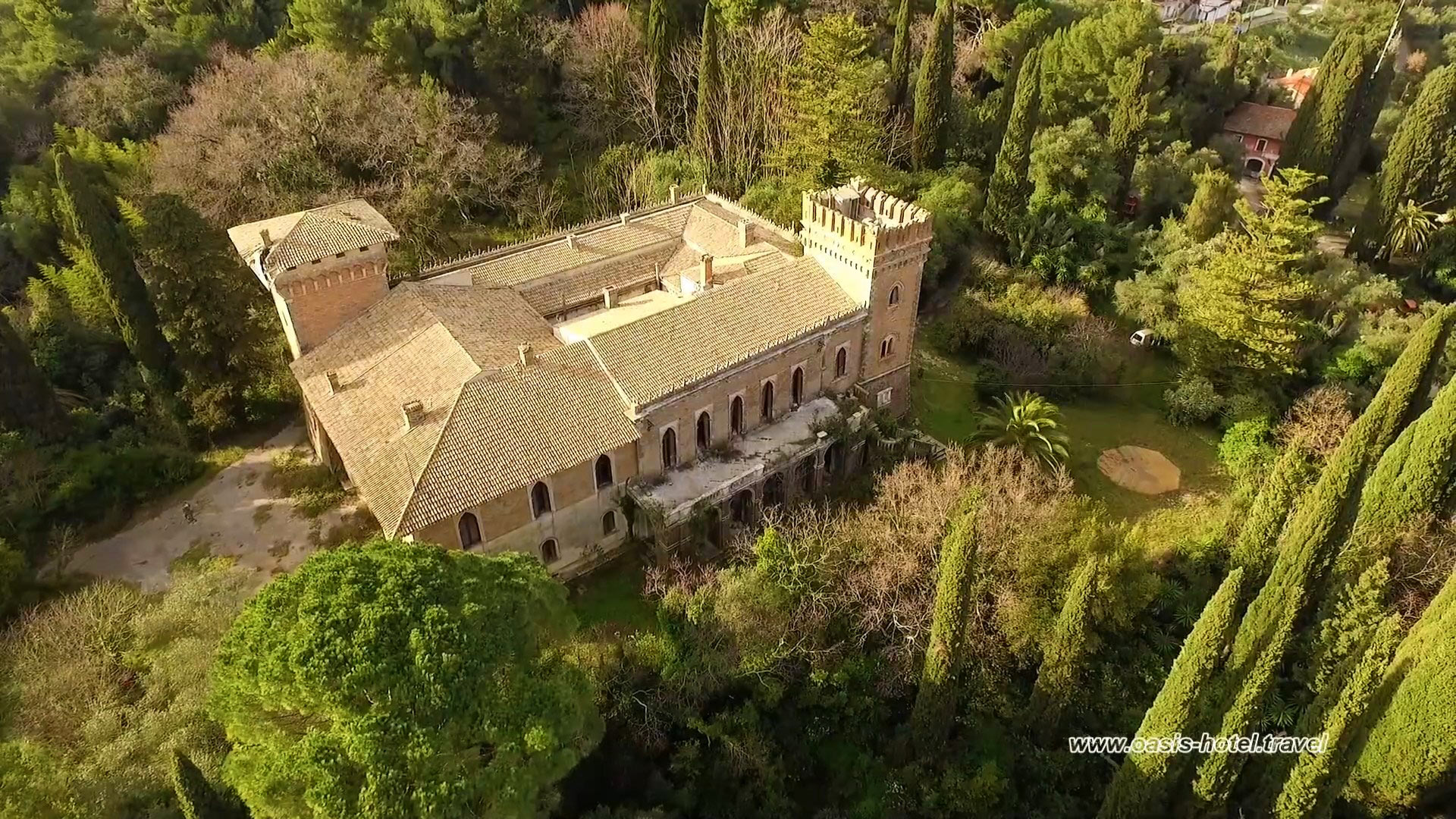
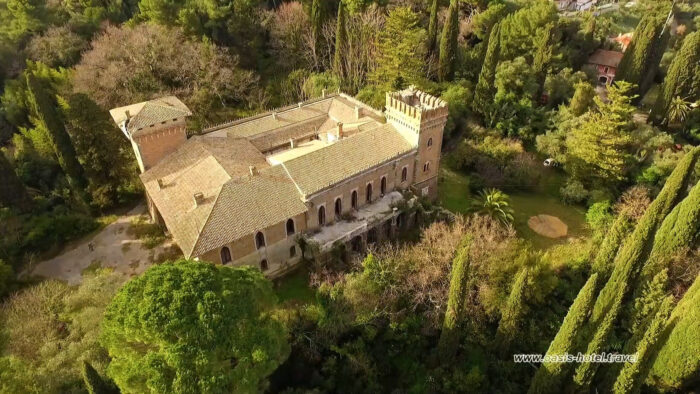
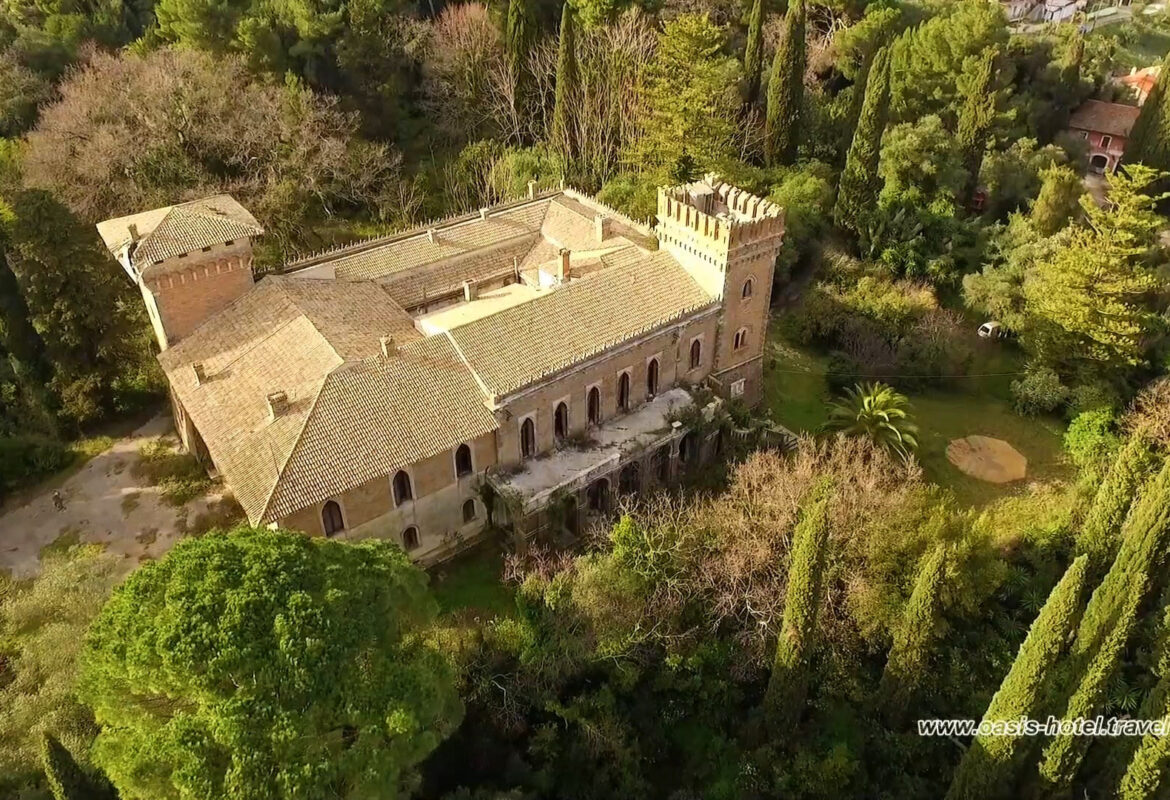
Mibeli Castle, better known as Castello Bibelli, is one of Corfu’s strangest and most atmospheric old estates. Hidden among the greenery of Kato Korakiana, the impressive Neo-Gothic mansion was built around 1905 by the Italian Baron and admiral Luca Bibelli, on the site of an older tower associated with the Polylas family. The estate once had an exotic garden and even a zoo.
Its story became even more unusual after the Bibelli family left Corfu during World War II. The property was taken over by the Greek state and used as a military hospital during the war.
In 1958 it reopened as the luxurious Castello Bibelli Hotel, which remained in operation until the early 1980s.
Today the great building stands abandoned, its beautiful architecture slowly being reclaimed by vegetation.
It is a fascinating place to see from outside, but it is not an ordinary visitor attraction and should not be entered without permission.
The property has been designated a modern monument, and plans have been made for its restoration and conversion into a boutique development.
For anyone interested in Corfu’s forgotten corners, Castello Bibelli is a remarkable reminder of the island’s early tourism era — a former luxury hotel that now looks like a forgotten castle in the woods.
Go Horse Riding Through the Northeast
Horse riding is a different way to discover the northeastern countryside of Corfu, using old tracks and paths that are difficult to appreciate from a car. Guided rides are available for both beginners and experienced riders, and some routes pass through the Erimitis nature reserve, with its wild landscape, trails and sea views.
For something genuinely different, the Erimitis nature reserve ride can take you through secluded parts of the northeast and down towards the coast. It is less about riding fast and more about experiencing Corfu’s countryside slowly, from the back of a horse.
For riding in this area, Mistral & Maistro in San Stefano arrange guided rides and horse rental. They can be contacted at +30 6937 486 930 or andremartzoykos@gmail.com.
Look for the House of Thomas Palaiologos in Chlomos
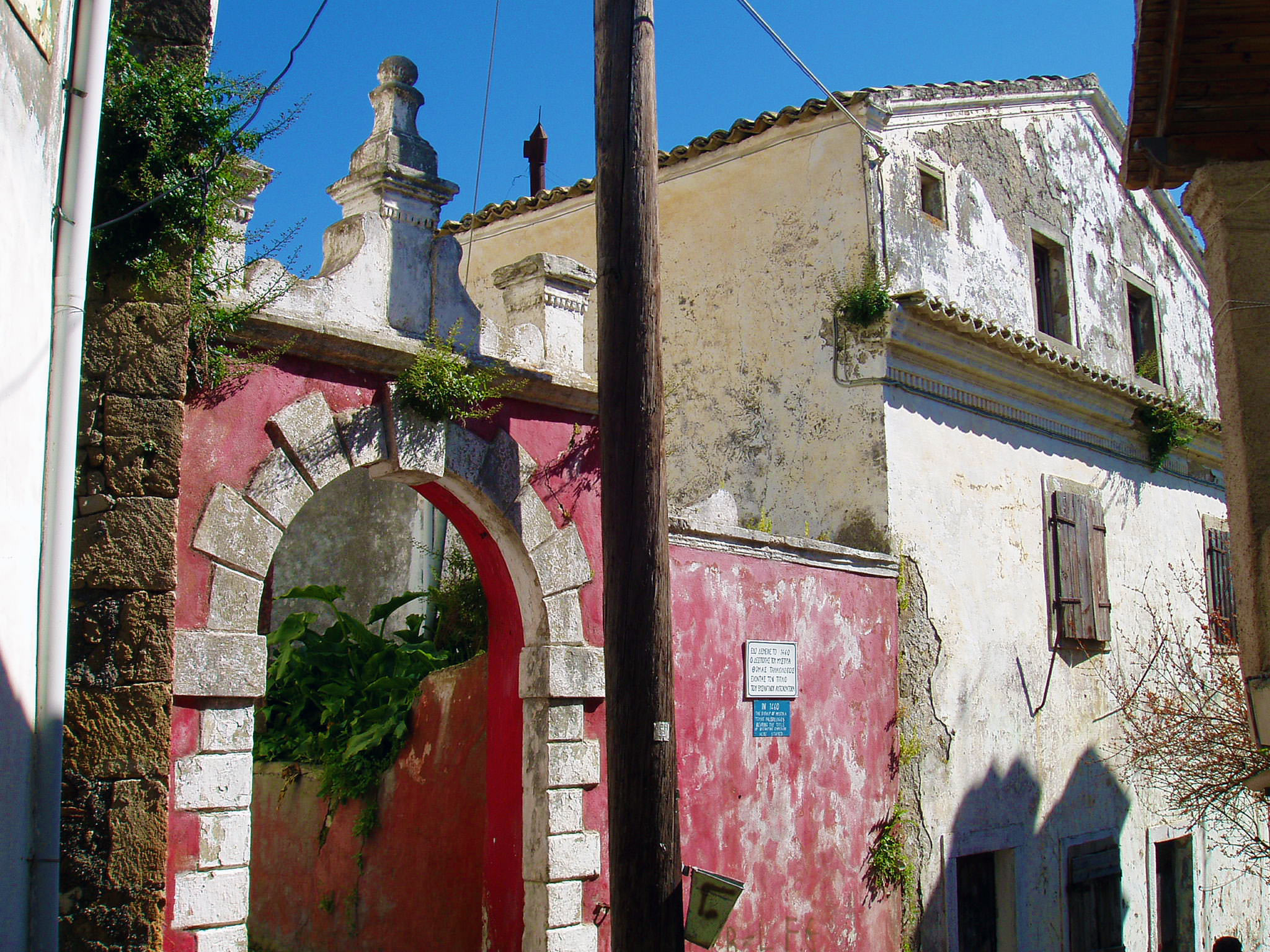
Wander through the narrow, cobbled streets of Chlomos and look for the old mansion traditionally identified as the home of Thomas Palaiologos, Despot of the Morea and brother of Constantine XI, the last Byzantine emperor. The 15th-century mansion is one of the village’s more unusual historical curiosities.
Thomas fled to Corfu after the Ottoman conquest of the Morea in 1460, before eventually leaving for Italy. The red mansion is part of the old village, although it is not a museum or conventional tourist attraction.
You may not find much more than an old house among the other historic buildings of Chlomos, but knowing who is traditionally associated with it gives another reason to explore this beautiful mountain village.
Chapels on the Mountain Slopes Around Benitses
Some of the most interesting little discoveries around Benitses are the old chapels scattered among the olive groves and mountain slopes above the village. They are easy to miss and, unlike the better-known churches of Corfu, are often reached by small tracks and footpaths.

- Agia Triada stands on a high knoll, with an open view over the surrounding countryside.
- Agios Nikolaos Vrysiliotis is a small, abandoned chapel beside the old springs and water sources above Benitses.
- Evangelistria is another old chapel, near the remains of an older church. Local tradition connects the ruins with a church built by a pirate, adding another curious story to the place.
- Taxiarchis is a tiny chapel in a particularly rugged, rocky landscape south of Benitses, where the setting is perhaps more impressive than the little building itself.
- Agia Paraskevi, behind Benitses, is associated with one of the old springs on the slopes of Mount Agii Deka. The spring and chapel were once part of the local water landscape, long before modern water supplies replaced these sources.

There are other small chapels scattered around the same slopes, including San Stefano Chapel, within the San Stefano estate, which is nevertheless kept open to the public only for a few days of the year.
These are not grand monuments. They are tiny pieces of the landscape, often surrounded by olive trees, rocks, springs and old paths — exactly the sort of places you can pass close to without ever knowing they are there.