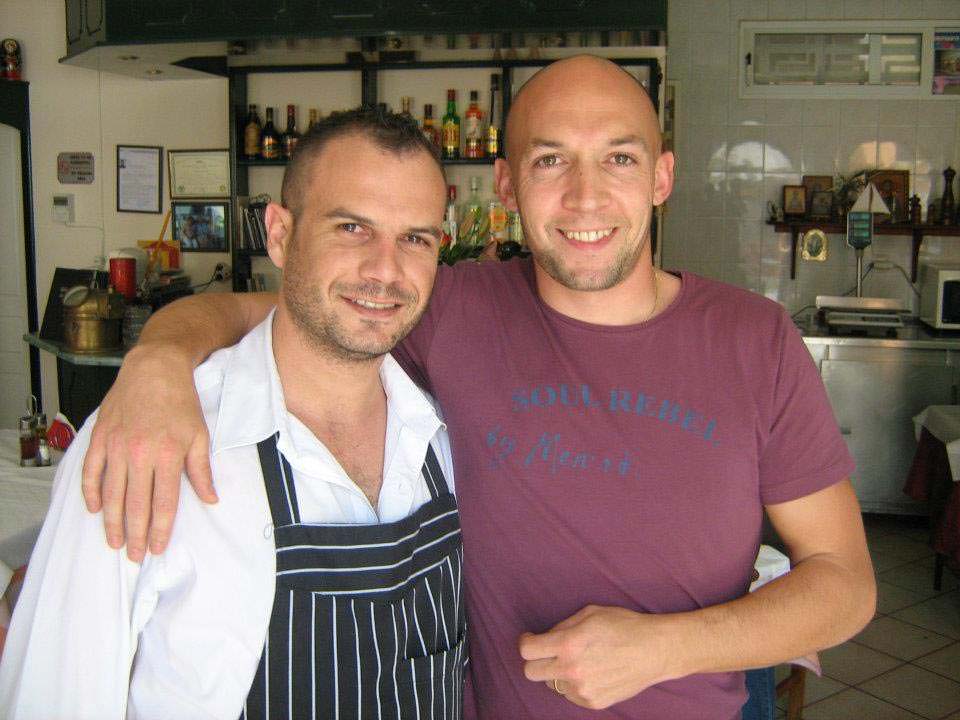
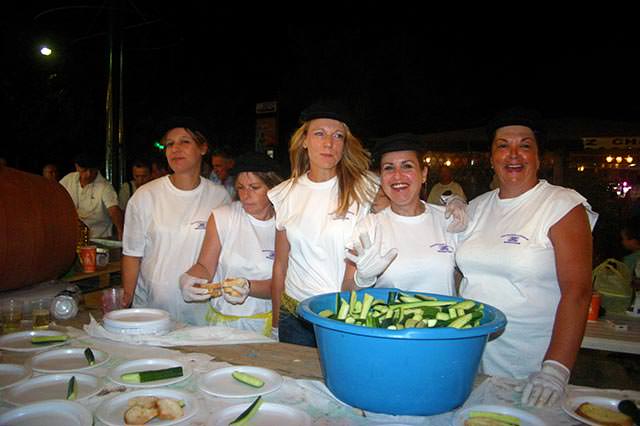
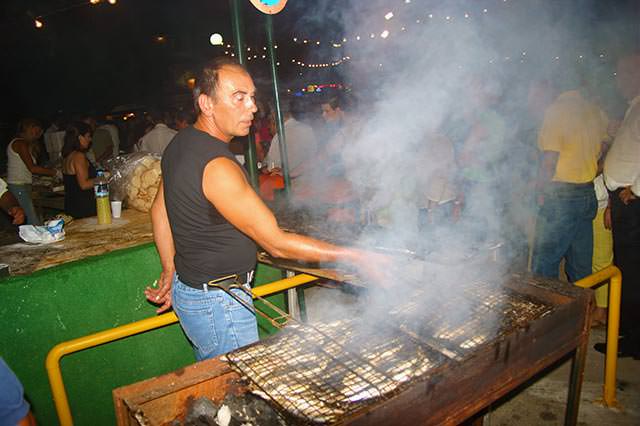
The Restaurant, grill room PAXINOS in Benitses Corfu
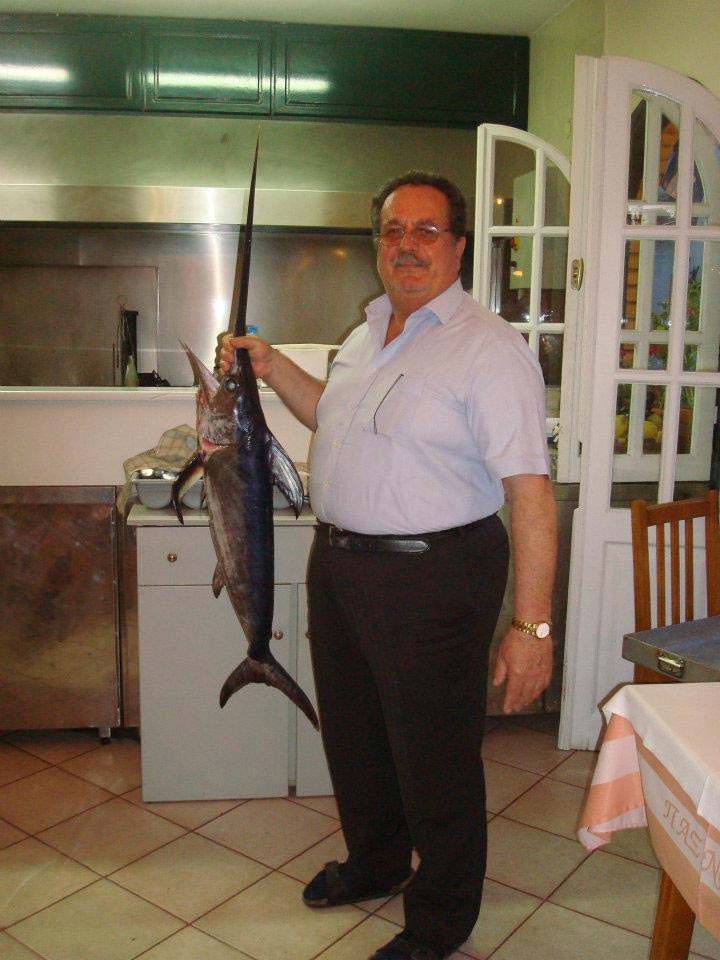
One of the best restaurants in Corfu, restaurant and grill specializing in the delicacies of local Corfiot cuisine and fresh fish.
We have our own production of wine and fresh vegetables from our garden.
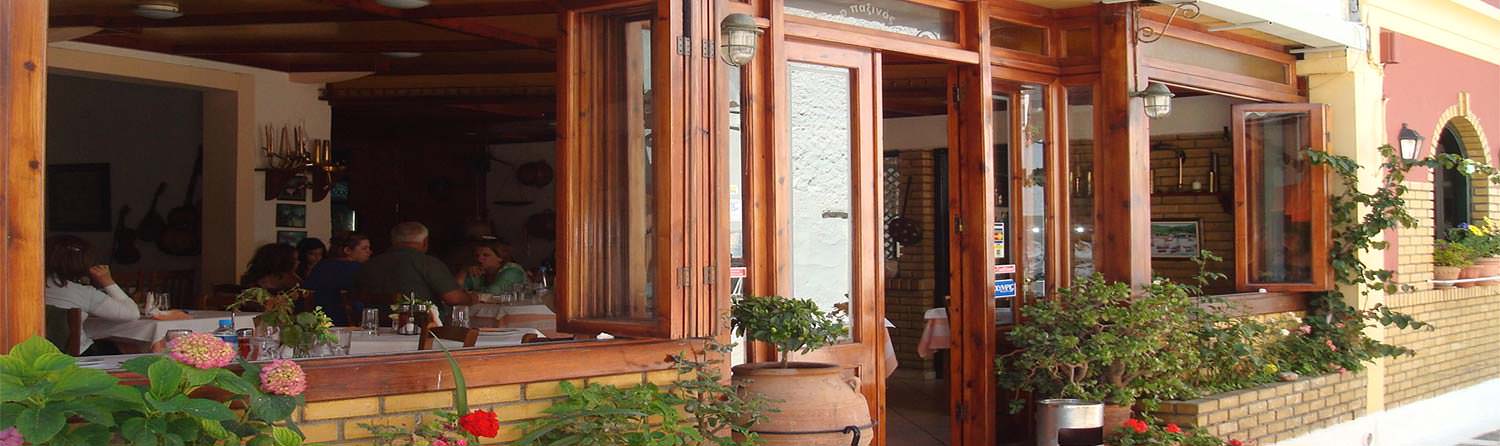
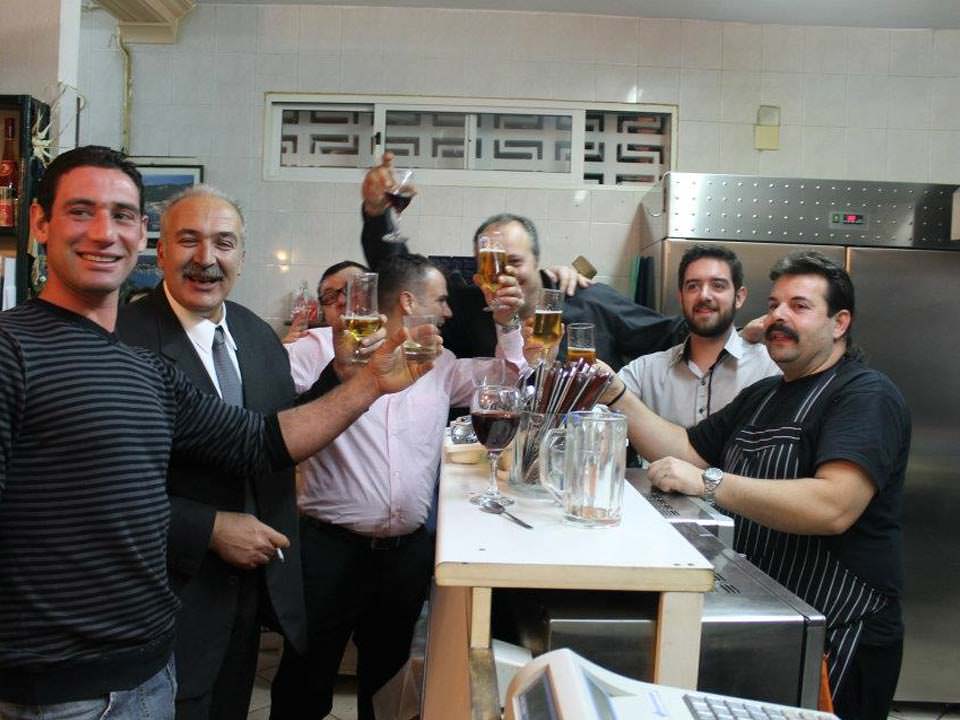
PAXINOS restaurant is a family-run in cozy traditional surroundings, decorated so that it blends perfectly with the flavors and keeps unaltered in time all old Corfiot recipes.
It operates all year round and is located right at the entrance of the village of Benitses and just 50 meters from the main road.
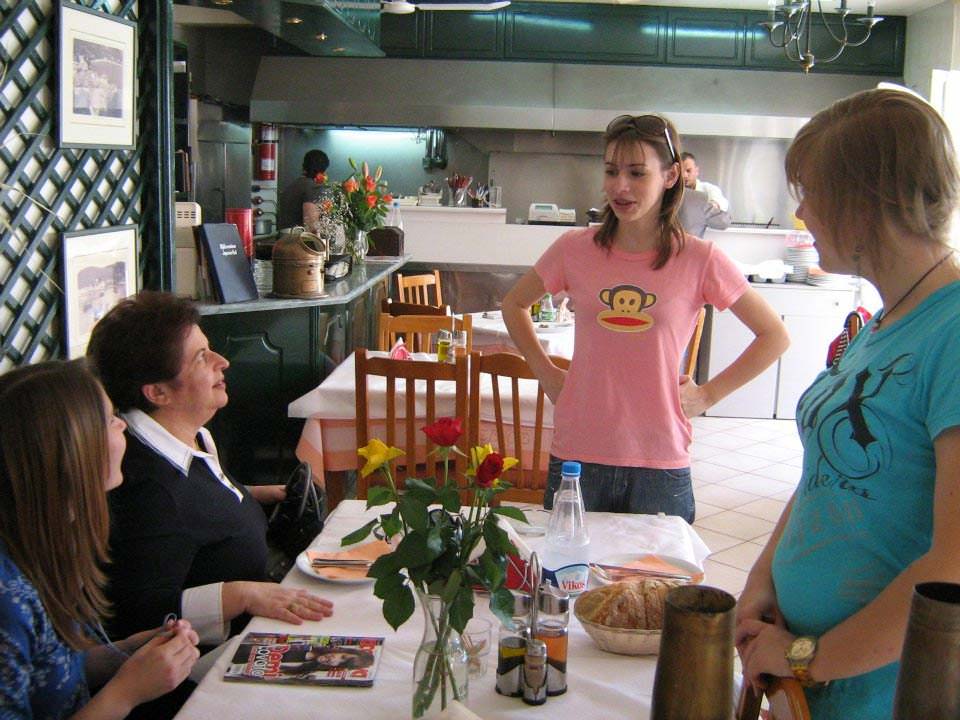
Our kitchen is located in the same room with the main hall creating a warm and friendly environment while just beside there are two more halls that can accommodate small events such as baptisms and weddings.
We are always available for any information on our phone at +30 26610 72339.
Benitses has a relaxed nightlife focused on bars, tavernas, and seaside drinks rather than big clubs. It’s a place for easy evenings, not all-night partying — but it also has a surprisingly lively past.
Today, you’ll find a handful of low-key bars and late-night spots, while the remains of old clubs tell the story of when Benitses was one of Corfu’s busiest party destinations.
What Is Benitses Like at Night?
Evenings in Benitses are typically slow-paced, with people gathering in tavernas, enjoying drinks by the sea, or taking relaxed walks along the waterfront.
While there are still a few places that stay open late, the atmosphere today is quiet and intimate, with most activity centered around dining and waterfront spots rather than dancing or clubbing.
This is a big change from the past. After the decline of mass tourism in the mid-1990s, Benitses gradually moved away from its busy nightlife scene and redefined itself as a more laid-back destination.
Today, the village focuses more on culture, scenery, and good food. Many locals returned to traditional activities like fishing, which now supports the fresh seafood served in the area’s tavernas.
For those looking for a more lively nightlife, Corfu Town and Kavos offer far more options within easy reach.
Benitses is not a party destination — it’s better for relaxed nights than clubbing.
In short, Benitses is about atmosphere, food, and relaxed evenings — not nightlife in the traditional party sense.
Benitses old clubs
Former nightclub in Benitses, historical photo
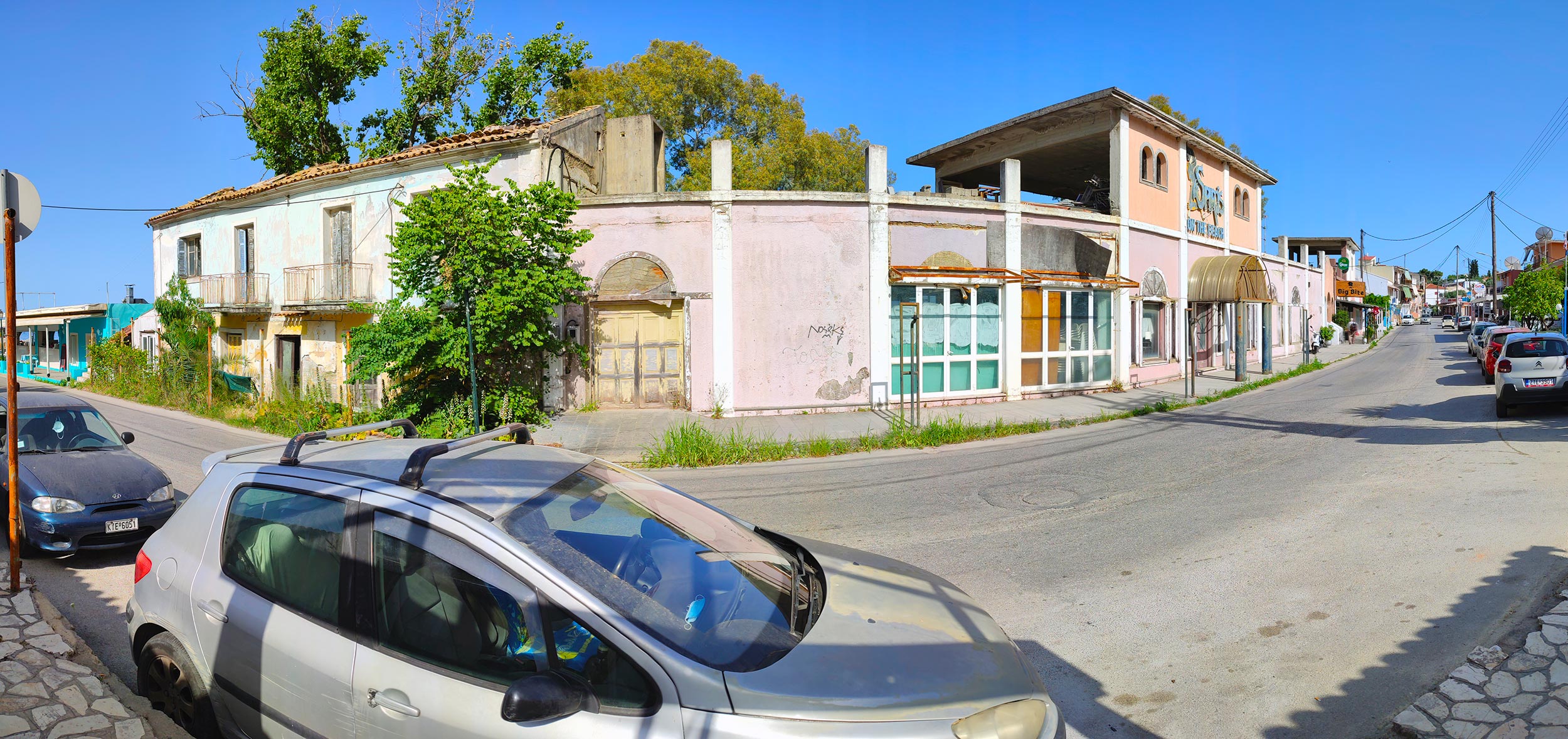
Today, nothing reminds us of the full-of-life and intense nights during past decades, when there were more than 100 bars as well as a dozen nightclubs staying open until early in the morning.
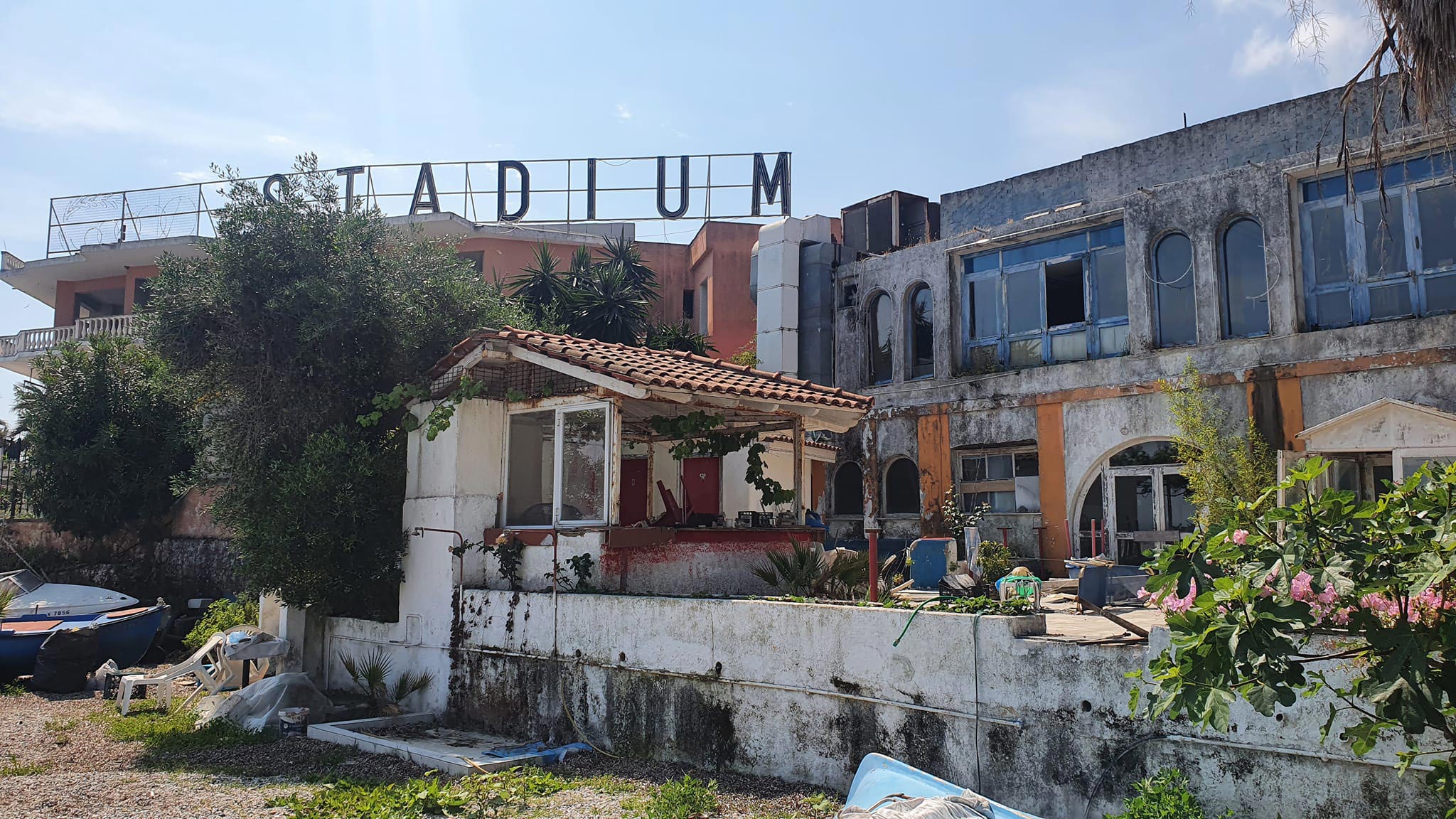
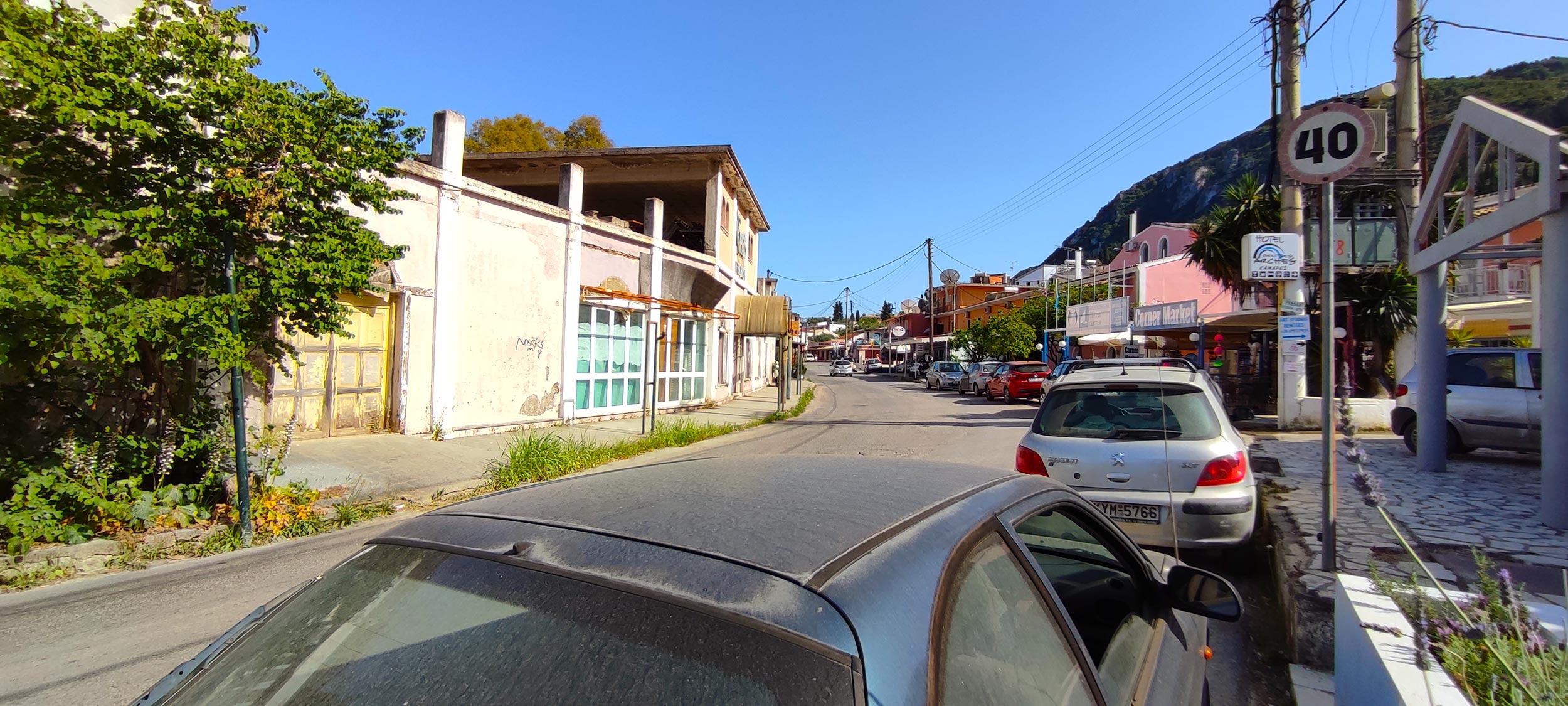
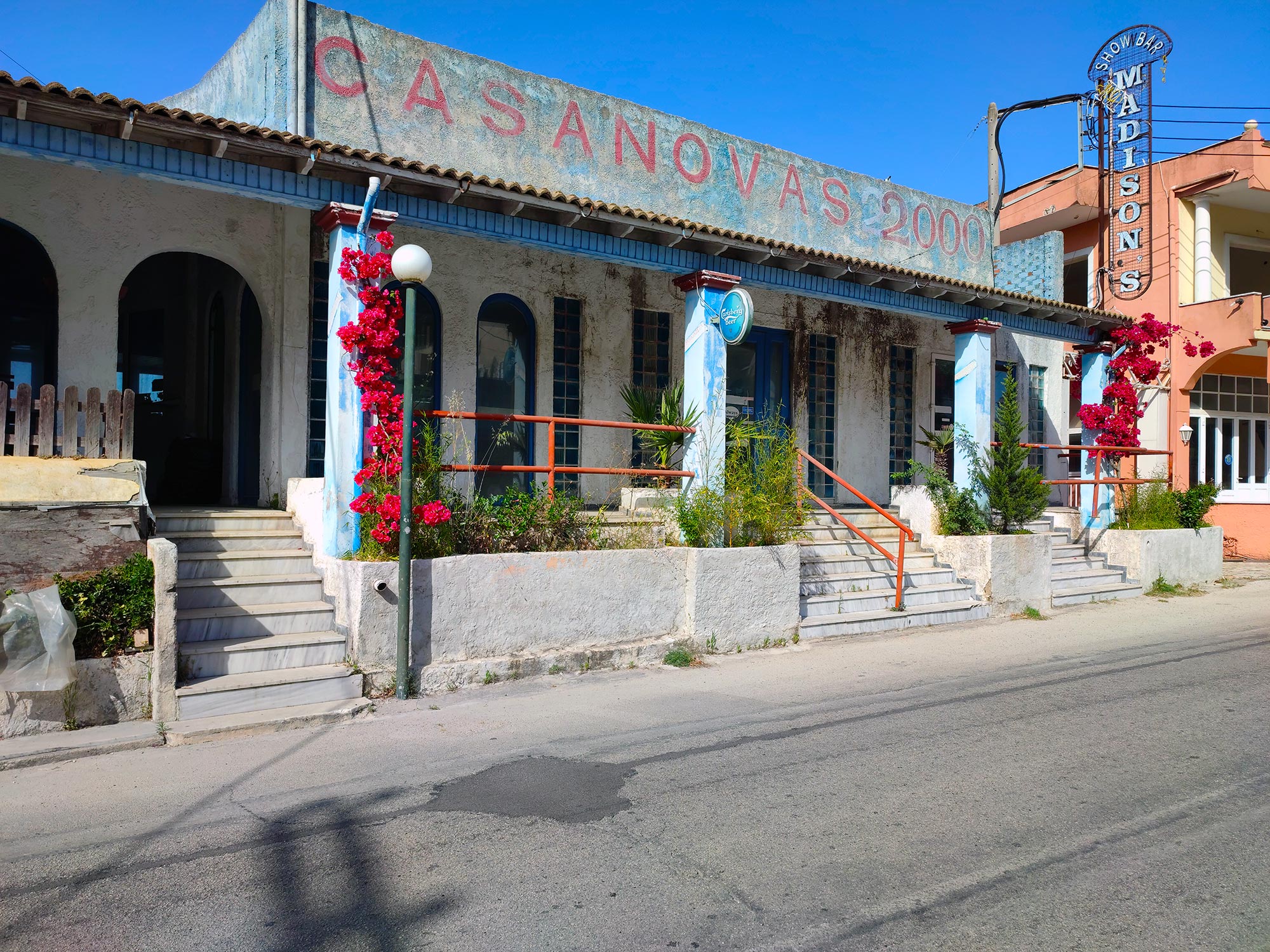
The waves of mass tourism that characterized the 1970s, 1980s, and 1990s are a distant memory. Witnesses of past decades are the remnants of abandoned discos next to supermarkets and restaurants.
Once upon a time, Benitses Clubs, only what is left…
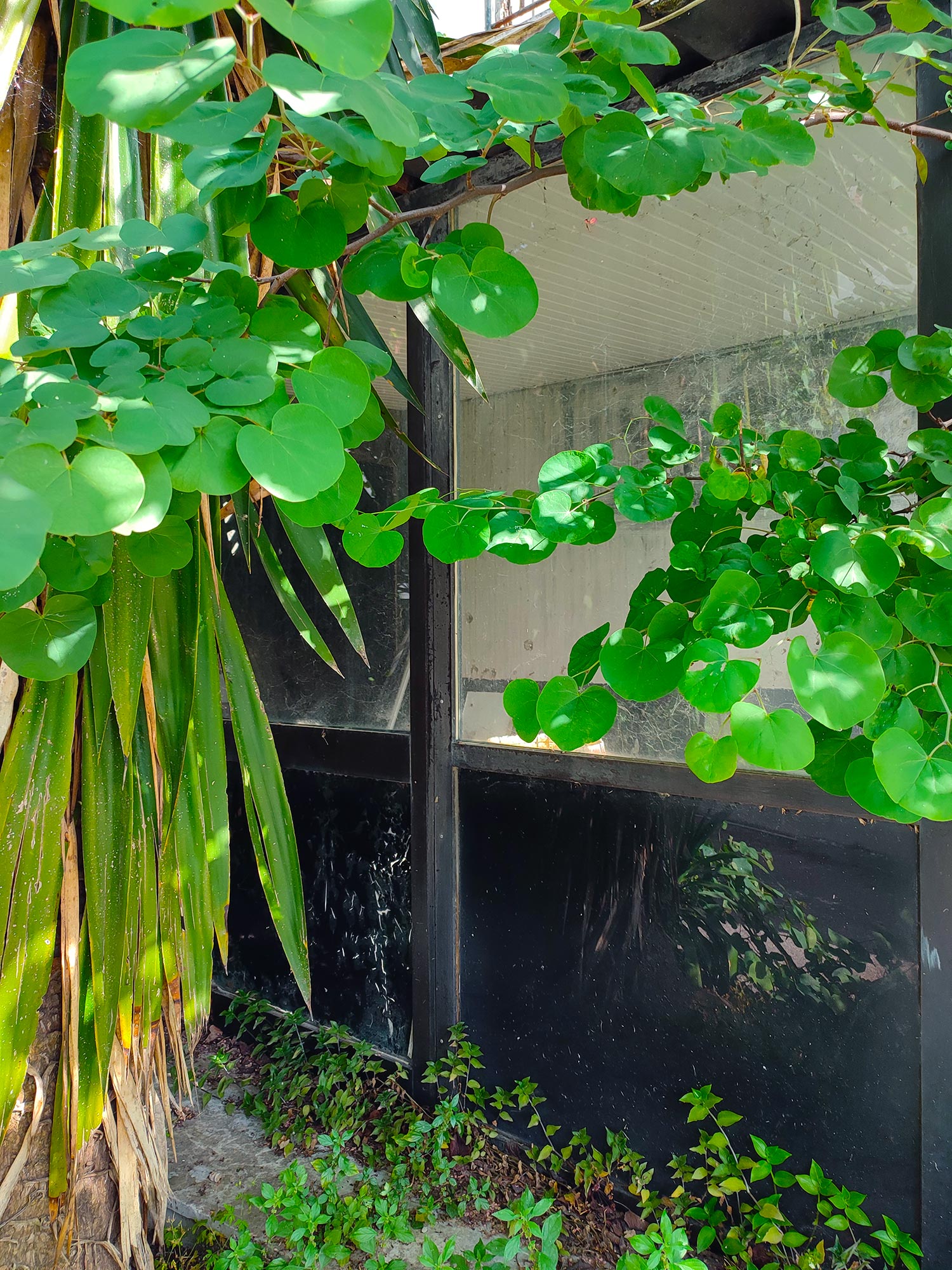
If you are wondering what this is below? It was the entrance of the Paradise Club, I mean, what is left now, there isn’t any better angle to take a good shot, as the place is surrounded by uncontrolled vegetation.
Disco Paradise – Closed during the 90s
Former Bars in Benitses
Rainbow Pub (Closed, Now is transformed to Loris restaurant)
Sunshine Bar (Still open, Bar with good music, crepes, and drinks during the day, stays open until late)
Shamrock Pub (Closed, now a souvenir shop)
Oxygen Bar (Closed since 2013)
Connections Internet Cafe (Is what its name says)
Casanovas (Closed after 2012)
Stadium Club (Closed and sold recently)
Barbayannis Cheers bar (Still open for the very few British visitors)
These are all we know about the clubs in Benitses. We may be missing some, as shops and bars are changing names and owners very frequently, and we heard that some new bars are opening.
NOTE: The bars-shops above are not clickable! They are just there for informational reasons.
If you’re looking for Corfu’s nightlife → click here to read the full Corfu Nightlife Guide.
Update October 20th, 2019: In recent years, Achilles’ race is no longer happening; this article has only historic value!
Achilleian’ race event in Benitses
The union of the Ionian Islands with Greece is officially celebrated here on May 21st when schools, armed forces, fire department, and other organizations parade in Corfu Town, accompanied by the bands of the City, and in the presence of local dignitaries.
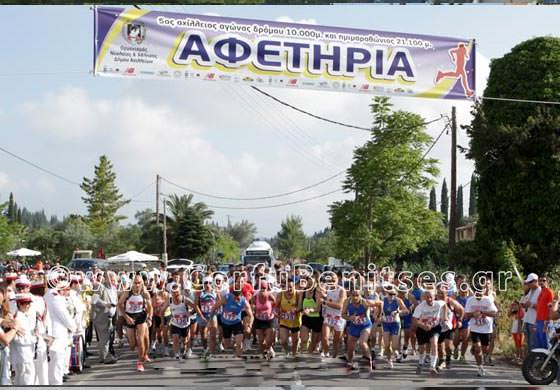
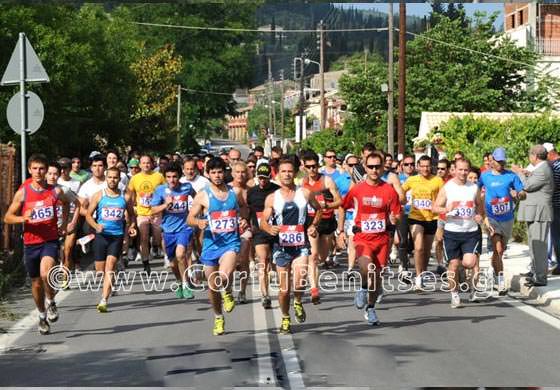
About ten days later, usually on the first Sunday of June, the annual Achillion race takes place, taking its name from the former municipality of Achillion.
A semi-marathon in which anyone can participate, regardless of sex or age.
The route passes through the villages of the municipality, and after about 21 km, the athletes finish in Benitses, where the awards and medals are presented.
Each year the race is upgraded, and last year, athletes from all over Greece took part, as well as many from Italy.
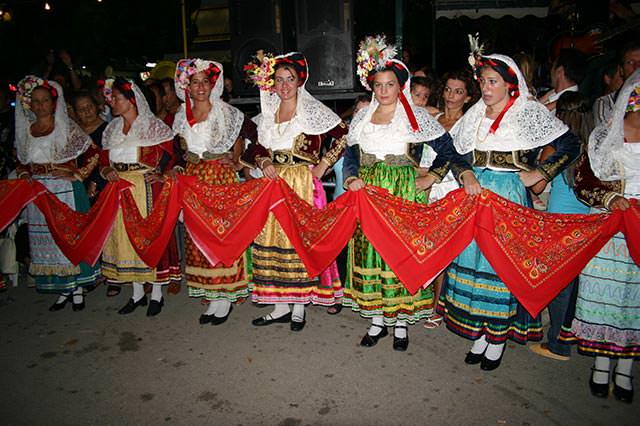
Following the event, there are performances by local dancers, singers, and musicians.
The Achilleian race is organized every year to develop sports incentives on the island of Corfu, where very few sporting events with an international character take place, but also to promote the diptych “SPORTS & FITNESS”.
Participants can include athletes from the Athletics Federation, sports clubs, Health Club Runners, veteran athletes, students, and fans of both sexes.
Great success had this year, the Achilleian or Achillion race in Corfu
Crowned with success for the fifth consecutive year, is the Achilleian Road Race of 10 000 meters and the semi-marathon of 21km, run for the first time on Sunday 23 May 2010, starting from the centre of Kynopiastes School and the nursery of the Municipality of Achilleion respectively, and both ending in the main square of Benitses.
Taking part in the race were athletes belonging to the powerful Athletics Federation, clubs, associations of runners for health, veteran athletes and general participants from Corfu and mainland Greece.
The participation of athletes from the city of Patras, which this year honored the game, was particularly impressive but runners also came from Trikala, Preveza, Igoumenitsa Agrinio, Athens, Kozani, Kavala, and for the first time about 60 athletes from Italy.
The athletes’ participation surpassed all expectations, as the number of participants exceeded 300 people.
Finishing first in the General Ranking and the race of 10, 000 meters in the men’s category was Thomas Nikas from Corfu and in the women’s category athlete Evangelia Donta from Corfu.
In the semi-marathon, in the men’s class, John Stamatopoulos of CMS Patras was first, and in the women category Gratsani Paraskevi from Trikala came first
The supporting organizations contributed significantly to the success of the event, primarily the Police Department of Achilleion, the Corfu branch of the Greek Rescue Team, the motorsports team of Achilleion, the Greek Red Cross, the clinic “THERAPIA”, the Primary Health Care of Moraitika (provided an ambulance during the race), the P.E.P.F.A.of the prefecture of Corfu, the Amateur Sports Association, the prefectural officer of Corfu Mr. Amoiridis, the CF Athletics Federation, the Association of Crete, the Corfu Athletic Association, the group of football and volleyball VOLIDA, the Sports Karate Association of Achilleion, the Athletic Club Kerkyra, the Cultural Association of Benitses and many citizens.
It must be noted that funding came from the organizing Region of the Ionian Islands and the NEW BALANCE, and GETIL (MESIMERIS – Skiadopoulos), Germanos, and Dionysis Chalikias.
Communication sponsors were the broadcaster TILEKERKYRA and radio stations RADIO CORFU, POP FM and LIFE RADIO.
There were also substantial contributions by the individuals: Mr. Nick Perros, Mr. G. Psailas, Mr. Nikos Moschos, Mr. Christos Vradis, Mrs. Stamatella Pouli, Lambrini Gioti and Elena Poulimenou as members of the Organizing Committee.
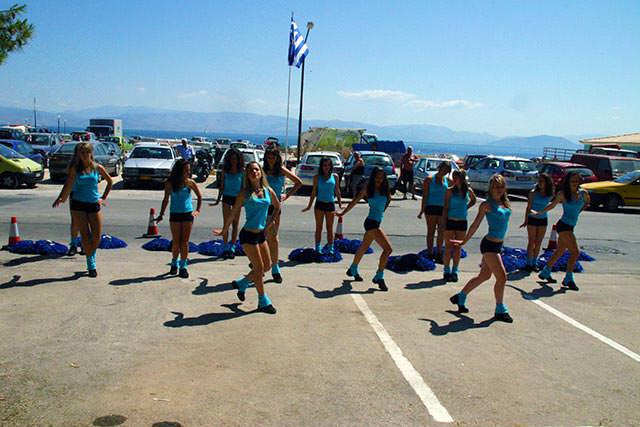
The awards ceremony included dancing by the cheerleader Schools of Nante Rizos and Mika Giourgas and the Dance Department of the Cultural Association of Benitses, while the signal for the race’s start was given by the Mayor of Achilleion Mr. Erotokritos Karidis and the President of O.N.A.D.A Mr.Spyros Kardamis with the presence of the Philharmonic bands of Gastouri and Kynopiastes.
It is worth noting that during the awards ceremony for the winners O.N.A.D.A. plaque honoring Paul Skordilis recognizing his contribution to sports events on the island was unveiled.
GREEK REPUBLIC FROM THE PRESS OFFICE OF THE MUNICIPALITY OF CORFU
6th Achilles Road Race of 10,000 meters and semi Marathon of 21,100 meters (06/06/2011)
Held last Sunday (5/6/2011) the 6th Achilles Road Race of 10,000 m and the semi Marathon of 21,100 m., starting in the center of Kynopiastes School and nursery of the Municipal Unit of Achilleion respectively and finished at the main square of Benitses.
In the event took place athletes belonging to the power of Athletics Federation, clubs, health associations runners, veteran athletes and fans from Corfu and mainland Greece.
Impressive was the participation of athletes from Patras honored this year of struggle, but also from the cities of Ioannina, Preveza, Igoumenitsa, Athens, Thessaloniki and about 100 athletes from Italy.
The athletes exceeded their participation in 250 and reached the finish of around 200 of them.
Finished first in the General rank in the path of 10,000 m in the category of men, Nikas Thomas from Corfu and in the category of women Koukakis Catherine, while on the road of 21,100 m in the category of men finished first the athlete John Stamatopoulos athletic federation of Patras, who scored a record, and in the category of Women Kourlesi Joanna.
The success of the organization contributed substantially, the Police Department of Achilleion and Corfu Municipal Police, Corfu Annex of the Greek Rescue Team, the motor Sports team of Achilleion, the Hellenic Red Cross, the General Hospital of Corfu, Corfu General Clinic Primary Health Care at Moraitika (provided an ambulance during the race), the Department P.E.P.F.A. Corfu, SP Athletics Federation, the Association of Judges, the Corfiot Athletic Club, the football team VOLIDA, the Sports Karate Association of Achilleion, the Cultural Associations of the area and many residents.
It should be mentioned that contributed to the organization: the NEW BALANCE, the DIELLAS and Accounting Office of Georgia Mitsi, while media sponsors were the Broadcasters CORFU CHANNEL and START TV and radio stations STAR FM, RADIO CORFU, POP FM, KYMA FM, IONIAN RADIO, ANTENNA CORFU, new radio, and LIFE RADIO.
The awards ceremony included dancing cheerleaders from the Rizos Nantes and Mika Giourga schools of Dance and the Dance Department of the Cultural Association of Benitses In awarding the medals and cup winners attended the Aldermen Erotokritos Karidis, Barbara Vlassis, Anastasios Potamitis, Alexandros Poulis, President of the cultural organization, sport and environment of the City Mr. Spyros Pandis, and the President of the Local Benitses Community Mr. George Spinoulas.
7th Achilleian (Achillion) Road Race of 10,000 meters and a semi-marathon of 21,100 meters (03/06/2012)
The 7th Achilleian race took place on Sunday 3 of June 2012, at 9 a.m.
The starting point for the seventh Achilleian race of 10,000 meters was at the School of Kynopiastes village, the athletes followed the road to Ponti’s crossroad, then they reached the Vrioni area and arrived at Chrysida, then Perama, Kaiser Bridge and finally ended at the square of Benitses.
The 7th Achilleian Semi Marathon of 21,100 meters was started at the municipal nursery Unity Achilleion on the National road, the athletes followed the direction to Ponti area, crossing the villages of Kastellani, Kouramades, Kalafationes, Agios Prokopios, and then through Lefkimis National road reached Perama, Kaiser Bridge, and finished at the square of Benitses.
See the results of the seventh Achilleian race here:
In Benitses, the local community events have always been based on tradition, and decades ago were as spontaneous and natural as the other everyday events of life.
The feast of Saint Marina was a spontaneous celebration centered around her church, which is the oldest in the area.
Children waited impatiently for the toys that were laid out on benches around the church.
We also remember watching the children leaping over the fire on the feast of St. John on June 22, and also the traditional winter holidays around Christmas.
Time has brought inevitable changes; of course, now everything has become more organized, lasts longer, and is perhaps more commercialized.
It was founded in 1982 by some young people to promote and preserve traditional customs, and raise awareness of the importance of these, especially for young people. Today it doesn’t exist.
Blessing of water and other processions
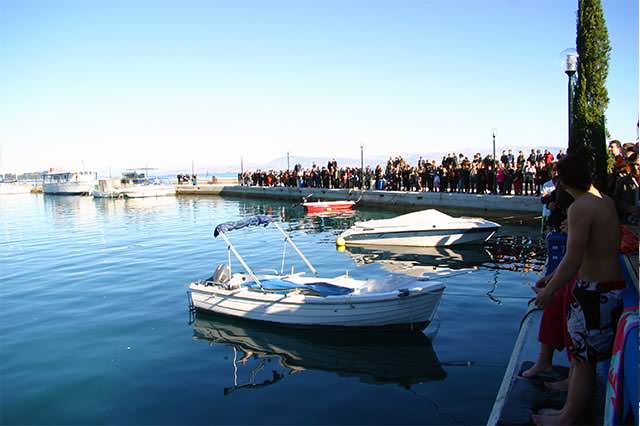
The service for the Blessing of water is organized with solemnity on the feast of the Epiphany, as is the procession of the Epitaphios on Good Friday.
On Easter Monday and on the following Sunday, there are processions, following a service in the small chapel of Agios Nikolaos in Tsaki, southern Benitses, and ending in the main square.
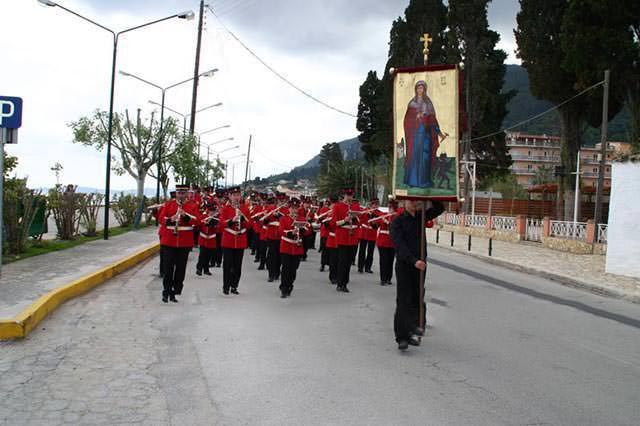
Both processions are accompanied by the band of the Municipality of Achilleion.
Resurrection on Easter
The Resurrection on Easter Saturday is now followed by a mass firework display.
This is a new development.
The display starts at midnight and is as spectacular as the famous one in Esplanade Square’s bandstand in Corfu Town.
The fires of St. John
On 22nd June, the day of St. John, the Women’s Cultural club of Benitses has undertaken the responsibility to organize the celebration of his feast day with Lampatines (jumping over fires).
The Lampatines are the fires of St. John, as we call them in the Ionian isles.
Anniversary of the Union with Greece – The Achilleian race
In recent years, the union of Corfu with Greece in 1864 has been officially celebrated here on May 21st, when there is a parade of the schools accompanied by the band of the City in the presence of officials.
One or two days later, depending on climatic conditions, an annual Achilleian race has been established, a semi-marathon race in which anyone can participate regardless of age.
Update October 20th, 2019: In recent years Achilleian race is no longer happening.
The church of Agia Marina was built on the banks of the river that once passed through the village, where now is the road that goes through the old village.
The river was used by the boats that carried flour to the mills, which were sited near the present aqueduct.
The church remained in the same place after the river was diverted elsewhere.
The feast of Saint Marina lasts for two days (July 16 & 17), with plans in the future to lengthen it further.
The Itinerant stallholders arrive early in order to get the best positions.
Dances and songs go on until early morning hours, and for those two days, Benitses is packed with visitors from other parts of the island as well as from further away.
During the first ten days of August, the festival of the celebration of sardines was organized.
To celebrate this small fish sounds far-fetched, but if we remember that Benitses once was a fishing village, the largest in Corfu, and that the people in the past lived by fishing, they had every right to create a celebration for the most popular fish, the sardine.
On the day of the feast, large quantities of sardines were cooked and offered free to all visitors, who could also enjoy dancing to the music of the various traditional bands and partying till late.
Update October 20th, 2019: In recent years and for various reasons, the custom has weakened, and the holiday is not happening.
Let’s clarify. When we talk about Roman baths in Benitses, don’t picture the grand public Roman baths found throughout the ancient empire.
Here, we’re referring to just a simple house in ruins once owned by a relatively wealthy Roman citizen who used it as a summer residence almost 2,000 years ago.
It was a typical Roman house with running water, hence the exaggerated title “baths,” and adorned flooring suggesting its affiliation with a wealthy family. As you notice we never use this title, we call it as it is, a Roman house with pipes for running water.
The floor is from a later period and features an elaborate arrangement of black and white marble pieces. It’s the only significant remnant of the building, but unfortunately, it is now buried underground and inaccessible to visitors.
The decision to bury the floor again and fence the site stemmed from tourists’ behavior, as they used to take small pieces of the floor as souvenirs. This led the Antiquities Authority to bury it, preserving what remained after the looting by “civilized tourists,” (those who now know how to write ‘good reviews’ on this… Tripadvisor) and enclosing the area with a metal fence.
This was deemed necessary as the archaeological value of the site wasn’t considered high enough to justify a permanent guard.
Given the sheer number of ancient, buildings in Greece, assigning guards to all is impractical. In essence, the site holds minimal archaeological value.
However, the orchard and the surrounding area are systematically cleaned 4-5 times a year to prevent the vegetation from engulfing the building within a few months.
This information is shared to set realistic expectations for your visit. We’ve come across amusing reviews on Tripadvisor that highlight the importance of managing expectations.
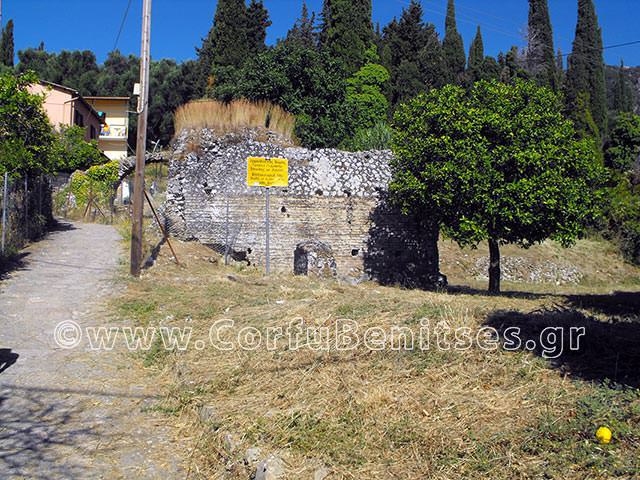
There are remains of a Roman villa with baths on the Kapsokavadis family land, in the centre of the village of Benitses.
At the East end, there is a large hall (Caldarium in Latin), with dimensions 4.70 x 6m, its entrance is from the north and the housing is based on arches (ride).
The walls are almost one meter (90 centimeters) thick and are built of the same size bricks and mortar, in some places the stones are irregular, elsewhere there are bricks and mortar, and preserved at the bottom are sections that were probably made of marble.
In the four corners and the centre of each wall are clay water pipes.
The floor has a very colorful mosaic with geometric jewels and has a rectangular opening communicating with the basement area (hypocaust) whose central area was surrounded by a vaulted corridor.
In the South wall, there is a small semicircular niche, its floor is lower than the rest and separated from the rest by a low wall.
Left of the semicircular apse there is a rectangle.
At the west end, there is a corridor (with dimensions 0.90 X4, 80m.) that was barrel-vaulted.
Southwest of the first room there is another arched room (Frigidarium), whose dimensions are 4,40 X5,50m.
The floor is of a later period and contains pieces of black and white marble. On the north side, a low wall separates this room from the water tank to the north whose base is 2.50 m lower down.
Other large areas have been partly excavated in the adjacent property to the west.
Of the top of the building, nothing has been saved, and of course, there is no trace of any roof.
How to reach the Corfu Roman villa with baths?
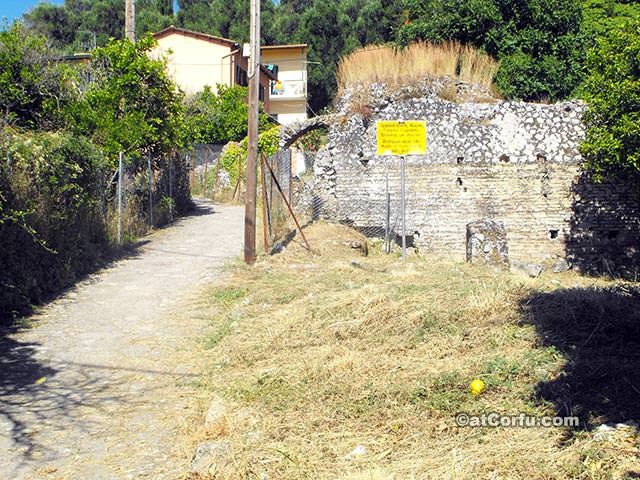
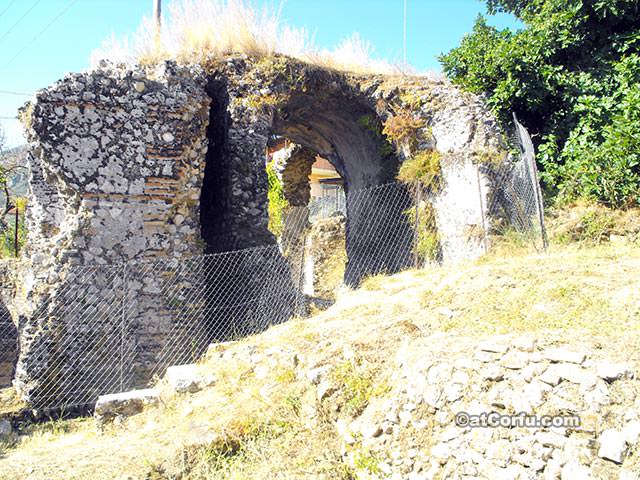
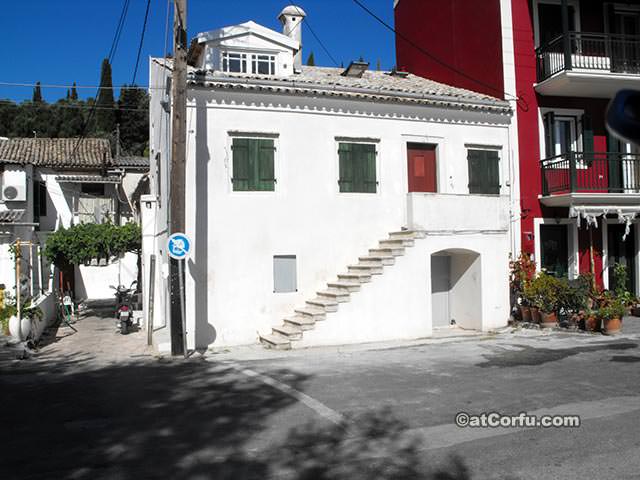
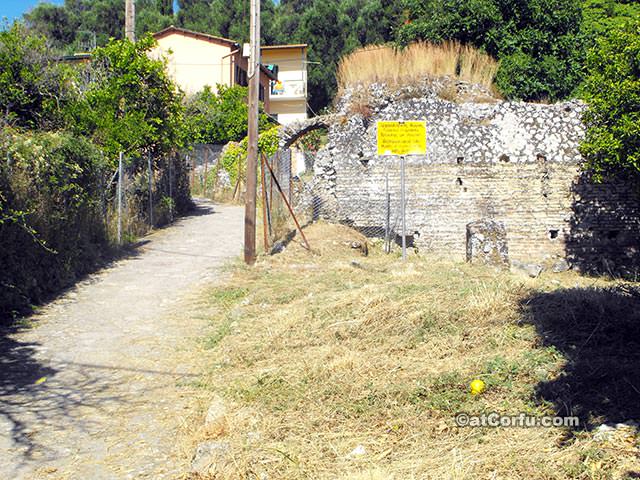
Because the access to the monument is a bit weird… as it is hidden behind houses, we prepared a little guide with photos of the trail that leads there, from the main road right up to the monument.
Somewhere in the village’s inner main street, just opposite the entrance of the Marina, you’ll spot Captain Octopus restaurant on the left (first picture) and the old characteristic renovated house of the second photo on the right.
You must walk to the end of the yard between those two and at your right-hand side, you will find the narrow path of the third photo.
Don’t be discouraged, follow this path and after 3-4 yards on your left side, you will see the narrow street of the fourth photo.
Arriving at the end of it you will find an opening as shown in the fifth photo, after 50 more yards on your right you will find the baths as they look in the last picture.
Roman remains around the island
Roman remains are not something many visitors associate with Corfu, but traveling around you can get glimpses that show you that their occupation was definitely not a quick holiday stop!
Many conquerors have left their marks on the island, the history of Corfu is a fascinating glimpse into power struggles, and the rise and fall of dynasties.
The Roman period is less well known than later times but was an extremely important time for the island.
Legend says that Nero watched a play in the theatre at Kassiopi– now disappeared sadly.
There are however Roman remains to be found in many villages around the island, Acharavi, Moraitika, and Benitses to name but a few. Indeed in Benitses, the remains of a splendid Roman bath with mosaics can be seen.
One of the most famous naval battles in history, in Actium, where Augustus Caesar (then Octavius) destroyed the fleet of Antony and Cleopatra, was fought in the seas just south of Corfu, and Caesar’s victory was celebrated by building a large city near the modern town of Preveza, called unsurprisingly Nicopolis, which in Greek means Victory City (Niki = Victory & Polis = Town).
At the northern end of the Corfu channel, on the Albanian coast, is located the remains of Butrint, an important archaeological site containing Roman remains, as well as relics of older Greek civilizations that have colonized this coast.
Corfu has always been very important strategically, as the entrance to the Adriatic Sea.
The main road to Rome, the Appian Way, began at Brindisi, the Italian port a bit to the north of Corfu, where today’s ferry passengers also disembark.
It was also the gateway to the eastern empire and for ships needing to refresh supplies of food and water, it was an essential stop.
Contains information related to marketing campaigns of the user. These are shared with Google AdWords / Google Ads when the Google Ads and Google Analytics accounts are linked together.
90 days
__utma
ID used to identify users and sessions
2 years after last activity
__utmt
Used to monitor number of Google Analytics server requests
10 minutes
__utmb
Used to distinguish new sessions and visits. This cookie is set when the GA.js javascript library is loaded and there is no existing __utmb cookie. The cookie is updated every time data is sent to the Google Analytics server.
30 minutes after last activity
__utmc
Used only with old Urchin versions of Google Analytics and not with GA.js. Was used to distinguish between new sessions and visits at the end of a session.
End of session (browser)
__utmz
Contains information about the traffic source or campaign that directed user to the website. The cookie is set when the GA.js javascript is loaded and updated when data is sent to the Google Anaytics server
6 months after last activity
__utmv
Contains custom information set by the web developer via the _setCustomVar method in Google Analytics. This cookie is updated every time new data is sent to the Google Analytics server.
2 years after last activity
__utmx
Used to determine whether a user is included in an A / B or Multivariate test.
18 months
_ga
ID used to identify users
2 years
_gali
Used by Google Analytics to determine which links on a page are being clicked
30 seconds
_ga_
ID used to identify users
2 years
_gid
ID used to identify users for 24 hours after last activity
24 hours
_gat
Used to monitor number of Google Analytics server requests when using Google Tag Manager