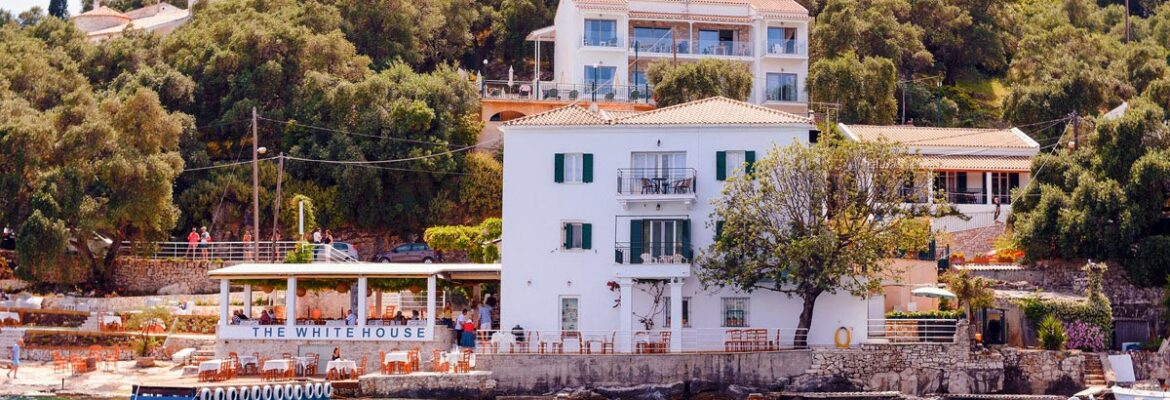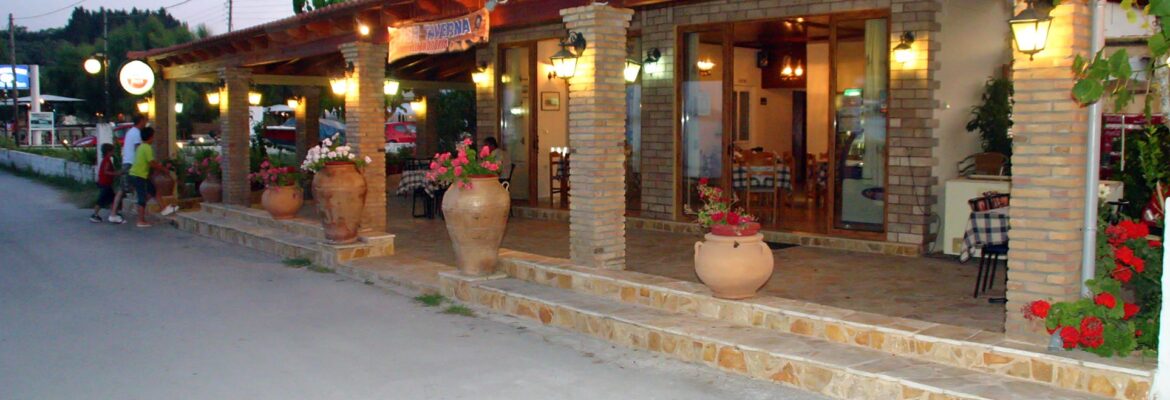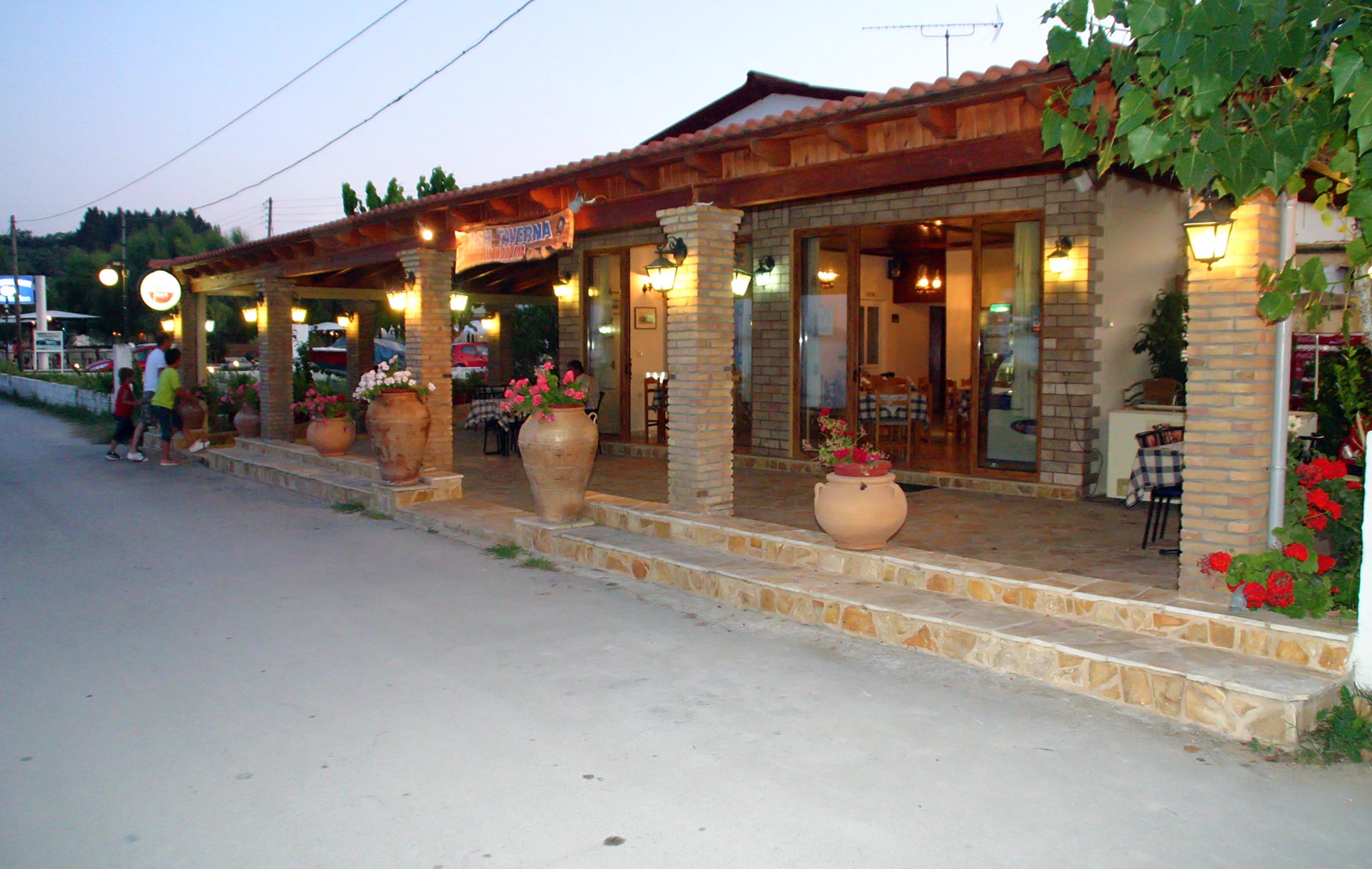

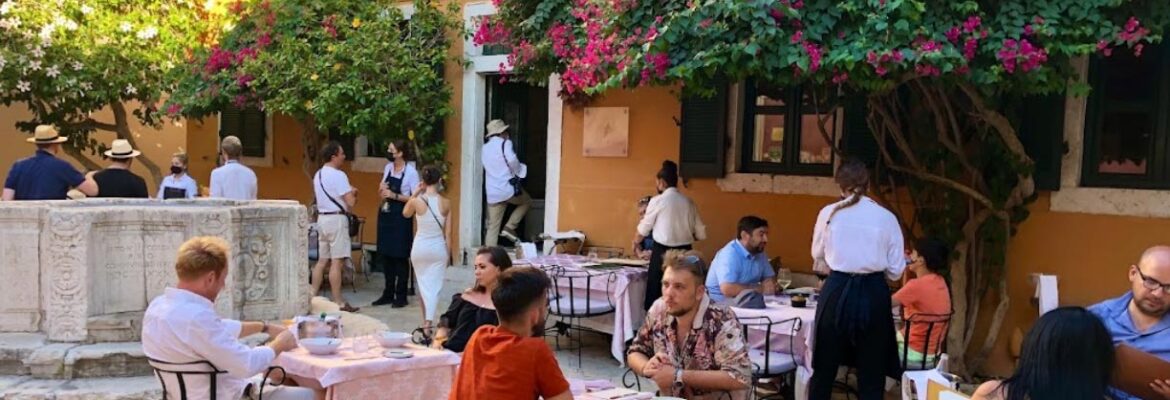
Limnopoula fish taverna is located by the sea. In the small village of Petriti in the south of Corfu, which is a hub for trading fresh catches in its port.
It is one of the best taverns in all of Corfu, especially for fresh fish. And in a relatively quiet location without the hustle and bustle of busy tourist centers.
Limnopoula combines traditional cuisine, fresh fish, and all kinds of seafood, wonderful sea views, and amazing service.
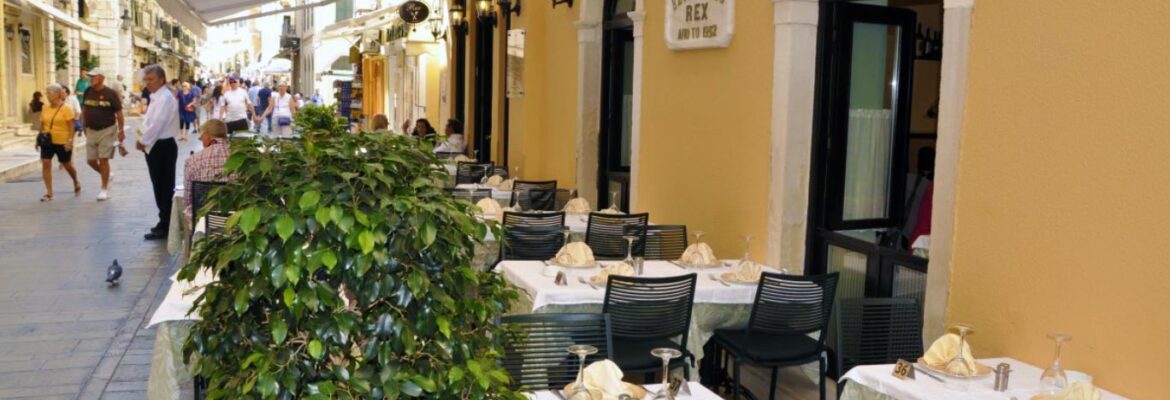
What is the reason to visit “REX”? Because you will find people passionate about the food they prepare, and you like the traditional Greek cuisine.
REX restaurant
One of the best restaurants in Corfu town, it is located on 66 Kapodistrias street, next to Liston and the Esplanade square, hence in the heart of the old town.
A luxurious restaurant with a beautiful environment in an elegant interior design.
Rex Restaurant, with its traditional Greek cuisine, has been a reference point in the gastronomy of Corfu since 1932!
The people in the Rex restaurant are passionate about the food they prepare. They use the finest ingredients and apply the most advanced techniques possible.
Each menu creation is meant to become a culinary journey, not just a collection of various dishes. It is created with passion and dedication, and they love to share it with their customers.
REX restaurant
Kapodistriou 66, Kerkira 491 00
Phone: 2661 039649
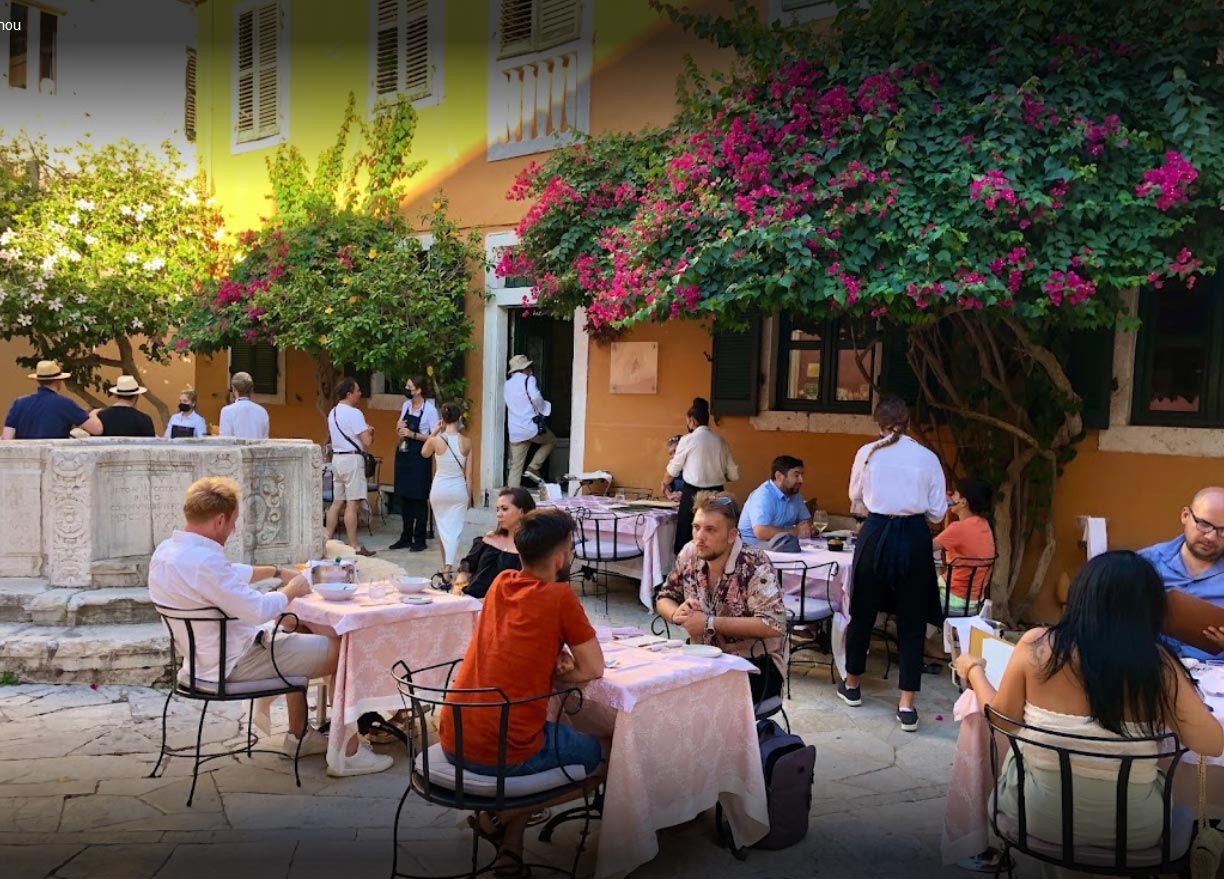
Why in Paradosiakon? Cause the Corfiot flavors and traditional recipes are taken from grandma’s drawer, following the traditional way of cookery and using pure fresh ingredients carefully selected.
Paradosiakon restaurant-Spilia Corfu
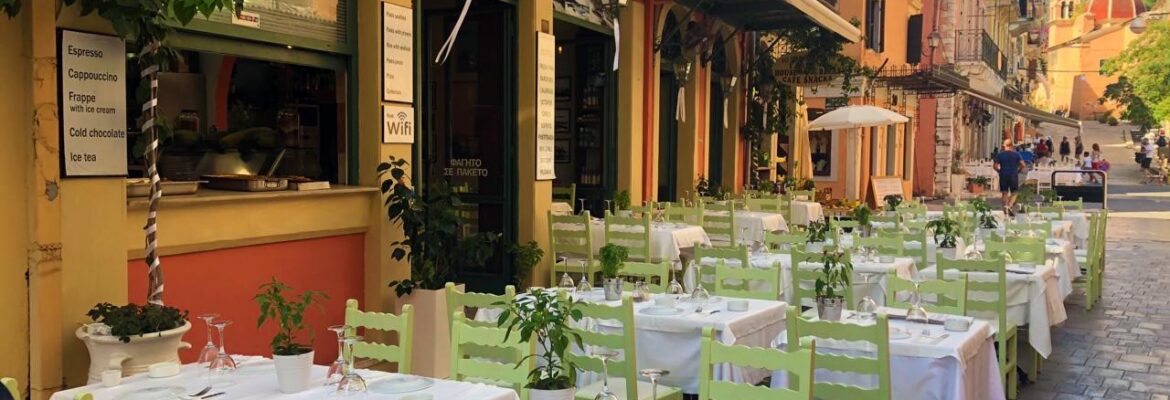
Paradosiakon (is the Greek word for “traditional”) restaurant is another historic restaurant inside the heart of the old town of Corfu.
It is one of the best traditional taverns since the decade of the ‘30s. You will find it in the Spilia region of the Old Town.
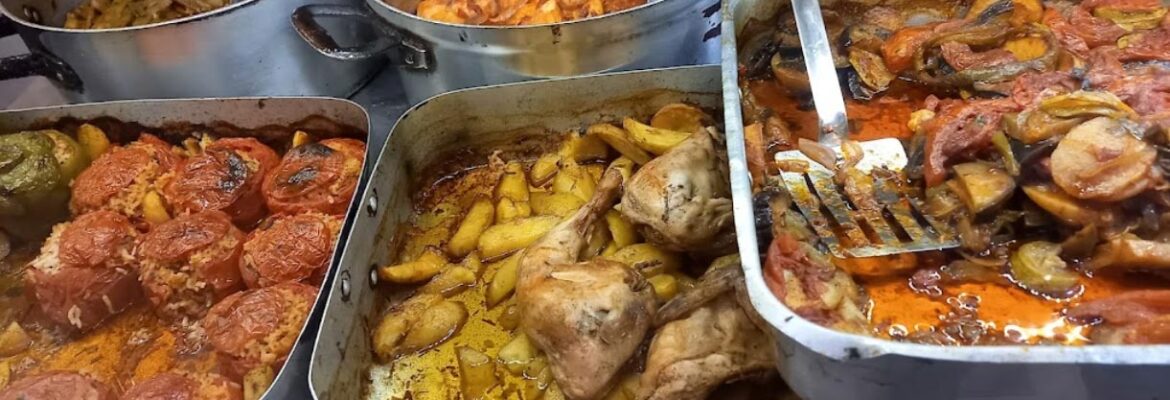
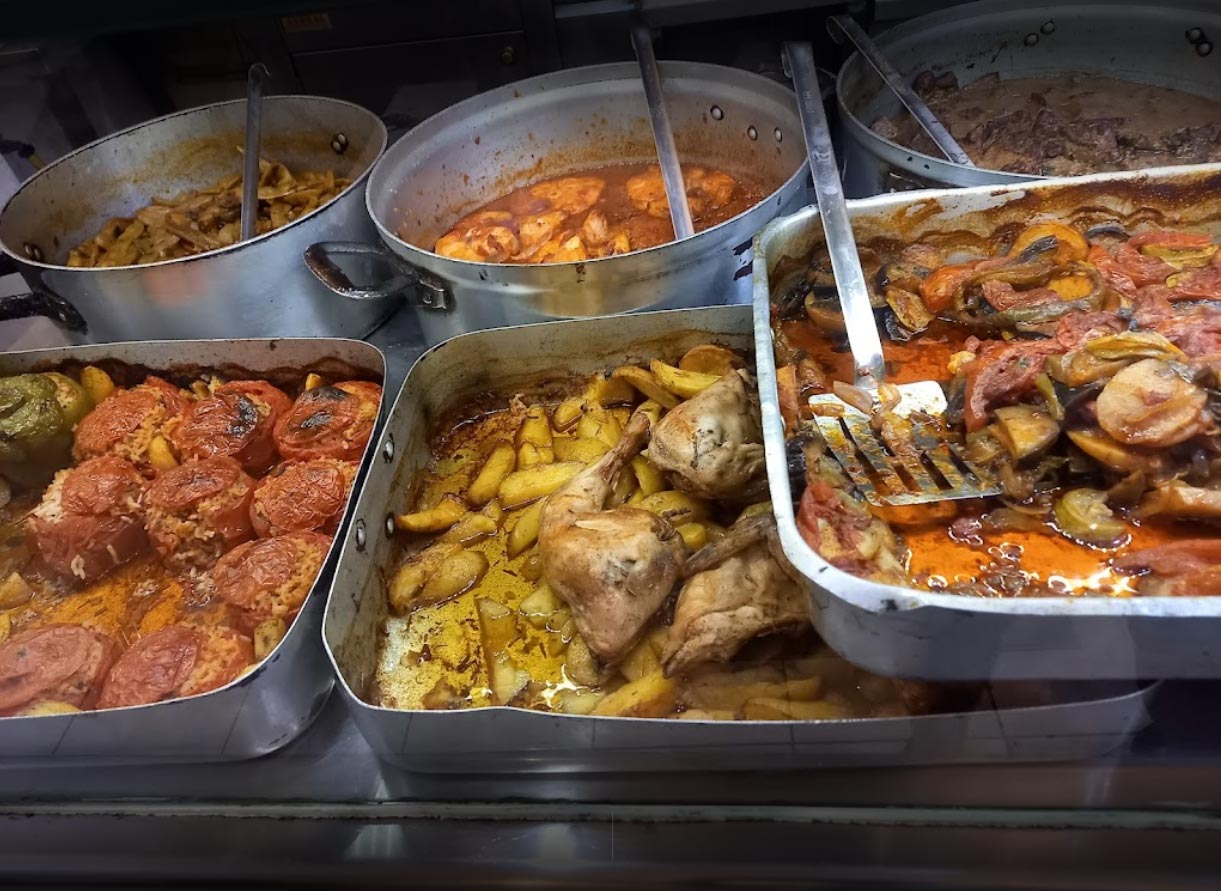
Here, the Corfiot flavors and traditional recipes are taken from grandma’s drawer, following the traditional way of cookery and using pure, fresh ingredients carefully selected.
Its location creates an ideal atmosphere for a meal in Corfu town.
More specialties worth trying are the fresh fish and the local meat on the grill.
Why go to Nino’s restaurant? Cause you will enjoy the real Corfiot flavors and traditional recipes without compromises in fresh ingredients at very cheap prices.
Ninos Restaurant-Corfu town
If you want to try real Corfiot specialties such as sofrito and pastitsada, all you have to do is plunge into the enchanting cantons of Corfu, at 44 Sevastianou Street.
Ninos is a Traditional tavern with excellently cooked and grilled food in the city center, a 25-minute walk from the port of Corfu and 10 minutes from the main square.
A story that Mrs. Chrissi, an amazing cook from Corfu, started writing several decades ago, is a must for anyone who comes to the island.
Today, the business is run by Nino’s family, and this can be seen in every aspect. Very warm, family atmosphere, with their wine, all excellently cooked by Natassa’s hands, and perhaps the best souvlaki on the island.
Very economical, while maintaining very good quality, in a traditional space, either inside or in the canton outside during summer.
Why Tripa Taverna? Because at last, you need to meet Corfu’s real character concerning the traditional gastronomy, and to try everything the Corfiot cuisine has to offer.
And in the end, something out of the ordinary and unique.
We leave the busy and noisy beaches and enter the interior of the island. In an old traditional village where the soul of Corfu lives, in Koinopiastes, somewhere in the middle of Corfu, not far from the city.
In Taverna Tripa, as we used to call it. (Tripa means a hole in Greek, as it looked like a hole when it first opened, a couple of centuries ago.)
This tavern is a remnant of other times because here we will find the authentic flavors of Corfu, definitely one of the best Corfu restaurants.
The place is reminiscent of past centuries, and the environment is pleasant and completely peculiar. The decoration has remained untouched since … 1900 CE! Something that will impress you at first, but is just the decoration, reminiscent of something like an 18th-century kafenion.
The interior of the store, along with the bottles of rare wines and drinks that seem to have been there for centuries, is surreal. There are many photos of famous people from the 19th century who have tasted the flavors of the store.
You will see former prime ministers, actors, tycoons, shipowners, Greeks, and foreigners because this taverna has a history … it seems that everybody has gone through Tripa…
The staff is very warm and the wine is wonderful. As for the food, it is just uncatchable !! With authentic ingredients and incomparable flavors, it is the ultimate traditional Corfiot cuisine. The authentic Corfiot pastitsada is … Hell.
Some days, it has live music in the cozy outdoor area, so some nights it gets even better.
Details, here you do not eat by menu, they bring you everything that the store has, like the good old days, you just keep on the table as many dishes as you want, or your eyes like, and send back those you don’t like.
So, remember a tip to follow: Be sure to go on an empty stomach, for your good!
Zeus, the mighty king of the gods, was not only the ruler of Mount Olympus and wielder of thunderbolts but also a notorious lover whose many relationships, both divine and mortal, shaped the very fabric of Greek mythology.
His affairs spawned legendary heroes, divine figures, and even entire dynasties, blending the lines between gods and humans.
This complex network of relationships is as vital to understanding Zeus’s character as it is to the tales and myths themselves.
Hera: The Jealous Queen and the Long-Suffering Wife
Hera
At the heart of Zeus’s divine family was Hera, his sister and wife, whose marriage was as powerful as it was tumultuous.
Hera was revered as the goddess of marriage, family, and childbirth, the protector of marital fidelity and the sanctity of the home.
Yet, she endured Zeus’s constant infidelities with fierce jealousy and wrath, a tension that fueled many mythic dramas.
Hera’s wrath often fell on Zeus’s lovers and their children, from sending serpents to kill baby Heracles to causing turmoil for others caught in the web of divine jealousy.
Despite her vengeful nature, Hera’s role in mythology goes beyond a jealous wife; she was a central figure upholding social order and family values.
Her temples dotted the ancient Greek world, a testament to her importance in both the divine and mortal spheres.
Her stormy relationship with Zeus symbolized the challenges inherent in power and passion, revealing a god whose authority was never uncontested, even at home.
Alcmene and the Birth of Heracles: A Hero’s Divine Origin
Among Zeus’s mortal lovers, Alcmene stands out most notably as the mother of Heracles, the quintessential Greek hero.
Zeus, ever the shapeshifter, disguised himself as Alcmene’s husband, Amphitryon, to be with her. This union produced Heracles, whose legendary feats of strength, courage, and endurance have echoed through the millennia.
Heracles’s story is one of hardship and redemption, shaped in no small part by Hera’s relentless persecution. She sent serpents to kill him as an infant and later imposed the famous Twelve Labors that would ultimately lead him to immortality.
Through Heracles, Zeus’s mortal affairs took on cosmic significance, bridging the realms of gods and men. Heracles’s eventual ascension to Olympus symbolized the ultimate union of mortal struggle and divine reward.
Leto: Mother of the Radiant Twins Apollo and Artemis
Zeus’s affair with Leto was fraught with peril, as Hera’s jealousy drove the goddess into hiding during Leto’s pregnancy.
After wandering in search of a place to give birth, Leto found sanctuary on the floating island of Delos, where she bore the divine twins.
Apollo, god of the sun, prophecy, music, and healing, and Artemis, goddess of the hunt, wilderness, and childbirth, represent two sides of nature and culture—light and dark, civilization and wildness.
Their births signaled a powerful expansion of the Olympian family, with Zeus’s relationship to Leto producing two gods whose influence permeated every aspect of ancient Greek life and religion.
Danaë and Perseus: Mortal Lineage and Divine Intervention
Danaë was a mortal princess visited by Zeus in a form as unique as the circumstances of their union—golden rain.
This union produced Perseus, a hero famed for slaying Medusa and rescuing Andromeda. Perseus’s exploits underscore the enduring legacy of Zeus’s mortal relationships, as many of these offspring became pivotal figures in mythological history.
The story of Danaë also highlights Zeus’s ability to circumvent human boundaries, his divine power enabling him to reach mortal women in extraordinary ways.
Through Perseus, Zeus’s influence extended far beyond Olympus, shaping heroic narratives and linking divine power with human fate.
Semele and Dionysus: The God Born of Tragedy and Ecstasy
Semele, a mortal princess, was one of Zeus’s most tragic lovers.
Entranced by Zeus, she was granted a fatal wish to see his true divine form. Unable to withstand the sight, she perished, but Zeus saved their unborn child by sewing him into his thigh.
From this extraordinary birth came Dionysus, god of wine, revelry, ecstasy, and transformation.
Dionysus’s complex character embodies both liberation and chaos, reflecting the paradoxes within Zeus’s relationships—joy and destruction, mortality and divinity intertwined.
The cult of Dionysus celebrated the breaking of social norms and communion with the divine through ecstasy, marking a spiritual and cultural shift in the ancient world.
Lesser-Known Lovers & Kids:
Electra: One of the Pleiades, mother of Dardanus and Iasion, founders of Troy and the Eleusinian Mysteries.
Chalciope: Mother of Linus (a tragic musician figure).
Thyia: Mother of Magnes and Macedon, eponymous ancestors of Macedonians and Thessalians.
Eurynome: Oceanid nymph; mother of the Charites (Graces).
Calypso: Ocean nymph; lover in some myths, but more commonly associated with Odysseus.
Aegina: Nymph; mother of Aeacus, grandfather of Achilles.
Dione: Sometimes considered the mother of Aphrodite in the Homeric hymns.
Nemesis: Goddess of retribution; mother of Helen (in some versions), fathered by Zeus in swan form.
Danaus: Through various mortal women, Zeus fathered many kings and heroes—linked to several royal genealogies.
Alcmene’s other sons: Some versions name Iphicles as the half-brother of Heracles (different father), but stories often intertwine.
Hippolyta (Amazon queen): In some rare variants, Zeus fathers a child with Hippolyta.
Eileithyia: Goddess of childbirth; occasionally linked with Zeus in obscure myths.
Themis: Titaness of divine law; mother of the Horae (seasons) and Moirai (Fates).
Mnemosyne: Titaness of memory; mother of the Muses by Zeus.
Eurydice: Minor mortal figure; in some variants mother of Linus.
Calisto’s other children: Besides Arcas, sometimes linked with other offspring.
Semele’s sister, Ino: Some myths suggest Zeus had relations with Ino, the mother of Melicertes.
Hermione: Daughter of Helen and Menelaus; sometimes associated with Zeus’s divine favor.
Pandora: In some versions, Zeus is linked to Pandora’s creation and story, though not a consort.
Notable Mortal Affairs Leading to Important Heroes:
Alcmene — Heracles
Danaë — Perseus
Semele — Dionysus
Io — Epaphus
Europa — Minos and others
These relationships, though less frequently spotlighted, enriched the mythological world, connecting divine narratives with human genealogies and local cults.
Zeus’s many relationships, whether marked by passion, conflict, or tragedy, reveal a god whose influence stretched far beyond his thunderbolt.
They underscore the intermingling of the divine and mortal, the eternal and ephemeral, and the complex nature of power, love, and legacy in Greek mythology.
We use cookies for anonymous statistics to understand how visitors use AtCorfu and improve the website. Please accept to help us improve your experience.
Cookie Preferences
Manage your cookie preferences below:
Essential cookies enable basic functions and are necessary for the proper function of the website.
Name
Description
Duration
Cookie Preferences
This cookie is used to store the user's cookie consent preferences.
30 days
These cookies are needed for adding comments on this website.
Name
Description
Duration
comment_author
Used to track the user across multiple sessions.
Session
comment_author_email
Used to track the user across multiple sessions.
Session
comment_author_url
Used to track the user across multiple sessions.
Session
Statistics cookies collect information anonymously. This information helps us understand how visitors use our website.
Google Analytics is a powerful tool that tracks and analyzes website traffic for informed marketing decisions.
Contains information related to marketing campaigns of the user. These are shared with Google AdWords / Google Ads when the Google Ads and Google Analytics accounts are linked together.
90 days
__utma
ID used to identify users and sessions
2 years after last activity
__utmt
Used to monitor number of Google Analytics server requests
10 minutes
__utmb
Used to distinguish new sessions and visits. This cookie is set when the GA.js javascript library is loaded and there is no existing __utmb cookie. The cookie is updated every time data is sent to the Google Analytics server.
30 minutes after last activity
__utmc
Used only with old Urchin versions of Google Analytics and not with GA.js. Was used to distinguish between new sessions and visits at the end of a session.
End of session (browser)
__utmz
Contains information about the traffic source or campaign that directed user to the website. The cookie is set when the GA.js javascript is loaded and updated when data is sent to the Google Anaytics server
6 months after last activity
__utmv
Contains custom information set by the web developer via the _setCustomVar method in Google Analytics. This cookie is updated every time new data is sent to the Google Analytics server.
2 years after last activity
__utmx
Used to determine whether a user is included in an A / B or Multivariate test.
18 months
_ga
ID used to identify users
2 years
_gali
Used by Google Analytics to determine which links on a page are being clicked
30 seconds
_ga_
ID used to identify users
2 years
_gid
ID used to identify users for 24 hours after last activity
24 hours
_gat
Used to monitor number of Google Analytics server requests when using Google Tag Manager