



Most people think they know the Trojan War from the Iliad. They don’t, quite. Homer’s poem covers only about seven weeks of the tenth year, and it stops before Achilles dies, before the wooden horse, before Troy falls. The most famous parts of the story come from other poems, most of them lost, and from writers who came centuries later.
This page tells the whole war in order and marks where each part comes from.
Where the Story Comes From
Three kinds of sources make up the Trojan War as we tell it today, and I mark each section with one of them:
- Iliad: Homer’s poem, which survives in its entirety.
- Epic Cycle: a group of poems that told the rest of the war, from its causes to the returns home. Only fragments survive, plus a summary attributed to a writer called Proclus. We know the plot of these poems, but not their words.
- Later tradition: details added by later writers such as Virgil and Statius.
The Odyssey also recalls episodes of the war, so it sometimes fills gaps as well.
The Trojan War at a Glance
- Before the war: the golden apple, the Judgment of Paris, Helen taken to Troy, the fleet gathering at Aulis and Iphigenia. Source: Epic Cycle (Cypria)
- Years 1 to 9: raids on the cities around Troy and a stalemate at the walls. Source: Epic Cycle (Cypria), assumed in the Iliad
- Year 10: the quarrel of Agamemnon and Achilles, Patroclus, Hector, and Priam’s ransom. Source: Iliad
- After the Iliad: Penthesilea, Memnon and the death of Achilles. Source: Epic Cycle (Aethiopis)
- After the Iliad: the invulnerable heel. Source: later tradition (Statius)
- After the Iliad: the armor contest, Philoctetes, Neoptolemus, the Palladion and the horse. Source: Epic Cycle (Little Iliad)
- After the Iliad: the sack of Troy. Source: Epic Cycle (Sack of Ilium), Virgil
- The returns: the journeys home, Agamemnon’s murder and Odysseus. Source: Epic Cycle (Returns), Odyssey
Before the War: The Apple, Helen and the Oath
Source: Epic Cycle (Cypria); the oath from later tradition
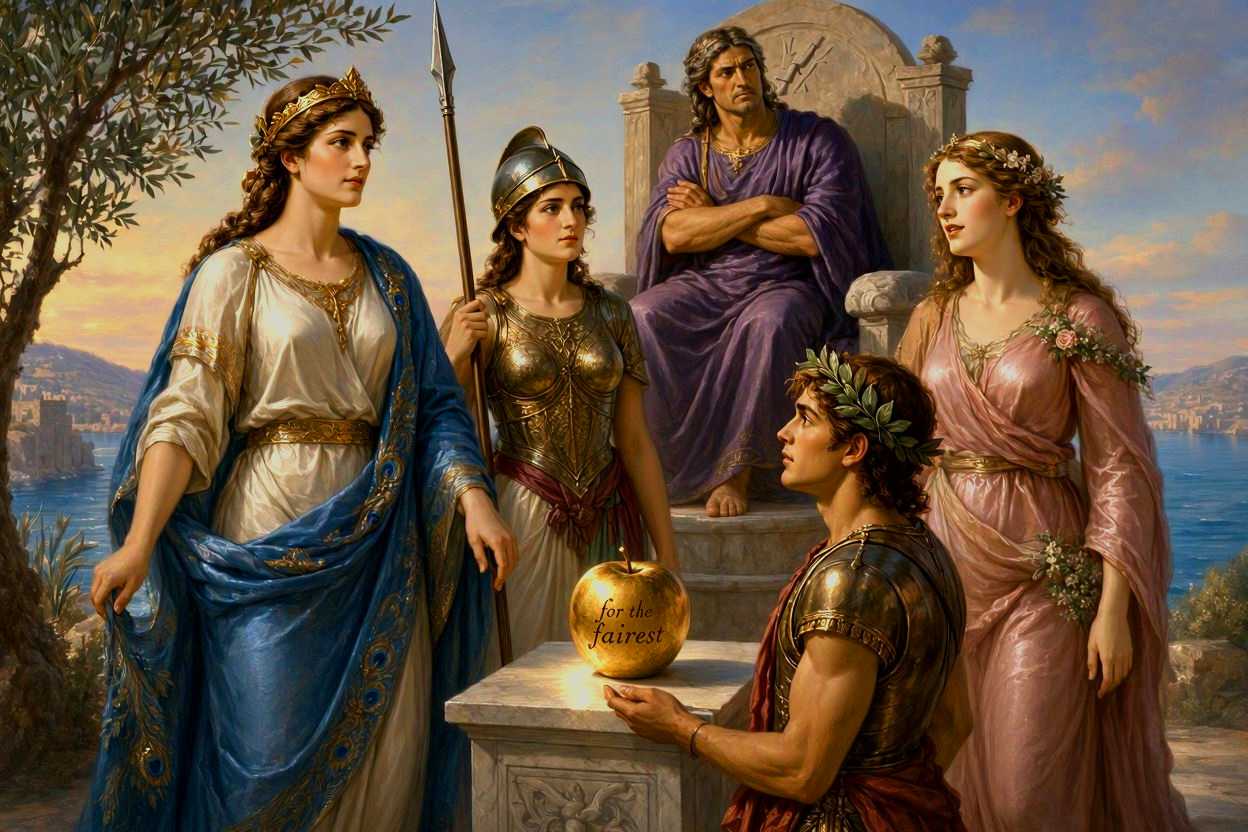
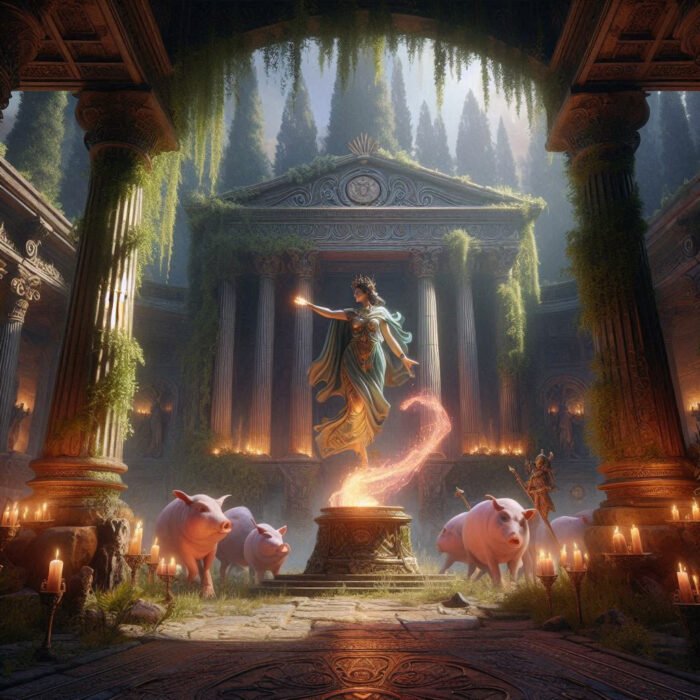
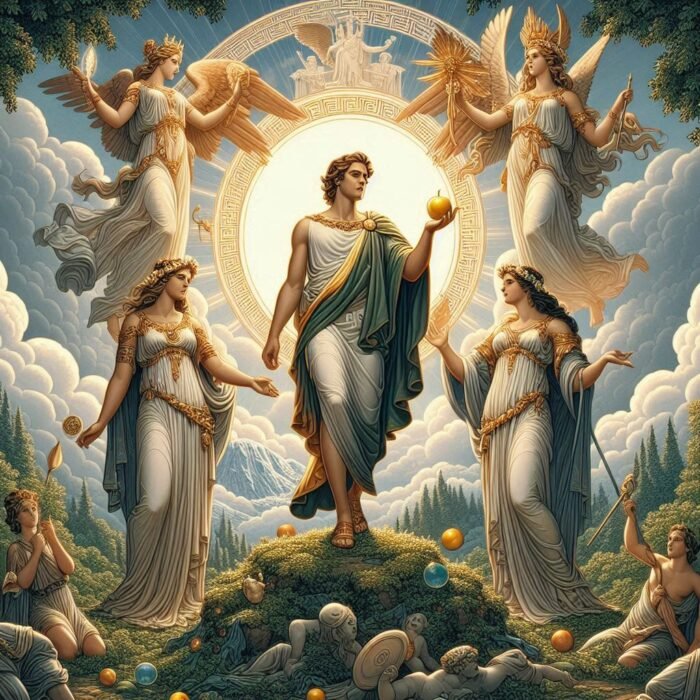
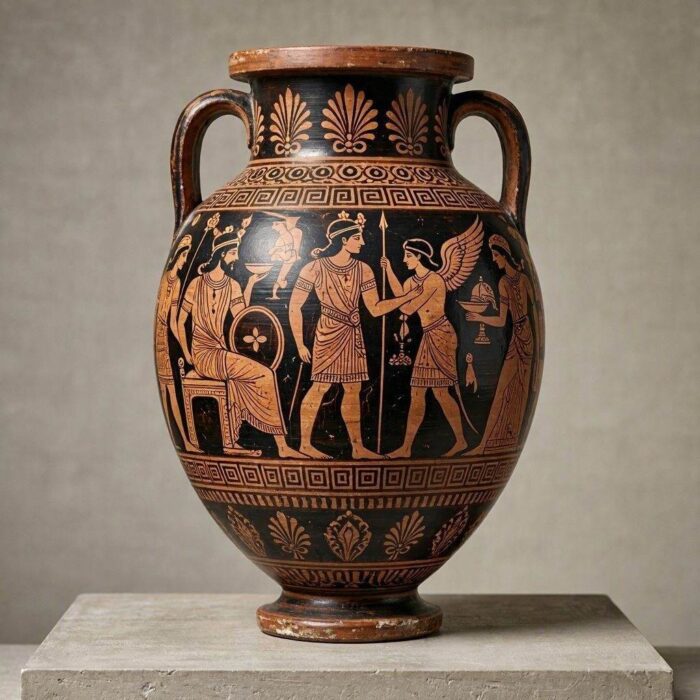
At the wedding of the mortal Peleus and the sea goddess Thetis, the future parents of Achilles, one guest was left off the list: Eris, goddess of strife. She sent in a golden apple marked “for the fairest”. Hera, Athena and Aphrodite each claimed it, Zeus refused to choose, and the decision fell to Paris, a Trojan prince raised as a shepherd on Mount Ida. Aphrodite offered him the most beautiful woman in the world, and he gave her the apple. You can read the full scene in The Judgment of Paris.
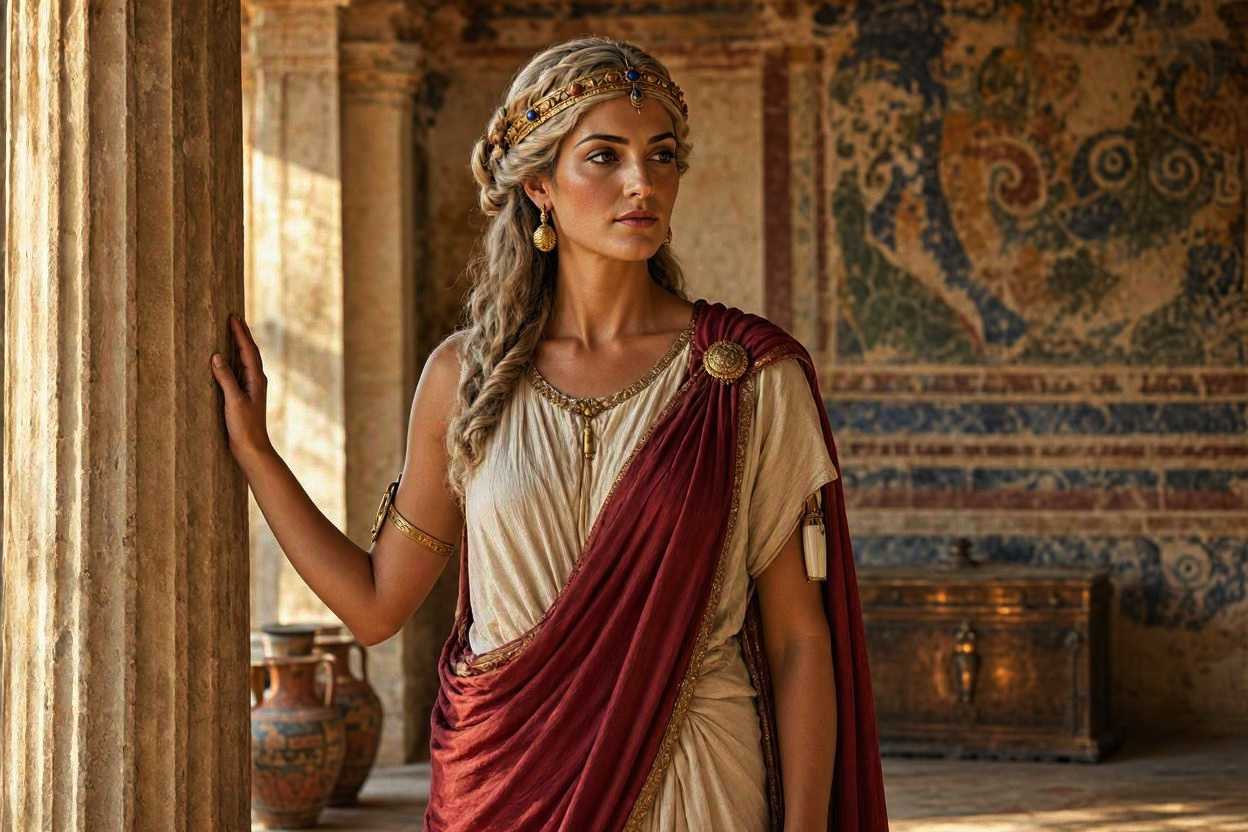
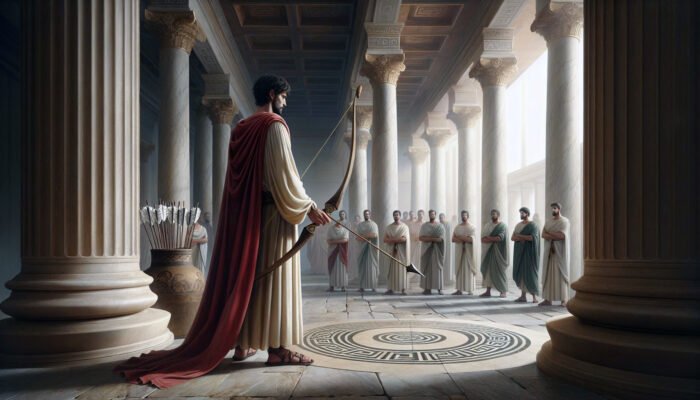
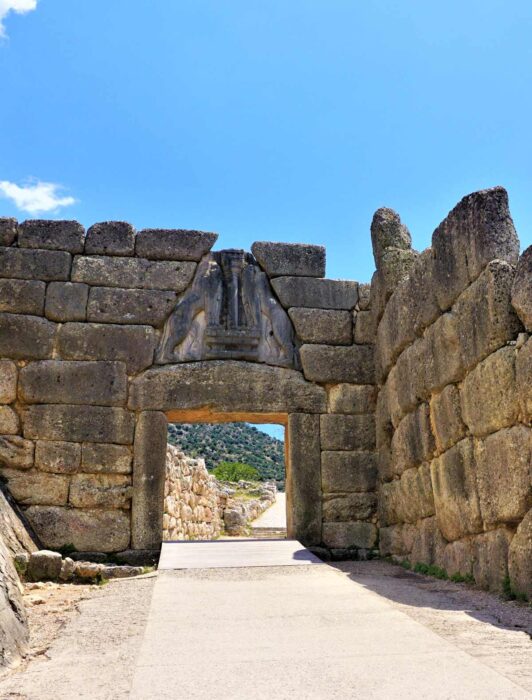
The woman was Helen, already the wife of Menelaus of Sparta. Later tradition adds that her many suitors had once sworn an oath, proposed by Odysseus, to defend whoever became her husband. When Paris carried her off to Troy, Menelaus and his brother Agamemnon, king of Mycenae, called the oath in. Kings from across Greece answered with more than a thousand ships.
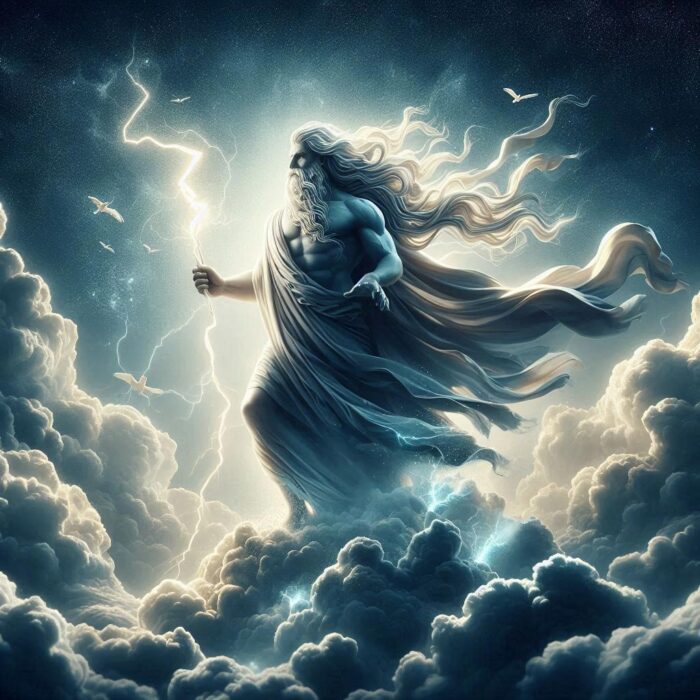
The Cypria also gives the war a darker purpose: Zeus himself, it says, planned it to thin out a crowded earth, and the quarrel over Helen was his means.
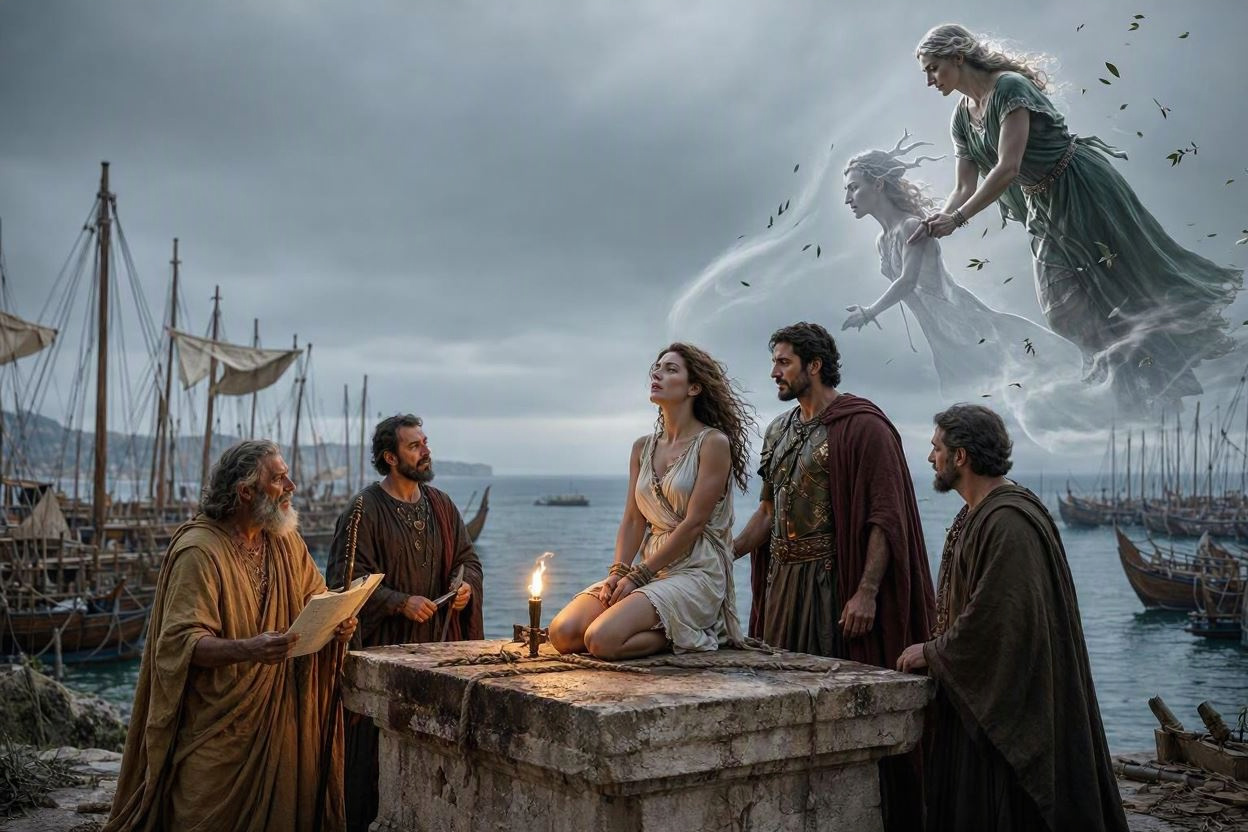
The fleet gathered at Aulis, where the winds failed. Agamemnon had offended Artemis, and the seer Calchas declared that his daughter Iphigenia must be sacrificed. In the Cypria, Artemis snatches the girl away at the last moment. Other versions let the sacrifice stand. Along the way, Philoctetes was bitten by a snake and left behind on Lemnos, and Protesilaus became the first Greek to leap ashore at Troy and the first to die there.
The First Nine Years
Source: Epic Cycle (Cypria), assumed in the Iliad
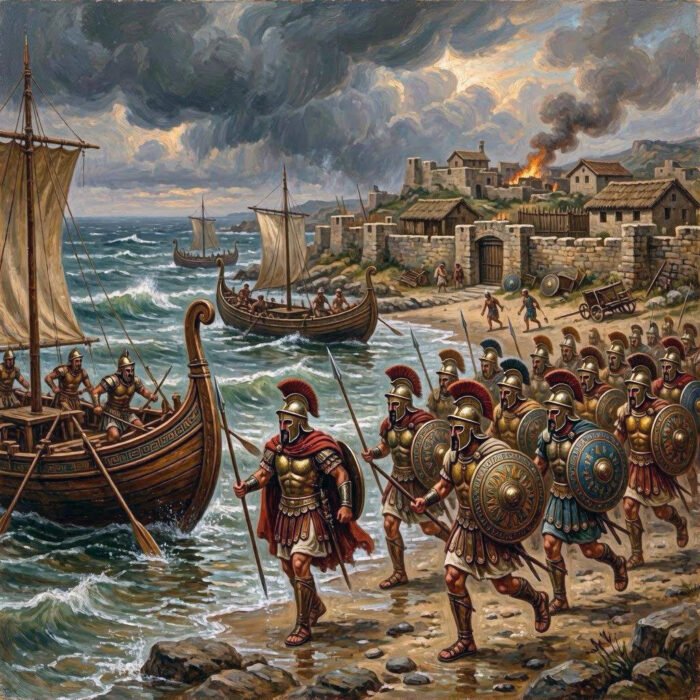
The Greeks could not break the walls of Troy, so they spent years raiding the surrounding cities and countryside for treasure and captives. Two of those captives, Chryseis and Briseis, matter later. Troy, for its part, drew in allies from across Anatolia.
The Rage of Achilles: What the Iliad Covers
Source: Iliad
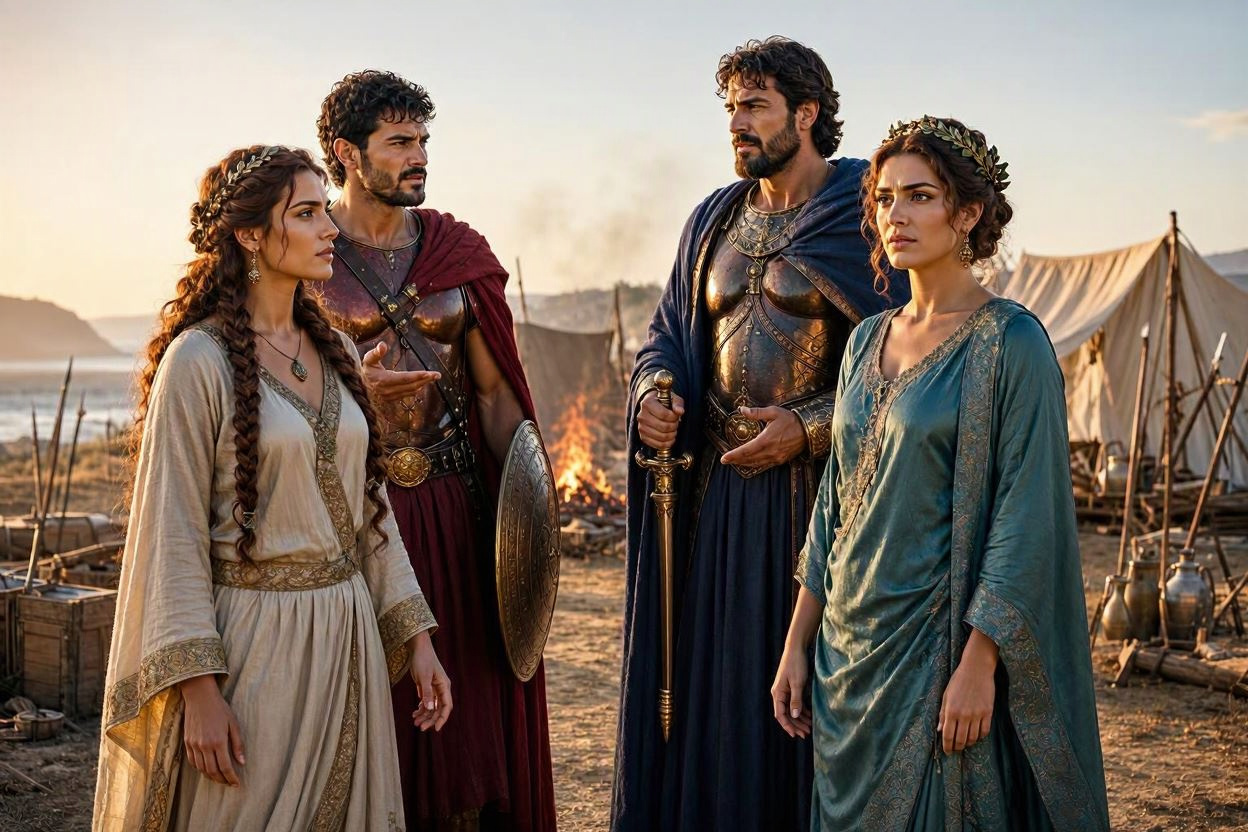
The Iliad opens in the tenth year. Agamemnon refuses to return Chryseis to her father, a priest of Apollo, and the god sends a plague on the Greek camp. Agamemnon gives her back, but takes Briseis from Achilles to make up for it. Insulted, Achilles withdraws from the fighting, and Zeus promises to see that the Greeks suffer for it.
They do. Achilles’ close friend Patroclus enters the battle wearing his armor and is killed by Hector, prince of Troy. Achilles returns in a rage, kills Hector, and drags the body behind his chariot. Then, with Hermes’ help, old King Priam walks into the Greek camp at night to beg for his son’s body, and Achilles gives it back. The poem ends with Hector’s funeral.
The gods take sides throughout: Hera, Athena, and Poseidon back the Greeks, while Aphrodite, Apollo, and Ares back Troy. And that’s all the Iliad contains. It has no wooden horse, no death of Achilles, and no fall of Troy.
After the Iliad: The Death of Achilles and the Fall of Troy
Source: Epic Cycle (Aethiopis, Little Iliad, Sack of Ilium)
Two allies arrive. Penthesilea, queen of the Amazons, comes to help Troy and is killed by Achilles. Then Memnon, king of the Ethiopians and son of the goddess Dawn, is killed by him too.
Achilles dies. Hector had foretold it with his dying words, and it happens at the Scaean Gate: Paris shoots the arrow, and Apollo guides it. Ajax carries the body out of the fighting while Odysseus holds off the Trojans.
The heel is not here. The story that Achilles’ mother dipped him in the river Styx, leaving only his heel vulnerable, is not in Homer or the Cycle. It first appears in the Roman poet Statius, centuries after the war’s last storytellers.
The armor contest. Ajax and Odysseus both claim Achilles’ armor, and the Greeks award it to Odysseus. Ajax, maddened by the insult, takes his own life.
The final pieces. A prophecy says Troy cannot fall without two things: the bow of Heracles, held by the abandoned Philoctetes, and Achilles’ young son Neoptolemus. Both are brought to Troy. Philoctetes is healed and kills Paris, and Neoptolemus fights with the courage of his father. Odysseus and Diomedes also steal the Palladium, a sacred statue of Athena that protects the city.
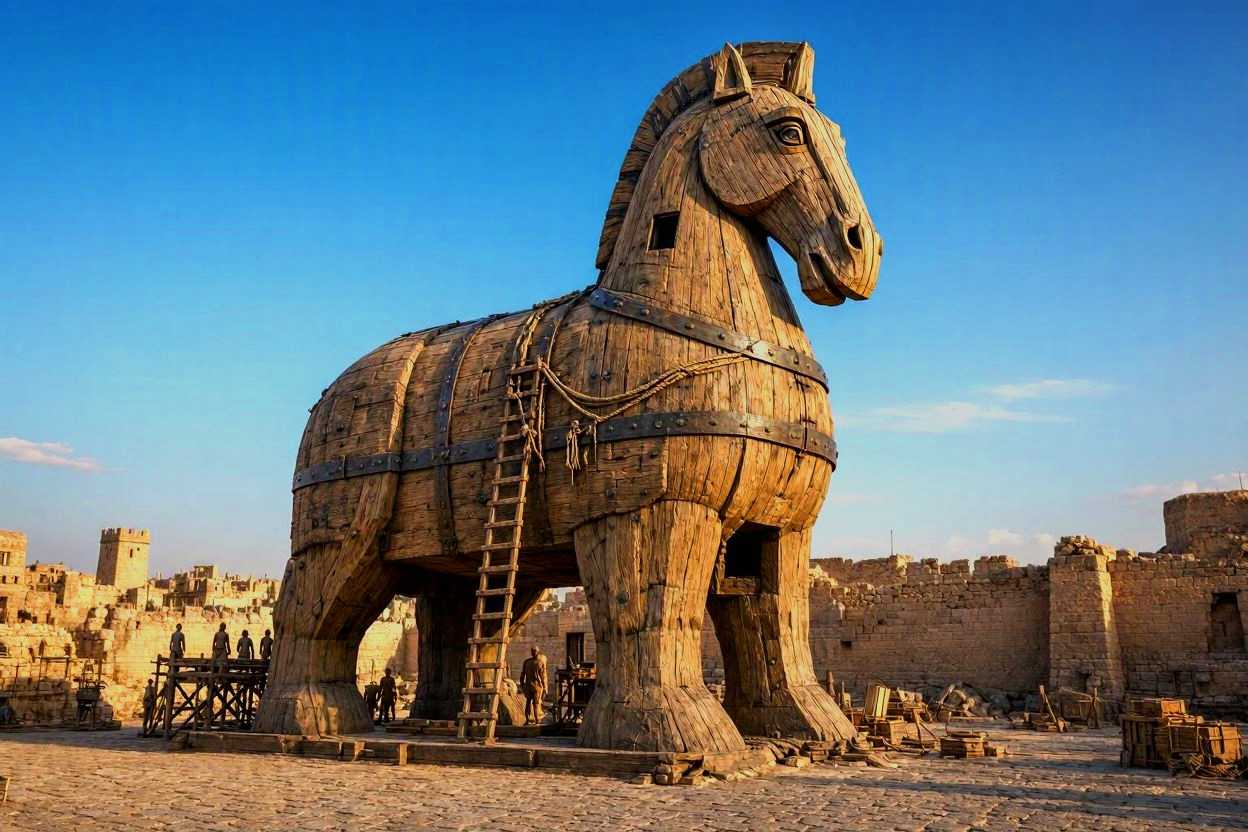
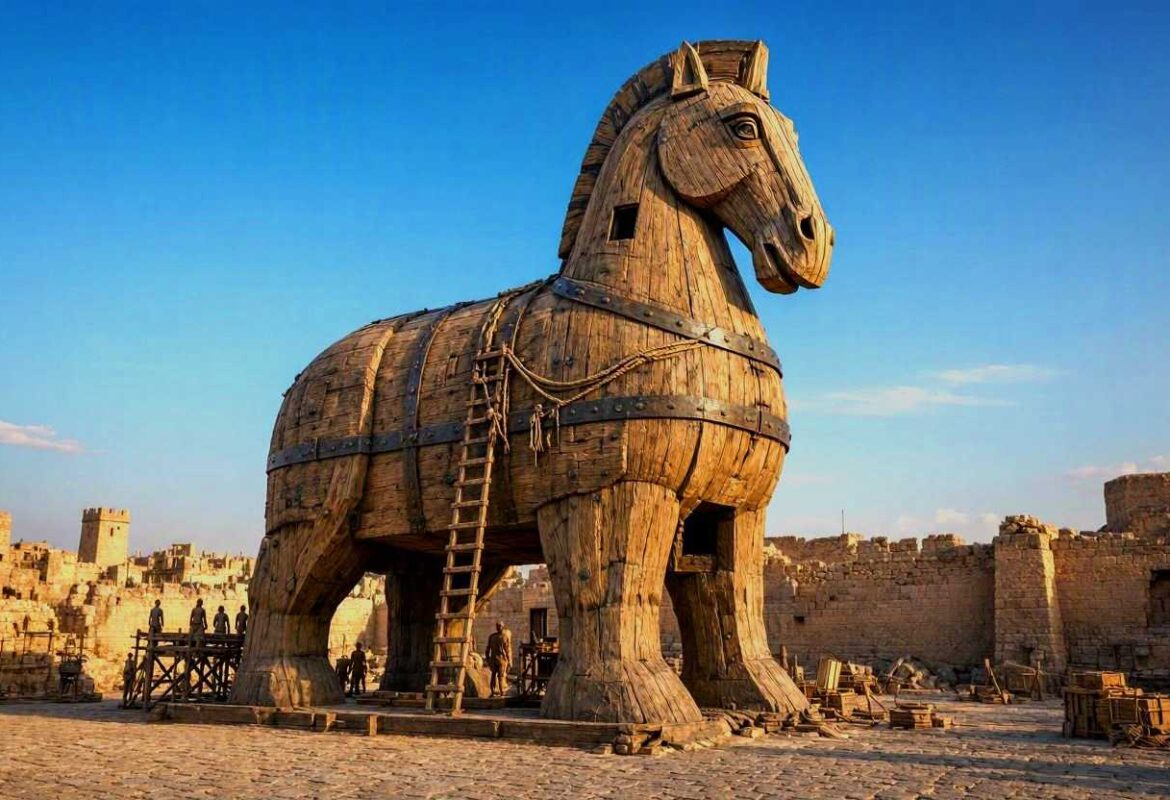
The horse. With Athena’s help, the builder Epeius makes a huge wooden horse. The Greeks burn their camp and sail away to the island of Tenedos, leaving the horse behind and a man, Sinon, to tell the Trojans it is an offering to Athena. The Trojans haul it inside their walls. In the Cycle’s summary, Laocoön is killed by serpents, and Aeneas withdraws to Mount Ida, scenes that Virgil later made famous. The Iliad never narrates the horse, and the Odyssey only recalls it in passing.
The sack. At night the Greeks come out of the horse and open the gates to their returning fleet. Troy burns. Priam is killed at an altar, Hector’s little son Astyanax is thrown from the walls, Polyxena is sacrificed at Achilles’ tomb, and the prophetess Cassandra is dragged from Athena’s statue, an act of sacrilege that will cost the Greeks dearly. Menelaus finds Helen and takes her back.
The Returns
Source: Epic Cycle (Returns), Odyssey
Victory did not bring the Greeks home safely. Athena, angered by the sacrilege, sent storms against the returning fleet. Agamemnon reached Mycenae, only to be murdered by his wife Clytemnestra (twin sister of Helen of Sparta) and her lover Aegisthus. Menelaus wandered for years before reaching Sparta.
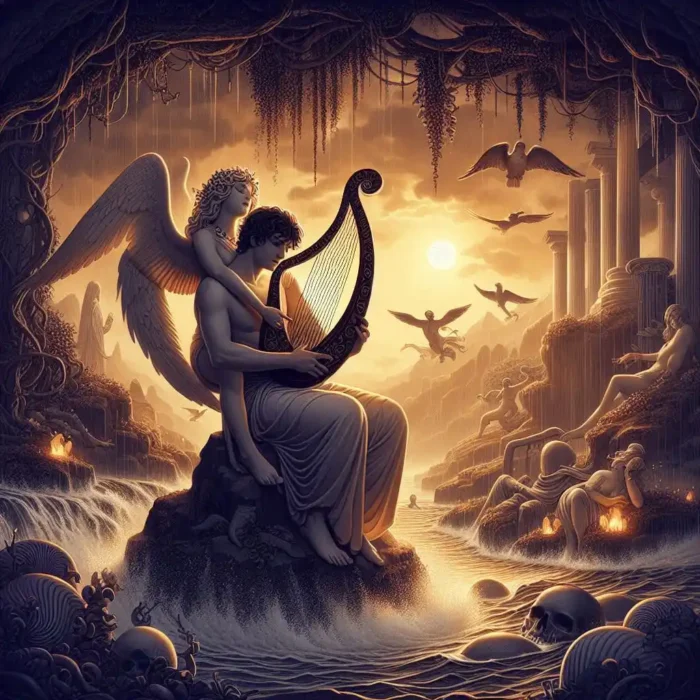
The longest journey belongs to Odysseus, and the Odyssey is the story of it. If you want to follow him, start with The Odyssey category. On Corfu, we have a personal interest in one of the stops: the island of the Phaeacians, which ancient tradition already identified with Corfu. You can read about it in Shipwreck on the Island of the Phaeacians.
Was There a Real Troy?
There was a real city. Its remains lie at Hisarlik in northwestern Turkey, with many layers of settlement built one over another, and archaeologists debate which layer, if any, matches Homer’s Troy. Whether a single great war lay behind the story is disputed.
Some outside evidence comes from the Hittite archives found at Hattusa, the capital of the Hittite Empire in central Anatolia. Their texts mention a kingdom called Wilusa in western Anatolia, which most scholars identify with Troy (Ilios in Greek, probably once pronounced Wilios), and a western power called Ahhiyawa, usually identified with the Mycenaean Greeks, the Achaeans of the Iliad.
A treaty of about 1280 BCE between the Hittite king Muwatalli II and Alaksandu, ruler of Wilusa, shows that Troy was a recognized state with diplomatic ties. Other Hittite documents of the thirteenth century BCE record tensions and disputes in the region. But this is not proof of the Homeric war: the texts describe no siege of Troy, and scholars disagree about how to read them.
The excavations point to two candidate layers. Troy VI, which lasted from about 1750 to 1300 BCE, ended in destruction around 1300 BCE, which research from the 1930s attributed to an earthquake. Its successor, Troy VIIa, was built by the same inhabitants, and it was burned around 1180 BCE. Arrowheads, sling bullets, and burnt buildings were found there, so most scholars now favor it as the setting behind the legend.
Some link its destruction to the wider upheaval of the Sea Peoples at the end of the Bronze Age. The Hittite records point to disputes in the thirteenth century BCE, while Troy VIIa fell around 1180 BCE, so the memory behind the war may combine more than one event.
Homer composed his poems long after the Bronze Age, and his world mixes details from several centuries. What is clear is that the story took hold across the Greek world, and the poems that told it shaped Greek religion and storytelling for a thousand years.
For the gods who take part, see The 12 Olympian Gods and the main Greek Mythology page.









Comments