


Swear in Greek Properly
So you’ve heard someone shout across a busy Greek street and wondered what it all means. Whether you’ve traveled to Corfu, Mykonos, or Athens, you’ve likely noticed that locals speak with a dramatic blend of passion, sarcasm, and poetry — all at once. Welcome to the colorful world of modern Greek slang.
If you want to blend in, raise a smile, or at least avoid an unintentional misunderstanding, this guide is for you. From everyday conversational filler words to unique cultural expressions, here is your crash course in sounding like a true local.
(Note: If you are looking for an absolute deep dive into Greece’s most famous slang word, check out our complete guide to Malaka here).
Essential Greek Words Locals Use Daily
Mastering everyday Greek filler words is the ultimate shortcut to sounding like a local in Corfu. However, how you use them changes everything — a simple Re (ρε), Ela (έλα), or Pame (πάμε) can turn from a friendly greeting into a serious misunderstanding depending entirely on your tone and context.
1. Re (ρε)
- What it means: A casual filler word similar to “hey,” “dude,” or “man.” It is informal and shouldn’t be used with strangers, bosses, or elders.
- How it’s used: Dropped into almost every casual sentence to add emphasis, whether the speaker is feeling friendly or annoyed.
- Example:– “Re file, ti kaneis?”– “Hey friend, how are you doing?”
2. Ela (έλα)
- Literal meaning: “Come.”
- Actual conversational use: It is incredibly versatile and can mean “come on,” “no way,” “seriously?” or simply “hello” when answering the phone.
- Example:– “Ela re!”– “Come on!” or “No way!” (expressed in disbelief)
3. Pame (πάμε)
- Meaning: “Let’s go.”
- Use: Universally used among groups of friends when leaving a spot, starting a night out, or just moving things along.
- Example:– “Pame gia ouzo!”– “Let’s go for some ouzo!”
4. Kouklos / Koukla (κούκλος / κούκλα)
- Meaning: Literally translates to “doll.”
- Use: A friendly, complimentary, or flirtatious term used to call someone “handsome” (kouklos) or “beautiful” (koukla).
- Example:– “Koukla mou, pos eisai?”– “My beautiful girl, how are you?”
5. Gamoto (γαμώτο)
- Meaning: “Damn it,” “shucks,” or “ugh.”
- Use: While derived from a harsher root word, it is completely softened in daily speech. It is used as an exclamation of pure frustration when something minor goes wrong.
- Example:– “Gamoto, xechasa ta kleidia!”– “Damn it, I forgot my keys!”
6. Endaxi (εντάξει)
- Meaning: “Okay,” “alright,” or “got it.”
- Use: The ultimate word for agreement, reassurance, or politely wrapping up a conversation.
- Example:– “Tha se paro avrio, endaxi?”– “I’ll call you tomorrow, okay?”
Mastering these simple filler words is the fastest way to get a friendly nod from the staff when ordering a drink. Try testing your skills out at the seaside tavernas highlighted in our complete Benitses Corfu Guide.
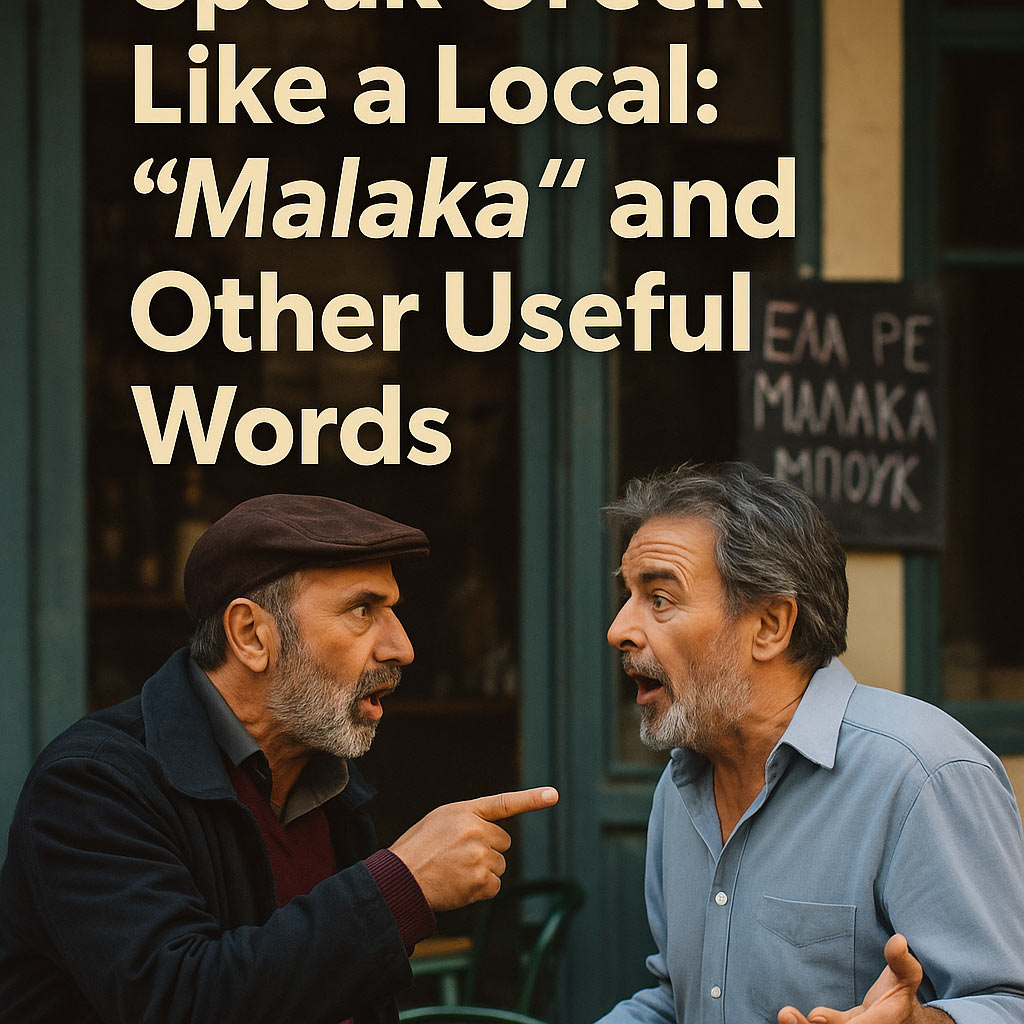

Let’s Get Rude: Greek Swear Words Locals Actually Use
Educational Disclaimer: The following terms are highly vulgar, offensive, or sexually explicit. They are presented here strictly for cultural, historical, and linguistic learning purposes. Avoid using them in casual conversation.
- Malista re vlaka (μάλιστα ρε βλάκα) – “Sure, you idiot.”
- Pousti (πούστη) – A highly offensive homophobic slur. Younger generations rarely use it today, but it remains heavily taboo and insulting.
- Kai gamo (και γαμώ) – Positive slang meaning “f***ing awesome” or incredibly good.
- Xesou (χέσου) – “Go sh*t yourself.” An expression used to show pure contempt.
- Trelos / Palavos (τρελός / παλαβός) – “Crazy” or “mad.” Greek has dozens of creative variations for this, used either teasingly between close friends or as a sharp insult.
- Poutana (πουτάνα) – Meaning “whore,” used as a heavy insult. The diminutive version, poutanaki, is sometimes used insultingly to describe women considered manipulative or unfaithful.
- Gamiese (γαμιέσαι) – Meaning “you are getting f***ed.” One of the strongest and most vulgar terms in the language, heavily used in serious arguments and street fights.
- Gamiese patokorfa (γαμιέσαι πατόκορφα) — An escalated insult meaning “get f***ed from head to toe (top to nails).”
- Skase (σκάσε) – “Shut up!” A rough, aggressive command frequently heard in heated disputes.
- Kai gamisou (και γαμήσου) – “Go f*** yourself.” A direct, pure insult.
- Koproskylo (κοπρόσκυλο) – Literally translating to “dung-dog.” It means a lazy bastard or a completely worthless individual.
- Vlakas / Vlammenos (βλάκας / βλαμμένος) – “Idiot,” “fool,” or “brain-damaged.” Widely used among men in both harsh arguments and mild, teasing contexts.
- Ante re! (άντε ρε!) – Meaning “come on!” Based on the speaker’s tone, it can be used dismissively to mean “get lost” or “go away.”
- Kopane (κόπανε) – “Knucklehead” or “dumbass.” A milder insult used both humorously and seriously depending on the situation.
- Ksekoliasmeni (ξεκολιασμένη) – A highly sexist, explicit, and vulgar derogatory term aimed at women.
- Karagiozis (καραγκιόζης) – Used to call someone a ridiculous clown or a buffoon. This term derives directly from the famous main character of traditional Greek shadow puppet theater.
- Megalo palto (μεγάλο παλτό) — Literally meaning “a big coat.” This is classic football slang used to describe a completely useless, overpaid sports player who contributes nothing to the game.
- Skila (σκύλα) — Meaning “b*tch” or “slag.” A sharp insult used similarly to its English counterpart.
- Kargiola (καργιόλα) — A highly derogatory, vulgar insult directed at women.
- Lamogio (λαμόγιο) — A descriptive piece of political and social slang used for corrupt opportunists, swindlers, thieves, or untrustworthy politicians.
- Ái sto diáolo (άει στο διάολο) – “Go to hell” or “go to the devil.”
- Hése mas (χέσε μας) – “Sh*t on us.” Said dismissively to someone you expect will completely mess up a job or mission.
- Héstika (χέστηκα) – “I don’t give a sh*t” or “I couldn’t care less.”
- Ston poutso mas (στον πούτσο μας) — Meaning “on our penis.” A vulgar male expression meaning “we don’t care.”
- Sta archidia mas (στα αρχίδια μας) — Meaning “on our testicles.” Functions identically to the phrase above to show complete indifference.
- Sto mouni mas (στο μουνί μας) — Meaning “on our vagina.” The explicit female alternative used instead of the two male phrasings above.
- Burdélo (μπουρδέλο) – Literally meaning “brothel.” Because traditional brothels operate differently now, locals routinely use this term metaphorically to describe a chaotic mess, a disorganized place, or the dysfunction of the state.
- Vizitoudes (βιζιτούδες) — High-class escorts or companions who meet clients in luxury hotels and villas. It derives from the Italian word visita, meaning “visit.”
- Gamo to kerato mou (γαμώ το κέρατό μου) — “F*** my horn.” In Greek culture, being deceived or cheated on is symbolized by growing horns, making this a common exclamation of deep frustration.
- Tou eipe kati Gallika (του είπε κάτι Γαλλικά) — Literally meaning “he spoke some French to him.” This is a humorous idiom often used in sports when a player or coach aggressively curses out a referee or opponent.
Two Famous Greek Gestures You Will See on the Road
- The Genital Gesture: Often seen during chaotic Greek traffic jams, a driver might move their hand downward toward their lap while facing another driver. This crude gesture translates to: *”I write what you think about my driving on my testicles” (I don’t care at all).*
- The Moutza (μούντζα): The ultimate Greek hand insult. A driver or pedestrian thrusts an open hand with five extended fingers directly toward someone’s face from a distance. It effectively means “get f***ed,” “go to hell,” or “drop dead.”
In the Greek language, many of these expressions are highly context-dependent. Most everyday curses do not carry their strict literal meanings; instead, they function as metaphors heavily shaped by the speaker’s tone, relationship, and surrounding situation.
Because of this conversational duality, understanding the exact social boundaries of these expressions is just as critical as knowing their translations.
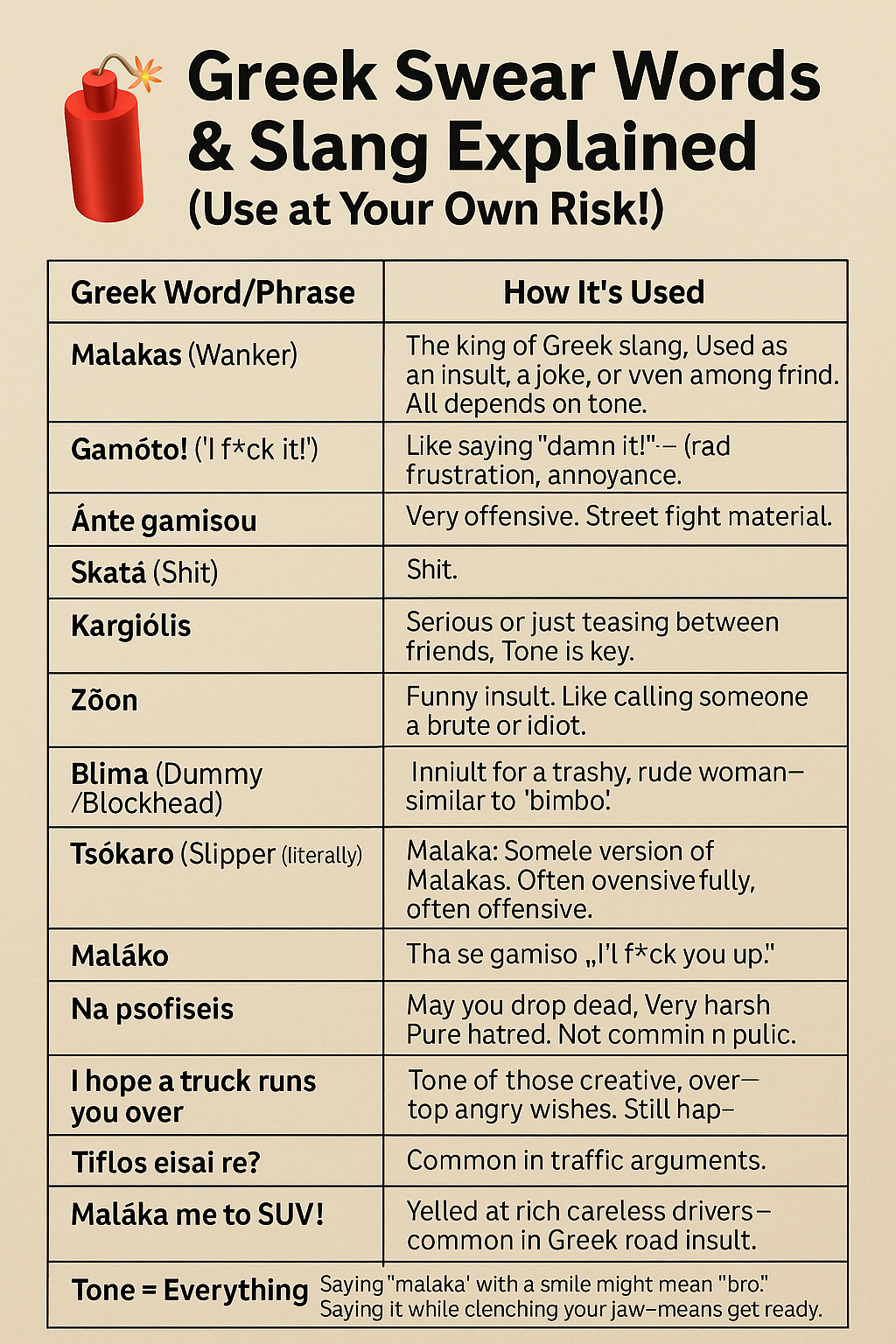
🧨 Greek Swear Words & Slang Summary Table
| Greek Word / Phrase | Literal Meaning | How It’s Used in Daily Life |
|---|---|---|
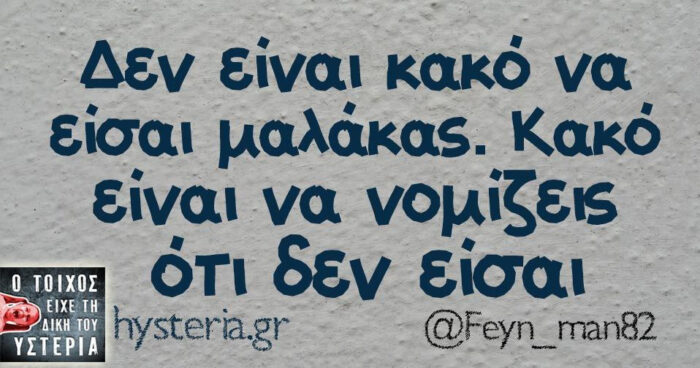
| Malakas | Wanker | The ultimate cornerstone of Greek slang. Used interchangeably as a harsh insult, a friendly joke, or a casual filler among friends. The speaker’s tone dictating the meaning. |
| Gamóto! | “F*** it!” | Functions identically to saying “damn it!” Used to express sudden frustration, irritation, or annoyance. |
| Ánte gamísou | Go f*** yourself | Highly offensive and aggressive. Never used playfully; this is strictly heated street argument material. |
| Skatá | Sh*t | Used exactly like its English counterpart. It can express mild annoyance or genuine anger. |
| Poustis | A highly offensive slur | Historically a homophobic slur. In modern casual slang, it is sometimes used metaphorically to describe a sneaky, underhanded, or shady person, though it remains highly sensitive. |
| Kargiólis | Bastard | Can be used as a serious insult or as rough, teasing slang between close male friends. The female counterpart, kargiola, is a highly derogatory insult aimed at women. |
| Zóon | Animal / Beast | A common insult used to call someone a brute, a stubborn mule, a donkey, or a complete idiot. |
| Vlíma | Dummy / Blockhead | A low-level, relatively lighthearted insult often used for playful teasing between friends. |
| Tsókaro | Wooden slipper | A derogatory slang term used to describe a loud, trashy, or ill-mannered woman. |
| Maláko | Female version of Malakas | Can be used playfully among very close female friends, but is often considered highly offensive depending on the social context. |
| Tha se gamíso | I’ll f*** you up | A severe, highly aggressive physical threat. Never to be used lightly or in jest. |
| Na psofíseis | May you drop dead | An incredibly harsh curse expressing deep animosity. Rarely used in polite or public settings. |
| Na se patisi fortigo | May a truck hit you | An example of creative, dramatic Greek driving curses. Frequently exchanged between drivers in chaotic traffic. |
| Stravos eisai re? | Are you blind?! | A standard, daily exclamation yelled during road traffic disputes or when someone cuts you off. |
| Maláka me to SUV! | You idiot with the SUV! | A classic road insult directed at careless or entitled drivers on busy Greek roads. |
Greek Swearing: More Than Just Insults
In Greece, swearing is about more than just causing offense — it is a dramatic vehicle for personal expression, emphasis, and connection. Almost all local curses are tightly wrapped in vocal tone and relationships. A rough word spoken to a lifelong friend can be an expression of affection, while the exact same word directed at a stranger can signal immediate trouble.
The Greek language thrives on passion. When a local friend jokingly tells you to shut up, always check for the smile on their face first.
📄 Download Greek Swear Words Infographic (PDF)
✅ Bonus: Greek Slang Survival PDF
We have put together a convenient, downloadable cheat sheet featuring these essential phrases, complete with pronunciation guides and advice on when to avoid using them.
📄 Download Greek Swear Words Infographic (PDF)
Final Thoughts on Greek Street Slang
While there are thousands of colorful expressions to uncover for a complete understanding of the language, mastering these foundational terms offers a fascinating window into Greek culture, humor, and soul. Learning even a few basic filler words can completely change how locals interact with you. Throw in a casual “re,” use “ela” with confidence, and you will instantly feel closer to the local culture.
Want to explore the nuances of local speech further? Explore all of our specialized Greek linguistic guides.





Comments