



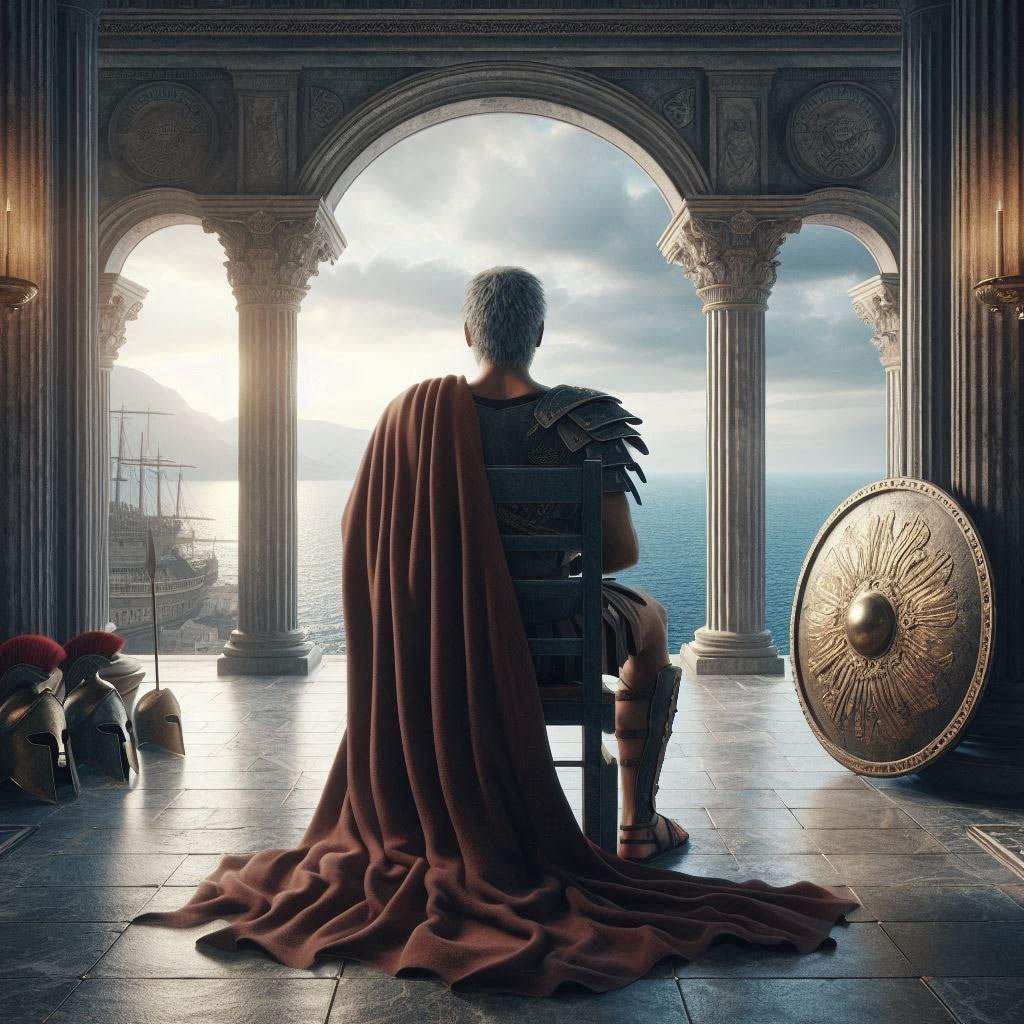
After years of wandering across the seas of the Odyssey, Odysseus finally reaches the shores of Ithaca.
But the return is not triumphant.
No crowds wait for him. No kingdom celebrates his arrival. The island he longed for through every storm no longer recognizes him. Remember: 20 years have passed, 10 in the war of Troy, and 10 more wandering lost at sea.
And so Odysseus returns home as a stranger.
Arrival in Silence
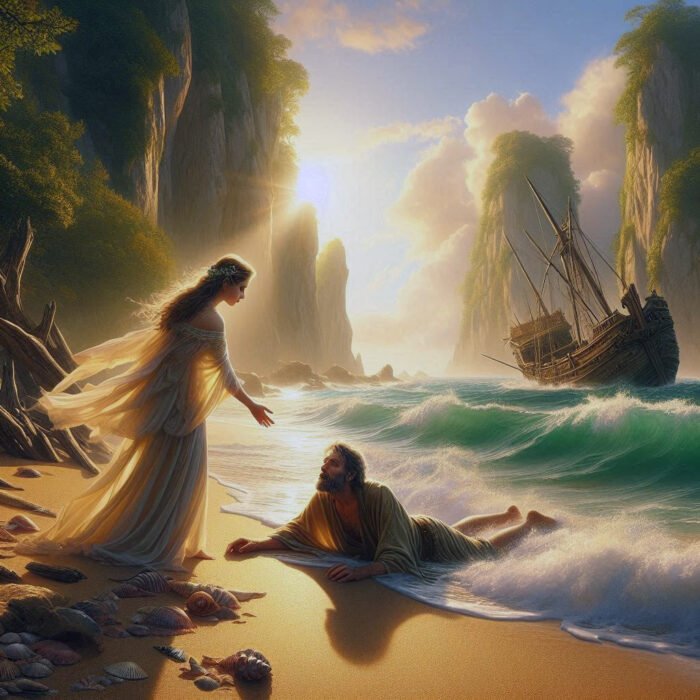
The Phaeacians leave Odysseus sleeping on the shore before disappearing back into the sea.
When he awakens, even Ithaca itself seems unfamiliar at first, as though the long years of the Odyssey have separated him from the world he once knew.
Only gradually does the reality settle around him:
He has finally returned home.
Athena’s Disguise
Yet the return cannot happen openly.
Athena advises caution. The palace is no longer safe. Powerful suitors consume Odysseus’ household, believing the king lost forever.
To move unseen among them, Odysseus is disguised as an old beggar.
In one of the most important transformations of the Odyssey, the great hero returns not in armor, but in concealment.
A Kingdom That Has Changed
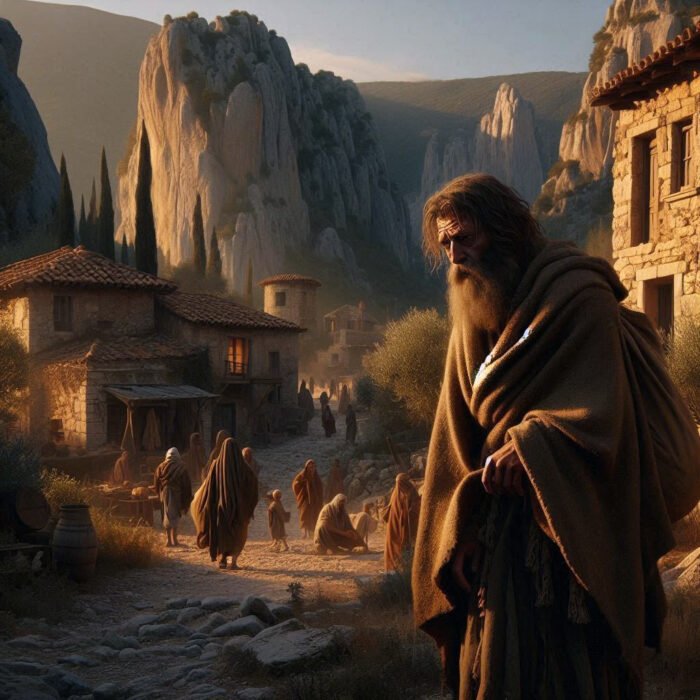
As Odysseus walks through Ithaca in disguise, he sees the consequences of his absence.
Servants have shifted loyalties. Disorder fills the halls of his house. The suitors feast openly within the palace, treating the kingdom as though it already belongs to them.
The return home becomes something more difficult than the sea voyage itself:
Odysseus must discover whether anything of his old world still survives.
Testing Loyalty
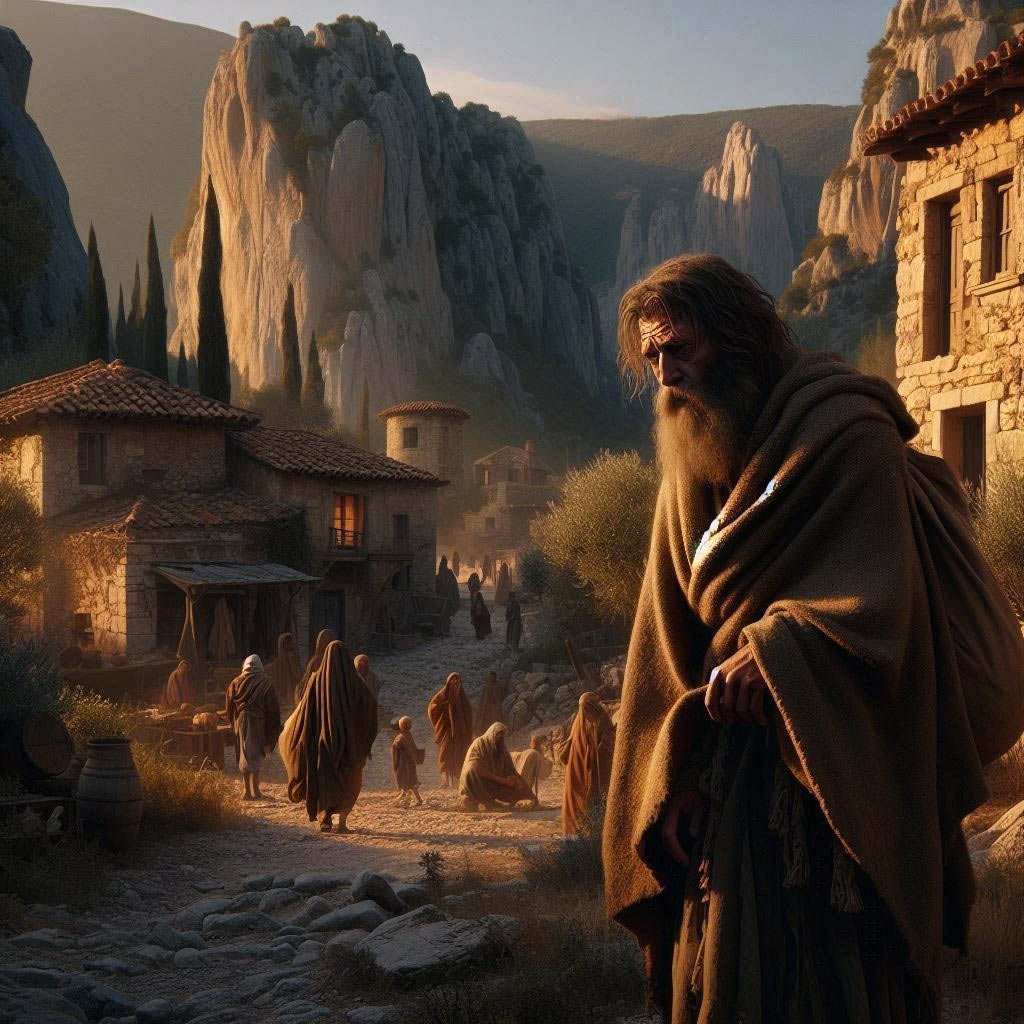
The hidden identity allows Odysseus to move through Ithaca without being recognized.
Throughout this part of the Odyssey, recognition becomes dangerous. Every conversation is a test. Every encounter reveals character.
Disguised as an old beggar, Odysseus does not immediately enter the palace as a figure of return. Instead, he moves through the margins of his own world — among fields, stables, and working servants — where life continues in the absence of its master.
There, far from the formal hall of the suitors, truth appears more clearly. People speak more freely, and loyalty shows itself not in words, but in habits, memory, and silence.
Some servants remain faithful despite years of neglect and uncertainty.
Others have adapted to the new order, serving the suitors who now dominate the household of the Odyssey.
Argos: Recognition Without Words
One of the most powerful recognitions happens outside the palace.
There, neglected in the yard and barely alive, Odysseus finds his old dog, Argos.
Argos recognizes him instantly, even through disguise. No words are needed. Only a moment of shared memory after years of abandonment.
Odysseus cannot reveal himself. He simply turns away and hides his emotion, while Argos, having fulfilled his final act of recognition, dies shortly after.
Recognition by Telemachus
Later, Odysseus reveals himself to his son, Telemachus.
At first, Telemachus cannot believe the stranger is truly his father. The long absence has made the return feel impossible.
But once identity is revealed, father and son begin planning in secret — not in the palace, but still under conditions of concealment — preparing for what will come next in the Odyssey.
Eurycleia and the Scar
Recognition also comes through touch and memory.
While washing the feet of the disguised stranger, the old nurse Eurycleia notices a scar from Odysseus’ youth.
The body becomes proof of identity where the face no longer can.
Odysseus silences her immediately, keeping the secret until the moment of return is complete.
Laertes and the Final Recognition
After the suitors are gone, Odysseus visits his aging father, Laertes, who lives withdrawn in grief among his fields.
There, away from the palace and its tension, recognition happens slowly and painfully.
Only through signs and memory does Laertes finally accept that his son has returned.
This final recognition closes the circle of the Odyssey, restoring not just kingship, but family, land, and identity itself.
The Hero Unrecognized
One of the most powerful ideas in the Odyssey emerges here:
A man may return home and remain invisible.
Odysseus stands inside his own hall while enemies mock him, unaware of who sits before them. His strength now lies not in open battle, but in patience, restraint, and timing.
The Beginning of Restoration
The return to Ithaca marks the final movement of the Odyssey.
The wandering across distant seas is over.
Now the struggle turns inward — toward identity, recognition, and the reclaiming of a home that has nearly forgotten its king.


Comments