


Beyond the Twelve Olympians: How the Greek Gods Were Really Organized
The idea that in Greek mythology there were only twelve Olympian gods is a modern oversimplification.
The ancient Greeks themselves were flexible, practical, and inconsistent in their approach to divine hierarchies.
While a core group of twelve usually anchored Olympus, many other gods lived on Olympus, attended divine councils, or served essential Olympian functions.
These figures were often fully divine, widely worshipped, and culturally central—yet excluded from the neat number twelve simply because tradition demanded it.
In reality, the Olympians formed a functional system, not a fixed list.
Gods were grouped by what they governed, where they acted, and which major deity they served. Below is a clean, historically grounded restructuring of the Olympian world—how it actually worked.
The Core Olympians (Brief Overview)
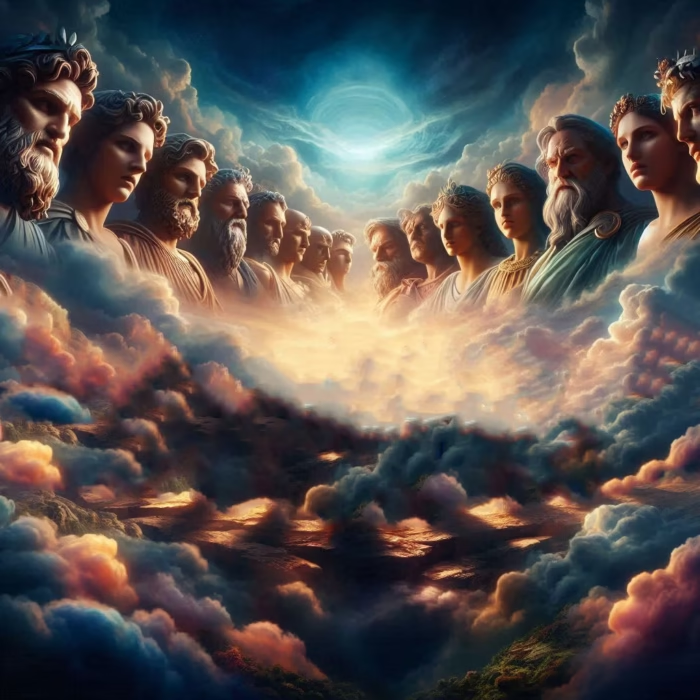
Greek mythology is often introduced through the Twelve Olympian Gods, the principal rulers of the divine world who resided on Mount Olympus. These major deities governed the sky, sea, war, wisdom, love, agriculture, and the core institutions of ancient Greek society.
Rather than repeating them here, this article focuses on the lesser Olympian gods, divine attendants, and related chthonic deities who operated alongside the Twelve and played vital roles in daily worship, ritual life, and myth.
→ For the complete list and full profiles of the Twelve Olympian Gods, see the dedicated article.
Functional Orders of the Olympian Gods
1. Theoi Agoraioi — Gods of Assembly, Law & Civic Life
Presiding over councils, justice, persuasion, and public order:
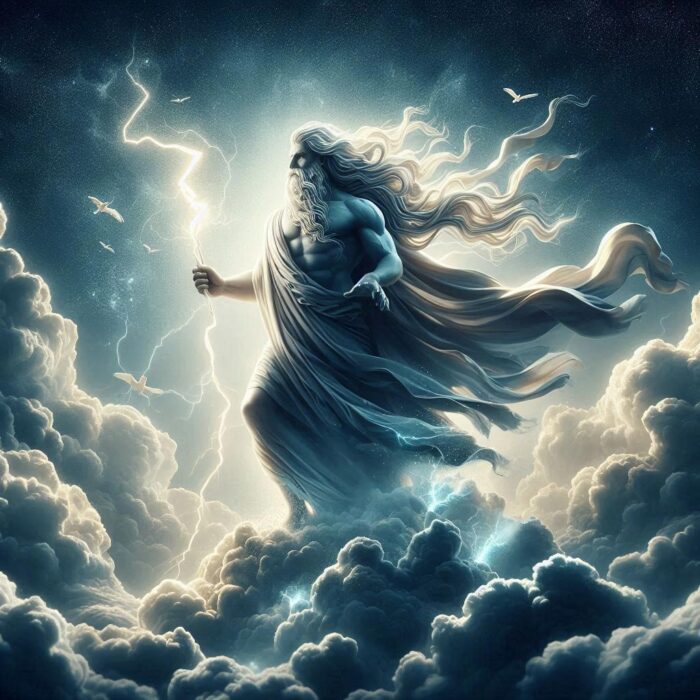
- Zeus – Supreme authority of kings and assemblies
- Athena – Wise counsel and strategy
- Themis – Divine law and custom
- Dike – Justice
- Eunomia – Good order
- Calliope – Eloquence and epic authority
- Hermes – Commerce and negotiation
2. Theoi Gamelioi — Gods of Marriage & Social Bonds
Governing marriage, harmony, persuasion, and fertility:
- Hera – Protector of marriage
- Zeus – Divine guarantor of unions
- Aphrodite – Love and attraction
- Harmonia – Unity and concord
- Hebe – Youth and renewal
- Peitho – Persuasion
- Hymenaios – Wedding ritual
- Charites (Graces) – Joy and celebration
- Erotes – Forces of desire (Eros, Himeros, Pothos)
3. Theoi Mousikoi — Gods of Music, Arts & Education
Presiding over poetry, music, dance, memory, and learning:
- Apollo – Music, poetry, leadership of the arts
- Artemis – Choral dance and maiden song
- The Nine Muses – Artistic inspiration:
- Calliope (Epic)
- Clio (History)
- Erato (Love poetry)
- Euterpe (Lyric poetry)
- Melpomene (Tragedy)
- Polyhymnia (Hymns)
- Terpsichore (Dance)
- Thalia (Comedy)
- Urania (Astronomy)
- Hermes – Musical invention
- Dionysus – Theater and ecstatic performance
4. Theoi Polemikoi — Gods of War & Conflict
Embodiments of battle, terror, victory, and strategic force:
- Ares – Brutal warfare
- Athena – Strategic war and defense
- Enyo – Destruction
- Eris – Strife
- Nike – Victory
- Phobos – Panic
- Deimos – Terror
- Zeus – Fate and outcome of wars
- Apollo – Archery and plague
5. Theoi Iatrikoi — Gods of Healing & Medicine
Healing deities associated with Apollo:
- Apollo – Divine healer
- Asclepius – Medicine and physicians
- Epione – Soothing pain
- Hygeia – Health
- Panaceia – Universal remedy
- Iaso – Recovery
- Aceso – Healing process
- Aegle – Radiant health
- Telesphorus – Completion of healing
6. Theoi Ktesioi — Gods of House & Home
Protectors of domestic life and property:
- Hestia – Hearth and household unity
- Zeus Ktesios – Household prosperity
- Hermes – Doorways and boundaries
- Hecate – Thresholds and entrances
7. Theoi Mantikoi — Gods of Prophecy & Fate
Oracular and prophetic deities:
- Apollo – Oracles and seers
- Zeus – Fate and destiny
- Themis – Prophetic law
- Mnemosyne – Sacred memory
- Dione – Oracle of Dodona
- Hermes – Divination and signs
- Pan & Nymphs – Rustic prophecy
8. Theoi Gymnastikoi — Gods of Athletics & the Games
Patrons of strength, competition, and victory:
- Hermes – Training and agility
- Heracles – Strength and heroic effort
- Dioscuri (Castor & Polydeuces) – Horsemen and athletes
- Nike – Victory
- Agon – Contest
- Eros – Comradeship
9. Theoi Halioi — Gods of Sea & Navigation
Maritime gods connected to Olympus:
- Poseidon – King of the Sea
- Apollo – Safe voyages
- Aphrodite – Harbors and calm seas
- Artemis – Coastal protection
- Dioscuri – Sailor salvation
10. Theoi Nomioi — Gods of the Countryside
Rural life, herding, hunting, and wild nature:
- Artemis – Hunting
- Hermes – Herds and flocks
- Dionysus – Wild vegetation
Note on Divine Domains: In Greek mythology, gods were not limited to a single role or category. Many deities operated across multiple spheres—religious, civic, natural, and cosmic—depending on context, cult practice, and myth. These categories reflect functions, not rigid boundaries, and a single god could belong to several groups at once.
Olympian-Associated Gods (Residents, Attendants & Deified Mortals)
These gods lived on Olympus, attended divine feasts, or served the ruling gods, and were often worshipped alongside them:
- Nike, Bia, Cratos, Zelos – Attendants of Zeus
- Iris – Messenger of Hera
- Ganymedes – Cupbearer of Zeus
- Horae – Guardians of cosmic order
- Moirae – Fates under Zeus
- Charites – Companions of Aphrodite and Hera
- Leto – Mother of Apollo and Artemis
- Heracles – Deified hero and gatekeeper of Olympus
- Ariadne – Immortal consort of Dionysus
- Psyche – Deified soul, wife of Eros
- Semele (Thyone) – Deified mother of Dionysus
Chthonic Gods and Deities of the Underworld
Chthonic gods were associated with the earth, the dead, fertility, rebirth, oaths, and the unseen forces beneath the world. They were worshipped differently from Olympian gods—often through night rituals, libations poured into the ground, and rites tied to agriculture or death.
Some chthonic deities stood in direct relationship with Olympus, forming a bridge between the worlds above and below.
Major Chthonic and Dual-Natured Deities
- Hades – Ruler of the Underworld; brother of Zeus and Poseidon, yet never an Olympian
- Persephone – Queen of the Underworld and daughter of Demeter
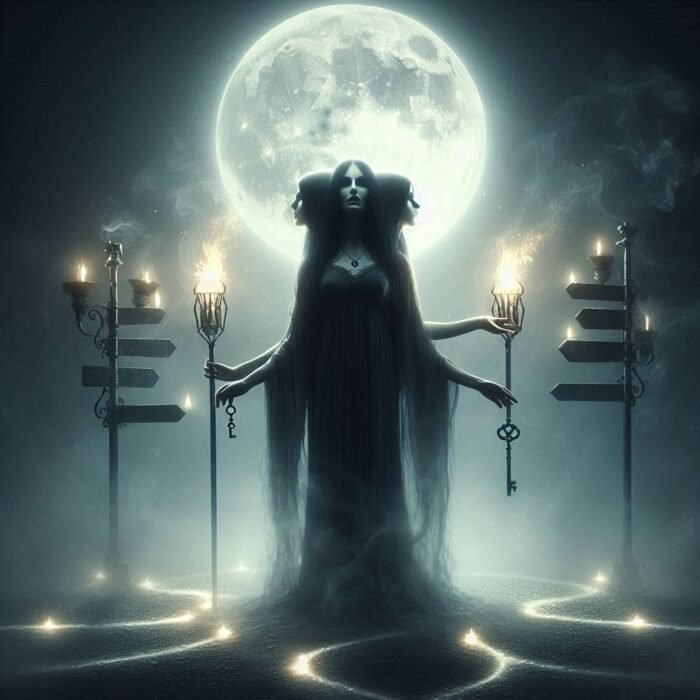
- Hecate – Goddess of crossroads, magic, and liminal spaces
- Demeter – Agricultural goddess with strong chthonic cults tied to death and rebirth
- Hermes Chthonios – Guide of souls to the Underworld
- Erinyes (Furies) – Goddesses of vengeance and moral retribution
- Gaia – Primordial Earth, source of life and the dead
Chthonic gods were not lesser in power, only different in function. Together with the Olympians, they formed a complete religious system that governed both life above ground and the mysteries below.
The Judgment of Souls in Greek Mythology
After death, human souls were believed to descend into the Underworld, where their fate was determined through divine judgment. This process was not moralistic in the later religious sense, but concerned oaths, crimes, and balance.
Minos, Rhadamanthys, and Aeacus – The three Judges of the Dead. Former mortal kings renowned for justice, they were appointed by Zeus to judge souls: Rhadamanthys judged souls from Asia, Aeacus judged souls from Europe, Minos held the final authority in disputed cases
Based on their judgment, souls were sent to:
- Asphodel Meadows – The neutral afterlife for most mortals
- Elysian Fields – A blessed realm for heroes and the righteous
- Tartarus – A place of punishment for oath-breakers and great offenders
The judgment of souls reinforced the Greek belief that divine order extended beyond death, governed not by mercy but by justice, memory, and cosmic balance.
Chthonic gods were not lesser in power, only different in function. Together with the Olympians, they formed a complete religious system that governed both life above ground and the mysteries below.
The Reality of Olympus
Olympus was not a parliament with fixed seats—it was a living religious system. Gods gained or lost prominence depending on local cults, political needs, and mythic tradition. The Twelve were symbolic anchors, not a closed club.
Understanding the Olympians means understanding function, worship, and role, not counting chairs.
That’s how the Greeks themselves saw it.


Comments