

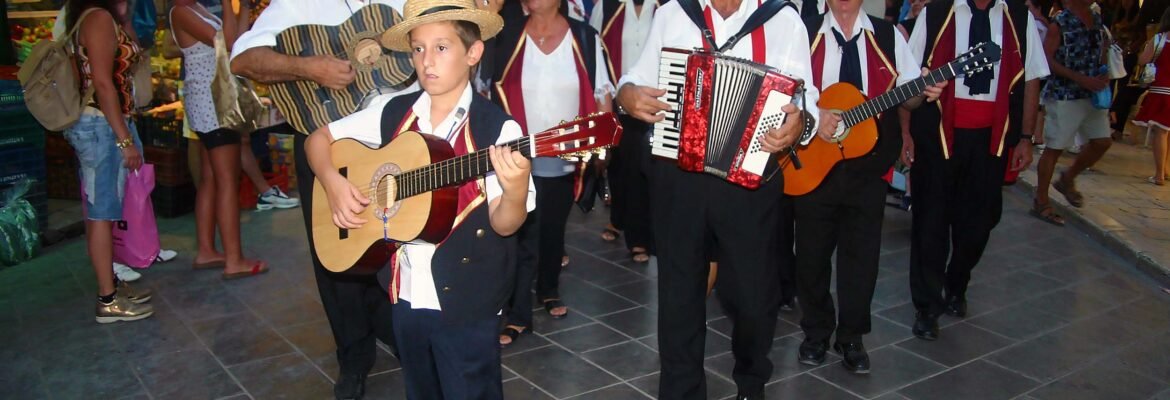


Corfu: Where Melodies Echo Through Time
Corfu is one of the most musical islands in Greece, known for its strong tradition of philharmonic bands and Western-influenced music. From historic orchestras to local serenades, music remains a central part of life on the island.
Shaped by Venetian rule, Corfu introduced opera to Greece and developed a unique musical identity that continues today through its bands, festivals, and cultural institutions.
The Philharmonic Society of Corfu
Fast forward to 1840, and the Philharmonic Society of Corfu was founded. Over the years, this society has weathered the tides of time and continues to thrive, a living testament to the island’s enduring love for music. The very essence of Corfu is steeped in melody, as conversations flow like verses of a song and melodies are woven into the fabric of everyday life.
The rise of philharmonic orchestras and bands on Corfu was part of a larger European trend in the 19th century, as music associations sprang up across the continent. Thanks to the island’s sons and daughters studying in European universities, Corfiots became an integral part of this musical revolution. The island’s philharmonic bands shine most brightly during the vibrant Easter celebrations when their enchanting performances captivate both locals and visitors alike.
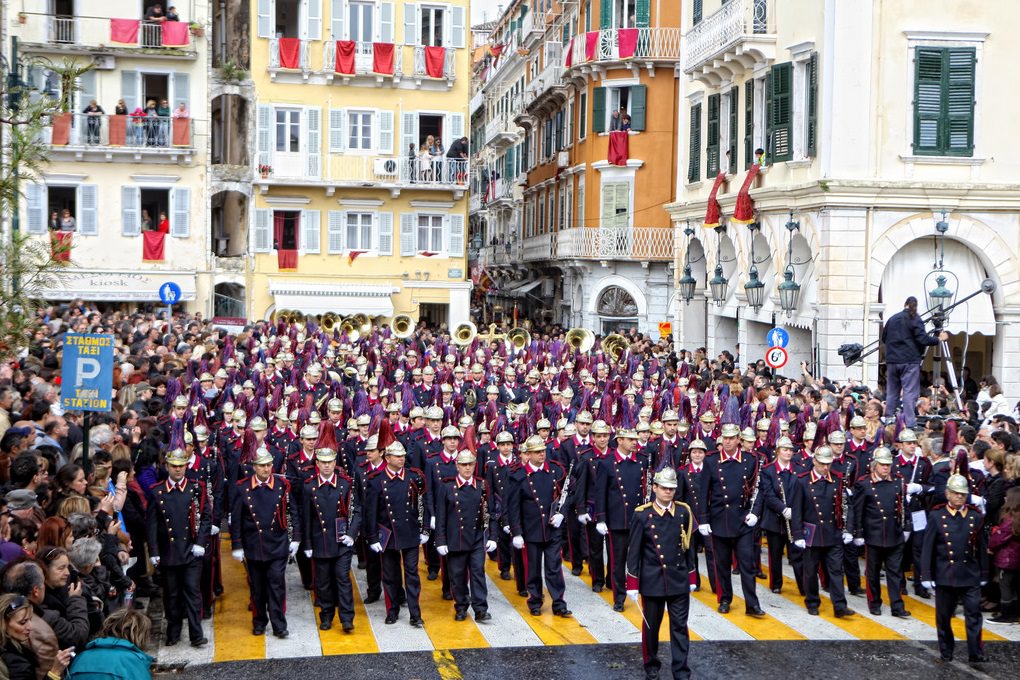
The birth of philharmonic orchestras on Corfu traces back to 1837, when Queen Victoria’s edict prohibited the British Army Band from participating in Orthodox events. This inspired the birth of the Corfiot Philharmonic Orchestra, known as the “Philharmonic Society of Corfu.” Established on September 12, 1840, its founding members included Spyridon Xyndas, Petros Kouartanos, Ioannis Kallonas, and Nikolaos-Halkiopoulos Mantzaros. Foreign residents fondly referred to it as “La Banda Grecca,” and the society’s uniforms were adorned in blue and red – the island’s iconic colors.
The legacy of Corfu musicians
The legacy of Spyridon Xyndas is a dazzling gem in Corfu’s musical crown. He composed the first Greek opera, a remarkable feat that echoed through time. Yet, it was his fellow band member, Nikolaos Halkiopoulos-Mantzaros, who gifted Greece with its National Anthem. Setting Dionysios Solomos’ stirring poem “Hymn to Liberty” to music in 1830, Mantzaros left an indelible mark on Greece’s cultural landscape.
Mantzaros’s musical legacy extended beyond symphonies and compositions; he dedicated much of his life to teaching music and nurturing the talents of future generations. The echoes of his influence continue to resonate in the island’s educational institutions and musical aspirations.
Mantzaros Philharmonic Society
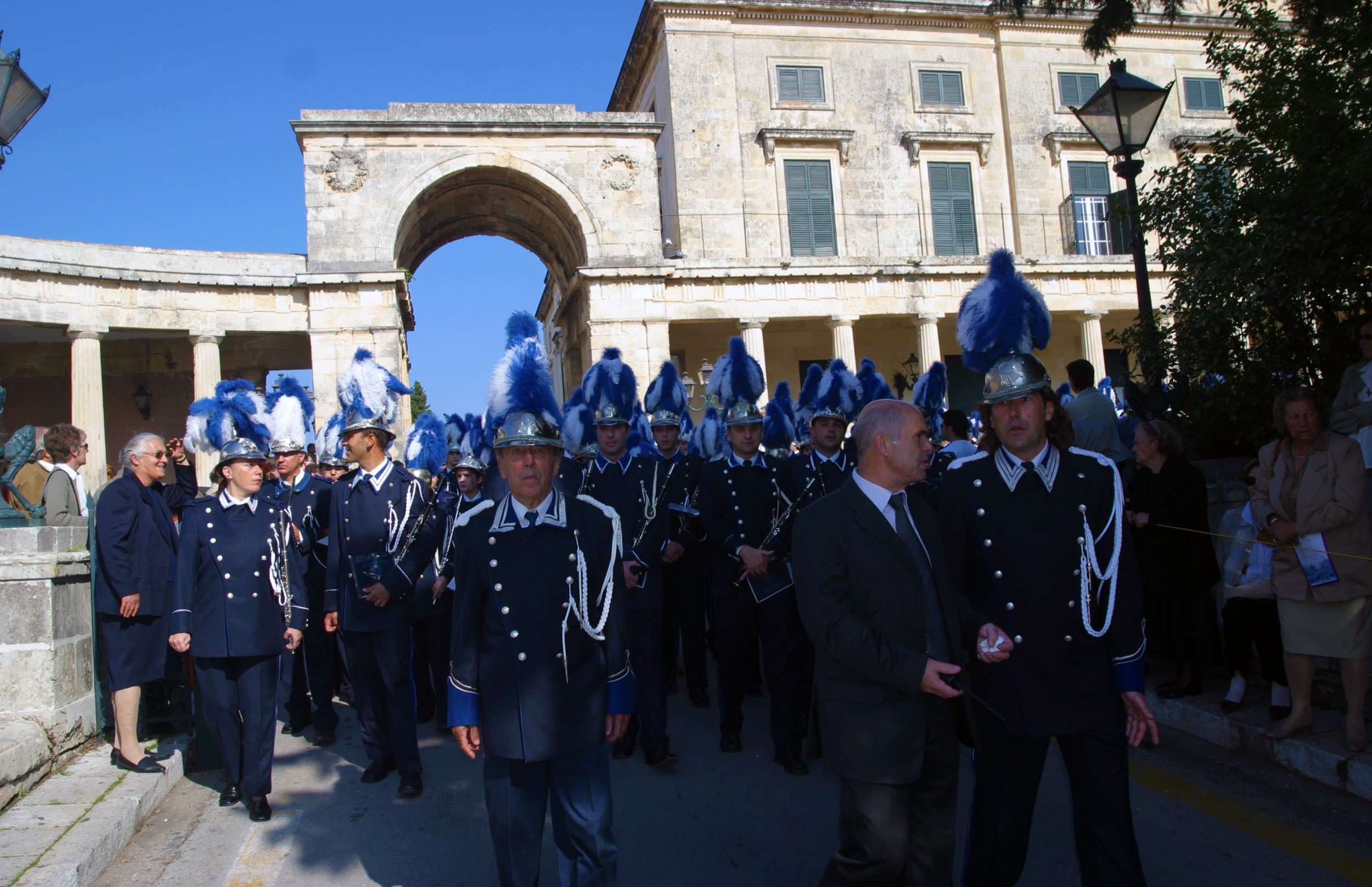
In 1890, the Mantzaros Philharmonic Society was born, weaving its own musical chapter into Corfu’s story. With blue and white uniforms that reflect Greece’s hues, this society has played a significant role in shaping the island’s musical landscape for over a century.
Kapodistrias Philharmonic Association of Corfu
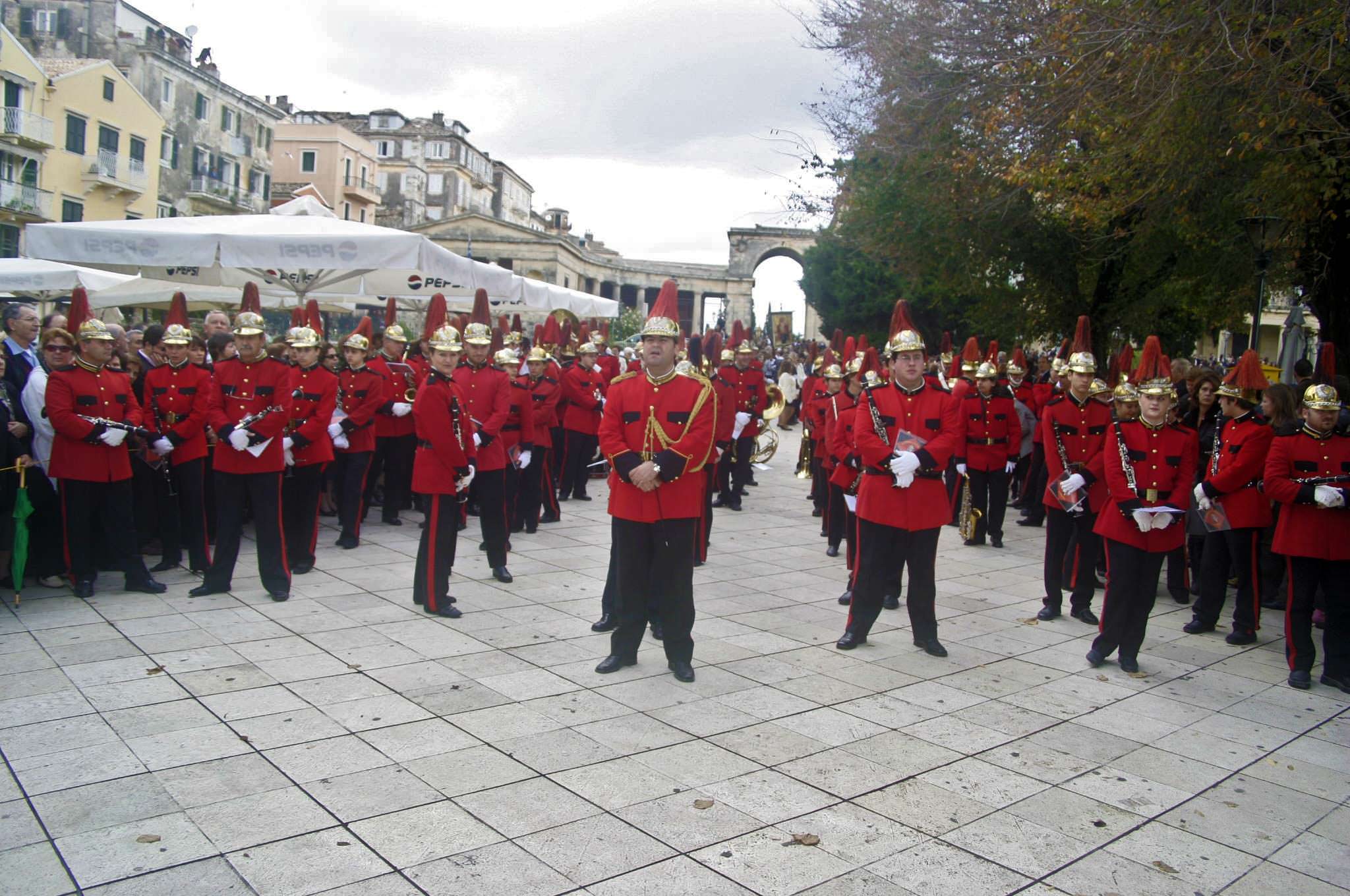
And the musical journey didn’t end there. In 1980, the Kapodistrias Philharmonic Association of Corfu emerged, embarking on a mission to enrich the island’s musical realm. Making its debut appearance on New Year’s Eve of 1981, this association swiftly became one of Corfu’s largest cultural and musical education centers. Its tireless efforts have nurtured a new generation of musicians, contributing to Greece’s evolving musical landscape.
Corfu’s philharmonic bands
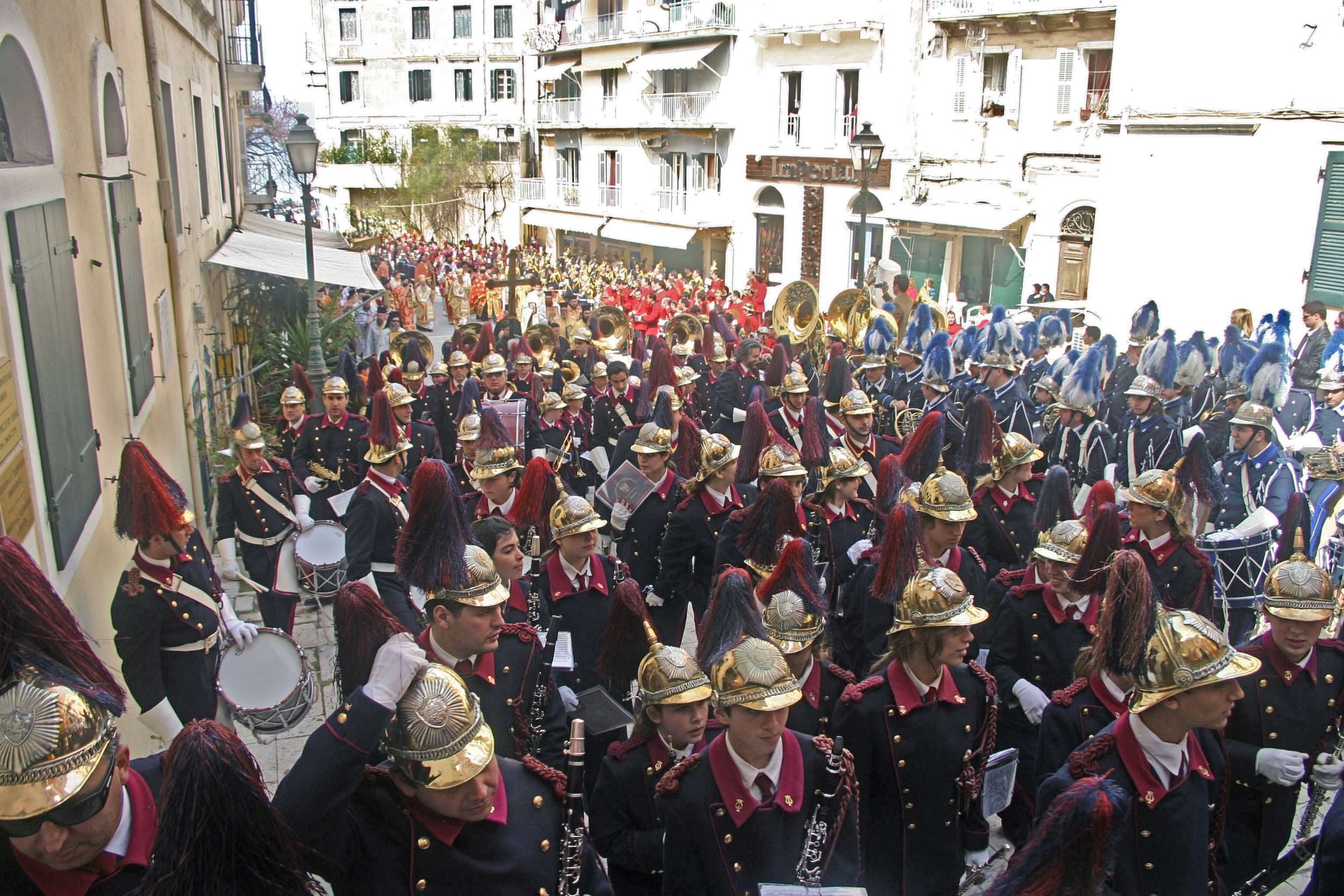
The musicians who dedicate their hearts to Corfu’s philharmonic bands are often not professionals, but their passion for music is boundless. They become mentors, guiding younger generations toward becoming accomplished soloists, conductors, and teachers in Greece’s vibrant musical scene.
It’s awe-inspiring to think that an island with a population of just 120,000 residents hosts more than twenty major music education organizations, accompanied by a multitude of music-related clubs. The School of Music under the Ionian University’s auspices further underscores the island’s commitment to nurturing musical talent. Music is, indeed, interwoven with Corfu’s soul, playing a profound role in shaping its rich cultural identity.
The ‘Kantadoroi’ of Corfu
As you stroll through the charming streets of Corfu, an unexpected symphony captures your senses. The melodic notes of guitars, accordions, and a choir fill the air, leading you to a delightful surprise. It’s as if the entire neighborhood has joined in song, infusing the atmosphere with celebration. Is it a special event or a festivity? The answer lies in the captivating world of Corfu’s Kantadori, or perhaps better known as the ‘Troubadours.’
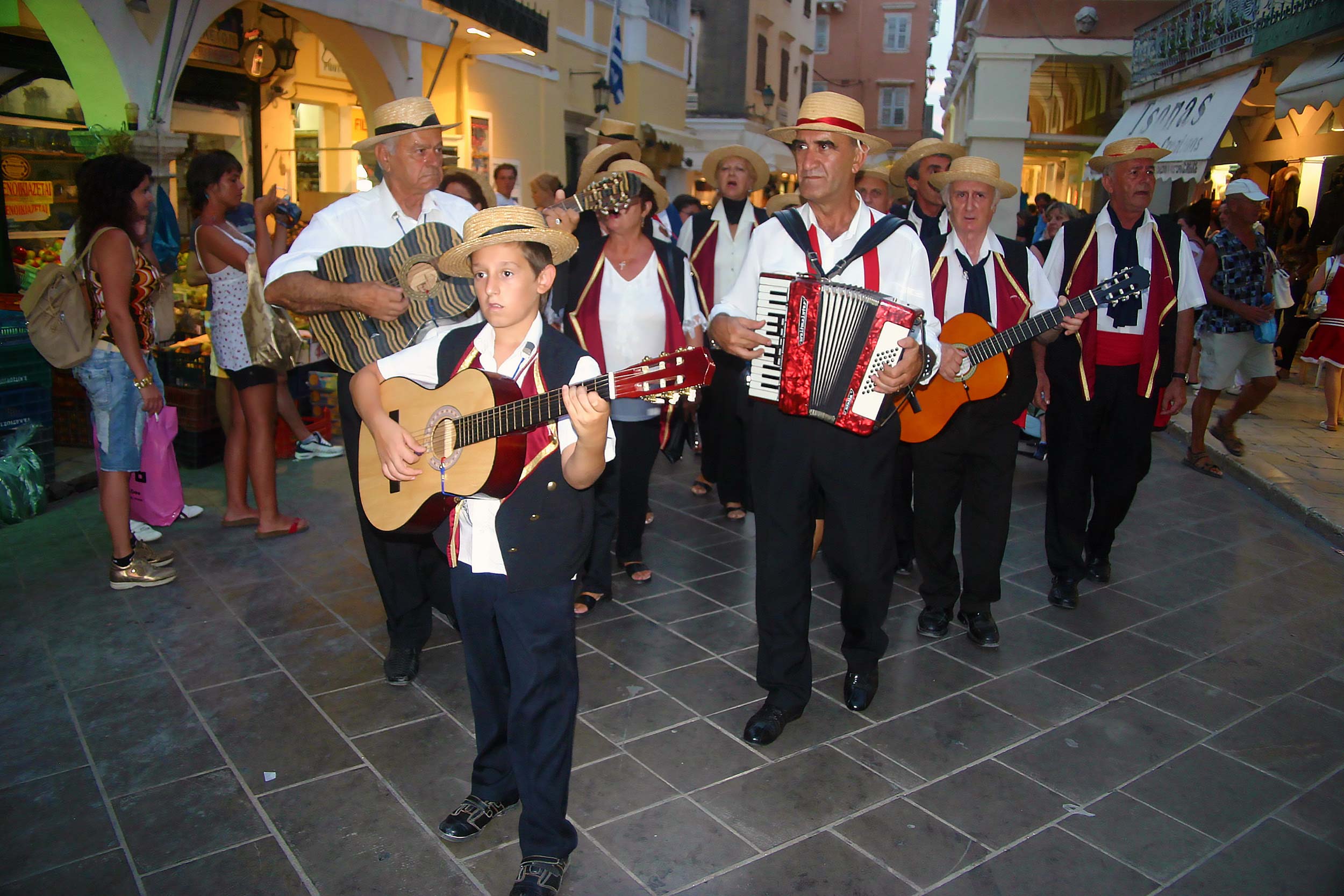
Dressed in traditional costumes, these groups of people take to the cobblestone streets of the old town, offering spontaneous and enchanting moments of entertainment to both residents and visitors. Their music and songs create an atmosphere of wonder and joy, not just within the cantonments but also at weddings, festivals, and a variety of island events. They are an integral part of Corfu’s cultural heritage, weaving melodies that echo across time.
Corfu, often dubbed the ‘most musical island in Greece,’ holds a unique position due to its historical influences and Venetian past. The island’s musical tapestry is a vibrant blend of Western harmony and Ionian charm, a result of its exposure to the art, literature, and music of the West. This influence gave birth to a distinctive style that is both familiar and uniquely Corfiot.
At the heart of this musical legacy lies the chant, an urban folk song that resonates with the spirit of Corfu. The chants feature Western polyphony and are performed by groups rather than soloists. Created by composers from the Ionian School of Music and the Modern Greek National School of Music, these melodies are often accompanied by guitars and mandolins or sung a cappella. The influence of Italian culture is evident in the very name, derived from the Italian verb ‘cantare,’ meaning ‘I sing.’
Intriguingly, Corfu’s philharmonic bands take center stage during Easter celebrations, a testament to the island’s profound connection with music. As Greece’s third most popular tourist destination, Corfu welcomes over a million visitors annually, drawn not only by its scenic beauty but also by its musical charisma. From the romantic serenades of yesteryears to the dynamic Kantadori of today, music continues to enrich the island’s culture and heritage.
As the sun sets over Corfu’s picturesque landscapes, the Troubadours of Love emerge, evoking the spirit of medieval minstrels. Like their European counterparts, these wandering performers bring folk music to life, weaving stories of love, beauty, and the sea. Their melodies resonate with the heart, capturing the essence of a bygone era while enchanting modern audiences.
In their traditional Corfiot attire, they strum guitars, play accordions, and sing in harmony, creating an atmosphere that transports you to a world where love is idealized and celebrated. Much like the troubadours of old, these modern minstrels channel emotions through their music, sharing stories of courtly love and the beauty of life.
Today, Corfu’s musical heritage remains a treasure trove of melodies and memories, rooted in its history and culture. The Kantadori, or Troubadours, continue to serenade the island with their soul-stirring songs, bridging the gap between past and present. So, as you wander through Corfu’s enchanting streets, listen for the echoes of the Troubadours’ melodies and let yourself be transported to a world where music weaves tales of love, joy, and the timeless spirit of this idyllic Greek island.”
Corfu Musical Tradition

There is a huge, long-lasting musical tradition on the island.
The city today has three main philharmonic societies. The Old Philharmonic, the Philharmonic of Mantzaros, and the Philharmonic of Kapodistrias, whose orchestras often give excellent concerts.
There are also bands in many villages, and on certain days they all play in Corfu Town to loud cheers from their supporters.
Italy influenced the musical tradition, and many artists created their music schools with classical influences.
Is the so-called Ionian School of Music divided into two periods? The first until 1870 and the second until the early 20th century.
In Greece, the Ionian School was finally overthrown by the so-called National School, created by the “Germanists” Georgios Nazos and Manolis Kalomiris.
The Ionian School of Music
Greek-born Ionian musicians were the Corfiot George Lambellet and Cefalonian Dionysios Lavragas. Members of both the Ionian School and the “National School”.
They were in constant quarrels with “Germanist” Kalomiris, who accused them of the Ionian music being related to the Italian.
The founder of the Ionian School of Music was Corfiot Nikolaos Chalikiopoulos Mantzaros(1795-1872).
The Ionian school includes many important musicians and composers of the first and second periods.
Corfiot and Ionian Islands Musicians
It is worth mentioning some musicians.
From Corfu
Domenikos Padovas (1817-1892), Spyros Xindas (1814-1896), and Spyros Samaras (1861-1917).
Eduardo, Louis, George, and Napoleon Lambellet are members of the large Lambellet family.
Other composers were Joseph Liveralis (1820-1899), Leonidas Alvanas (1823-1881), Joseph Caesaris (1845-1923), Spyridon Caesaris (1859-1946), Dimitrios Andronis (1866-1918), Sotirios Kritikos (1888-1945), and Alexandros Grek (1876-1959).
From Zante (Zakynthos)
Pavlos Karrer (1829-1896), Frangiskos Domeniginis (1809-1874), and Dionysios Viscardis (1910-1999).
Suzana Nerantzi from Zakynthos was a great woman pianist and student of Mantzaros in Corfu.
From Kefalonia
Dionysios Lavragas (1864-1941), Antiochos Evangelatos (1903-1981), and Spyridon Spathis (1876-1959) from Sami island.
From Ithaka
Dionysios Rodotheatos (1849-1892).
Others
Antonios Kapnisis (1813-1885), George Lambiris (1833-1889), Lavrentios Kamilieris (1878-1956), Georgios Axiotis (1875-1924), and Georgios Sklavos (1886-1976).
Literature

But also in literature, the Ionian Islands have created their own Ionian School.
With writers and poets such as the prominent figure of Dionysios Solomos from Zakynthos (1798-1857), who lived for 30 years in Corfu.
Many others, such as Aristotelis Valaoritis from Lefkada, Andreas Laskaratos and Ioulios Typaldos from Lixouri, Gerasimos Markoras from Kefalonia, Iakovos Polylas from Corfu, Georgios Terchetis, and Andreas Kalvos from Zakynthos.
The term “Eptanissian School” was founded by the great Greek poet Kostis Palamas.
Kostis Palamas introduced the literary consciousness and the rivalry between the Dimotiki and Katharevousa. Two forms of the modern Greek language.
One of the main features of the Ionian School was the use of Dimotiki in Poetry.
Corfu’s contribution to the formation of the modern Greek state
The immense contribution of Corfiot intellectuals to the formation of the modern Greek state is well known.
The island has produced world-renowned personalities accomplished in many different spheres.
Corfu has given and still gives a lot to Greece, both culturally and economically, through its huge tourist growth, but has not necessarily taken back all that it deserves!
Without mentioning the younger generations, the famous personalities who were born or lived here include:
Corfiot intellectuals
Ioannis Kapodistrias was a politician who, for several years, served as the Minister of Foreign Affairs of Russia. He was a descendant of a noble family.
From his position, he was involved in many European political affairs, including the constitutional reform of Switzerland, before accepting the responsibility of becoming the first governor of modern Greece.
Nikolaos Mantzaros was another noble, musician, and composer of the Greek national anthem. He was the major representative of the so-called Ionian School of Music.
Dionysios Solomos, our national poet, was born in Zakynthos(Zante) and lived here for the last 30 years of his life.
Spyros Samaras, another musician, was the composer of the Olympic anthem. Yes, the one played during the opening and closing ceremonies of every Olympics.
The famous Italian composer Antonio Vivaldi lived much of his life on the island. As did poets like Gerasimos Markoras, Lorenzos Mavilis, Andreas Kalvos, and Iakovos Polylas.
All the above were members of the Ionian School of Literature.
A former Greek prime minister was Corfiot George Theotokis, whilst his relative Nikolaos Theotokis became the archbishop of Russia.
The important Ecumenical Patriarch Athenagoras and St Filomena were born here.
The unforgettable actor Nikos Kourkoulos originates from Corfu. Also, Albert Cohen and the singers Vicky Leandros and Nana Mouskouri were born here.
There are hundreds of others not mentioned. Even Giacomo Casanova spent much of his life in Corfu and was finally forced to leave as he had an affair with the young wife of the Venetian provost.
Summary
Corfu boasts a rich musical tradition, with three renowned philharmonic societies that regularly perform. Influenced by Italian music, the island became the birthplace of the Ionian School of Music, founded by Nikolaos Mantzaros, and produced notable composers like Spyros Samaras, creator of the Olympic anthem.
Corfu’s literary scene also flourished, with figures like Dionysios Solomos, author of Greece’s national anthem, contributing to the Ionian School of Literature. This vibrant cultural history continues to shape Corfu’s identity today.

Comments